
Clinically reviewed by Dr. Ponlawat Pitsuwan, Physician, Doctor Bangkok. Last reviewed: July 2026
Bangkok belly is traveler’s diarrhea caused by bacteria your gut has not encountered before. Most cases settle within one to three days with oral rehydration salts and rest. If you have a fever, blood in your stool, or symptoms lasting beyond 72 hours, you need a clinical assessment, not more waiting.
You have been in Bangkok for two or three days. You feel fine, you eat something from a street stall or a restaurant, and by the next morning your stomach is in revolt. Loose stools, cramping, that urgent run to the bathroom. You are not alone. This is the most common illness I see in visitors and newer expats, and most of the time it is manageable at home, at least at first.
The question I get asked most is: when does this stop being something I ride out, and when do I actually need a doctor? That is exactly what this article answers. I will walk you through what helps, what does not, and the signs that mean you should stop self-treating and come in.

What Causes Bangkok Belly?
The main culprit is a bacterium called enterotoxigenic E. coli, or ETEC. Your gut simply has not met this strain before, and it responds by pushing everything out fast. But ETEC is not the only cause. Shigella and Campylobacter tend to produce more severe symptoms, including fever and blood in the stool. Norovirus hits fast and hard, with vomiting often more prominent than diarrhea.
Most cases come from contaminated food or water. Ice made from tap water, raw vegetables washed in tap water, undercooked meat, and food sitting out in the heat are the common culprits.
Bangkok Belly vs Food Poisoning — Are They the Same Thing?
I hear this question a lot. Bangkok belly is an infection. Symptoms tend to build over a day or two. Food poisoning is different. It is caused by toxins already in contaminated food before you swallow it. Symptoms come on fast, often within hours of a specific meal, and vomiting tends to hit harder.
In practice, both can make you feel equally terrible. The important thing is not to assume you know which one it is and wait too long before getting checked.

Why Bangkok’s Climate Makes It Worse
Bangkok’s heat and humidity mean you lose fluid much faster here than you would with the same illness in London or Sydney. When you are having frequent loose stools in 35-degree heat, dehydration sets in quickly.
I see patients who feel worse than they expect to, and part of that is the climate working against them. You may not feel thirsty in the way you usually do, but your body is losing fluid and electrolytes faster than you realise. This is why oral rehydration salts are not optional. Water alone is not enough.
How Long Does Bangkok Belly Last?
Most uncomplicated cases improve within one to three days. If you are drinking enough and resting, you should see clear improvement by day two.
If you are still symptomatic at 72 hours, that is when I want to see you. At that point we need to find out why it has not resolved. A stool test can identify what is causing it and guide treatment properly. You can find out what to expect from the process on our diarrhea treatment page.
A small number of patients develop post-infectious IBS after a bad bout. The gut stays unsettled, with bloating and irregular stools that persist for weeks. This is more common when the initial infection was not treated properly or when patients pushed through without adequate rest and hydration.
What to Eat and Drink While Recovering
Start with fluids. Oral rehydration salts are available at every pharmacy in Bangkok, including 7-Eleven. Mix them properly and drink steadily throughout the day.
For food, plain is best. In Thailand, you have a genuine advantage here. Khao tom, the Thai rice congee sold at almost every local restaurant and many convenience stores, is exactly what you want: warm, bland, and easy to digest. Plain white rice and clear broth soups are also fine. Avoid dairy, spicy food, raw vegetables, and alcohol until your symptoms have fully settled.
Loperamide, sold as Imodium, can slow things down and is useful if you need to travel. But it does not treat the underlying cause. Do not use it if you have a fever or any blood in your stool. In those cases, you need the cause identified, not just the symptoms suppressed.
When Do You Actually Need Antibiotics?
Antibiotics are not needed for most cases of Bangkok belly. Mild symptoms with no fever and no blood in your stool will usually resolve with ORS and rest. Taking antibiotics unnecessarily builds resistance and can make things worse.
Antibiotics become appropriate when symptoms are moderate to severe, when you have a high fever, or when there is blood or mucus in your stool. In those cases, I will usually recommend a stool test first. That way we treat the actual cause rather than guessing. I never recommend starting antibiotics without at least a brief clinical assessment.
Red-Flag Symptoms — When to Stop Waiting and See a Doctor
There are clear situations where self-treatment is not appropriate. Come in if you have had symptoms for more than 72 hours without improvement. Come in if there is blood or pus in your stool. Come in if you have a fever above 38.5°C alongside diarrhea.
Come in if you cannot keep fluids down. Vomiting combined with diarrhea in Bangkok’s heat can cause dehydration quickly, and sometimes IV fluids are the only way to catch up. Same-day appointments are usually available at Doctor Bangkok for exactly this situation.
One more thing worth flagging. Severe or worsening pain in the lower right side of your abdomen is not typical Bangkok belly. Appendicitis can start with gut-like symptoms and get mistaken for traveler’s diarrhea. If the pain is localised and getting worse rather than coming and going, please come in for assessment. This is not a situation to manage with loperamide and hope.
Could It Be Something Else?
Most of the time, yes, it is Bangkok belly. But not always. Persistent symptoms beyond a week, especially with bloating and fatigue, can point toward a parasitic infection such as Giardia or Cryptosporidium. These do not resolve on their own and require specific treatment.
Typhoid fever can also present with gut symptoms early on, usually alongside a steadily rising fever and feeling genuinely unwell beyond just the stomach. Dengue fever, which I see frequently at the clinic, can include abdominal symptoms alongside high fever and body aches. If something feels off beyond a straightforward gut illness, say something.
Bangkok Belly in Expats and Long-Term Residents
If you have been living in Bangkok for a year or more, your gut does develop some tolerance to the local bacterial environment. But that does not mean you are immune.
Long-term residents still get Bangkok belly, particularly after eating somewhere new, travelling upcountry, or during the rainy season when food hygiene can slip. Recurring episodes, more than two or three bouts a year, are worth investigating. I would look at stool test results, check for parasitic infection, and consider whether gut flora is being disrupted by repeated antibiotic use. Recurring diarrhea that you are writing off as part of expat life is not something to ignore.
Prevention — Bangkok Belly Before It Starts
You have heard the basics before: bottled or purified water only, no ice unless you are certain of the source, fully cooked food from busy places with high turnover. These rules exist because they work.
Two things are often overlooked. Taking a good-quality probiotic for two weeks before arrival and continuing through your trip has some evidence behind it as a preventive measure, though benefit varies. Hand hygiene also matters more than people think. Bangkok’s street food is mostly safe when it is fresh and hot. The real risk is hands carrying bacteria to your mouth throughout the day.
If you are visiting from overseas, our travel health service can advise on pre-travel preparation including gut health and vaccination needs.
Seeing a Doctor in Bangkok for Bangkok Belly
If you do need to come in, the process is straightforward. At Doctor Bangkok, I will take a brief history, assess your hydration, and decide whether a stool test is needed. Results are usually back within 24 to 48 hours. If you need IV fluids, we can do that in the clinic the same day.
We provide itemised receipts suitable for travel insurance reimbursement, which most international policies cover for acute illness. If you are too unwell to travel, ask about our hotel visit service. You do not need to drag yourself across the city when you are dehydrated and running to the bathroom every hour.
Got Bangkok belly and not sure whether to wait it out or get checked? At Doctor Bangkok, we offer same-day appointments for traveler’s diarrhea, oral rehydration support, stool testing, and IV hydration if needed. English-speaking physicians, BTS accessible, and hotel visits available. Book at doctorbangkok.co.th or visit our diarrhea treatment page to learn more.
FAQ
How long does Bangkok belly last?
Most uncomplicated cases clear up within one to three days with oral rehydration salts and rest. If you are still symptomatic at 72 hours, that is the point to get assessed rather than continue waiting. Same-day appointments are available at Doctor Bangkok if you need to be seen quickly.
Is Bangkok belly contagious?
Most bacterial cases like ETEC are not passed directly between people. However, if the cause is Norovirus or Shigella, there is a real transmission risk, especially in shared accommodation or on group tours. Thorough handwashing reduces that risk significantly.
What is the difference between Bangkok belly and food poisoning?
Bangkok belly builds gradually over your first few days as your gut adjusts to unfamiliar bacteria. Food poisoning is toxin-driven and hits fast, often within hours of a specific meal, with more intense vomiting. Both can make you seriously unwell and both can warrant a clinical assessment if symptoms are severe.
Should I take antibiotics for Bangkok belly?
Not for mild cases. Antibiotics are appropriate when symptoms are severe, when you have a high fever, or when there is blood in your stool. A stool test can guide which antibiotic is actually needed. Doctor Bangkok can assess your symptoms and arrange testing before any prescription is issued.
When should I see a doctor instead of treating myself?
Come in if symptoms have not improved after 72 hours, if there is blood or pus in your stool, if you have a fever, if you cannot keep fluids down, or if you have worsening pain in the lower right abdomen. Patients who are pregnant, over 65, or immunocompromised should seek assessment earlier rather than waiting.
Can I get IV fluids for Bangkok belly in Bangkok?
Yes. If you cannot keep fluids down or dehydration is getting ahead of your oral intake, IV hydration is a fast and effective option. Doctor Bangkok provides IV drip therapy at the clinic and can arrange a hotel visit if you are too unwell to travel.
I have lived in Bangkok for two years and I still get this. Is that normal?
Recurring episodes more than two or three times a year are worth investigating rather than accepting as normal. Parasitic infections like Giardia, disrupted gut flora from repeated antibiotic use, and other causes can all be screened for. Come in and we can run the right tests.
Dr. Ponlawat Pitsuwan
Physician, Doctor Bangkok
a private medical clinic in central Bangkok. He sees expats, residents, and medical tourists for traveler’s diarrhea, infectious illness, gastrointestinal complaints, and general medical concerns. His focus is straightforward, evidence-based care delivered in plain language.
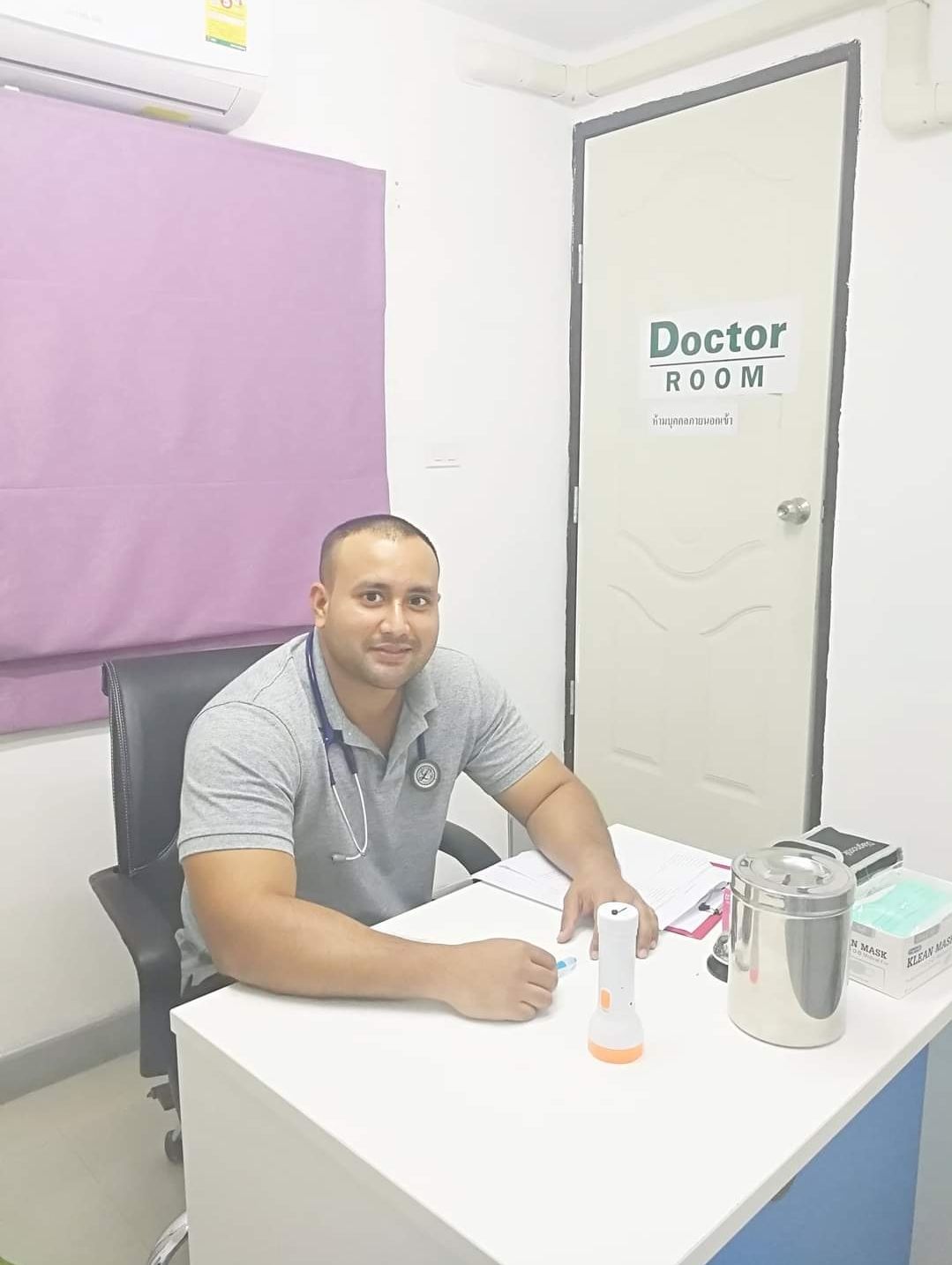
Dr. Ponlawat Pitsuwan is a physician at Doctor Bangkok, a private clinic in central Bangkok. He sees expats, residents, and medical tourists for general medicine, wellness consultations, and IV therapy. His focus is straightforward, evidence-based care delivered in plain language.