
Clinically reviewed by Dr. Ponlawat Pitsuwan, Physician, Doctor Bangkok. Last reviewed: July 2026
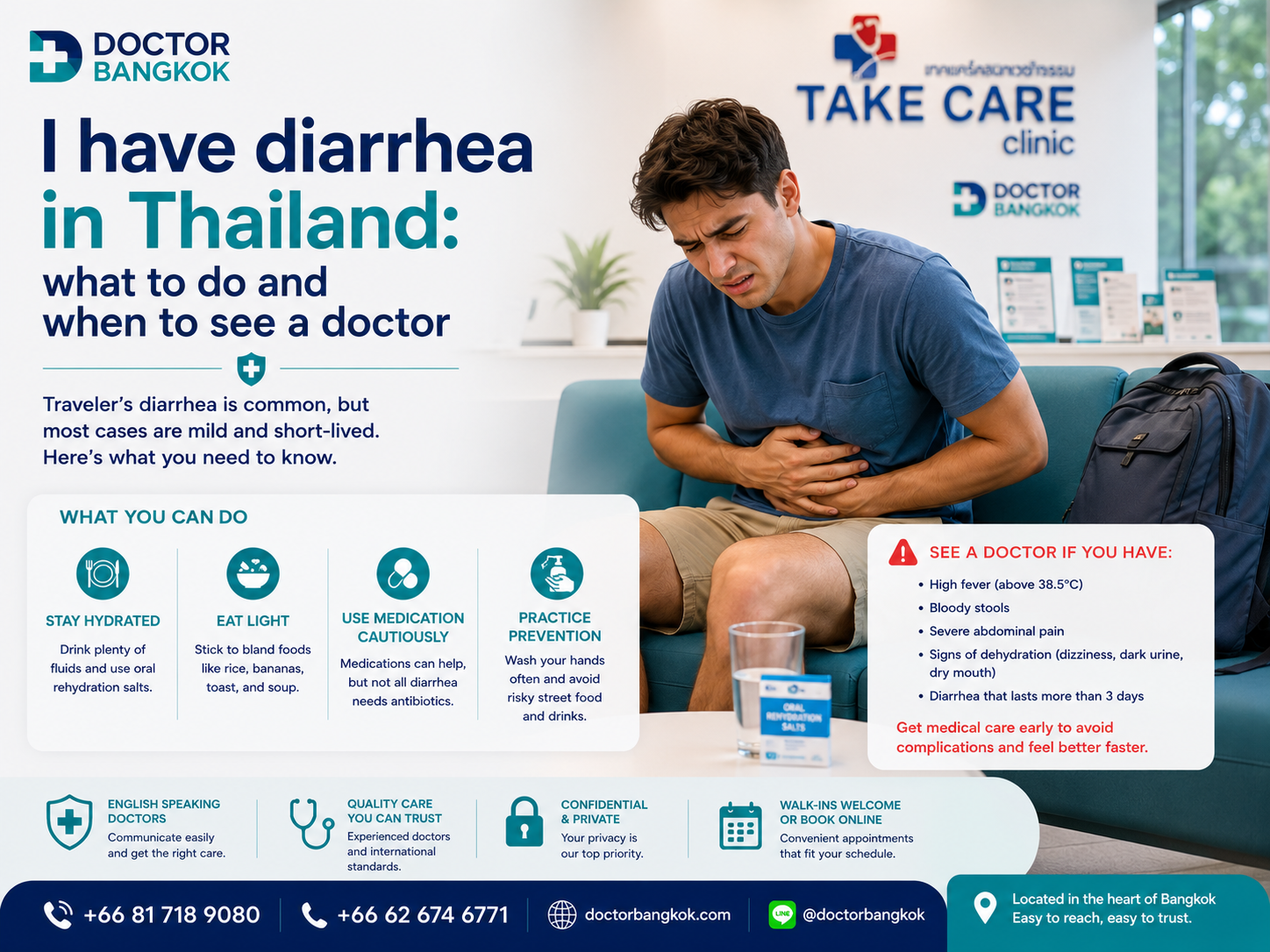
Diarrhea and vomiting together usually mean your gut is fighting off a bug, most often from food or water. The biggest risk is dehydration, and in Bangkok’s heat, it comes on faster than most people expect. If you cannot keep fluids down for more than a few hours, you need medical help that day, not tomorrow.
If you are reading this from a Bangkok hotel room or apartment, you already know something is wrong. You got hit from both ends, possibly after street food, a restaurant meal, or just being in the city long enough. It is miserable, it is frightening if you are far from home, and the first thing you want to know is: is this serious?
Most of the time, no. But the answer changes fast in Bangkok. The heat here means you can lose dangerous amounts of fluid in hours, not days. What would be a manageable stomach bug in London or Toronto can tip into real dehydration here by mid-afternoon. This guide tells you what is going on, what to do right now, and when to call for help.

Why Both Symptoms Hit at the Same Time
Your gut has one job when it detects something dangerous: get it out. It does not care which direction. Vomiting clears the stomach quickly. Diarrhea clears the intestines. When something is bad enough, your body triggers both at once.
This is not a sign that something is more seriously wrong. The real problem is what it leaves behind: fluid loss, salt loss, and a body that quickly gets too dry to function.
What Is Actually Causing It
Food Poisoning
This is the most common cause I see, especially in new arrivals. You eat something contaminated, and within a few hours your body reacts. Common culprits in Bangkok include Salmonella, E. coli, Campylobacter, and Vibrio, which often comes from seafood.
The onset is usually fast. You feel fine, then suddenly you do not. Vomiting tends to dominate early because your stomach is trying to eject what it absorbed.
Viral Gastroenteritis
Norovirus is extremely common and spreads easily in shared spaces: hotel buffets, offices, and condos. It builds more gradually than food poisoning. You feel off for a few hours before it hits properly.
Viral infections do not respond to antibiotics. The treatment is managing symptoms and replacing fluids. Most people recover within one to two days, but that window feels very long when you are dehydrated in the heat.
Traveller’s Diarrhea and Bangkok Belly
If you have been in Bangkok for less than two weeks, this is high on my list. Traveller’s diarrhea is usually bacterial, most often E. coli strains your gut has never encountered before.
Bangkok’s food culture is one of its great strengths, but it does come with exposure risk. Ice, raw produce, undercooked meat, and food sitting out in the heat all carry risk. I see this pattern constantly, especially with people who arrive, eat adventurously on day one, and are flat on day two.
Other Causes Worth Knowing
Not everything is a stomach bug. Alcohol, certain medications, anxiety, and heat exhaustion can all cause vomiting and diarrhea together. Occasionally I see patients with more than one thing going on at once, a bacterial infection on top of existing gut sensitivity, for example.
If your symptoms do not fit the usual pattern, or are not improving after 24 to 48 hours, that is worth a proper assessment rather than more waiting.

Bangkok Makes This More Dangerous Than You Think
Here is the part most generic health advice misses. Standard guidance says to see a doctor if symptoms last more than 48 to 72 hours. In Bangkok, that advice is too slow.
When you combine fluid loss from vomiting and diarrhea with Bangkok’s heat and humidity, you can become genuinely dehydrated in six to twelve hours. You are also likely sweating, possibly moving around, and possibly not recognising the signs early enough.
Dark urine is one of the clearest home checks. If your urine is the colour of apple juice, or you have not passed urine in four hours, you are already behind on fluids. That is the moment to act, not the moment to try another glass of water.
How to Rehydrate When You Cannot Keep Anything Down
Oral rehydration salts (ORS) are the right first step. They are available at any pharmacy in Bangkok and contain the right balance of salts and sugar to help your body absorb fluid. Plain water does not absorb as efficiently when you are very depleted.
The technique matters. Small sips every few minutes, not large gulps. Large amounts at once can trigger the vomiting reflex. Try one or two teaspoons every five minutes for the first hour, then slowly increase.
If you genuinely cannot keep even small sips down for more than a couple of hours, oral rehydration has failed. At that point, IV fluids are the clinically appropriate next step. An IV drip bypasses your stomach entirely and gets fluid directly into your bloodstream.
What to Eat During Recovery
Do not force food while you are still vomiting. Once vomiting settles, start with very plain foods: plain rice, toast, banana, or boiled potato. The BRAT diet (bananas, rice, applesauce, toast) is a reasonable starting point.
Avoid dairy, spicy food, coffee, and alcohol until your gut has had at least 24 hours of stability. Rushing food is one of the most common reasons people relapse.
A Note on Over-the-Counter Medications
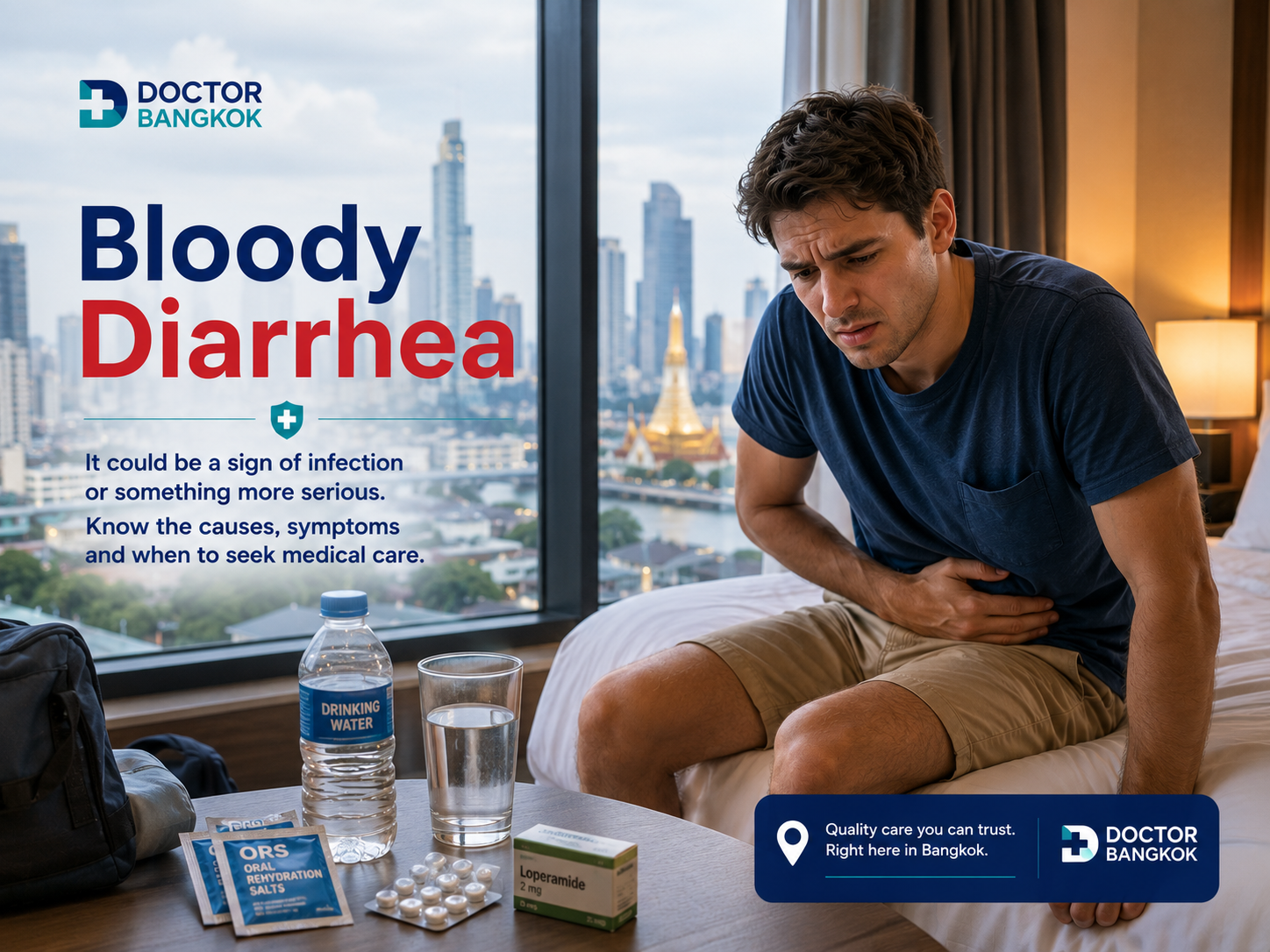
Loperamide (sold as Imodium) slows down the gut. It can help with mild, uncomplicated diarrhea when you have no fever and no blood in your stool. It is not appropriate if you have a high fever or bloody stool, because slowing the gut can trap the infection inside.
An antiemetic like ondansetron can reduce vomiting and make oral rehydration possible. This is prescription medication in Thailand. It genuinely changes how quickly some patients turn the corner, and I can prescribe it during a consultation.
Do not take antibiotics you have at home without a diagnosis. Antibiotics work for certain bacterial infections, but taking the wrong one, or taking one when the cause is viral, creates more problems than it solves.
When to Stop Managing It Yourself
Some situations need same-day medical care. Come in or call for help if you see blood in your stool or vomit, if your fever goes above 39 degrees Celsius, if you cannot keep fluids down for more than two to three hours, or if you feel confused or very weak.
Children and older adults dehydrate faster. If you are caring for someone in either group, the threshold for seeking help is lower.
Severe pain that is fixed in one spot, rather than general cramping, can point to something beyond gastroenteritis. That warrants urgent assessment regardless of other symptoms.
Getting Treatment in Bangkok Without Going Far
If you are well enough to travel, same-day assessment at Doctor Bangkok is the most practical option for most patients. We can run a stool test where appropriate, prescribe the right medication, and set you up with IV rehydration if needed. We are BTS accessible in central Bangkok, and all consultations are in English.
If you are too sick to travel, Doctor Bangkok offers a hotel doctor visit service where a physician comes to you. We carry IV fluids, antiemetics, and diagnostic equipment. For many patients, being rehydrated in their own room is the right clinical call, not the easy way out.
Keep your receipt and ask for a medical certificate. Most international travel insurance policies cover acute illness including gastroenteritis and food poisoning, but you will need itemised documentation from a licensed clinic to make a claim. We provide that as standard.
For more detail on causes and our full approach to sudden gut illness, visit our diarrhea treatment Bangkok page.
Sick in Bangkok and cannot keep fluids down? Doctor Bangkok offers same-day walk-in consultations and hotel doctor visits across central Bangkok. English-speaking physicians, IV rehydration on-site, and medical certificates for insurance. Visit doctorbangkok.co.th or WhatsApp us to arrange a visit today.
FAQ
Is it safe to take loperamide when I also have vomiting?
Loperamide can help with mild diarrhea if you have no fever and no blood in your stool. It does nothing for vomiting and should not be used if you have a high temperature or see blood. When in doubt, get a physician to assess you before taking it.
How quickly can I get dehydrated from diarrhea and vomiting in Bangkok?
Faster than most people realise. Combined losses from vomiting, diarrhea, and sweating in Bangkok’s heat can cause noticeable dehydration within six to twelve hours. Dark urine or no urine in four hours means you are already behind. Do not wait until you feel dizzy to act.
What is the difference between food poisoning and a stomach virus?
Food poisoning usually hits fast, within one to six hours of eating, and vomiting tends to dominate early. A stomach virus builds more slowly and often comes with a low-grade fever. Treatment overlaps, but bacterial causes may need antibiotics while viruses do not. A stool test is the only way to know for certain.
I am too sick to travel to a clinic. What can I do?
Doctor Bangkok offers a hotel doctor visit service across central Bangkok. A physician comes to you with IV fluids, medication, and diagnostic tools. If you cannot safely get into a taxi, this is the right option. Contact us via WhatsApp to arrange.
Will my travel insurance cover this?
Most international travel insurance policies cover acute illness including food poisoning and gastroenteritis. Keep your receipt and ask for a medical certificate or diagnosis letter from your treating physician. Doctor Bangkok provides insurance-compatible documentation as standard.
How long should diarrhea and vomiting last before I see a doctor?
In Bangkok’s heat, I would not wait the full 48 to 72 hours that standard advice suggests. If you cannot keep fluids down after two to three hours, or if you have a high fever or blood in your stool, see a doctor that day. For milder symptoms that are clearly improving, 24 hours of careful home management is reasonable.
Should I go to a hospital or a private clinic?
For most cases of diarrhea and vomiting without severe complications, a private clinic like Doctor Bangkok is faster, more comfortable, and clinically appropriate. A hospital emergency room is the right call if you have severe pain, loss of consciousness, or cannot be stabilised with IV fluids in a clinic setting.
Dr. Ponlawat Pitsuwan
Physician, Doctor Bangkok
a private medical clinic in central Bangkok. He sees expats, residents, and medical tourists for acute illness including food poisoning, gastroenteritis, and traveller’s diarrhea. His focus is straightforward, evidence-based care delivered in plain language.
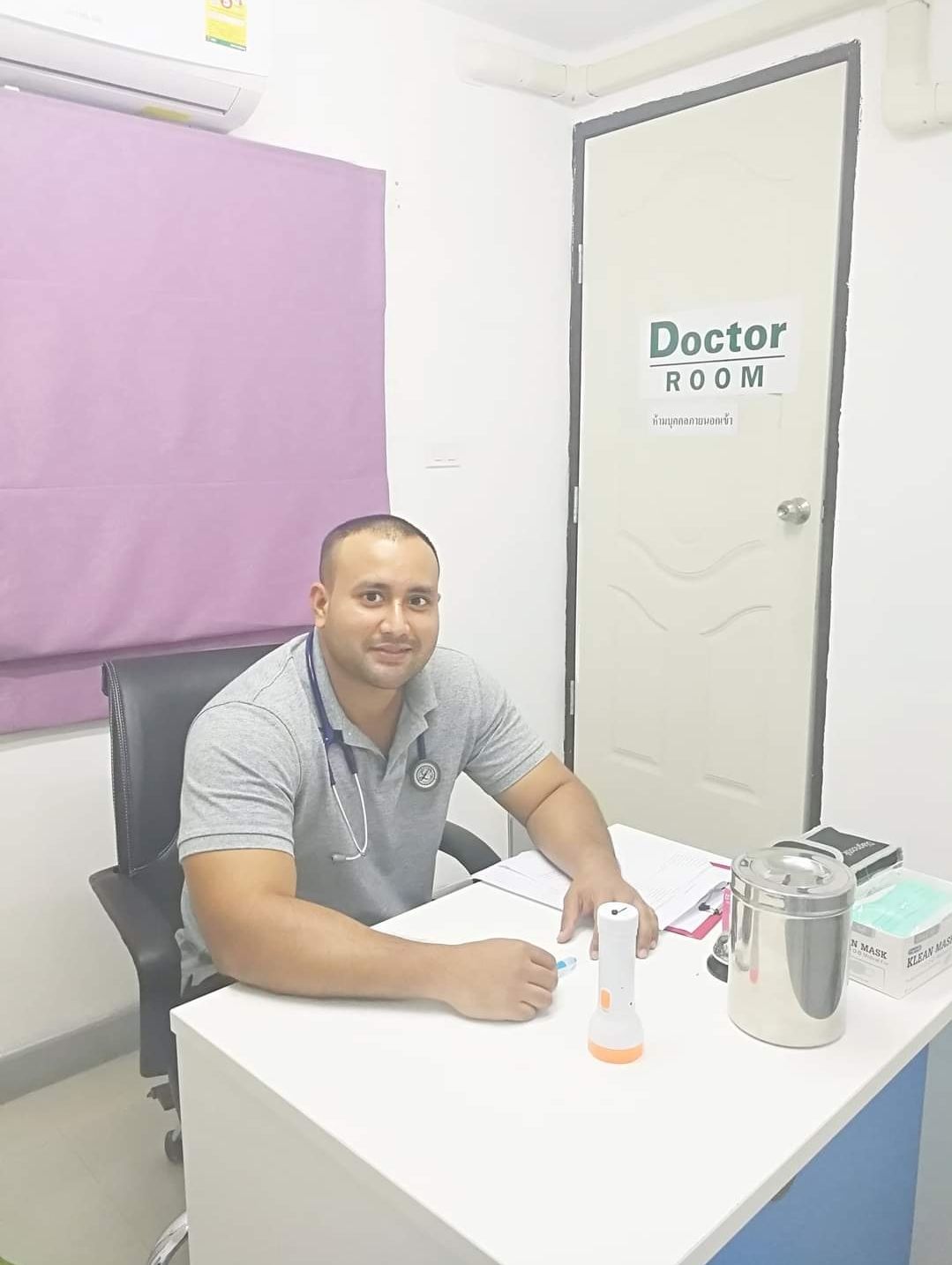
Dr. Ponlawat Pitsuwan is a physician at Doctor Bangkok, a private clinic in central Bangkok. He sees expats, residents, and medical tourists for general medicine, wellness consultations, and IV therapy. His focus is straightforward, evidence-based care delivered in plain language.