
Clinically reviewed by Dr. Ponlawat Pitsuwan, Physician, Doctor Bangkok. Last reviewed: September 2026
Most aneurysms cause no symptoms at all until they rupture. When a rupture happens, the most recognised sign is a sudden, severe headache that patients often describe as the worst of their life, reaching full intensity within seconds. Other warning signs, including a stiff neck, vision changes, or a drooping eyelid, can appear days or even weeks before rupture. Any new, severe, or unusual headache warrants same-day medical assessment.
If you are reading this because someone near you just had a sudden, explosive headache, stop here. Call 1669 or get to an emergency department now. This article is for people who are worried, doing research, or trying to make sense of something they felt earlier today.
Most patients I see who are concerned about an aneurysm have been carrying that worry for days. They had a headache that scared them. A friend’s story stuck with them. Or they have high blood pressure, a family history, and no regular doctor since moving to Bangkok. All of that is worth taking seriously. Here is what to look for and what to do.

What an Aneurysm Actually Is
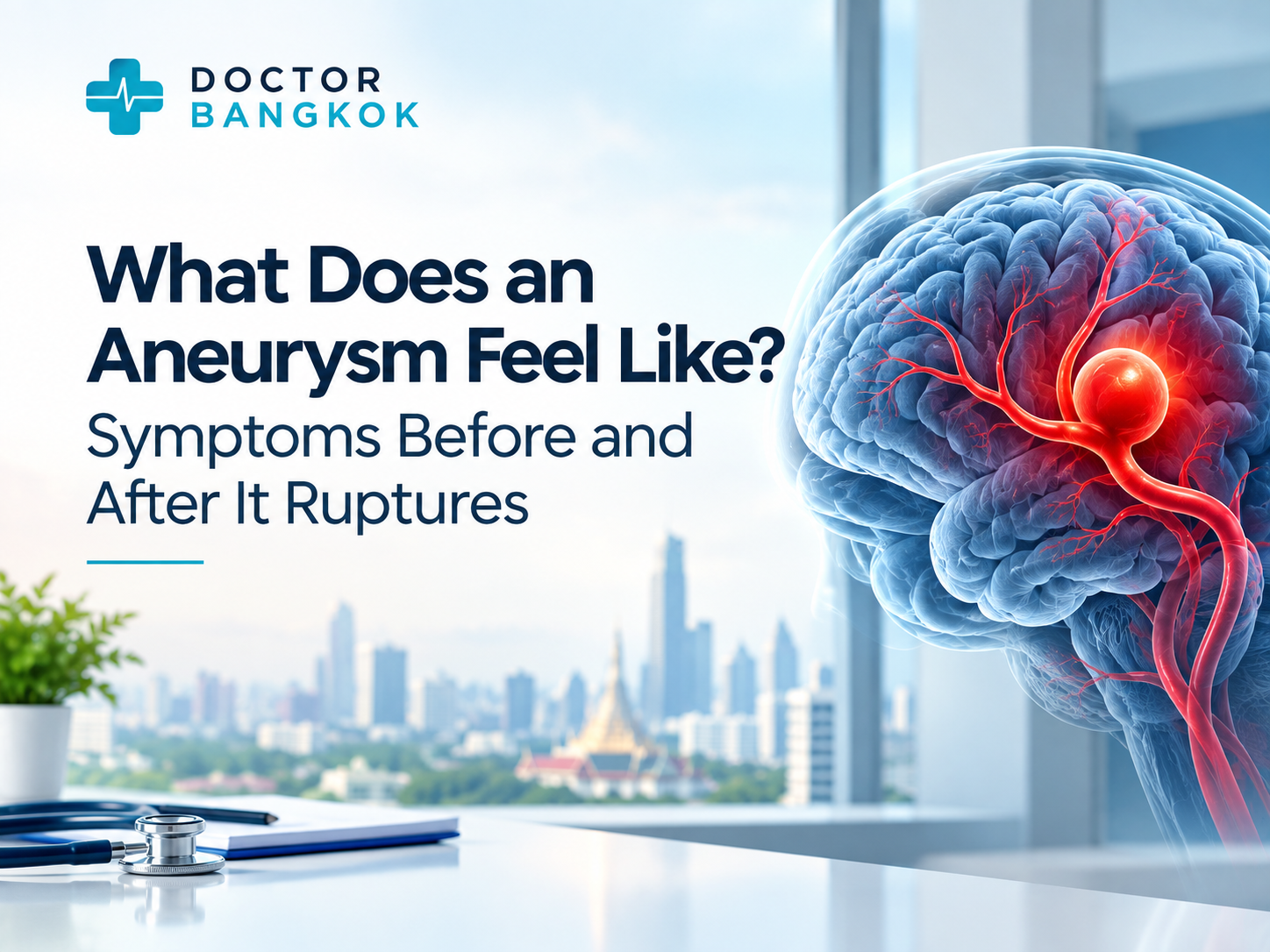
An aneurysm is a weak spot in a blood vessel wall that balloons outward under pressure. Most people have no idea one is there. It sits quietly, causes nothing, and is often found by accident during a scan done for something else entirely.
The two types you hear about most are brain aneurysms and aortic aneurysms. They form in different places and cause very different symptoms. Where the aneurysm sits determines almost everything about how, or whether, you feel it.
Symptoms of an Unruptured Aneurysm — When There Are Any at All
Here is the honest answer: most unruptured aneurysms feel like nothing. An estimated one in fifty people may have an unruptured brain aneurysm and not know it. No headache. No warning. No symptoms at all.
When an unruptured brain aneurysm does cause symptoms, it is usually because it has grown large enough to press on nearby structures. That can produce a drooping eyelid, a dilated pupil on one side, double vision, or pain above and behind one eye. These are not common, but they are real. If you notice any of these without an obvious cause, that warrants assessment, not a wait-and-see approach.
Unruptured aortic aneurysms are even quieter. An abdominal aortic aneurysm may only show itself as a dull, deep ache in the back or side. Some patients feel a pulsating sensation in the abdomen. Many feel nothing until something goes wrong.

The Thunderclap Headache — How to Tell It Apart From a Migraine
This is the symptom that matters most. When a brain aneurysm ruptures and causes bleeding around the brain, it typically produces a headache that hits peak intensity within one to two seconds. Patients consistently describe it as the worst headache of their life, using phrases like "a bat hit me" or "a bomb went off in my head."
A migraine builds. It escalates over minutes to hours. A tension headache feels like pressure across the forehead or around the skull. Neither reaches full, unbearable intensity within seconds the way a rupture does.
Other symptoms that often follow a rupture include neck stiffness, nausea, vomiting, light sensitivity, sudden confusion, and sometimes loss of consciousness. If the headache arrives with any of these, treat it as a medical emergency, regardless of how you feel five minutes later.
Sentinel Headaches — Warning Signs That Can Appear Days or Weeks Before
This is something many people miss. A sentinel headache is caused by a small leak from the aneurysm before it fully ruptures. It can happen days or even weeks before the main event.
A sentinel headache is different from your usual headaches. It is not one-sided like a migraine. It has no obvious trigger. It tends to spread across the whole head and is usually more severe than what you are used to. Patients describe it as unusual, not their worst ever, but different enough to notice.
If you had a headache recently that was new, unexplained, and more severe than usual, do not file that away as stress or travel fatigue. That kind of history is exactly what we ask about at Doctor Bangkok during a clinical assessment. Getting it checked is not an overreaction.
Aneurysm Symptoms by Location — Brain, Thoracic, and Abdominal
Brain and aortic aneurysms behave very differently, and the symptoms reflect that completely.
A brain aneurysm sits on the blood vessels around or within the brain. When it causes symptoms, they are neurological: headache, vision changes, drooping eyelid, confusion, or speech difficulties. A rupture is sudden and serious.
A thoracic aortic aneurysm, which forms on the aorta in the chest, can cause deep chest or back pain, hoarseness, or difficulty swallowing if it presses on nearby structures. Many patients feel nothing.
An abdominal aortic aneurysm sits in the belly and may cause a persistent, deep ache in the abdomen or back. When it ruptures, the pain is sudden, severe, and often described as tearing. This is a life-threatening emergency requiring immediate surgery.
Risk Factors — Who Should Be Paying More Attention
High blood pressure is one of the most significant modifiable risk factors for both brain and aortic aneurysms. Smoking, heavy alcohol use, and a family history of aneurysm also raise the risk meaningfully. Certain connective tissue conditions increase risk further.
What I see often in Bangkok is expats who have not had a routine blood pressure check in two or three years. No regular GP. No annual health check. Blood pressure can run high for years without a single symptom, and that sustained pressure is exactly what weakens vessel walls over time.
If you smoke, drink heavily, have a family history of aneurysm, or have not had your blood pressure checked recently, a routine health check is a straightforward thing to arrange. Doctor Bangkok offers same-day general consultations and blood pressure screening with no appointment backlog.
What to Do If You Are in Bangkok and These Symptoms Hit
If the thunderclap headache happens, call 1669. That is Thailand’s national emergency medical services number. Do not drive yourself. Do not wait for it to pass. Get to the nearest hospital emergency department immediately.
If your symptoms are less clear, if you had a headache that worried you or you have been getting new and unusual head pain, come in for an urgent same-day consultation. We can take your history, check your blood pressure, assess your neurological signs, and refer you directly for CT or MRI brain imaging if it is warranted. You do not need to navigate a Thai hospital system on your own.
Bangkok has excellent neurosurgical facilities at several private hospitals, and Doctor Bangkok can coordinate a direct referral. The language barrier and unfamiliarity of the system here are real stressors. We handle both.
How an Aneurysm Is Diagnosed in Practice
If a rupture is suspected, the first test is a CT scan of the head. It is done immediately and detects blood around the brain quickly. If the CT is normal but symptoms are strongly suggestive, a lumbar puncture, which checks the fluid around the brain for traces of blood, may follow.
For unruptured aneurysms, CT angiography and MRI brain scan are the standard tools. CT angiography maps the blood vessels in detail and can show the size and shape of an aneurysm clearly. An MRI gives more detail about surrounding tissue.
The key point is that diagnosis requires imaging. No blood test or physical examination alone can rule out an aneurysm. If your instinct says something was wrong with that headache, trust it enough to get scanned.
What Happens After an Aneurysm Is Found
For a ruptured aneurysm, treatment is urgent and happens in a neurosurgical unit. The two main approaches are endovascular coiling, where tiny coils are placed inside the aneurysm to block blood flow, and surgical clipping, where a clip is placed on the neck of the aneurysm. Your neurosurgeon will decide based on the aneurysm’s size, location, and shape.
For an unruptured aneurysm found incidentally, immediate treatment is not always the right call. Small aneurysms in low-risk locations may be monitored with regular imaging. The risk of surgery can outweigh the rupture risk for very small, stable aneurysms.
What patients in this position do need is a clear follow-up plan: controlling blood pressure, stopping smoking, limiting alcohol, and knowing exactly which symptoms should send them straight to an emergency department. A GP at Doctor Bangkok can help you build and maintain that plan.
If you had a headache recently that felt different, or if you have risk factors for aneurysm and no regular doctor in Bangkok, come in and get assessed. Doctor Bangkok offers same-day general medical consultations, blood pressure checks, and direct referral for neurological imaging when it is needed. Our English-speaking physicians are experienced with expats and international patients navigating care in Thailand. Walk in or book online at doctorbangkok.co.th. We are centrally located in Bangkok and easily reached by BTS.
Can you have an aneurysm and feel completely normal?
Yes, and this is actually the most common situation. The majority of unruptured aneurysms produce no symptoms at all and are found accidentally during scans done for other reasons. This is exactly why knowing your risk factors and keeping up with routine health checks matters, especially if you do not have a regular GP in Bangkok.
What does a sentinel headache feel like compared to a normal headache?
A sentinel headache tends to be new, diffuse, and more severe than your usual pattern, with no clear trigger. Unlike a migraine, it is not one-sided and does not build with light sensitivity. The key word is different. If a headache stood out to you as unusual, that is worth telling a doctor.
If I think I am having an aneurysm rupture in Bangkok, what should I do?
Call 1669, which is Thailand’s emergency medical service, or have someone take you immediately to the nearest hospital emergency department. Do not wait to see if it settles. If your symptoms are less severe but still concerning, Doctor Bangkok can assess you same-day and refer you for urgent imaging.
Is high blood pressure a major risk factor, and can I get it checked in Bangkok?
High blood pressure is one of the most significant modifiable risk factors for both brain and aortic aneurysms. Many expats go years without a routine check simply because they lack a regular GP here. Doctor Bangkok offers same-day blood pressure screening and general consultations, with referrals for further investigation if needed.
What is the difference between a brain aneurysm and an aortic aneurysm in terms of symptoms?
A brain aneurysm, when it causes symptoms, typically produces neurological signs: sudden severe headache, vision changes, or a drooping eyelid. An aortic aneurysm more often causes deep back, chest, or abdominal pain, sometimes with a pulsating sensation in the belly. Both can be completely silent until a rupture occurs.
If an unruptured aneurysm is found, does it always need immediate treatment?
Not always. Small, stable aneurysms in low-risk locations are sometimes monitored with regular scans rather than treated straight away. A neurosurgeon will weigh the rupture risk against the surgical risk for your specific situation. Controlling blood pressure, stopping smoking, and knowing your warning symptoms are all part of that plan.
Dr. Ponlawat Pitsuwan
Physician, Doctor Bangkok
a private medical clinic in central Bangkok. He sees expats, residents, and medical tourists for general medical consultations, urgent symptom assessment, health checks, and referral coordination across Bangkok’s private hospital network. His focus is straightforward, evidence-based care delivered in plain language.
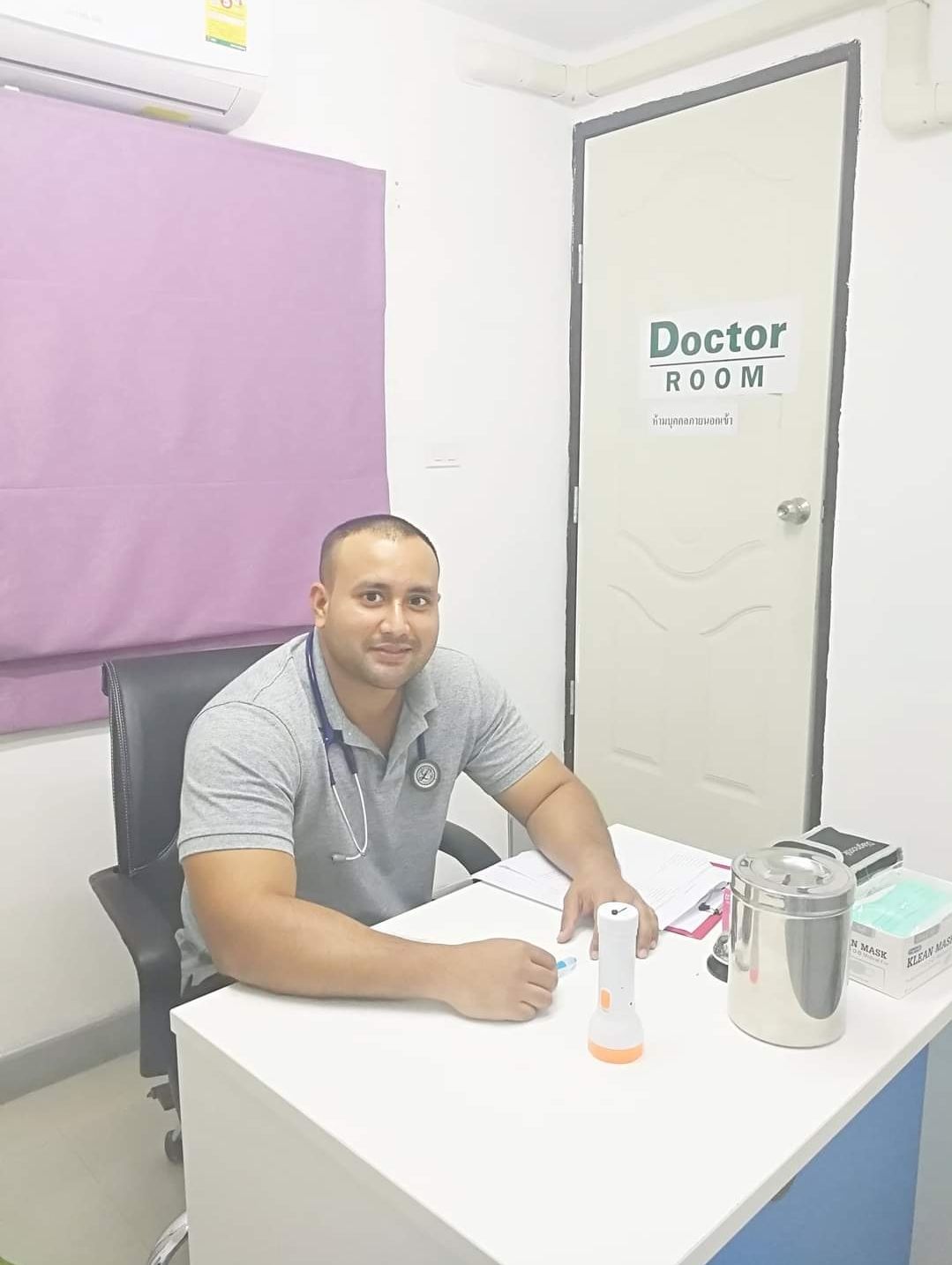
Dr. Ponlawat Pitsuwan is a physician at Doctor Bangkok, a private clinic in central Bangkok. He sees expats, residents, and medical tourists for general medicine, wellness consultations, and IV therapy. His focus is straightforward, evidence-based care delivered in plain language.