
Clinically reviewed by Dr. Ponlawat Pitsuwan, Physician, Doctor Bangkok. Last reviewed: August 2026
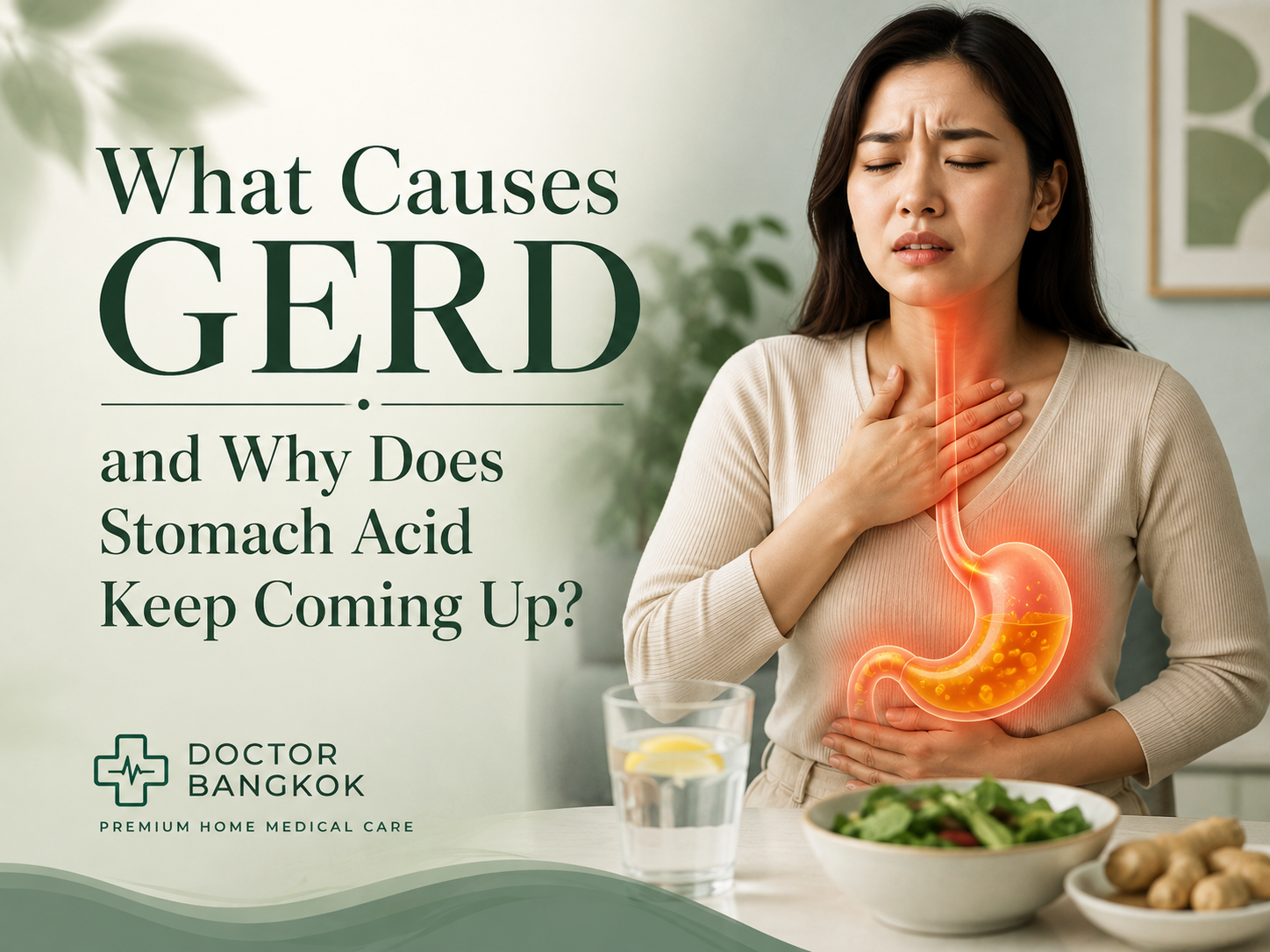
GERD happens when the valve between your stomach and oesophagus stops working properly, letting acid travel upward repeatedly. The most common triggers are diet, excess weight, smoking, certain medications, and a structural issue called a hiatal hernia. If you get heartburn more than twice a week, or your symptoms are not going away with antacids, it is time to see a doctor.
If you are lying awake in Bangkok at 1am with a burning chest after tom yum or a long night out, you are not alone. I see this regularly, especially with expats who have been here a few months and notice their digestion has changed. The heat, the food, the pace of life here all add up.
GERD, or gastroesophageal reflux disease, is not just bad heartburn. It is a chronic condition where acid keeps rising into your oesophagus, the tube connecting your mouth to your stomach. The good news is it is treatable. But you first need to understand what is actually causing it.

The Real Reason Acid Keeps Coming Up
There is a small muscular valve at the bottom of your oesophagus. Its job is simple: open to let food into your stomach, then close tightly. When it works properly, acid stays where it belongs.
In people with GERD, that valve does not close properly. Sometimes it is physically weak. More often, it keeps relaxing at the wrong times, letting acid push upward. This is the main reason most people develop GERD.
A hiatal hernia can make things worse. That is when the top part of your stomach slides up through the diaphragm, the muscle separating your chest from your abdomen. It disrupts the valve’s position and makes it easier for acid to escape. Many patients I see do not know they have one until we investigate.
GERD Risk Factors — What Makes You More Likely to Get It
Excess weight puts pressure on your stomach and pushes acid upward. Smoking weakens the valve directly. Pregnancy does the same through hormonal changes and physical pressure. These are among the strongest risk factors, supported by consistent evidence.
Eating large meals stretches the stomach and forces the valve to work harder. Lying down soon after eating means gravity is no longer helping keep acid down. I tell patients with reflux: finish eating at least two to three hours before bed. That one change helps many people significantly.
Alcohol relaxes the valve. So does coffee. Neither causes GERD on its own, but both make existing symptoms worse, especially combined with a big late-night meal.

Living in Bangkok — Why Your Symptoms Might Be Worse Here
This is something I talk about almost every week. Thai food is genuinely delicious, but it stacks several GERD triggers into a single meal. High-fat coconut milk curries, fresh and dried chilli, large portions, eaten late at night, often with beer or wine. That is a near-perfect combination for reflux.
Spicy and high-fat meals both slow how quickly your stomach empties. When food sits longer in your stomach, there is more pressure on the valve and more opportunity for acid to rise. Research in Asian populations consistently identifies these foods as top dietary triggers for GERD symptoms.
Expat life in Bangkok brings its own pressures too. Relocation, long hours, time zone adjustments, frequent travel. Stress does not directly increase acid production, but it drives the habits that trigger GERD: irregular meals, more alcohol, less sleep. I see this pattern constantly.
Symptoms You Might Not Realise Are GERD
Most people know heartburn. That burning feeling behind your chest, sometimes reaching your throat, is the classic sign. Regurgitation, where you taste acid in your mouth, is another. But GERD does not always look like that.
I regularly see patients who come in for a chronic cough, hoarseness, or a persistent sore throat. They have seen an ear, nose, and throat specialist and nothing was found. Then we explore GERD and that turns out to be the cause. When acid reaches the throat and voice box, the cough and hoarseness come from acid irritating tissue that is not designed to handle it.
Disrupted sleep is another sign people miss. Many patients do not realise they are waking because of reflux. If your symptoms are worse at night or you wake with a sour taste, bring that up with a doctor.
Medications That Can Cause or Worsen GERD
Several common medications relax the valve or irritate the oesophagus directly. This is something many people overlook.
NSAIDs, the group that includes ibuprofen and aspirin, are among the most common culprits. Many expats take these regularly for headaches, joint pain, or as a hangover remedy. Calcium channel blockers, used for blood pressure and heart conditions, also relax the valve. Certain antibiotics and osteoporosis medications can irritate the oesophagus on the way down.
If you are on any of these and your reflux is getting worse, do not just add another antacid. Bring your full medication list to your next consultation. Switching the drug or changing how you take it sometimes resolves the reflux entirely.
When GERD Becomes Dangerous — Complications to Know
GERD that is managed properly rarely causes serious problems. Left unchecked for years, it can.
Repeated acid exposure inflames the lining of the oesophagus, causing pain and difficulty swallowing. Over time, that lining can change into a different type of tissue, a condition called Barrett’s oesophagus. Barrett’s carries a small but real increased risk of oesophageal cancer.
See a doctor without delay if you have difficulty or pain when swallowing, unintentional weight loss, vomiting blood, or black tarry stools. These do not always mean something serious, but they always need to be checked.
How GERD Is Diagnosed — What to Expect at a Clinic in Bangkok
For most patients, the first step is a clinical assessment and a trial of medication that reduces acid production. If your symptoms resolve, that strongly supports a GERD diagnosis. It is straightforward and works for the majority of patients.
If symptoms continue or red-flag signs are present, we go further. A gastroscopy, where a small camera is passed down into the stomach, lets us see the oesophagus directly and check for damage. A 24-hour pH test measures the actual acid level in your oesophagus over a full day.
Both investigations are available at private hospitals and clinics in Bangkok. At Doctor Bangkok, we can assess your symptoms, start you on the right treatment, and refer you for further testing when needed. Everything is explained in English.
When to Stop Managing It Yourself
If you have been buying antacids at a Thai pharmacy every week and still not getting relief, that is your sign. Antacids treat the symptom. They do not treat the cause.
Come in if your symptoms happen more than twice a week, have continued for more than four weeks, or are waking you at night. Come in sooner if you have any of the red-flag symptoms above. With GERD, symptoms rarely improve on their own without addressing what is driving them.
Persistent heartburn or acid reflux that is not responding to pharmacy antacids needs a proper clinical assessment. At Doctor Bangkok, our English-speaking physicians can assess your symptoms, discuss your diet and medications, and start you on the right treatment. We also refer for gastroscopy and pH testing when needed. Book a general medical consultation at doctorbangkok.co.th.
FAQ
Can eating Thai food cause GERD?
Thai food combines several of the strongest GERD triggers in one meal: chilli, high-fat coconut milk, large portions, and late eating times. You do not need to stop eating Thai food, but identifying your personal triggers and avoiding very large late meals makes a real difference. Most patients find one or two specific changes do most of the work.
What is the difference between acid reflux, heartburn, and GERD?
Acid reflux is the event itself, stomach acid moving up into the oesophagus. Heartburn is the symptom that event produces, the burning feeling in your chest or throat. GERD is the chronic condition diagnosed when acid reflux happens frequently and causes ongoing symptoms or damage.
Can stress or anxiety cause GERD?
Stress does not directly make your stomach produce more acid, but it makes you more sensitive to reflux symptoms and drives the habits that trigger GERD: eating late, drinking more, sleeping poorly. For expats managing relocation and work pressure, stress is almost always part of the picture. Addressing it is part of managing the condition.
How do I know if I have GERD or just occasional heartburn?
Occasional heartburn after a big meal is common and usually not a concern. GERD is the diagnosis when symptoms happen more than twice a week, have lasted more than a few weeks, or are not responding to over-the-counter antacids. If symptoms are waking you at night or you have any difficulty swallowing, see a doctor rather than waiting.
What tests are used to diagnose GERD and can I get them in Bangkok?
Most cases start with a clinical assessment and a trial of acid-reducing medication. If that is not enough, a gastroscopy checks the oesophagus directly for damage, and a 24-hour pH test measures acid levels over a full day. Both are available at private clinics and hospitals in Bangkok, and Doctor Bangkok can guide you through the process in English.
Do I need to take medication forever if I have GERD?
Not necessarily. Many patients manage GERD well through lifestyle changes: weight loss, cutting alcohol, adjusting meal timing, and identifying food triggers. Medication is often used short-term to let the oesophagus heal, then reduced gradually. Some people need longer-term treatment depending on severity, and your doctor will guide that based on how you respond.
Dr. Ponlawat Pitsuwan
Physician, Doctor Bangkok
a private medical clinic in central Bangkok. He sees expats, residents, and medical tourists for general medical consultations, digestive complaints, and ongoing chronic condition management. His focus is straightforward, evidence-based care delivered in plain language.
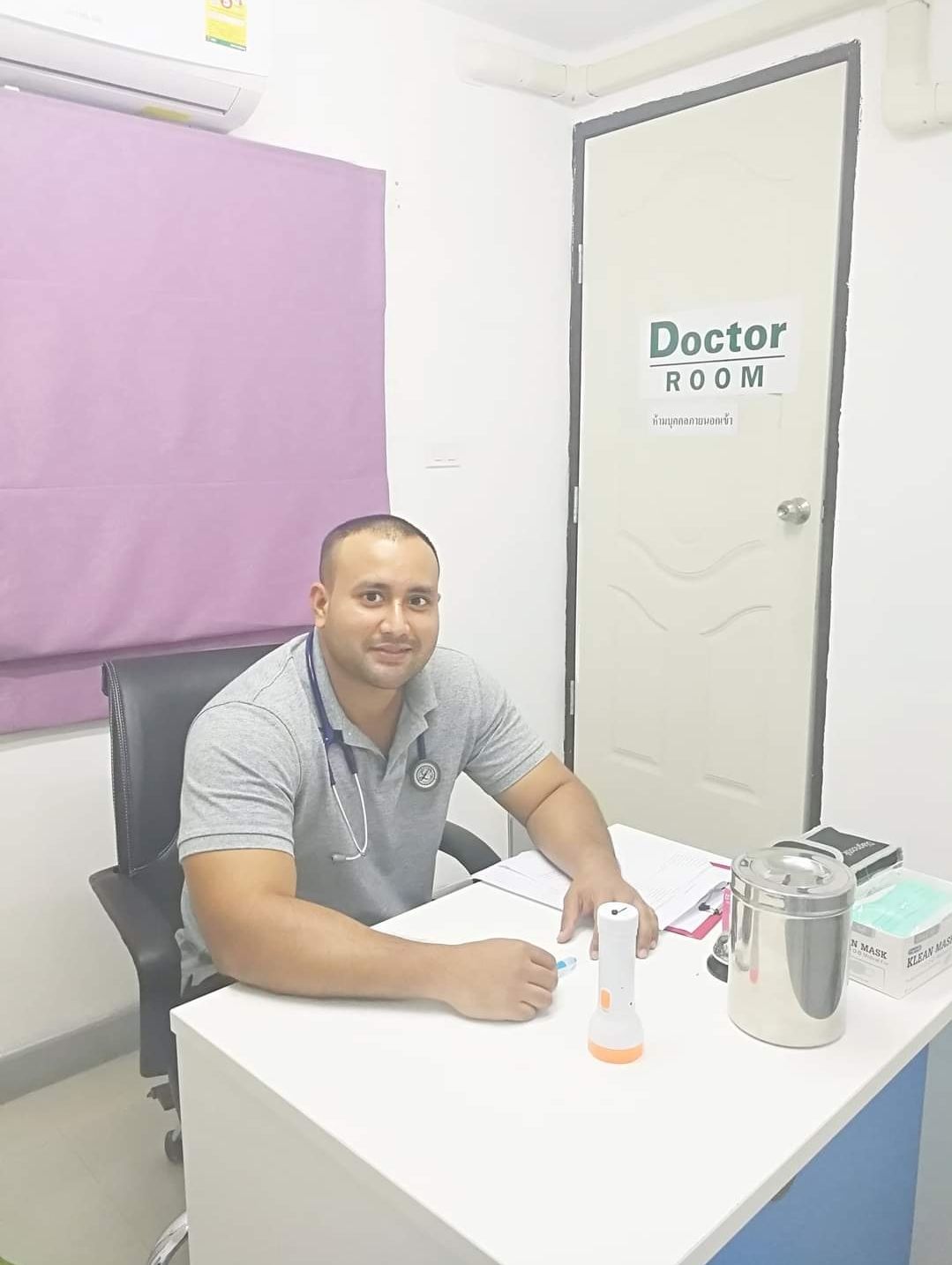
Dr. Ponlawat Pitsuwan is a physician at Doctor Bangkok, a private clinic in central Bangkok. He sees expats, residents, and medical tourists for general medicine, wellness consultations, and IV therapy. His focus is straightforward, evidence-based care delivered in plain language.