
Clinically reviewed by Dr. Ponlawat Pitsuwan, Physician, Doctor Bangkok.
Last reviewed: July 2026
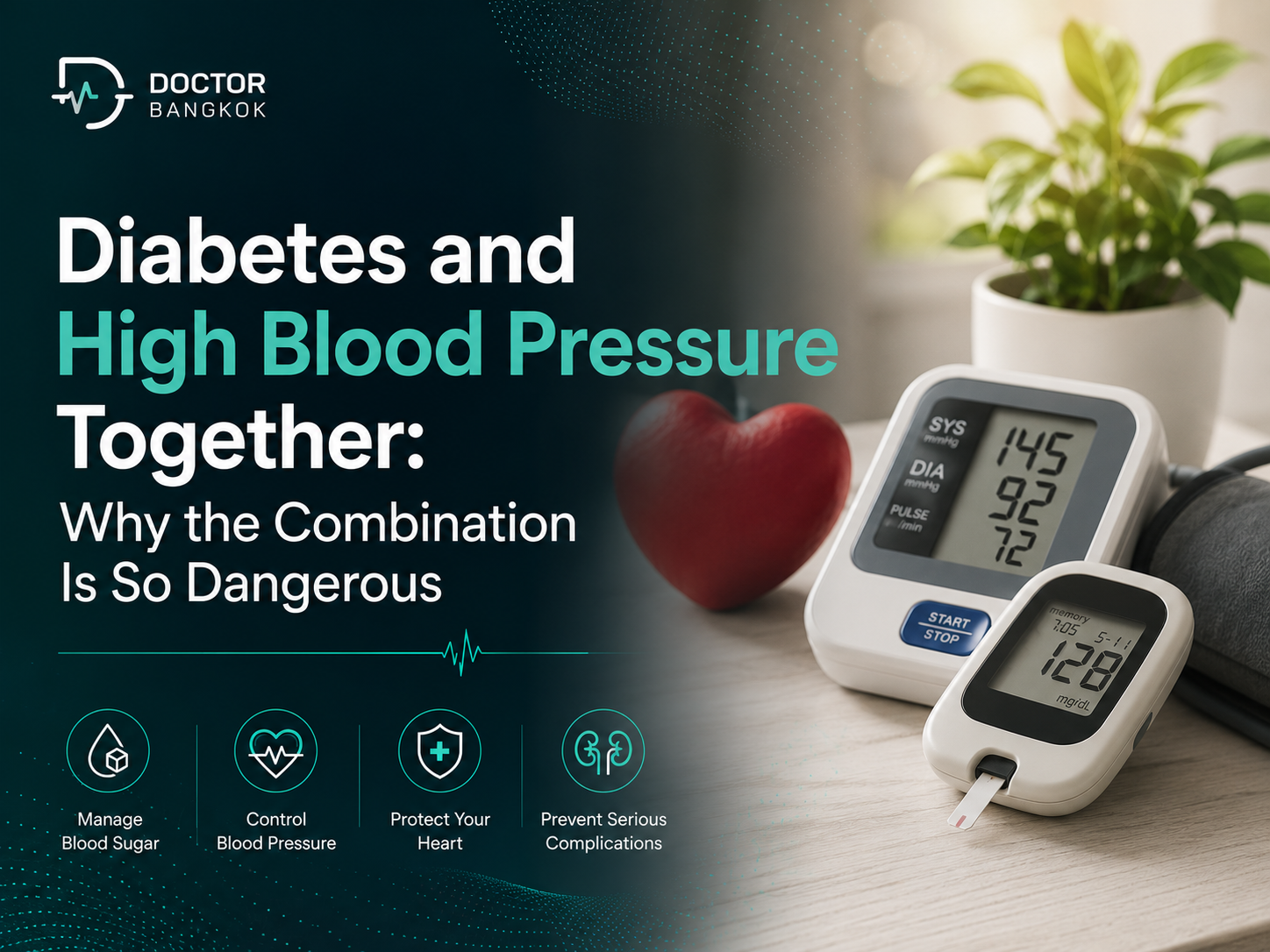
Having diabetes and high blood pressure at the same time is not just bad luck. The two conditions feed each other, damage the same organs, and together raise your risk of heart attack and stroke far beyond what either causes alone. If you have both, you need active monitoring and treatment for both, not just one.
If you have been told you have diabetes, there is a good chance your doctor has also mentioned your blood pressure. That is not a coincidence. These two conditions travel together more often than not, and when they do, the damage they cause is faster and harder to reverse. Many patients in Bangkok only find out they have both during something routine: a health check, a travel consult, a blood test for something else entirely.
The reason they go undetected for so long is simple. Neither condition hurts. You do not feel high blood sugar creeping up. You do not feel high blood pressure. But both are quietly damaging your blood vessels, kidneys, heart, and eyes. That is why this combination deserves your full attention, especially if you are living abroad and have not had a proper check-up in a while.

Why These Two Conditions Almost Always Travel Together
This is the question I get asked most when I explain to a patient that they have both. The short answer is that they share the same root cause.
Insulin resistance sits at the centre of type 2 diabetes. It also damages the lining of your blood vessels, making them stiffer and narrower. Stiffer vessels mean higher blood pressure. So the same process driving your blood sugar up is also pushing your blood pressure up.
Weight gain and the kidneys holding onto more sodium than they should both make this worse. The two conditions are not travelling together by coincidence. They are pulling from the same source.
The Heart Risk Is Not Just Doubled
Most patients assume having two conditions means roughly twice the risk. It does not work that way.
Having both diabetes and high blood pressure raises your risk of heart attack and stroke significantly beyond what either condition causes alone, according to the American Diabetes Association. The combination does not simply add risk. It multiplies it. High blood pressure forces the heart to pump harder. High blood sugar stiffens and narrows the artery walls. Put those two processes together and the arteries age much faster than they should.
For expats in Bangkok who have been too busy to get checked, this is the section worth re-reading.

The Organ Damage You Cannot Feel
This is the part that concerns me most clinically, because there are no warning signs until things are already serious.
Your Kidneys
The kidneys are the organ most consistently harmed when diabetes and high blood pressure occur together. High blood sugar damages the tiny filtering vessels inside the kidneys. High blood pressure then pushes harder through those already-damaged filters. The first sign of trouble is a protein called albumin leaking into the urine. You will not notice it. A urine test will. Without treatment, this can lead to chronic kidney disease.
Your Eyes
The blood vessels at the back of the eye are small and fragile. Both conditions damage them. Diabetic retinopathy, damage to the eye from high blood sugar, gets worse faster when blood pressure is also high. Most people with early retinopathy have no symptoms at all. By the time vision changes, significant damage has already occurred.
Your Brain
High blood pressure is one of the strongest drivers of stroke. Diabetes doubles the stroke risk on its own. Together, they substantially raise the chance of both major stroke and the smaller, quieter strokes that affect thinking and memory over time.
Blood Pressure Targets When You Have Diabetes
The standard target for most adults is below 140/90 mmHg. If you have diabetes, that target drops.
The American Diabetes Association recommends keeping blood pressure below 130/80 mmHg if you have diabetes and any additional cardiovascular risk. The 2025 AHA/ACC hypertension guidelines support this more intensive target. The BPROAD study, published in 2025, found that pushing systolic pressure below 120 mmHg reduced major cardiovascular events in people with type 2 diabetes compared to the standard 140 mmHg target.
In practice, this means that if your blood pressure reads 138/88 and your doctor says "not bad," you may still need treatment if you have diabetes. The threshold for action is lower for you than for someone without diabetes. The right target depends on your individual risk, and that is a conversation worth having with a doctor who knows your full picture.
The Triple Threat Nobody Mentions
Diabetes and high blood pressure rarely arrive alone. Most patients with both also have abnormal cholesterol levels: high triglycerides and low HDL, what people call "good cholesterol."
This cluster of high blood sugar, high blood pressure, and abnormal cholesterol is sometimes called metabolic syndrome. When all three are present, the risk to your arteries and heart accelerates further. Your treatment plan needs to address all three, not just the one that got flagged first.
This is one reason I run a full lipid panel, blood sugar, HbA1c, and blood pressure check together in a single visit when someone comes in concerned about any one of the three.
Managing Both Conditions as an Expat in Bangkok
Bangkok has its own set of complications for chronic disease management, and I say that having looked after expats here for years.
Thai food is delicious and also very high in sodium. A single bowl of boat noodles or a plate of pad see ew can contain more sodium than many guidelines recommend for an entire day. The heat matters too. In high temperatures, blood pressure can temporarily read lower than usual, which is misleading if you are monitoring at home. Regular alcohol, common in expat social settings here, raises both blood glucose and blood pressure. Relocation stress raises cortisol, which pushes blood sugar up.
None of this means Bangkok is the wrong place to manage these conditions. It means you need a clinic that understands this context. Doctor Bangkok has been managing chronic conditions for the expat community in central Bangkok for years, and this local knowledge is built into every review we do.
Medication Continuity From Your Home Country
This is one of the most common problems I see. A patient arrives with a prescription from their GP in London, Sydney, or Toronto. They either run out, or they cannot find the same brand name here.
Many blood pressure medications are available in Thailand under different brand names, and some can be bought over the counter at pharmacies without a prescription. That might sound convenient, but taking these without monitoring is genuinely risky. Doses can be wrong, interactions go unchecked, and nobody is watching your kidney function or your blood pressure response.
Bring a list of your generic drug names, not just brand names, when you travel. We can review your overseas prescription, match it to the Thai equivalent, and set up ongoing monitoring so your management stays on track.
How We Manage Both Conditions at Doctor Bangkok
When a patient comes to me with diabetes and high blood pressure, I do not treat them as two separate problems.
A chronic condition review at Doctor Bangkok covers blood pressure measurement, a full blood panel including HbA1c, fasting glucose, kidney function, and a lipid panel. If there is any cardiac concern, we can add an ECG on the same visit. We also check microalbuminuria in the urine, the earliest warning sign of kidney stress from these two conditions combined. Most results come back the same day or the next morning.
Medications, if needed, are available from our on-site pharmacy. For patients managing these conditions over the longer term, we offer follow-up by telehealth so you do not need to come in for every minor question or adjustment. The goal is a management plan that works with your actual life in Bangkok: what you eat, how much you drink, what medications you are already on, and where your numbers need to be given your personal risk.
If you have been putting this off, a chronic condition review is the right place to start.
Doctor Bangkok offers same-day chronic condition reviews including HbA1c, full blood panel, kidney screening, ECG, and blood pressure assessment, all in one visit from a central Bangkok clinic with English-speaking doctors. If you have diabetes, high blood pressure, or both, do not wait for symptoms. Visit doctorbangkok.co.th/chronic-conditions to book your review or ask us a question.
Frequently Asked Questions
What is the recommended blood pressure target if I have diabetes?
The American Diabetes Association recommends keeping blood pressure below 130/80 mmHg if you have diabetes and additional risk factors. The 2025 BPROAD study found that pushing systolic pressure below 120 mmHg reduced major heart events in people with type 2 diabetes. Your personal target should be set by a doctor who knows your full health picture, which is exactly what a chronic condition review covers.
Can I manage my diabetes and blood pressure medication in Bangkok if my prescription is from overseas?
Many medications are available in Thailand, often under different brand names and sometimes without a prescription, which creates real risks if you self-manage without monitoring. Bring your generic drug names with you, not just the brand names. Doctor Bangkok can review your overseas prescription, identify the Thai equivalent, and set up proper ongoing monitoring so your care does not fall apart because you changed countries.
How does high blood pressure make diabetes complications worse?
High blood pressure forces extra pressure through blood vessels that diabetes has already weakened. In the kidneys, this speeds up damage faster than either condition alone. In the eyes, it accelerates retinopathy. In the heart and brain, it substantially raises the risk of heart attack and stroke. The two conditions do not simply add their risks together; they multiply each other’s damage.
How often should I have my blood pressure and blood sugar checked if I have both conditions?
Blood pressure should be checked at every clinical visit. HbA1c, your three-month blood sugar average, should be checked every three months if your levels are unstable, and every six months once things are controlled. Kidney function and a urine test for albumin should be done at least once a year, along with a cholesterol panel and an eye check. Doctor Bangkok can run all of these in a single visit with same-day results.
Does living in Bangkok affect my blood pressure and blood sugar control?
It genuinely does, and this is something I discuss with almost every expat patient I see. High-sodium Thai food, regular alcohol in expat social settings, Bangkok’s heat affecting blood pressure readings, and the stress of living abroad all have real effects on both conditions. Knowing this and adjusting your monitoring accordingly matters, and it is part of what we factor into every management plan at Doctor Bangkok.
Can I have both diabetes and high blood pressure with no symptoms at all?
Yes, and this is the biggest reason people go undiagnosed for years. Neither condition reliably causes symptoms in the early stages. The damage to your kidneys, eyes, heart, and blood vessels builds quietly in the background. The only way to know where you stand is to get tested. If you have not had a check-up recently, that is reason enough to book one.
Dr. Ponlawat Pitsuwan
Physician, Doctor Bangkok
a private medical clinic in central Bangkok. He sees expats, residents, and medical tourists for chronic disease management including diabetes, hypertension, and metabolic conditions. His focus is straightforward, evidence-based care delivered in plain language.
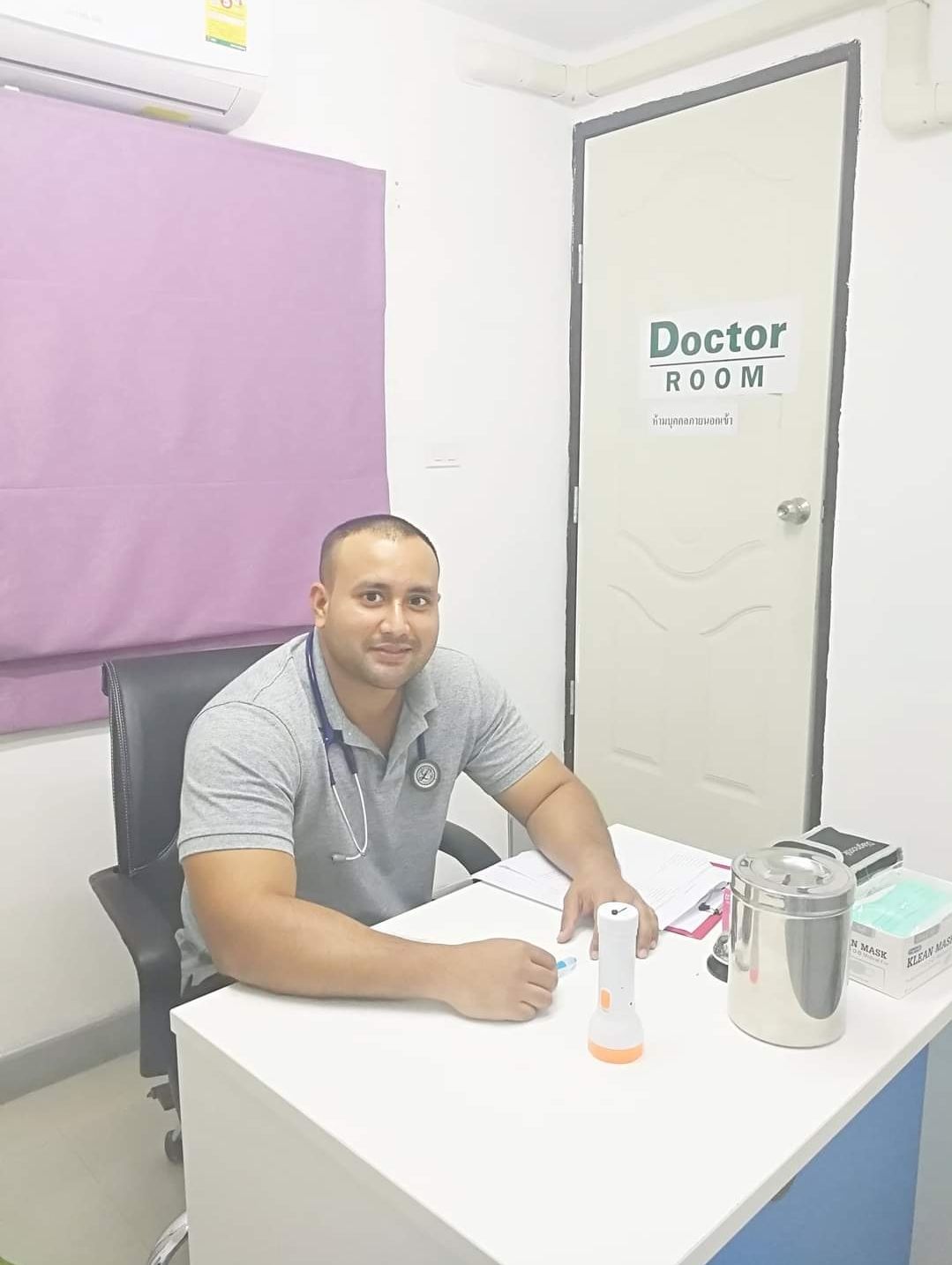
Dr. Ponlawat Pitsuwan is a physician at Doctor Bangkok, a private clinic in central Bangkok. He sees expats, residents, and medical tourists for general medicine, wellness consultations, and IV therapy. His focus is straightforward, evidence-based care delivered in plain language.