
Clinically reviewed by Dr. Ponlawat Pitsuwan, Physician, Doctor Bangkok. Last reviewed: September 2026
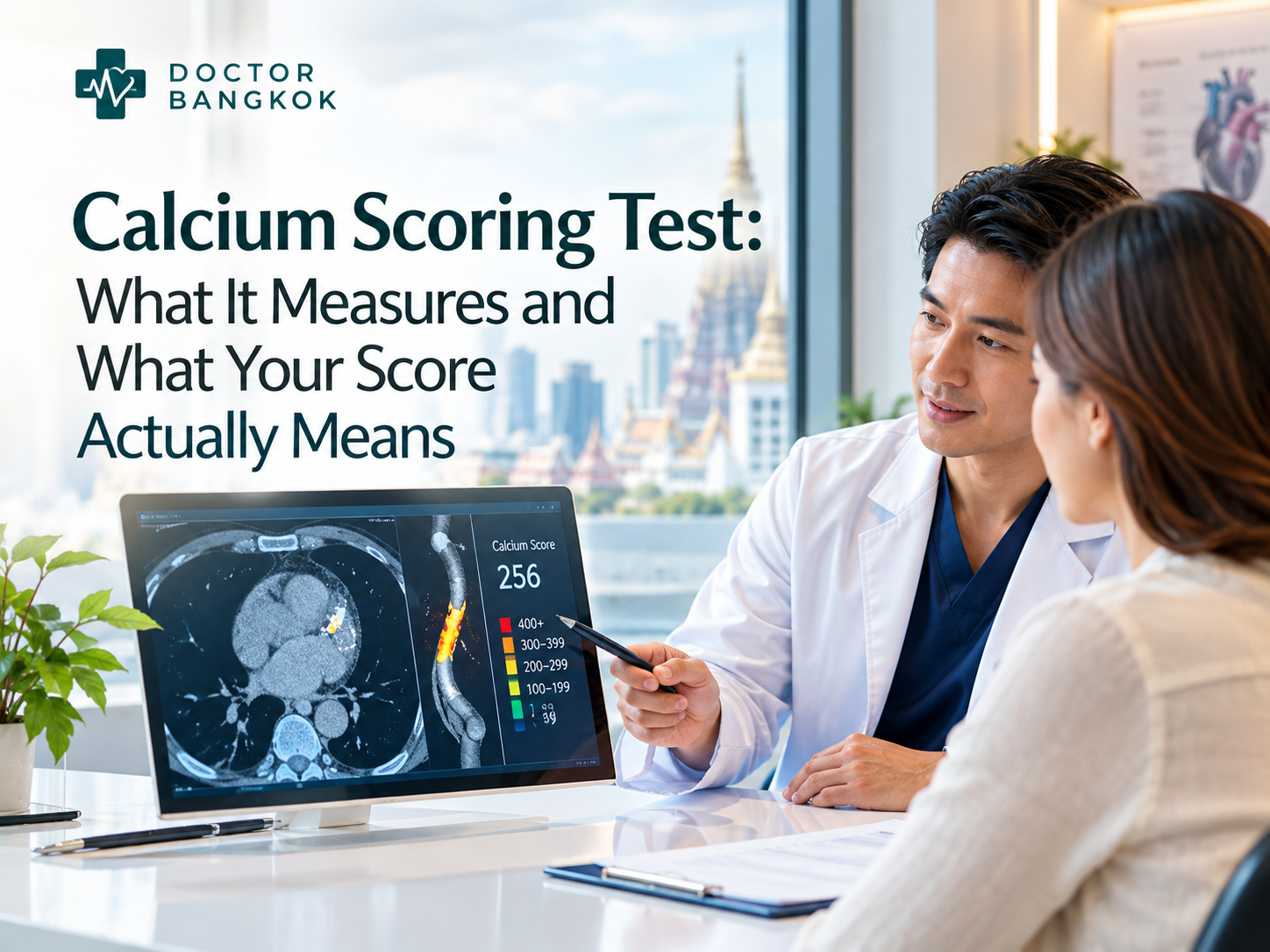
A calcium scoring test is a low-dose CT scan that measures calcified plaque in your coronary arteries and gives you a single number, your Agatston score, that reflects your heart attack risk. A score of zero suggests low short-term risk. A score above 100 usually means it is time to act. The result only tells part of the story, so it should always be reviewed by a doctor alongside your full health history.
A lot of patients arrive with a printout from a radiology centre, a number on a page, and no idea what to do with it. They had the scan done during a health check, a colleague recommended it, or they just turned 45 and decided it was time. The test takes about ten minutes. The confusion afterwards is what brings them in.
The calcium scoring test, sometimes called a coronary artery calcium or CAC scan, is one of the most useful non-invasive heart screening tools available. No injections, no needles, no hospital stay. If you carry risk factors like high cholesterol, high blood pressure, a family history of heart disease, or a history of smoking, this test can tell you something a routine blood panel cannot. Getting the result explained properly, in context, in English, is what most expats in Bangkok are missing.

What a Calcium Scoring Test Actually Measures
The scan picks up calcium deposits in the walls of your coronary arteries. These deposits form when plaque, the fatty buildup that narrows arteries over time, starts to harden. The more calcium found, the more established the process.
Your result is expressed as an Agatston score. Zero means no calcification was detected. Above zero, the number rises with the extent of the buildup. Above 400, the burden is considered severe. These are broad categories, and they matter, but the raw number is only the starting point.
What the Score Ranges Mean in Practice
| Agatston Score | What It Generally Suggests |
|---|---|
| 0 | No calcified plaque detected. Low short-term risk. |
| 1 to 99 | Mild calcification. Moderate risk. Lifestyle review recommended. |
| 100 to 399 | Moderate to significant calcification. Active risk management usually needed. |
| 400 or above | Extensive calcification. High cardiovascular risk. Cardiology review warranted. |
One thing most radiology reports leave out is percentile rank. A score of 50 means something very different for a 42-year-old woman than for a 65-year-old man. Your score is compared against people of the same age and sex. If yours sits in the 90th percentile for your group, that is a stronger signal than the raw number alone suggests.
What the Calcium Scoring Test Can and Cannot Tell You
This is the part that gets left out almost everywhere. The CAC scan detects calcified plaque. It does not detect soft, non-calcified plaque, which is the newer, less stable type that can rupture and cause a heart attack even when the calcium score is zero.
A score of zero is genuinely reassuring. It is not a guarantee. I tell patients this not to alarm them, but to make sure the result is used correctly. A zero score still needs to sit alongside your cholesterol numbers, blood pressure, family history, and lifestyle.
The test also does not show whether an artery is blocked, how narrowed it is, or whether blood flow is reduced. The CAC scan is a screening tool for people without symptoms, not a test for someone already having chest pain. For those questions, different imaging is needed.

Who Should Consider Getting a Calcium Scoring Test
The test is designed for people in a grey zone. If your 10-year cardiovascular risk is clearly low, the scan will not change anything. If you already have established heart disease, you do not need this test to know you are at risk.
The sweet spot is what clinicians call intermediate risk. Someone whose standard risk calculations put them in a range where the decision to start medication or make significant lifestyle changes is genuinely uncertain. The calcium score helps tip that decision one way or the other.
In practice, I most often recommend this test for patients in their 40s to 60s with one or more of the following: high LDL cholesterol that has not fully responded to lifestyle changes, a strong family history of heart attacks, borderline-controlled blood pressure, or a long history of smoking. If you are not sure whether that describes you, a general health consultation is the right first step.
What to Expect During the Scan
The scan is done at a radiology centre or hospital imaging unit in Bangkok, not at the clinic itself. Preparation is simple: no caffeine and no smoking for at least four hours beforehand. No contrast dye is injected. You lie on a table, the scanner takes images over a few minutes, and you are done.
The radiation dose is low, roughly comparable to a mammogram, though this varies by machine and protocol. It is not zero, which is one reason the test should not be repeated unnecessarily or used as a casual annual check.
Results come back as a radiology report. It gives you the score. What it usually does not give you is a clinical plan.
Does Taking Statins Affect Your Calcium Score
Yes, and this surprises nearly every patient who asks. Statins are effective at reducing cardiovascular events, and there is good evidence they benefit high-risk patients. But over time, they can cause soft plaque to calcify and stabilise. This means a CAC score can rise in someone on long-term statin therapy even while their actual heart attack risk is falling.
A rising score in someone on long-term statin treatment does not automatically mean things are getting worse. It may mean the medication is doing its job. Interpreting this correctly requires knowing your medication history, your baseline score, and how long you have been treated.
If you are already on a statin and considering this test, mention it to your doctor before the scan. The result will need context that a radiology report alone will not provide.
Understanding Your Calcium Score Results and What Happens Next
Getting the number is step one. Knowing what to do with it is step two, and this is where the process often breaks down for expats in Bangkok.
A score above 100 typically prompts a conversation about statin therapy if you are not already on one, and a stricter LDL cholesterol target. A score above 400 usually means referral to a cardiologist for further assessment. A score between 1 and 99 sits in a range where lifestyle modification is the priority and the decision about medication is more nuanced.
At Doctor Bangkok, we review these results in full: your scan report alongside your blood pressure, lipid panel, weight, family history, and current medications. The goal is a plan you can actually follow, not a number handed back with a brochure.
Calcium Scoring Compared to Other Heart Checks in Bangkok
| Test | What It Detects | Best For | Limitations |
|---|---|---|---|
| Calcium scoring (CAC) | Calcified coronary plaque | Asymptomatic intermediate-risk screening | Misses soft plaque; no functional data |
| Resting ECG | Heart rhythm and electrical activity | Detecting arrhythmia or prior heart attack | Does not show artery disease in most cases |
| Exercise stress test | Heart function under physical stress | Patients with possible symptoms on exertion | Less useful for asymptomatic screening |
| Lipid panel (blood test) | Cholesterol and triglyceride levels | Baseline cardiovascular risk assessment | Does not show arterial disease directly |
| CT coronary angiogram | Artery narrowing and plaque type | Patients with symptoms or high-risk scores | Higher radiation; contrast dye required |
These tests are not competing. They answer different questions. A good cardiovascular screening approach often uses more than one, depending on your age, symptoms, and risk profile. A health consultation helps you decide which ones are worth doing and in what order.
Getting Your Calcium Score Explained in English in Bangkok
This is the gap I hear about constantly. A patient has a scan at a hospital. They get a Thai-language report or a one-page English summary with a score and a normal range table. No doctor sits down with them. No one asks about family history or current medications. They leave with a number and a vague sense of worry.
Doctor Bangkok is a general practice, not a radiology centre. English-speaking physicians review test results in the context of your full clinical picture. If you have had a calcium scoring test and are not sure what the result means for you specifically, that is exactly the kind of consultation we handle every day. No referral needed.
Trying to make sense of a calcium score result? Doctor Bangkok offers English-language cardiovascular risk consultations, health checks, and coordination of specialist referrals for expats and medical tourists in central Bangkok. Walk in or book ahead. Our physicians review results in context, not in isolation. Visit doctorbangkok.co.th or contact us directly to arrange a consultation.
Frequently Asked Questions
Dr. Ponlawat Pitsuwan
Physician, Doctor Bangkok
a private medical clinic in central Bangkok. He sees expats, residents, and medical tourists for cardiovascular risk assessment, health checks, general medical consultations, and coordination of specialist care. His focus is straightforward, evidence-based medicine delivered in plain language.
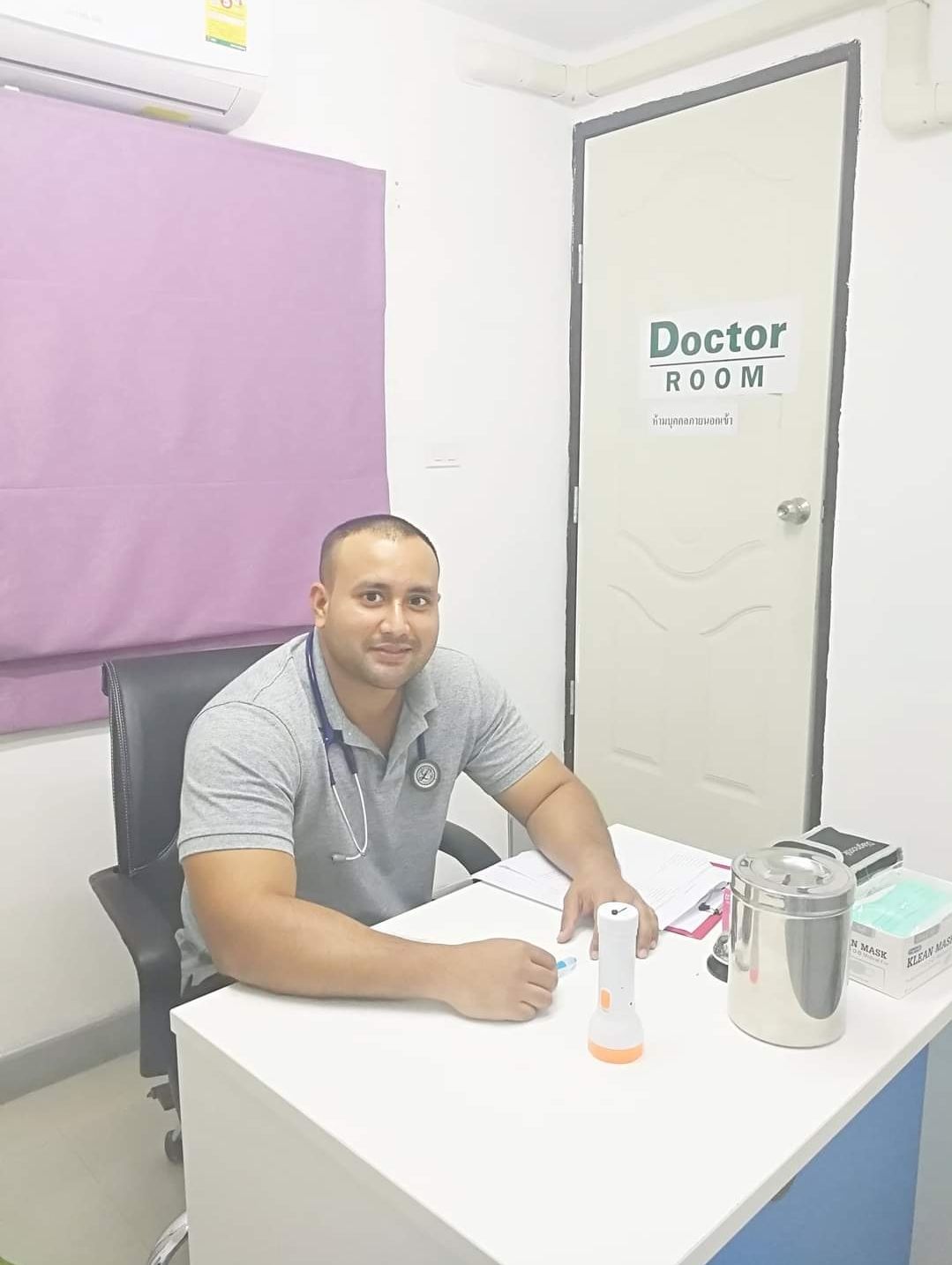
Dr. Ponlawat Pitsuwan is a physician at Doctor Bangkok, a private clinic in central Bangkok. He sees expats, residents, and medical tourists for general medicine, wellness consultations, and IV therapy. His focus is straightforward, evidence-based care delivered in plain language.