
Clinically reviewed by Dr. Ponlawat Pitsuwan, Physician, Doctor Bangkok.
Last reviewed: July 2026
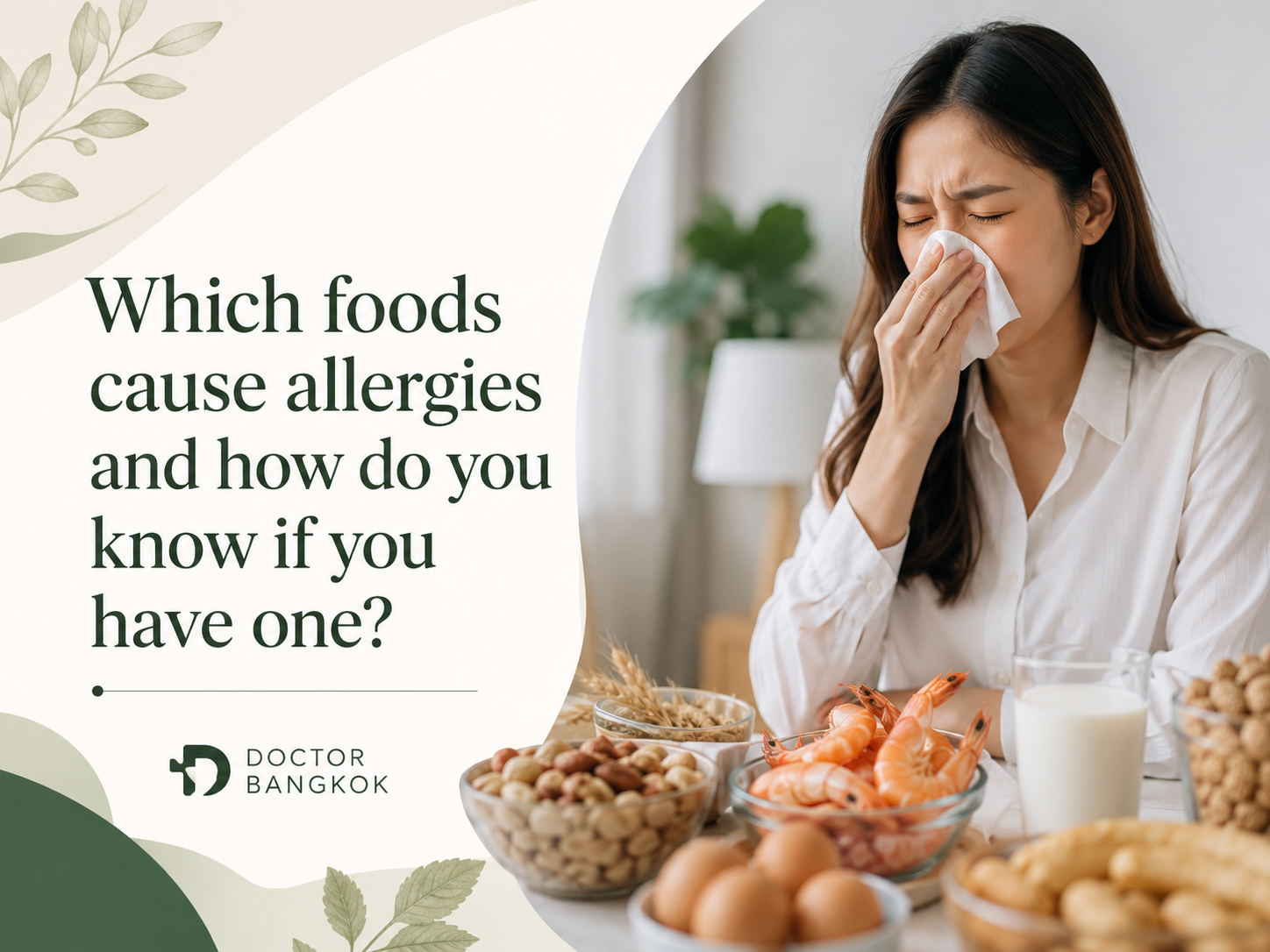
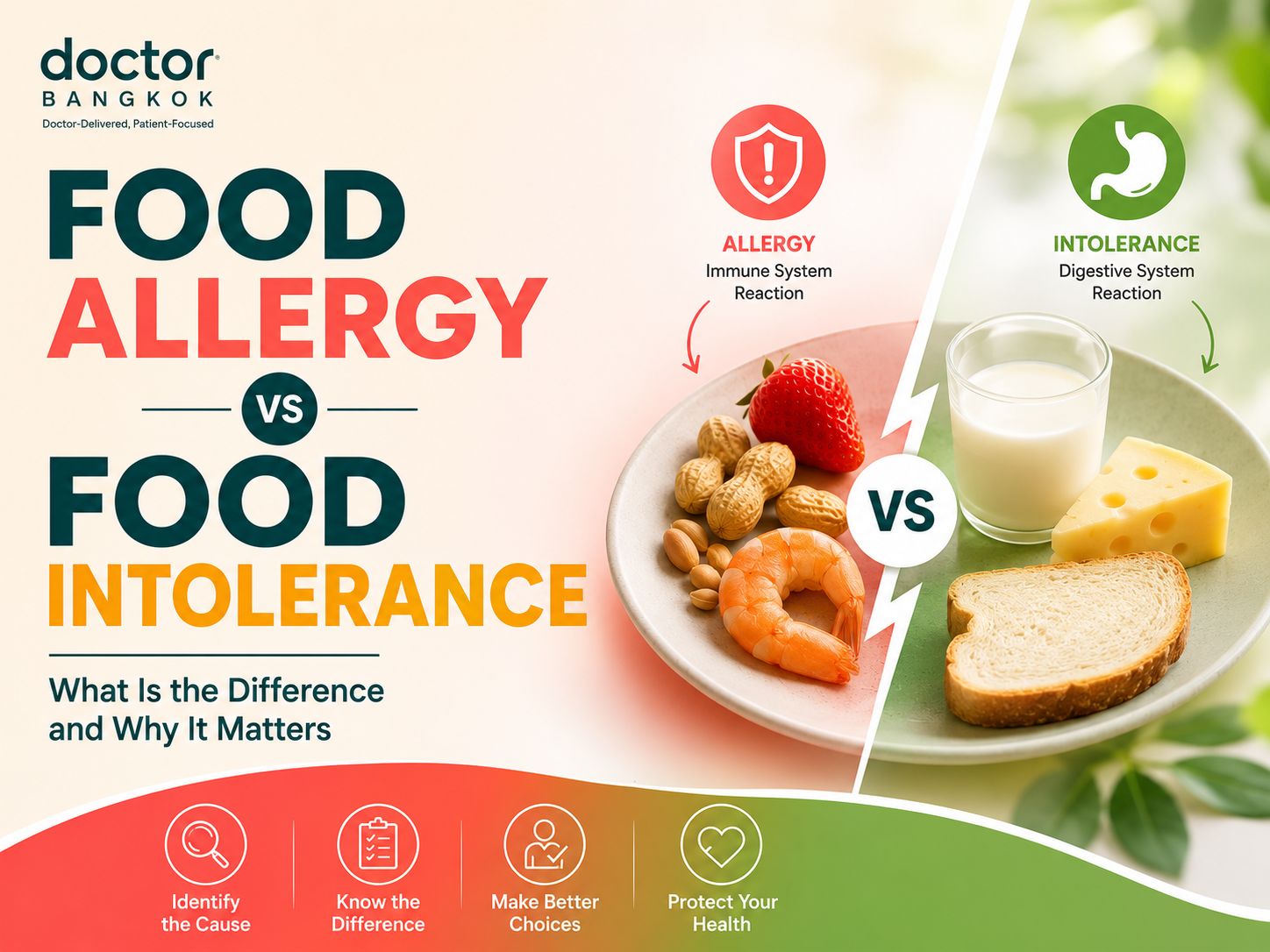
A food allergy triggers your immune system and can cause serious reactions within minutes, including anaphylaxis. A food intolerance is a digestive issue that causes discomfort but is not life-threatening. The two conditions need different tests and different management. Getting the right diagnosis matters more than most people realise.
You ate something in Bangkok and now you feel terrible. Maybe it was the pad thai, the green curry, or something from a street stall. You have hives, a bloated stomach, or you just feel off in a way you cannot quite explain. The question most people ask me at this point is: is this an allergy or just my stomach being sensitive?
It is a reasonable question, and the answer changes what you should do next. Food allergy and food intolerance are not the same condition. One can send you to hospital. The other will make you miserable but will not. If you are living in or visiting Bangkok, where eating out is unavoidable and Thai food contains some of the most common allergens in the world, knowing which one you are dealing with is genuinely important.

How a Food Allergy Feels and Why It Matters
A food allergy is an immune system reaction. Your body mistakes a food protein for a threat and launches a defence. The next time you eat that food, it reacts fast. Symptoms usually start within minutes, sometimes up to two hours after eating.
Those symptoms can include hives, swelling, vomiting, or in serious cases, anaphylaxis. Anaphylaxis means throat swelling, a sudden drop in blood pressure, and difficulty breathing. It is a medical emergency. Even a very small amount of the food can trigger a full reaction. There is no safe small dose, and that is what makes a true food allergy so much more dangerous than intolerance.
How Food Intolerance Is Different
Food intolerance has nothing to do with your immune system. It is a digestive problem. Your gut cannot properly break down a certain food or ingredient. Lactose intolerance is the most common example: your body does not make enough of the enzyme needed to process milk sugar.
Symptoms are almost always digestive. Bloating, gas, diarrhoea, stomach cramps, sometimes headaches or fatigue. Unpleasant, but not dangerous in the way an allergy is. Timing is what makes intolerance hard to spot. Symptoms can show up 12 to 72 hours after eating. You ate something on Tuesday and feel terrible on Wednesday. Most people never connect the two.
Dose matters with intolerance too. A small amount of the trigger food might cause no problem at all. It is only when you eat more that symptoms appear. This is one reason intolerance is much harder to pin down without a proper clinical assessment.

The Symptoms Side by Side
| Food Allergy | Food Intolerance | |
|---|---|---|
| Immune system involved? | Yes | No |
| Onset of symptoms | Minutes to 2 hours | Hours to 3 days |
| Small amounts dangerous? | Yes | Usually not |
| Can be life-threatening? | Yes (anaphylaxis) | No |
| Common symptoms | Hives, swelling, vomiting, breathing difficulty | Bloating, gas, cramps, diarrhoea, fatigue |
The Grey Area: Conditions That Sit Between Both
Some conditions do not fit neatly into either category. Celiac disease is a good example. It is an immune response to gluten, but it does not involve IgE antibodies and does not cause anaphylaxis. It damages the lining of the small intestine over time. It is not a classic allergy and not a simple intolerance. It needs its own diagnosis and its own management.
Non-celiac gluten sensitivity is different again. People feel genuinely unwell after eating gluten but test negative for both celiac disease and wheat allergy. Their symptoms are real, the mechanism is less clear, and there is no single definitive test that confirms it.
Histamine intolerance is another one I see in the clinic. People react to foods naturally high in histamine, like aged cheese, wine, fermented foods, or certain fish. The symptoms look a lot like an allergy, which causes real confusion. It is not an allergy, but it does mean certain foods need to be limited. If you assume you have a simple intolerance when you actually have celiac disease, you will keep damaging your gut without knowing it.
Thai Food and Why Bangkok Is a Particular Challenge
This is something I raise with almost every expat who comes in with food symptoms. Thai food is one of the most flavour-layered cuisines in the world, and that layering hides a lot of common allergens.
Peanuts are in curries, satay sauces, and salads, sometimes in places you would not expect. Shellfish is a base ingredient in many sauces and pastes. Fish sauce goes into almost everything, including dishes that do not taste like fish at all. Sesame appears in stir-fries and dipping sauces without always being listed.
Street food carries extra risk because ingredients are not labelled and shared woks mean cross-contact is very common. You might order a vegetable dish and it gets cooked in the same pan that just had prawns in it. If you have a confirmed prawn allergy, that is enough to trigger a reaction. If you have a known allergy, carrying a Thai-language allergy card that lists your specific allergens is one of the most practical things you can do in Bangkok.
Why Guessing Gets People into Trouble
The biggest mistake I see is people deciding their reaction is probably just an intolerance and carrying on without getting tested. Sometimes they are right. Sometimes they are managing a true allergy with antacids and hoping for the best.
If you have a true allergy and do not know it, every meal in Bangkok is a risk. You might have had mild reactions and assume you are tolerating things reasonably well. But allergic reactions can escalate. A reaction that caused hives last time can cause throat swelling next time.
On the other side, some people assume they have a dangerous allergy when they actually have an intolerance. They cut out entire food groups, feel anxious every time they eat out, and live with restriction they do not need. Getting properly assessed gives you the right answer, and that changes what you eat, how you travel, and whether you need to carry emergency medication.
How Food Allergies and Intolerances Are Diagnosed
Diagnosis starts with a proper clinical history. When did symptoms appear? What did you eat? How severe were they? This conversation alone narrows things down before any test is ordered.
For suspected food allergy, the most clinically validated tests are a skin prick test and a blood test measuring IgE antibodies to specific foods. If results are positive and the history fits, we can be fairly confident about the diagnosis. In some cases, an oral food challenge is used under medical supervision.
IgG food intolerance testing is widely marketed in Bangkok. I want to be straightforward about this: IgG testing is not endorsed by major allergy bodies as a reliable standalone diagnostic tool for food intolerance. A positive IgG result means your body has been exposed to that food, not that it is causing your symptoms. At Doctor Bangkok, we give you an honest assessment of what each test can and cannot tell you, so you leave with information that actually helps.
Elimination diets, where you remove a suspected food and then reintroduce it in a controlled way, are often the most useful tool for diagnosing intolerance. Done with guidance, they give you clear information. Done without guidance, they often lead to unnecessary restriction or missed triggers.
What to Do If You Have a Severe Reaction in Bangkok
If someone develops symptoms of anaphylaxis after eating, such as throat tightening, severe swelling, difficulty breathing, or sudden dizziness, this is an emergency. Call 1669, Thailand’s emergency services number, or go immediately to the nearest hospital emergency department.
Epinephrine auto-injectors, known as EpiPens in many countries, are not reliably available over the counter at Thai pharmacies. If you have a known serious food allergy and your home doctor has prescribed one, bring it with you to Thailand. Do not assume you can get one here quickly when you need it. If you are not sure whether what you experienced was anaphylaxis or something less serious, come in and get checked. It is always worth it.
Getting Assessed at Doctor Bangkok
If you are not sure whether you are dealing with an allergy or an intolerance, a straightforward consultation is the right starting point. At Doctor Bangkok, we see this regularly, especially from expats and visitors who have been reacting to Thai food and are not sure what is happening.
During your appointment, we take a detailed history, review which tests are appropriate for your situation, and explain what the results actually mean. We do not hand you a panel printout. We help you understand whether you need to avoid a food entirely, whether you can tolerate small amounts, and whether you need to carry emergency medication. You can find out more about our approach on our allergy treatment and assessment page. We are BTS accessible in central Bangkok and English-speaking doctors are available.
Reacting to food in Bangkok and not sure if it is an allergy or intolerance? Doctor Bangkok offers food allergy consultations with English-speaking physicians in central Bangkok. We help you get the right diagnosis and a clear plan, not just a test result. Visit our allergy treatment page to find out more or book an appointment.
Frequently Asked Questions
Can I have both a food allergy and a food intolerance at the same time?
Yes, they are completely separate conditions. You can have a true allergy to shellfish and also have lactose intolerance at the same time. This is one reason self-diagnosis is unreliable. A clinical evaluation helps sort out what is actually going on.
How quickly do symptoms appear with a food allergy compared to a food intolerance?
Allergic reactions typically start within minutes of eating and almost always within two hours. Intolerance symptoms are usually delayed, sometimes 12 to 72 hours after eating. That timing difference is one of the most useful clues when I am taking a patient history.
Is it safe to eat Thai street food if I have a food allergy?
It depends on your allergen and how severe your allergy is. Thai street food carries real risks: shared cooking surfaces, hidden peanuts and shellfish in sauces, and fish sauce in dishes that do not taste like fish. If you have a confirmed food allergy, carry a Thai-language allergy card and always have an action plan ready.
What is the difference between an IgE test and an IgG food test?
An IgE blood test is the clinically validated way to test for true food allergy. An IgG test, which is widely sold in Bangkok, measures food exposure rather than allergy and is not endorsed by major allergy bodies as a reliable diagnostic tool. At Doctor Bangkok, we explain exactly what each test measures before recommending anything.
What should I do if I have a severe allergic reaction in Bangkok?
Call 1669 or go immediately to the nearest hospital emergency department. Do not wait to see if it improves on its own. If you have a known serious allergy, bring your epinephrine auto-injector from home, because EpiPens are not reliably available over the counter in Thailand.
Is gluten intolerance the same as a gluten allergy?
No. A wheat allergy is a true IgE-mediated immune reaction. Celiac disease is an immune response to gluten but does not involve IgE and does not cause anaphylaxis. Non-celiac gluten sensitivity is a separate condition where people react to gluten without testing positive for either. Each needs a different approach and different management.
Can food intolerance get worse over time?
It can. Some people find symptoms increase as their overall intake of a trigger food builds up over time. Stress and gut health can also make symptoms more pronounced. If your reactions are changing or getting more frequent, it is worth getting assessed rather than continuing to manage it on your own.
Dr. Ponlawat Pitsuwan
Physician, Doctor Bangkok
a private medical clinic in central Bangkok. He sees expats, residents, and medical tourists for food allergy assessment, intolerance evaluation, and general medical consultations. His focus is straightforward, evidence-based care delivered in plain language.
Dr. Ponlawat Pitsuwan is a physician at Doctor Bangkok, a private clinic in central Bangkok. He sees expats, residents, and medical tourists for general medicine, wellness consultations, and IV therapy. His focus is straightforward, evidence-based care delivered in plain language.