
Clinically reviewed by Dr. Ponlawat Pitsuwan, Physician, Doctor Bangkok.
Last reviewed: November 2026
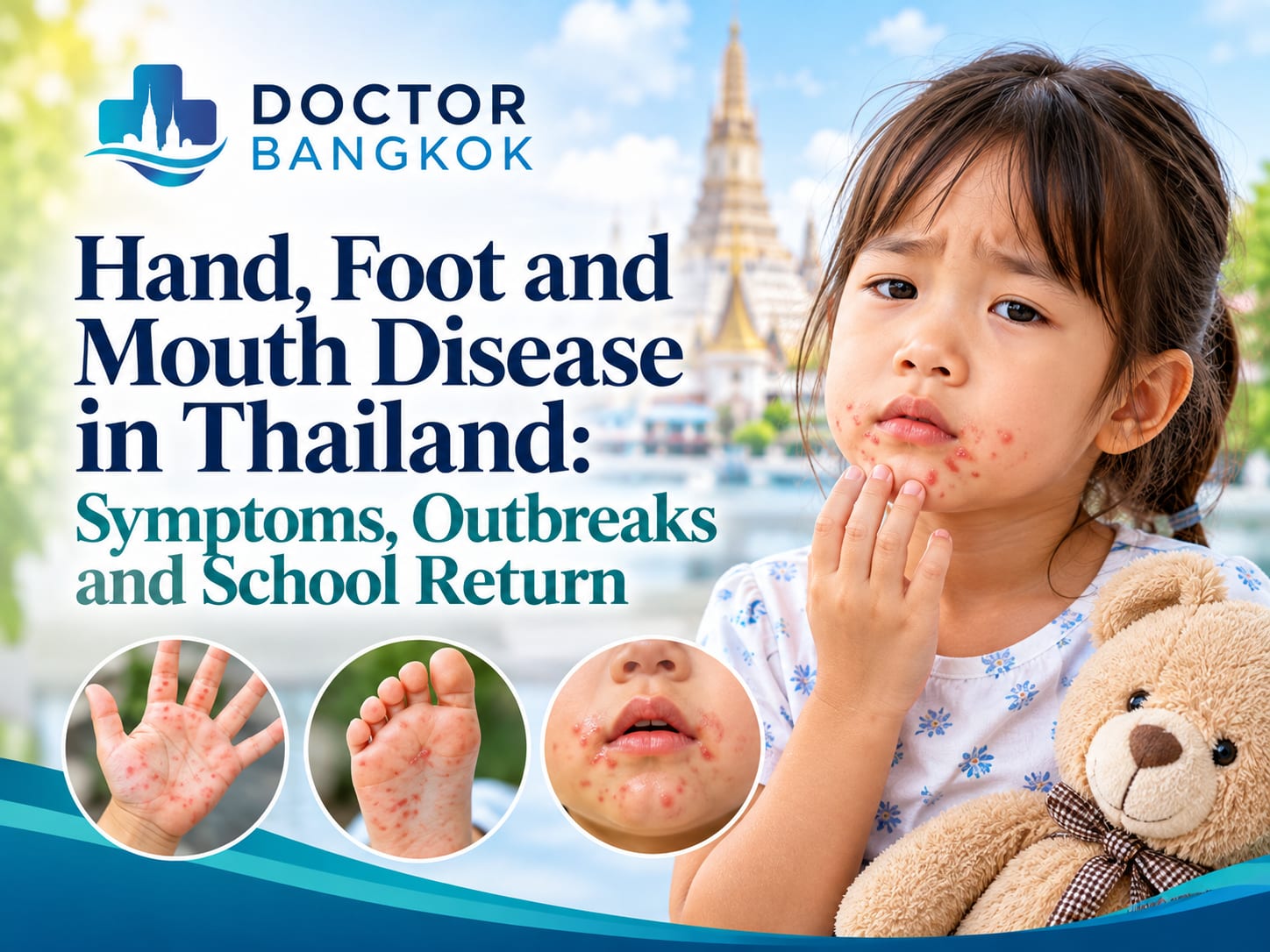
Hand, foot and mouth disease (HFMD) is a viral illness that spreads quickly through Bangkok’s schools and nurseries. Symptoms include fever, painful mouth sores, and blisters on the palms and soles. There is no antiviral treatment. Management focuses on fluids, fever relief, and watching for warning signs that the illness has become serious.
Your child woke up with a fever, refused breakfast, and now there are blisters forming on their hands. If you are an expat parent in Bangkok, that combination sends most people straight to Google at 6am. Most cases of hand, foot and mouth disease resolve on their own within 7 to 10 days. What matters is knowing which signs mean you need a doctor today, not tomorrow.
Bangkok’s Department of Disease Control records significant HFMD case numbers each year, with transmission peaking during the rainy season from May through September and around school reopening periods. If your child is in a Bangkok nursery, pre-school, or international school, this is not a remote possibility.
What Causes Hand, Foot and Mouth Disease
HFMD is caused by enteroviruses, most often Coxsackievirus A16 or Enterovirus 71 (EV71). Both spread through direct contact with an infected person’s saliva, blister fluid, or stool. Children pick it up at school, at the pool, on shared toys, and anywhere small hands are touching the same surfaces.
The virus can survive on hard surfaces for days. Soap and water handwashing removes it more reliably than alcohol gel, which is worth knowing when you are packing a toddler’s bag for school. The hand-to-mouth route after a nappy change is a common path in younger children.
Bangkok’s rainy season from May through September drives the biggest spikes in cases. School reopening in May and again after the summer break amplifies transmission. The pattern repeats annually.
Spotting HFMD Symptoms Early
Fever usually comes first. Within one to two days, painful sores appear inside the mouth, on the tongue, and on the gums. These are the sores that make children refuse to eat and drink.
The rash follows: flat or raised spots, sometimes becoming blisters, on the palms of the hands and the soles of the feet, and sometimes the buttocks and knees. The rash is not usually itchy. Mouth ulcers are painful; the skin blisters tend to be less so.
Most children are unwell for about a week. Children under five are affected most severely, though older children and adults can catch it too. The time from contact to first symptoms is usually three to seven days.

EV71 Warning Signs That Need Urgent Attention
Coxsackievirus A16 almost always causes mild illness. EV71 is different. It carries a small but real risk of neurological complications, including encephalitis and, in severe cases, brainstem involvement.
Watch for these red flags: persistent high fever lasting more than three days, sudden jerking or twitching of the arms and legs, unusual drowsiness or difficulty waking, and rapid or laboured breathing. These are not signs to manage at home.
If any of these appear, your child needs hospital assessment the same day. Paediatric hospitals including Samitivej, Bumrungrad, and Bangkok Hospital have the facilities for children with EV71 complications. If you are not sure whether what you are seeing counts as a warning sign, Doctor Bangkok’s doctor-on-call service can assess your child at your home or condo within one hour.
Treatment and Fluids: What You Can Do and When to Escalate
There is no antiviral medication for HFMD. Treatment is supportive: managing fever with paracetamol or ibuprofen at the right dose for your child’s weight, keeping the mouth clean, and above all, keeping your child hydrated. Ibuprofen should not be given to infants under three months of age or to children with kidney problems or certain other conditions; check with a doctor if you are unsure.
Hydration is where most cases go wrong. Mouth sores make swallowing painful, so children stop drinking. Cold fluids help: chilled water, diluted juice, ice lollies, and oral rehydration solution sachets dissolved in water all make swallowing more tolerable.
If your child has not urinated in six or more hours, has dry lips, produces no tears when crying, or seems unusually drowsy, they are likely dehydrated and need assessment. At that point, oral rehydration alone may not be enough. IV rehydration restores fluids and electrolytes quickly when oral intake has failed.
Doctor Bangkok offers IV drip therapy at our clinic on Sukhumvit Soi 13. Our doctor-on-call service can also attend your home, hotel, or condo within one hour to assess dehydration and administer an IV drip on-site if needed. You can also walk in any time to our 24-hour walk-in clinic in Sukhumvit for a same-day assessment.
Returning to School After Hand, Foot and Mouth Disease
This is the question every Bangkok parent asks: when can they go back?
The standard used by Bangkok international schools aligns with clinical guidance: your child should be fever-free, all blisters should be dry and crusted over, and there should be no open sores in the mouth. This typically takes 7 to 10 days from symptom onset, but it varies.
Most Bangkok international schools require a physician-signed medical certificate before a child returns. Doctor Bangkok issues same-day medical certificates signed by a physician, whether you come to the clinic or we come to you.
Do not send a child back because the rash has faded. The virus continues to shed in stool for several weeks after the skin has healed. Handwashing after every nappy change or toilet visit matters for that entire period.
Adults Catching HFMD in Bangkok
Adults can and do catch HFMD, particularly parents and caregivers in close contact with an infected child. Symptoms in adults are often milder: a few mouth sores, a faint rash on the hands, low-grade fever, or no symptoms at all.
Some adults feel genuinely unwell, with significant mouth ulcers, fatigue, and blistering that makes walking or eating uncomfortable. Immunocompromised adults face a higher risk of a more difficult illness.
If you work in childcare, international schools, or hospitality in Bangkok and develop these symptoms, stay home. HFMD spreads easily in workplaces with shared surfaces, and adults are contagious even when symptoms are mild. Adults with severe symptoms or any of the EV71 warning signs listed above need the same urgent assessment as a child.
The EV71 Vaccine in Bangkok
An EV71 vaccine is available at private clinics and major hospitals in Bangkok, including through Doctor Bangkok’s vaccination service. It is given as a two-dose course.
The vaccine targets EV71 strains specifically. It does not protect against Coxsackievirus A16 or other enteroviruses that cause HFMD. It reduces the risk of severe EV71 disease, particularly neurological complications, rather than eliminating HFMD entirely.
For children under five in Bangkok, especially during the rainy season and school year, it is worth discussing timing with a doctor. Getting vaccinated before the May to September peak period makes practical sense.
Seeing warning signs or not drinking? Doctor Bangkok is open 24 hours a day, seven days a week, with no appointment needed. Walk in to our clinic on Sukhumvit Soi 13 or use our doctor-on-call service: a physician comes to your hotel, home, or condo anywhere in Bangkok within one hour. We assess dehydration, administer IV fluids on-site if needed, and issue physician-signed medical certificates for school return. Contact us any time.
Frequently Asked Questions
Dr. Ponlawat Pitsuwan
Physician, Doctor Bangkok
a private medical clinic in central Bangkok, open 24 hours a day, seven days a week. The clinic operates a doctor-on-call service that attends your hotel, home, or condo within one hour. Dr. Pitsuwan sees expats, residents, and medical tourists for paediatric illness, fever assessment, infectious disease, and general medical consultations, with a focus on evidence-based care delivered in plain language.
References
- Centers for Disease Control and Prevention. Hand, Foot, and Mouth Disease (HFMD). CDC, 2024.
- World Health Organization. Hand, foot and mouth disease. WHO Western Pacific.
- NHS UK. Hand, foot and mouth disease. NHS, 2023.
- CDC Yellow Book 2024. Hand, Foot, and Mouth Disease. Centers for Disease Control and Prevention, 2024.
- Victorian Government. Hand, foot and mouth disease. Health.vic, 2023.
The information in this article is for educational purposes only and does not constitute medical advice. It should not be used to self-diagnose or replace a consultation with a qualified physician. If you have concerns about your health, contact a licensed medical professional. For appointments at Doctor Bangkok, visit doctorbangkok.co.th.
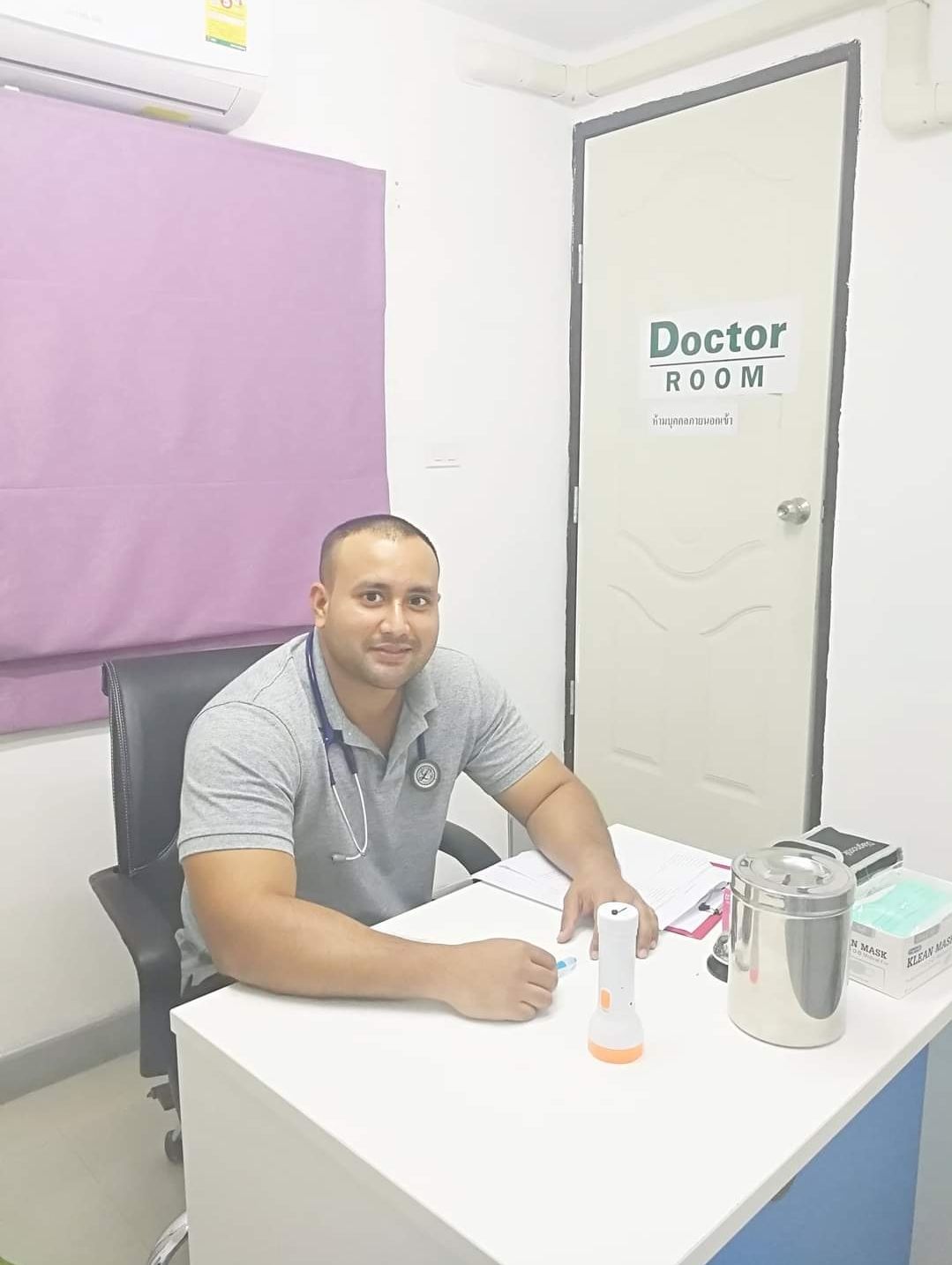
Dr. Ponlawat Pitsuwan is a physician at Doctor Bangkok, a private clinic in central Bangkok. He sees expats, residents, and medical tourists for general medicine, wellness consultations, and IV therapy. His focus is straightforward, evidence-based care delivered in plain language.