
Clinically reviewed by Dr. Ponlawat Pitsuwan, Physician, Doctor Bangkok.
Last reviewed: November 2026
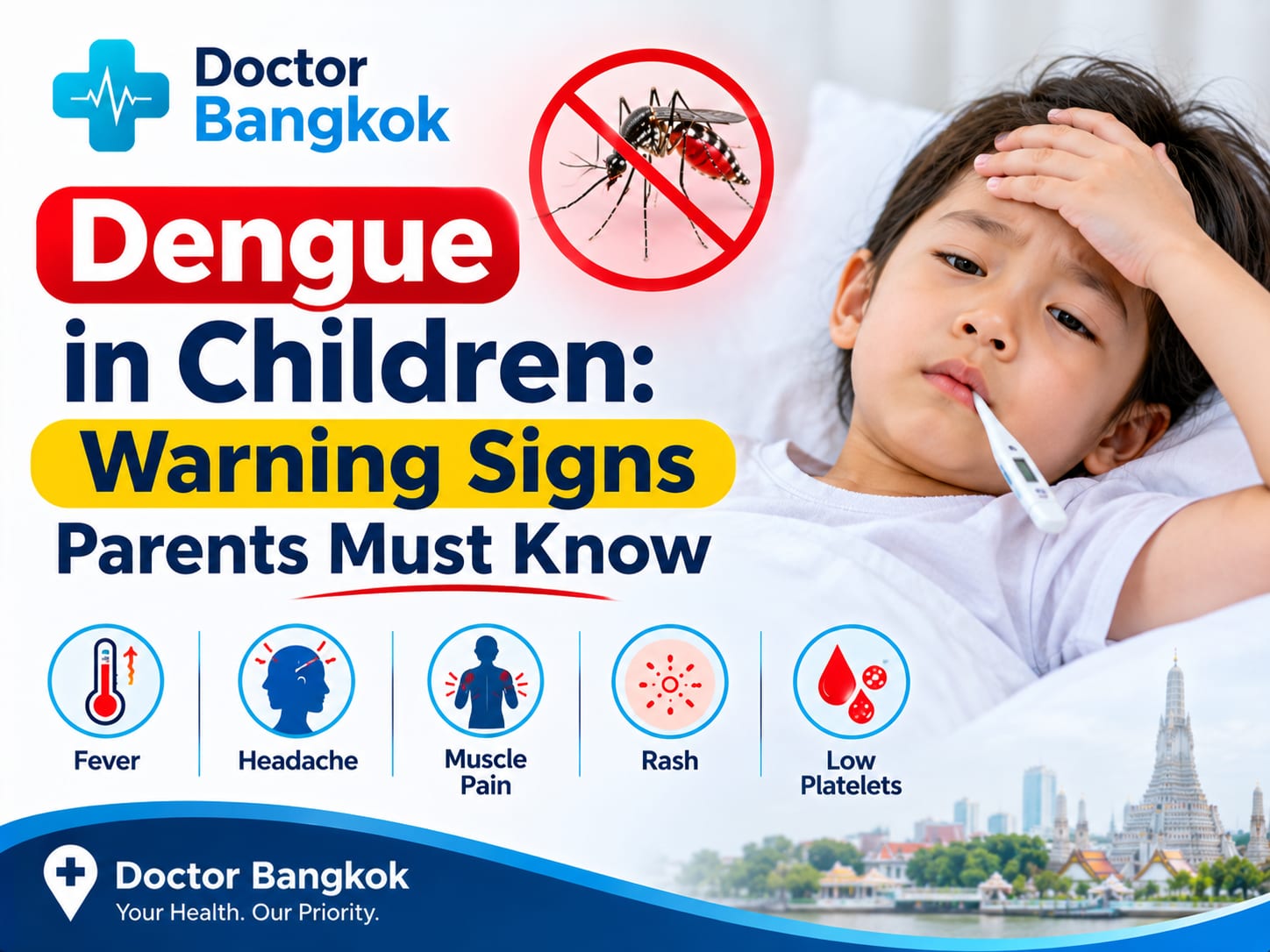
Dengue in children becomes most dangerous not when the fever is highest, but when it breaks. Days 3 to 7 are the critical window. Watch for severe abdominal pain, repeated vomiting, bleeding gums, pale or cold skin, and unusual restlessness or drowsiness. Paracetamol only. No ibuprofen, no aspirin. If any warning sign appears, get medical help the same day.
Your child woke up with a high fever, body aches, and that hollowed-out look that makes every parent’s stomach drop. You Googled. Dengue came up. Now you need to know whether this is serious, what to do tonight, and whether Bangkok’s rainy season actually changes your risk.
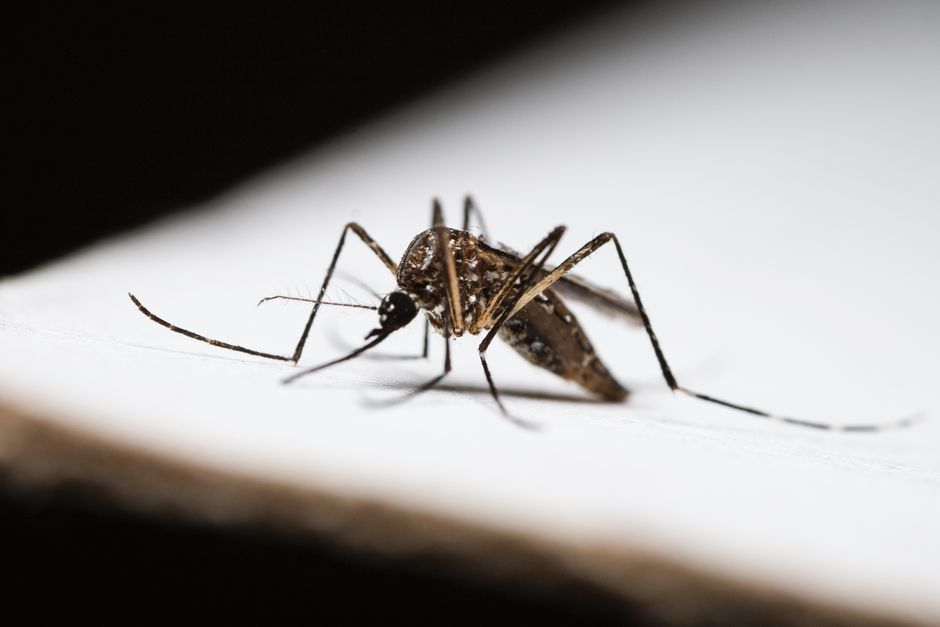
It does. Dengue transmission in Bangkok peaks during the wet season, roughly May through October, though cases circulate year-round. Most children recover without complications if parents know what to watch for and act at the right time. The hard part: the danger shifts as the fever changes, not in the direction most parents expect.
How Dengue Shows Up in Children
Dengue starts like a lot of tropical fevers. Sudden high temperature, headache, pain behind the eyes, muscle and joint aches. In younger children you may also see a rash, usually red and blotchy on the trunk and limbs, appearing a few days in.
The fever is typically high and can swing up and down. Some children vomit early. Infants and toddlers under two are harder to read because they cannot tell you where it hurts. Watch for unusual crying, refusing feeds, or persistent drowsiness.
The first two to three days are the febrile phase. The child feels terrible, but the most dangerous window has not started yet. This is the right time to confirm dengue with a blood test. An NS1 antigen test works best in the first five days of illness and gives a same-day result.
The Critical Phase: What Parents Miss About Dengue in Children
Here is what catches most parents off guard. When the fever drops, usually around day 3 to 5, it feels like recovery. It is not. That temperature drop marks the start of the critical phase. For the next 24 to 48 hours, the illness can cause fluid to shift out of blood vessels into surrounding tissue. In serious cases, this leads to dengue shock syndrome.
During this window, your child’s platelet count is falling and the blood may be thickening with fluid loss. Neither is visible from the outside, which is why a blood count check at this point is clinically important.
The warning signs that something is wrong right now: severe or constant abdominal pain, vomiting more than three times in 24 hours, bleeding from gums or nose, blood in vomit or stool, pale or cold and clammy skin, rapid breathing, extreme restlessness, or difficulty waking your child. Any one of these warrants same-day medical assessment.
Watch more closely once the fever breaks, not less. A falling platelet count combined with any of these symptoms is what your doctor needs to know about. The trend over 24 hours matters more than any single number.

Keeping Your Child Hydrated at Home
Keeping your child well hydrated is the cornerstone of home dengue care. The practical target: your child should urinate at least four to six times per day. If that is not happening, oral intake is not enough.
Oral rehydration salts, available at any Bangkok pharmacy, are the best choice. Plain water, diluted fruit juice, and coconut water are acceptable alternatives. Avoid sugary drinks and anything caffeinated. If your child is nauseous, small frequent sips work better than large volumes.
If your child cannot hold fluids down, is vomiting repeatedly, or urine output drops off, oral rehydration is no longer sufficient. IV fluids will be needed, and you should see a doctor the same day. IV drip therapy is available at Doctor Bangkok’s clinic on Sukhumvit Soi 13 and via home or hotel visit for children stable enough to receive it outside a hospital. A doctor assesses suitability first.
Medicines to Avoid With Dengue
Paracetamol is the only safe fever and pain medicine for dengue. Use it at the dose on the label for your child’s weight. Do not exceed the recommended dosing frequency.
Ibuprofen and aspirin are both contraindicated in dengue. They affect platelet function, which is already under pressure from the virus, and increase the risk of bleeding. This is not a mild caution. It is a firm clinical rule.
If your child was given ibuprofen before dengue was suspected, tell your doctor. The same applies to any NSAID, the class of anti-inflammatory drugs that includes ibuprofen and naproxen. Do not give any herbal or traditional remedy without checking with a doctor first.
Dengue Vaccine Options in Bangkok
Two dengue vaccines are available at private clinics in Bangkok, and they are not interchangeable.
Qdenga (TAK-003) is approved for children aged four and older regardless of prior dengue infection. It is given as two doses, three months apart. For expat children in Bangkok with no documented prior infection, this is currently the more practical option.
Dengvaxia was approved for children aged nine and older who had already had a confirmed dengue infection. Using it in a child who has never been infected carries a higher risk of severe disease if they are later infected. Sanofi discontinued production of Dengvaxia in the third quarter of 2026 due to low global demand, so it is no longer available at private clinics. Qdenga is now the dengue vaccine option available in Bangkok.
Neither vaccine replaces bite prevention. Repellent, long sleeves during peak mosquito hours at dawn and dusk, and screened or air-conditioned rooms all reduce exposure. The travel vaccinations page at Doctor Bangkok covers vaccine scheduling for children in Bangkok.
When to Call a Doctor Versus Go Straight to the ER
This is the question every expat parent in Bangkok eventually asks, often at midnight.
Call a doctor first if your child is in the first two days of illness, has no warning signs, is drinking reasonably well, and is alert. A Doctor Bangkok physician can come to your hotel or condo, run an NS1 antigen test on-site, assess your child clinically, and give you a clear monitoring plan. That is the right first move for uncomplicated early dengue. Families unfamiliar with Bangkok’s hospital system, or those with travel insurance that requires a referral, can find relevant details on the travel insurance clinic page.
Go directly to a hospital emergency department if your child has any warning sign listed above, is under one year old, cannot be woken normally, is showing signs of shock such as cold or mottled skin, or if you cannot reach a doctor within 30 minutes.
Bangkok’s major hospitals with 24-hour paediatric emergency coverage include Bumrungrad International, Bangkok Hospital on New Phetchaburi Road, and Samitivej Sukhumvit. Most accept international insurance directly.
Blood Tests for Dengue: What Your Child Needs and When
Blood testing follows a time-dependent pattern, and getting it right matters.
In the first five days of illness, the NS1 antigen test is the right choice. It detects a protein the virus releases into the blood and gives a same-day result. After day five, if NS1 is negative but dengue is still suspected, IgM and IgG antibody tests become more accurate.
A full blood count, checking platelet count and haematocrit, should be done at the first visit and repeated every 24 hours during the critical phase. A single platelet result is a snapshot. The trend over 24 hours tells you the direction the illness is heading.
Doctor Bangkok can arrange same-day dengue testing and blood count monitoring at the clinic on Sukhumvit Soi 13 or via walk-in appointment. A physician will go through the results with you directly.
Worried your child may have dengue? Doctor Bangkok is open 24 hours a day, every day. A doctor can come to your hotel, condo, or home anywhere in Bangkok within one hour for assessment, NS1 testing, and a clear monitoring plan. For children with warning signs, we can coordinate urgent care. Walk-in appointments are also available at our clinic on Sukhumvit Soi 13. Contact Doctor Bangkok now.
FAQ
Dr. Ponlawat Pitsuwan
Physician, Doctor Bangkok
a private medical clinic in central Bangkok open 24 hours a day, with a doctor-on-call service that reaches your hotel or condo within one hour. He sees expats, residents, and medical tourists for fever assessment, dengue evaluation, paediatric consultations, and general medical care. His focus is straightforward, evidence-based care delivered in plain language.
References
- World Health Organization. Dengue and severe dengue. WHO Fact Sheet, 2024.
- Centers for Disease Control and Prevention. Clinical Features of Dengue. CDC, 2024.
- European Medicines Agency. Qdenga: EPAR product information. EMA.
- Immunization Action Coalition. Ask the Experts: Dengue Vaccine Products. Immunize.org, 2025.
- Ministry of Health Singapore. Discontinuation of Dengvaxia and Ongoing Monitoring of Dengue Vaccines. MOH Singapore, September 2026.
- Chan M, Johansson MA. The Incubation Periods of Dengue Viruses. PLoS ONE 2012;7(11):e50972.
The information in this article is for educational purposes only and does not constitute medical advice. It should not be used to self-diagnose or replace a consultation with a qualified physician. If you have concerns about your health, contact a licensed medical professional. For appointments at Doctor Bangkok, visit doctorbangkok.co.th.
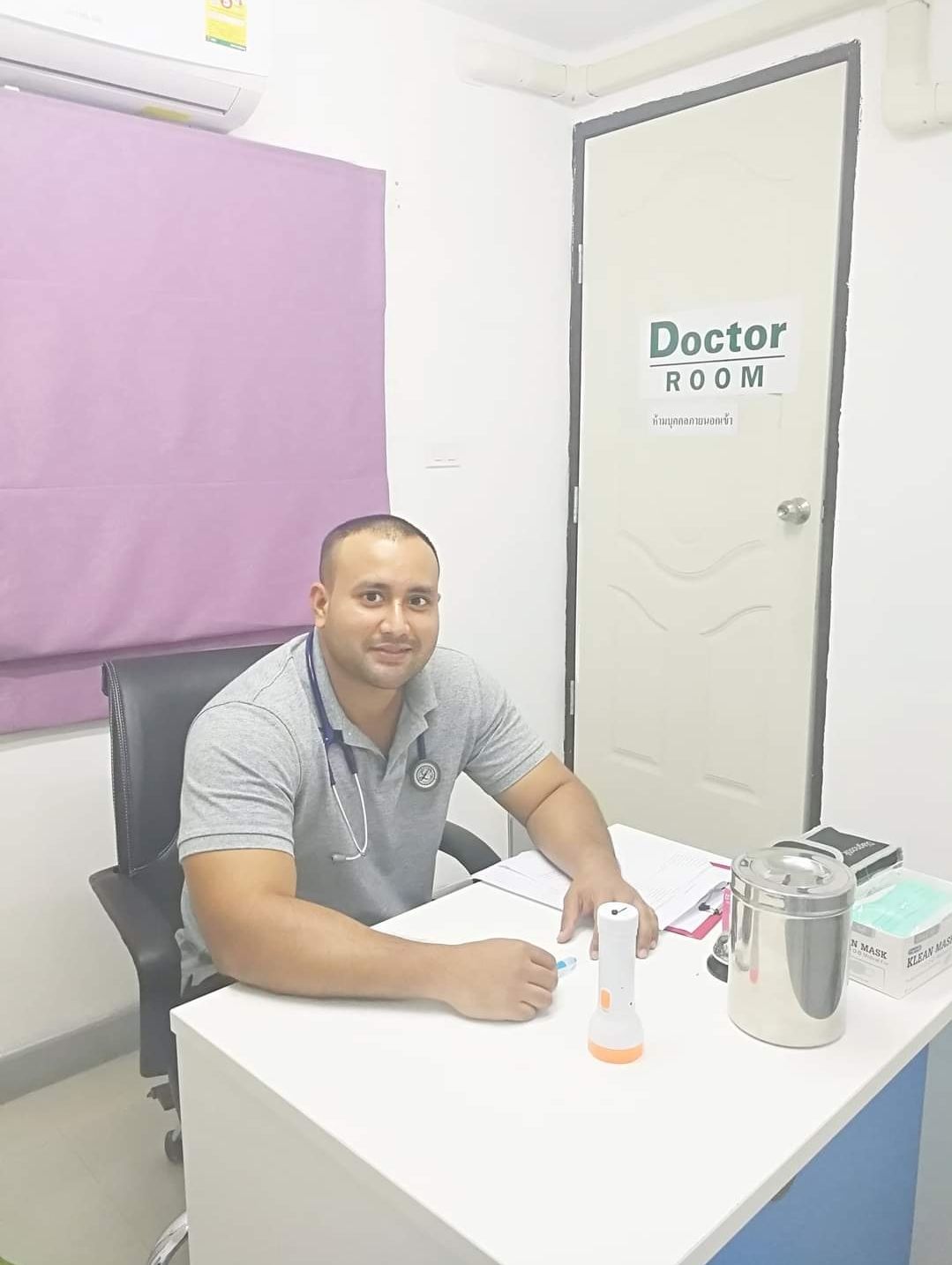
Dr. Ponlawat Pitsuwan is a physician at Doctor Bangkok, a private clinic in central Bangkok. He sees expats, residents, and medical tourists for general medicine, wellness consultations, and IV therapy. His focus is straightforward, evidence-based care delivered in plain language.