
Clinically reviewed by Dr. Ponlawat Pitsuwan, Physician, Doctor Bangkok. Last reviewed: September 2026
Brain stem cell treatment uses living cells to support or partially restore damaged nervous tissue. It is not a cure for most neurological conditions, but for some patients it can slow progression or improve function. The evidence is strongest for stroke recovery, Parkinson’s disease, and multiple sclerosis. A proper medical assessment is essential before deciding whether it is right for you.
Patients who come in asking about stem cell therapy for a neurological condition are usually not looking for a sales pitch. They have done the reading. They have been through the forums. What they need is someone to be straight with them about what this treatment can and cannot do.
Brain stem cell treatment is a genuine and evolving area of medicine. For some neurological conditions, the evidence is real and growing. For others, the claims circulating online run well ahead of what the science currently supports. If you are an expat or medical tourist in Bangkok weighing this up, here is what you actually need to know.

How Stem Cells Work in the Nervous System
The brain and spinal cord do not repair themselves well after injury or disease. Stem cells are not a simple replacement for lost neurons. What they can do is reduce inflammation around damaged tissue, release growth signals that help surviving neurons stay healthy, and help regulate the immune response.
That last point matters a great deal in conditions like multiple sclerosis, where the immune system attacks the brain’s own tissue. The cells act more like a support team than a replacement crew. Getting them to the right place is one of the main clinical challenges, because the brain has a protective filter that makes delivery more complex than it is for other organs.
Types of Stem Cells Used in Brain Treatment
Not all stem cells are the same, and the source matters more than most patients realise.
Mesenchymal stem cells, or MSCs, are the most widely used in clinical practice in Bangkok. When sourced from umbilical cord tissue, they offer a consistent, well-characterised cell type that does not require harvesting from the patient. Autologous MSCs, taken from the patient’s own bone marrow or fat tissue, carry no rejection risk but involve an extra procedure, and cell quality can vary with age and overall health.
Neural stem cells are more targeted but harder to prepare and less widely available outside clinical trials. Induced pluripotent stem cells remain largely investigational. Some protocols use extracellular vesicles, the signalling particles stem cells release, rather than the cells themselves. At Doctor Bangkok, we walk through the full range of options during your consultation so the protocol fits your specific condition and history.

How Brain Stem Cell Treatment Is Given
This is the question I get asked most often. No, it is not usually injected directly into the brain. That is not a standard approach.
The two most common routes are intravenous infusion and intrathecal administration. IV delivery is straightforward: cells enter the bloodstream and migrate toward areas of neurological damage. Intrathecal delivery means placing cells into the fluid around the spinal cord, which gets them closer to the central nervous system without brain surgery. Intranasal delivery is also being studied as a non-invasive option.
The right route depends on the condition, its severity, and the protocol being used. Any clinic offering a one-size-fits-all approach is a warning sign.
Which Neurological Conditions Has Brain Stem Cell Treatment Helped?
The evidence is not equal across all conditions. Patients deserve to know where the science stands before they commit.
Stroke recovery has some of the strongest signals in the current literature. Stem cell therapy given in the weeks or months after a stroke has shown measurable improvement in motor and cognitive function across several clinical trials. It does not reverse the damage, but it can support recovery that might otherwise plateau.
Parkinson’s disease is another area where research has advanced meaningfully. The disease destroys a specific set of neurons that produce dopamine, and cell-based treatment aims to support that loss. Some patients in trials show reduced tremor and improved motor control, though results are still being analysed across ongoing studies.
Multiple sclerosis, particularly the relapsing-remitting form, has responded to stem cell therapy in clinical trials. The goal is to reduce the immune system’s attack on the protective coating around nerve fibres. Some patients experience a significant slowdown in disease activity. You can read more about which neurological conditions stem cell therapy has shown results for on our treatment page.
For Alzheimer’s disease, ALS, and cerebral palsy, the research is earlier stage. There are signals of benefit, particularly in slowing decline and quality of life, but the evidence base is thinner. Traumatic brain injury is an active research area with promising early results. I would not dismiss these applications, but I would not oversell them either.
What the Research Currently Shows
Stem cell therapy for neurological conditions is not experimental in the way that phrase is sometimes used to dismiss it entirely. Phase I, II, and III clinical trials are underway globally, and some treatments have moved through regulatory review in multiple countries. But it is also not a proven cure for any neurodegenerative disease.
The honest position: the evidence supports meaningful benefit for some patients in some conditions, with the strongest case for stroke recovery and Parkinson’s disease. For others, the data is still limited but moving in a promising direction. Any clinic guaranteeing results for late-stage Alzheimer’s or ALS is overclaiming. Any clinic dismissing all stem cell therapy as unproven is not keeping up with the literature. You want someone who reads the data carefully and tells you exactly where your condition sits on that spectrum.
What Results Can Patients Realistically Expect?
Most patients do not experience dramatic overnight change. What I see more often is a gradual stabilisation, a slowing of decline, or an improvement that becomes clearer over weeks to months rather than days.
Stem cells work best alongside active rehabilitation. A patient who receives treatment and then does nothing is unlikely to do as well as one who combines it with physiotherapy, speech therapy, or cognitive rehabilitation. The two approaches reinforce each other.
Timeline also matters. Most programmes involve multiple sessions across several months. Coming to Bangkok for a single infusion and expecting lasting results without follow-up is not a realistic plan. Most initial neurological protocols require at least several days in Bangkok, with remote monitoring and repeat sessions planned around your schedule.
Choosing a Brain Stem Cell Clinic in Bangkok
Bangkok has reputable providers and it has clinics that should not be operating the way they are. The gap between the two is not always obvious from a website.
Look for a clinic where a licensed physician, registered with the Thai Medical Council, oversees the protocol personally. The stem cells should be prepared in a GMP-certified laboratory, meaning quality-controlled conditions that meet international standards. Ask where the cells come from, how they are tested, and what the handling process looks like. A credible clinic welcomes these questions without deflecting.
Avoid any provider that quotes success rates without citing peer-reviewed evidence, guarantees improvement for every patient, or refuses to discuss what happens if the treatment does not help. At Doctor Bangkok, patients receive a thorough pre-treatment review that includes an honest assessment of whether stem cell therapy is appropriate at all. Sometimes the right answer is that it is not the right fit for that patient.
Starting the Process as an Expat or Medical Tourist
For most expats and medical tourists, the process starts before you arrive in Bangkok. We review your recent medical records remotely: imaging, bloodwork, current medications, and diagnosis history. This gives us a realistic picture of whether you are a suitable candidate before you book flights.
The first in-clinic visit covers a full clinical assessment and a detailed discussion of the protocol, expected timeline, and follow-up plan. Most neurological programmes involve treatment across several days, not one afternoon. If you are coming from outside Thailand, plan for at least a week for the initial phase. Remote follow-up and repeat sessions can often be scheduled around travel.
Our stem cell therapy programme in Bangkok outlines how we approach neurological cases and what the process looks like from first contact through follow-up.
Considering brain stem cell treatment for a neurological condition? Doctor Bangkok offers in-depth consultations for expats and medical tourists, including remote pre-assessment before you travel. Our English-speaking physicians review your case, discuss realistic outcomes, and design a protocol based on your specific diagnosis. We are centrally located in Bangkok and accessible by BTS. Contact us to arrange your consultation.
FAQ
Dr. Ponlawat Pitsuwan
Physician, Doctor Bangkok
a private medical clinic in central Bangkok. He consults with expats, residents, and medical tourists on neurological stem cell therapy, general health assessments, and a wide range of medical concerns. His focus is straightforward, evidence-based care delivered in plain language.
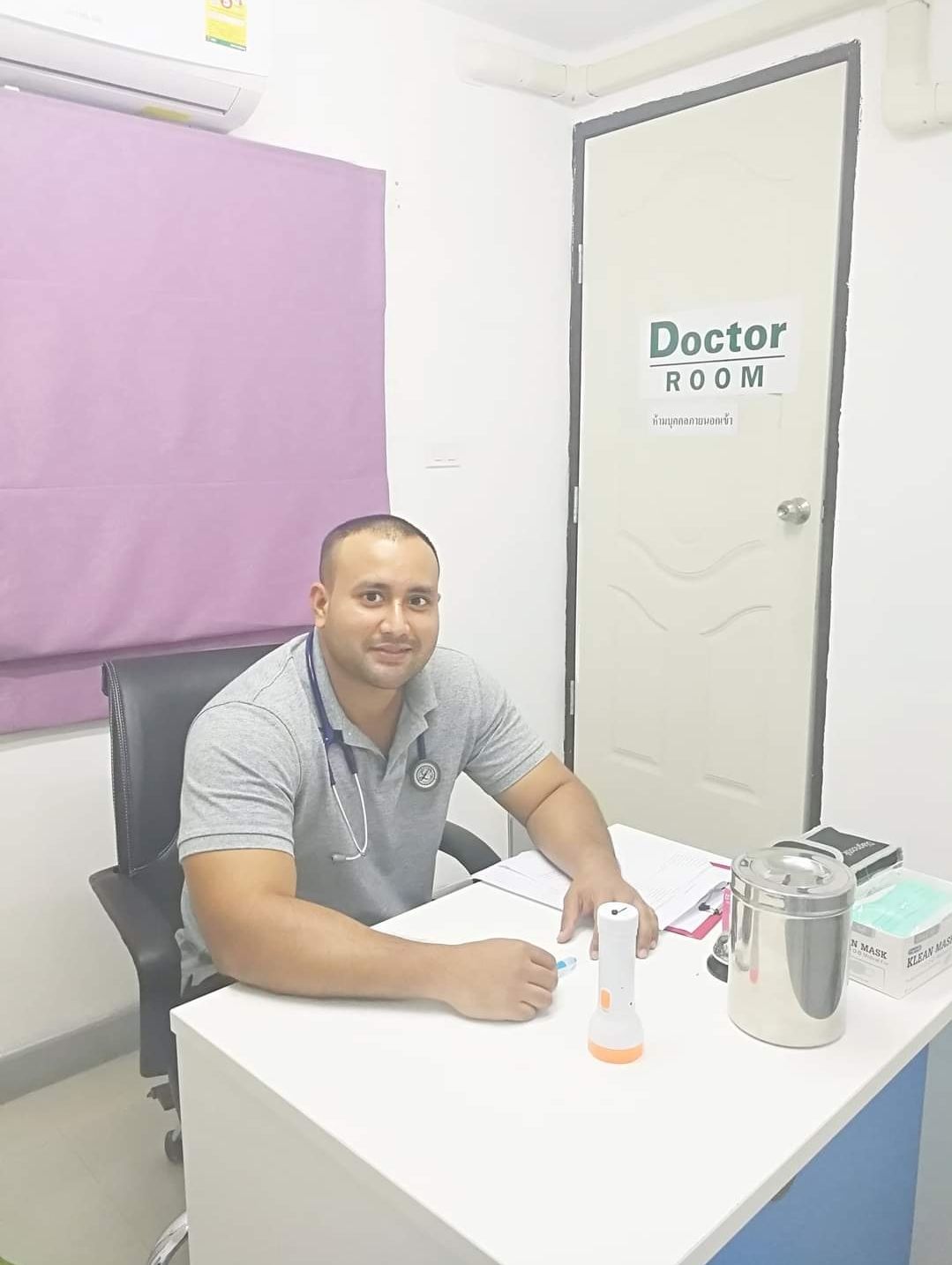
Dr. Ponlawat Pitsuwan is a physician at Doctor Bangkok, a private clinic in central Bangkok. He sees expats, residents, and medical tourists for general medicine, wellness consultations, and IV therapy. His focus is straightforward, evidence-based care delivered in plain language.