
Clinically reviewed by Dr. Ponlawat Pitsuwan, Physician, Doctor Bangkok.
Last reviewed: September 2026
Stem cells for autism show a promising signal in early clinical trials, but this is not yet an approved treatment. A 2025 meta-analysis of 22 studies found meaningful overall improvement across social and behavioural measures, but trial quality varies considerably. If you are exploring this for your child, a proper medical consultation before any commitment is the right first step.
Parents asking about stem cells for autism have usually done months of research before they arrive at this question. You have tried behavioural therapy, speech therapy, occupational therapy. Now you are looking at something more experimental and you want to know if the science holds up. The honest answer is that there is genuine early evidence, and there are real limits to what that evidence tells us.
Bangkok sits near the centre of this conversation for expat families. Thailand has a growing number of clinics offering stem cell therapy for autism, and quality varies enormously. What follows is what the research actually shows, what the risks are, and how to think about this before spending money or putting your child through a procedure.

Why Autism May Respond to Stem Cell Therapy
A significant proportion of children with autism spectrum disorder show signs of chronic neuroinflammation. The immune system inside the brain sits in a low-grade state of overactivation. This is not the cause of autism in every case, but it is a consistent finding across many children studied.
Mesenchymal stem cells, particularly those from umbilical cord tissue, appear to reduce this inflammation. The cells do not replace damaged tissue. They release molecules that calm immune activity and support the growth of new neural connections. This is biologically plausible. The question is whether plausible translates into meaningful results for real children.
Types of Stem Cells Being Used in Autism Trials
The cell type used matters for both safety and how the therapy is expected to work. The most common in recent trials and Bangkok clinics are umbilical cord-derived mesenchymal stem cells, or UC-MSCs, sourced from the connective tissue inside the umbilical cord. A separate category is cord blood mononuclear cells, or CBMNCs, which come from cord blood and have a stronger immune-modulating profile.
Some trials have used bone marrow-derived cells. Earlier research involves reprogrammed adult cells called hiPSCs, but these are not in commercial use and remain a research tool only.
Combination protocols using CBMNCs given intravenously alongside UC-MSCs delivered into the fluid around the spinal cord have shown larger improvements in some trials than single-source approaches. The delivery route and cell type together influence outcomes. This is why the specific protocol a clinic uses matters, not just whether they offer stem cells at all.
| Cell Type | Source | Delivery Route | Trial Status |
|---|---|---|---|
| UC-MSCs | Umbilical cord tissue | IV or intrathecal | Phase I/II trials |
| CBMNCs | Cord blood | Intravenous | Phase I/II trials |
| Bone marrow MNCs | Patient’s own marrow | IV or intrathecal | Early trials |
| hiPSCs | Reprogrammed adult cells | Experimental only | Preclinical |

What Clinical Trials Have Actually Found
A 2025 meta-analysis covering 22 studies found a statistically significant overall improvement in autism symptoms, with a pooled effect size that researchers classify as moderate to large. Improvements were measured using tools like the Childhood Autism Rating Scale and the Autism Treatment Evaluation Checklist.
Families in these studies reported better eye contact, more social engagement, improved communication, and calmer behaviour. These are real outcomes that showed up repeatedly across the included studies.
The critical caveat is the heterogeneity between those studies, which was extremely high. What worked in one trial did not reliably predict what would happen in another. No one yet knows which children respond best, what dose to use, or how long any benefit lasts.
Limitations and Honest Caveats
Stem cell therapy for autism is not an approved treatment anywhere in the world. It is experimental. Phase I and Phase II trials establish early safety and begin to look at efficacy, but they are not the same as definitive proof of benefit across a broad population.
Most trials to date have been open-label, meaning both families and researchers knew which children received the treatment. That creates bias. Without a proper placebo comparison, it is hard to separate the effect of treatment from natural child development over time. Small sample sizes and short follow-up periods, often six months or less, are consistent problems across the published literature. A Frontiers in Psychiatry review of the field called specifically for researchers to temper expectations while the evidence base matures. That is an honest position.
Risks to Know Before Deciding
Intravenous infusion can cause reactions ranging from mild fever to, in rare cases, more serious immune responses. Delivery into the spinal fluid carries a small risk of infection or headache. Cells not produced under strict pharmaceutical-grade conditions carry a theoretical risk of contamination.
Stem cell tourism is a real problem in Bangkok and across Southeast Asia. Clinics operating without ethics committee oversight, without certified cell sourcing, and without physician-led assessments do exist. A price quoted before anyone has assessed your child’s medical history is a warning sign. Any responsible provider screens for contraindications first. Active infections, uncontrolled seizure disorders, and certain genetic conditions all require evaluation before any protocol is considered.
What Overlapping Research With Parkinson’s Tells Us
Stem cell research for autism and for Parkinson’s disease covers more shared ground than most families realise. Both involve neuroinflammation. In both, MSCs are thought to work by reducing immune overactivation and supporting the brain’s ability to repair and reorganise itself.
At Doctor Bangkok, we evaluate patients considering stem cell therapy for Parkinson’s disease using the same structured, evidence-led approach we apply to any regenerative medicine consultation. The same rigour applies here. Research advances in one condition also tend to inform the other, so the Parkinson’s evidence base is directly relevant to families asking about autism.
What a Proper Consultation in Bangkok Should Look Like
A responsible consultation does not start with a treatment plan. It starts with a full picture of your child. That means a detailed medical history, current seizure status, recent bloodwork, and a baseline behavioural assessment using a standardised tool like CARS or ATEC. Contraindications are screened before any protocol is discussed.
At Doctor Bangkok, we do not offer stem cell infusions as a standalone commercial package. We offer an honest, evidence-led consultation that helps families understand where this treatment sits clinically and whether pursuing it makes sense for their child specifically. If you are considering stem cell therapy, that conversation should happen with a physician, not a coordinator.
Families who combine stem cell protocols with existing behavioural and speech therapy have the most clinical support behind them. The period after infusion may represent a window where children are more responsive to conventional therapy. Planning that combination with your treating physician matters.
Choosing a Clinic Safely in Bangkok
Ask any clinic these questions before agreeing to anything. Is the cell sourcing certified under pharmaceutical-grade production standards? Is there a physician-led pre-treatment consultation, or is it handled by a coordinator? Does the clinic operate under Thai Ministry of Public Health licensing and ethics committee oversight? Is there a structured follow-up plan?
A clinic that sends you a treatment package price before a clinical assessment has skipped the step that protects your child. The right provider takes the history first. That is how Doctor Bangkok approaches every regenerative medicine inquiry, and it is what you should expect from any Bangkok provider you consider.
If your family is weighing stem cell therapy for autism and you want an honest, evidence-based medical opinion, Doctor Bangkok offers clinical consultations for families exploring regenerative medicine options in Bangkok. We cover the evidence, screen for contraindications, and help you make an informed decision before any commitment. Our physicians speak English and the clinic is BTS accessible in central Bangkok. Contact us to book a consultation.
Is stem cell therapy for autism approved or still experimental?
It is still experimental. No major regulatory body, including the FDA, EMA, or Thai FDA, has approved stem cell therapy as a standard treatment for autism spectrum disorder. As of 2026, it remains in Phase I and Phase II clinical trials at reputable institutions. Promising early data exists, but long-term safety and efficacy have not been definitively established.
What type of stem cells are used for autism, and does the type matter?
Yes, it matters. The most commonly used are UC-MSCs from umbilical cord tissue and cord blood mononuclear cells, or CBMNCs. Some trials use combination protocols, and these have shown larger effects than single-source approaches in certain studies. The cell type, dose, sourcing quality, and delivery route all affect both safety and expected outcomes.
What improvements have been reported in children after stem cell therapy?
The 2025 meta-analysis of 22 studies reported improvements in social engagement, eye contact, communication, and behaviour across standardised rating scales. The pooled effect size was meaningful, but variation between studies was very high. No single outcome can be reliably predicted for an individual child.
My child attends an international school near Asok. If we pursue stem cell therapy and return to Bangkok, will school-based therapy still be effective alongside it?
Yes, and combining them is advisable. The period after infusion may represent a window where the brain is more responsive, so continuing school-based speech and behavioural therapy during that time makes clinical sense. Talk to your treating physician about how to structure the two approaches together.
How do I tell the difference between a reputable Bangkok stem cell clinic and a stem cell tourism operation?
The clearest sign of a reputable clinic is that no price is quoted before a clinical assessment. Look for certified cell sourcing under pharmaceutical-grade standards, physician-led consultations, Ministry of Public Health licensing, ethics committee oversight, and a structured follow-up plan. Any clinic that leads with a package price is one to avoid.
Can stem cell therapy be combined with other autism treatments?
Most clinical protocols combine stem cell infusions with behavioural therapy, speech therapy, and occupational therapy. Some trials have also used hyperbaric oxygen therapy alongside infusions. The combination approach has more clinical support behind it than stem cells alone, and planning it properly with a physician is important.
Dr. Ponlawat Pitsuwan
Physician, Doctor Bangkok
a private medical clinic in central Bangkok. He sees expats, residents, and medical tourists for general medical consultations, health assessments, and regenerative medicine inquiries including stem cell therapy evaluation for neurological conditions. His focus is straightforward, evidence-based care delivered in plain language.
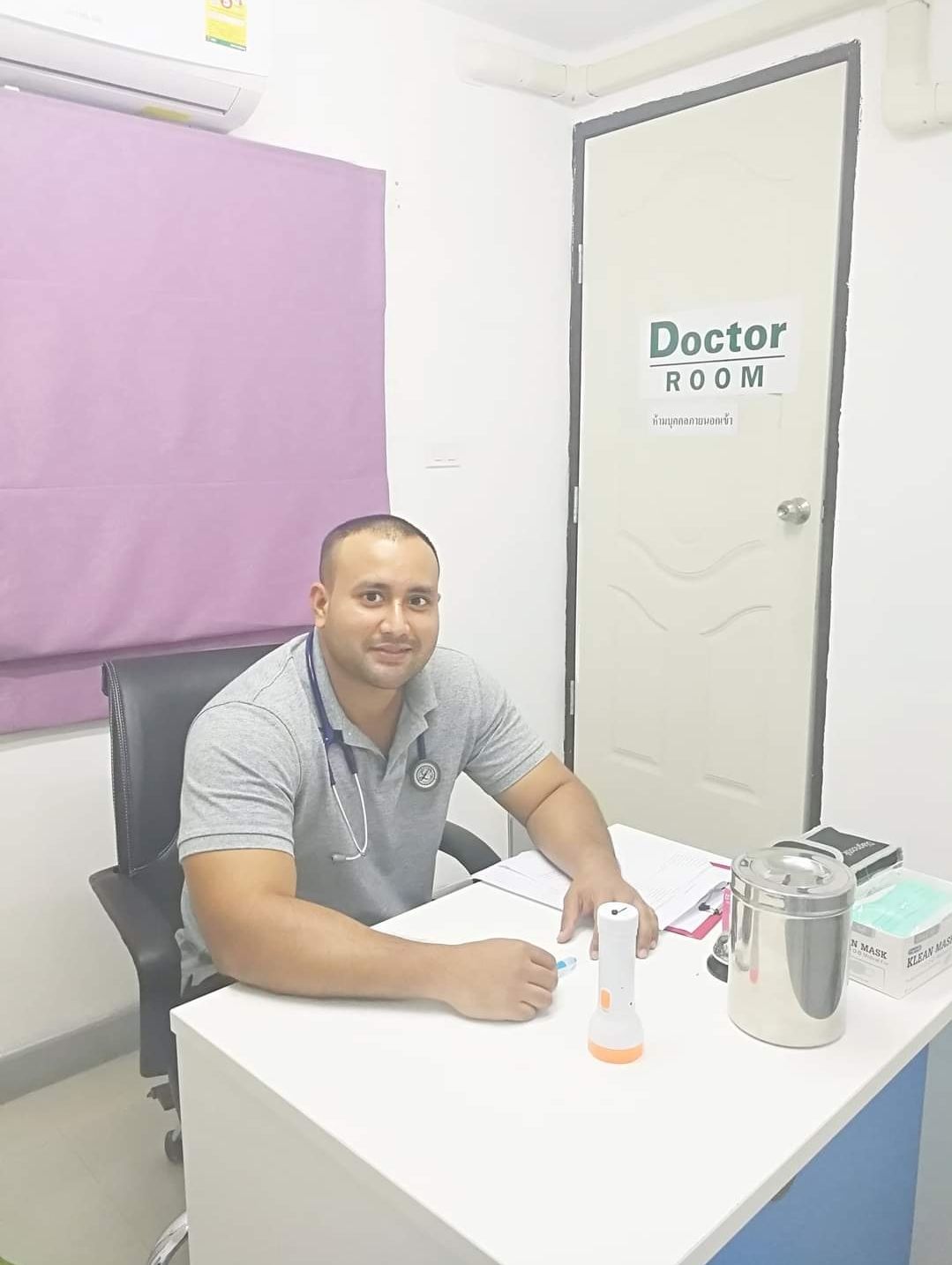
Dr. Ponlawat Pitsuwan is a physician at Doctor Bangkok, a private clinic in central Bangkok. He sees expats, residents, and medical tourists for general medicine, wellness consultations, and IV therapy. His focus is straightforward, evidence-based care delivered in plain language.