
Clinically reviewed by Dr. Ponlawat Pitsuwan, Physician, Doctor Bangkok. Last reviewed: September 2026
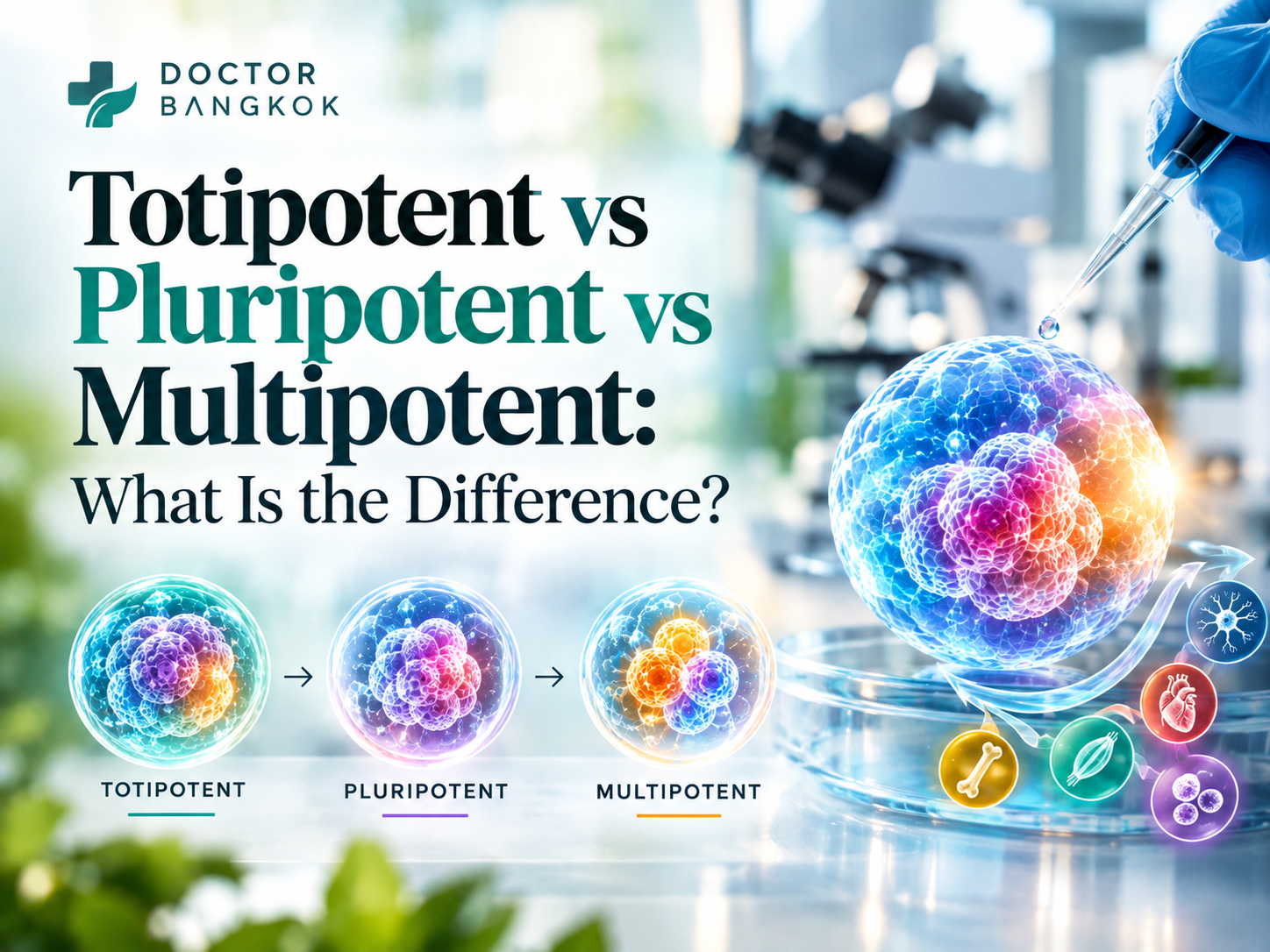
Totipotent cells can become any cell in the body, including placental tissue. Pluripotent cells can become almost any cell except placental tissue. Multipotent cells are limited to one family of related cell types. In clinical stem cell therapy today, multipotent cells — most often mesenchymal stem cells from umbilical cord tissue — are the type actually used in treatment.
Most patients asking me this question are not biology students. They are expats or visitors who have heard about stem cell therapy in Bangkok, found conflicting information online, and want to know what they would actually be receiving before they commit to anything. That is a smart question to ask.
The key concept is potency — what a stem cell is capable of becoming. Totipotent, pluripotent, and multipotent describe three levels of that capability. Knowing the difference tells you where the cells come from, what they can realistically do, and why clinics use one type and not another.

The Full Potency Spectrum — From Totipotent to Unipotent
Cell potency is not just three categories. It is a spectrum, and understanding the full range gives you a clearer picture of any treatment you are considering.
Totipotent cells sit at the top. These exist only in the first few days after fertilisation, in the zygote and the very first cell divisions that follow. They can become literally anything: liver, brain, bone, and also the placenta and supporting tissues that no other stem cell can form. They are not used in therapy and cannot be harvested for clinical use.
Pluripotent cells are one step down. They can form any tissue in the human body except the placenta. This category includes embryonic stem cells and induced pluripotent stem cells, which I will cover shortly. Their wide potential makes them central to research, but their use in commercial therapy is more limited than most patients expect.
Multipotent cells are the workhorses of clinical regenerative medicine. They can only become a specific family of related cell types. Mesenchymal stem cells can become bone, cartilage, and fat tissue. Hematopoietic stem cells produce all blood cell types. These are the cells used in the vast majority of stem cell infusions offered at clinics today.
Below multipotent, there are oligopotent cells, which produce only a small number of related types, and unipotent cells, which produce just one. These matter in research but are not used in clinical therapy.
Totipotent Stem Cells — Why They Are Not Used in Treatment
Totipotent cells are the most powerful cells in human biology. They are also clinically inaccessible. By the time the embryo reaches the blastocyst stage, around five days after fertilisation, totipotency is already gone. There is no practical way to isolate these cells for therapeutic use.
When you see marketing language implying a product is derived from the "most powerful" or "earliest" stem cells, ask for specifics. No clinic anywhere is using totipotent cells in a commercial treatment.

Pluripotent Stem Cells — Research Gold Standard, Clinical Work in Progress
Embryonic stem cells are taken from the inner cell mass of a blastocyst. They can theoretically become any tissue type in the adult body. That sounds ideal for therapy, but two significant problems have kept them out of standard clinical use.
First, there are ethical concerns about using embryonic material. This is a genuine issue for many patients, particularly those from countries where embryo research is legally or culturally sensitive. Second, pluripotent cells carry a risk of forming tumours from uncontrolled growth when introduced into the body. These safety concerns are the main reason embryonic stem cells remain largely confined to research despite decades of work.
Induced Pluripotent Stem Cells — Pluripotency Without the Embryo
In 2006, researcher Shinya Yamanaka showed that ordinary adult cells, such as skin or blood cells, could be reprogrammed back into a pluripotent state. The result is a cell with broad potential that does not require embryonic material.
Because these induced pluripotent stem cells, known as iPSCs, can be made from a patient’s own cells, they also reduce the risk of immune rejection. These advantages have made iPSCs a major focus of regenerative medicine research.
iPSC-based therapies are still largely in clinical trial phases. They are not a standard treatment available at most private clinics, including in Bangkok. A handful have received approval in Japan for specific conditions, but that remains a narrow exception. If a clinic is offering iPSC treatment today, ask for the regulatory documentation.
Multipotent Stem Cells — What Is Actually Used in the Clinic
This is where the science meets the treatment room. Multipotent stem cells, specifically mesenchymal stem cells derived from umbilical cord tissue, are what patients receive in the overwhelming majority of clinical stem cell infusions in Bangkok.
These cells are sourced from donated umbilical cord tissue after birth, with donor consent. They are not embryonic. They have been studied extensively for their ability to reduce inflammation, support tissue repair, and help regulate immune responses. They are also well-documented in terms of safety, which is why they have become the standard cell type in legitimate clinical protocols in Thailand and internationally.
At Doctor Bangkok, when patients come in asking about regenerative treatment options, mesenchymal stem cells are what the clinical conversation centres on. A pre-treatment consultation is always the starting point, not an optional step.
Which Type of Stem Cell Is Used in Which Treatment?
| Cell Type | Source | Can Become | Used Clinically? | Ethical Concerns? |
|---|---|---|---|---|
| Totipotent | Zygote / early blastomeres | Any cell including placenta | No | High |
| Pluripotent (embryonic) | Blastocyst inner cell mass | Any cell except placenta | Research only | High |
| Pluripotent (iPSC) | Reprogrammed adult cells | Any cell except placenta | Emerging / trials | Low |
| Multipotent (MSC) | Umbilical cord, bone marrow, fat | Bone, cartilage, fat | Yes — widely used | Low |
| Multipotent (HSC) | Bone marrow, cord blood | All blood cell types | Yes — bone marrow transplant | Low |
| Oligopotent | Various adult tissues | Two to three related types | Rarely / research | Low |
| Unipotent | Muscle, skin | Single cell type | Rarely / research | Low |
Ethical Considerations — Source Matters
For many patients, the question is not just whether a treatment works. It is where the cells come from. Embryonic stem cells require the destruction of an embryo, which is not acceptable for some patients regardless of any clinical benefit. iPSCs sidestep this entirely. Umbilical cord-derived mesenchymal stem cells come from tissue that would otherwise be discarded after birth, which most patients find ethically straightforward.
If you are considering stem cell therapy in Bangkok, ask your clinic to confirm the cell source and provide documentation. A well-run clinic should be able to tell you the donor consent process, country of origin, and GMP certification status. This is a conversation to have before you pay anything.
Is Stem Cell Therapy in Bangkok Regulated?
Thailand’s Food and Drug Administration and Ministry of Public Health have frameworks governing stem cell treatments, but oversight varies significantly between hospital-based programmes and private wellness clinics. That gap is where patients need to be careful.
Before any stem cell procedure, verify that the clinic uses GMP-certified cell products, operates under direct physician supervision, and can provide documentation of cell viability, purity, and safety testing. A general health assessment before treatment is sensible, both to confirm you are a suitable candidate and to establish a documented baseline.
Thinking about stem cell therapy or regenerative treatment in Bangkok? Before any procedure, a consultation with a qualified physician is the right first step. At Doctor Bangkok, we see patients who want straight answers about what these treatments involve, what the evidence supports, and whether they are a good fit. We are BTS accessible, English-speaking, and available for same-day appointments. Contact us to book a consultation.
What type of stem cells are used in stem cell therapy in Bangkok?
Almost all clinical stem cell infusions in Bangkok use multipotent mesenchymal stem cells, most often from umbilical cord tissue. Totipotent cells are not clinically available. Pluripotent embryonic cells carry safety and ethical concerns that have kept them out of most commercial protocols. Umbilical cord mesenchymal stem cells are preferred because they are well-studied, ethically uncomplicated, and carry a documented safety record.
Are embryonic stem cells used in anti-aging treatments?
True embryonic stem cells are rarely if ever used in commercial anti-aging treatments. Most clinics in Bangkok and internationally use adult-derived mesenchymal stem cells or exosomes derived from them, which avoid embryonic sourcing entirely. If a clinic claims to use embryonic stem cells in a standard wellness treatment, ask for the regulatory approval documentation before proceeding.
What is the difference between pluripotent and multipotent in plain language?
A pluripotent cell can become almost any cell type in the body. A multipotent cell is a specialist that can only become a specific family of related types, such as blood cells or bone and cartilage. Multipotent cells are the type used in most current clinical treatments because their restricted range makes them safer and more predictable.
Can iPSCs be made from my own cells?
Yes. Induced pluripotent stem cells are created by reprogramming your own adult cells, such as skin or blood cells, back into a pluripotent state. Because they come from your own body, they reduce the risk of immune rejection and avoid the ethical concerns associated with embryonic cells. These therapies are still largely in trial phases and are not yet widely available as standard private clinic treatments.
I am staying near Asok and researching stem cell IV drips — how do I know if a Bangkok clinic is legitimate?
Ask the clinic to confirm the cell type being used, the source and country of origin, GMP certification of the product, and the qualifications of the physician overseeing the procedure. A legitimate clinic will answer all of these questions before you pay anything. Walk away from any clinic that is evasive about cell documentation.
Is stem cell therapy safe for expats and medical tourists in Bangkok?
Mesenchymal stem cell-based therapies have a reasonable safety record in the published literature, but product quality and clinical oversight vary significantly between providers. The safest approach is to see a qualified physician for a consultation before any procedure, confirm the regulatory status of the treatment, and make sure your baseline health has been assessed. At Doctor Bangkok, we do not skip this step regardless of how routine a request seems.
Dr. Ponlawat Pitsuwan
Physician, Doctor Bangkok
a private medical clinic in central Bangkok. He consults with expats, residents, and medical tourists on general health concerns, health assessments, and pre-treatment evaluations, including patients exploring regenerative medicine options. His approach is direct and evidence-based.
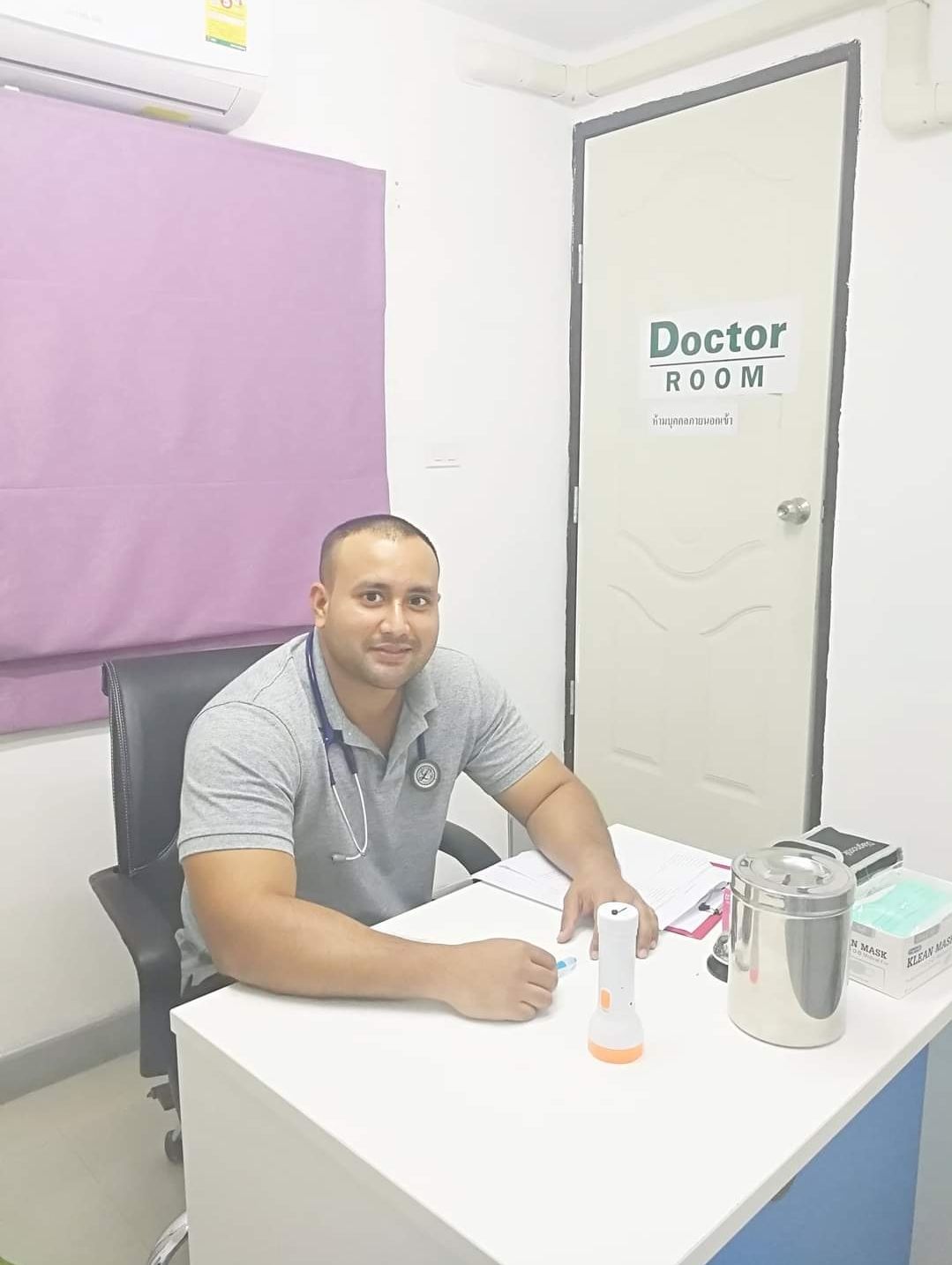
Dr. Ponlawat Pitsuwan is a physician at Doctor Bangkok, a private clinic in central Bangkok. He sees expats, residents, and medical tourists for general medicine, wellness consultations, and IV therapy. His focus is straightforward, evidence-based care delivered in plain language.