
Clinically reviewed by Dr. Ponlawat Pitsuwan, Physician, Doctor Bangkok. Last reviewed: August 2026
When a pile bursts, you will usually see a sudden release of dark or clotted blood, often followed by a drop in pain. Bleeding typically stops within ten minutes and is rarely dangerous. If bleeding continues beyond that, or you develop fever, dizziness, or pus, see a doctor the same day.
You felt something give way, then blood. Now you are trying to decide whether this needs attention or whether you can just wait it out. I get this question regularly, often from expats or visitors in Bangkok who had a pile burst at exactly the wrong moment — before a flight, after a long work trip, or after a week of heat and spicy food.
The honest answer: most burst piles are not dangerous and settle on their own within a few days. But some situations do need a doctor, and some bleeding is not from piles at all. Here is how to tell the difference and what to do right now.

What Actually Happens When a Pile Bursts
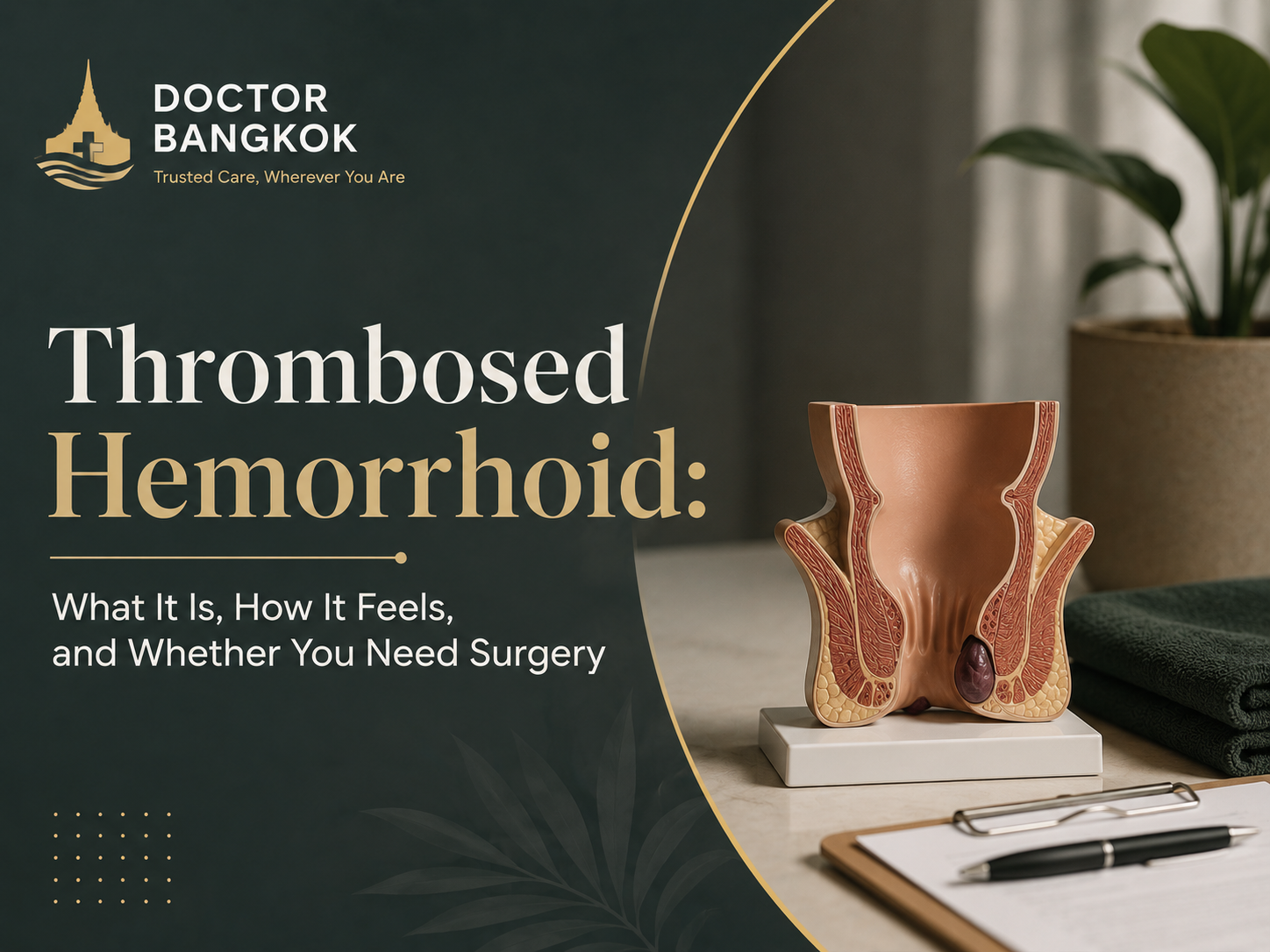
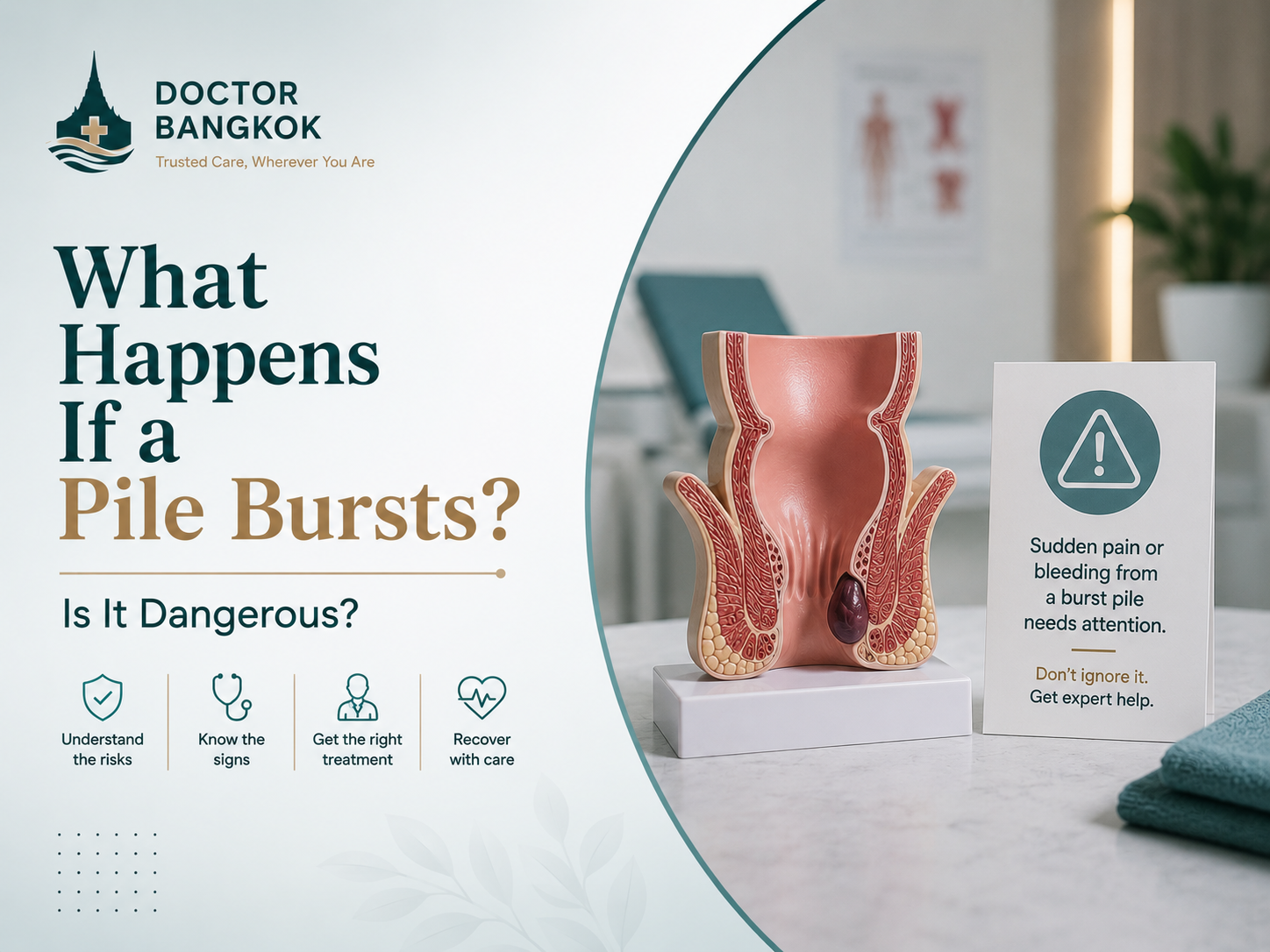
A pile is a swollen vein in or around the back passage. When pressure builds up inside one, it can rupture. What you experience depends on the type.
External piles sit under the skin around the anus. Sometimes a blood clot forms inside one — this is called a thrombosed external haemorrhoid. These feel tight and painful. When they burst, there is a sudden release of dark, clotted blood through the skin, and the pain usually drops quickly after.
Internal piles sit higher up inside the passage. They do not burst through the skin. When they bleed, you see bright red blood in the toilet bowl or on toilet paper. There is no pressure-release moment. People often call this a burst pile, but it is really a bleeding one.
Burst Pile or Bleeding Pile — How to Tell
This distinction matters, and it changes what you should do next.
A true burst thrombosed pile follows a clear pattern: a hard, painful lump, then a sudden release of dark blood, then noticeably less pain. That pressure-relief feeling is the giveaway. If pain drops after the bleed, that fits.
If you are seeing bright red blood without any build-up or release, it is more likely a bleeding internal haemorrhoid or an anal fissure, which is a small tear in the skin around the anus. If pain gets worse after the bleeding rather than better, that is worth taking seriously.
Not sure which one you are dealing with? That is exactly when a clinical check makes sense.

Which Type of Pile Actually Bursts?
Only external thrombosed piles truly burst through the skin. Internal haemorrhoids bleed, sometimes heavily, but they do not rupture the same way. The treatment path is different depending on which type you have.
External piles that have burst generally need simple wound care, pain relief, and a stool softener to avoid reopening. Internal haemorrhoids that bleed repeatedly may need rubber band ligation or sclerotherapy — clinic-based procedures that do not require general anaesthesia. Surgery is reserved for the most severe or persistent cases.
If you have never had a pile diagnosed before and you are now bleeding from your back passage, do not assume. Get checked.
Is a Burst Pile Dangerous?
Almost never. Bleeding from a burst pile usually slows and stops within five to ten minutes. The body clots the area quickly.
That said, there is a line. If bleeding soaks through more than one pad, does not slow after ten minutes, or comes with fever, dizziness, or pus, that needs same-day attention. Do not wait on those signs.
Expats in Bangkok sometimes hesitate because they are not sure how to access care here. Doctor Bangkok is BTS-accessible and fully English-speaking — no language barrier, no need to find your own way to a large hospital.
Why Expats in Bangkok Are More Likely to Get This
Bangkok is a specific environment, and it creates a specific kind of patient. The heat causes dehydration faster than most people expect, and when you are dehydrated your stools become harder, straining increases, and pressure on the veins goes up.
Layer in a long-haul flight, jet lag, a diet shift to spicy Thai food, more alcohol than usual, and a bathroom routine that has gone completely off schedule — and you have a reliable recipe for a thrombosed pile. I see this pattern regularly, both with expats who have been here a few months and with visitors in Bangkok for a week.
Drinking enough plain water every day matters more here than most people realise. Fruit with skin, vegetables, and cutting back on alcohol all help. In Bangkok’s climate, these are directly relevant, not just general lifestyle advice.
What to Do Right After a Pile Bursts
Stay calm first. The bleeding looks alarming, but it is usually not.
Clean the area gently with water. Bangkok’s bum guns — the handheld bidet hoses found in almost every toilet here — are ideal for this. Do not scrub. Pat dry. Apply a clean cold compress if there is still pain or swelling.
Take paracetamol for pain, not ibuprofen or aspirin. Those can slow clotting and may prolong the bleed. Drink water, not alcohol. A stool softener from any pharmacy in Bangkok helps prevent straining during the next bowel movement, which is the main risk of reopening the site.
If bleeding has not slowed after ten minutes, contact a doctor the same day.
What Happens If a Burst Pile Is Left Without Treatment
Most burst piles settle without intervention. But leaving repeated bleeds or an active thrombosis alone when it should be assessed does carry risk.
Infection is the main concern. If the skin around a burst pile does not heal cleanly, bacteria can enter and cause a perianal abscess — a pocket of infection near the anus that needs drainage. It is painful and avoidable with timely care.
Skin tags are less urgent but worth knowing about. After a thrombosed pile resolves, the stretched skin sometimes remains as a small flap of tissue. It is not dangerous, but it can make hygiene harder and occasionally becomes chronically irritated.
Repeated bleeding without investigation also carries a small risk of anaemia, particularly if your diet is already low in iron. Pale stools, fatigue, or lightheadedness alongside rectal bleeding is a prompt to get a blood count done.
When Rectal Bleeding Is Not a Pile at All
This is the part most websites skip, and I think it matters most.
Bright red blood on toilet paper after straining is, in the majority of cases, a pile or a small fissure. But not always. Dark red blood, blood mixed with mucus, a change in stool shape, or unexplained weight loss alongside rectal bleeding needs investigation. These patterns can point to colorectal polyps, colitis, or in some cases colorectal cancer.
If you are over 40, have a family history of bowel cancer, or have not had a health check in several years, this bleed is your prompt. Use it. A general medical consultation and a blood test is a reasonable starting point, and further investigation can follow if needed.
Do not self-diagnose this one. If you are unsure, come in.
What Seeing a Doctor in Bangkok Actually Involves
The idea of an examination in an unfamiliar clinic abroad can feel daunting. Here is what actually happens.
You describe your symptoms. The doctor does a visual inspection of the external area. If needed, a brief internal examination using a small instrument called an anoscope lets us see internal haemorrhoids quickly, and it is painless in most cases. No sedation is needed for a basic assessment.
If a clot from a thrombosed pile is still present and recent, a minor in-clinic procedure called incision and drainage can relieve it quickly. If haemorrhoids are recurrent, we discuss rubber band ligation or sclerotherapy. If there is any concern that the bleeding is not haemorrhoidal, we arrange further investigation from there.
The initial consultation at Doctor Bangkok is done in English and usually completed within the hour.
If your pile has burst, bleeding has not fully stopped, or this is not the first time it has happened, get it assessed properly. Doctor Bangkok offers same-day general medical consultations in central Bangkok with English-speaking physicians. No referral needed. Contact us via WhatsApp or book online at doctorbangkok.co.th.
Frequently Asked Questions
Dr. Ponlawat Pitsuwan
Physician, Doctor Bangkok
a private medical clinic in central Bangkok. He sees expats, residents, and medical tourists for general medical concerns including rectal bleeding, haemorrhoid assessment, wound care, and health screening. His focus is straightforward, evidence-based care delivered in plain language.
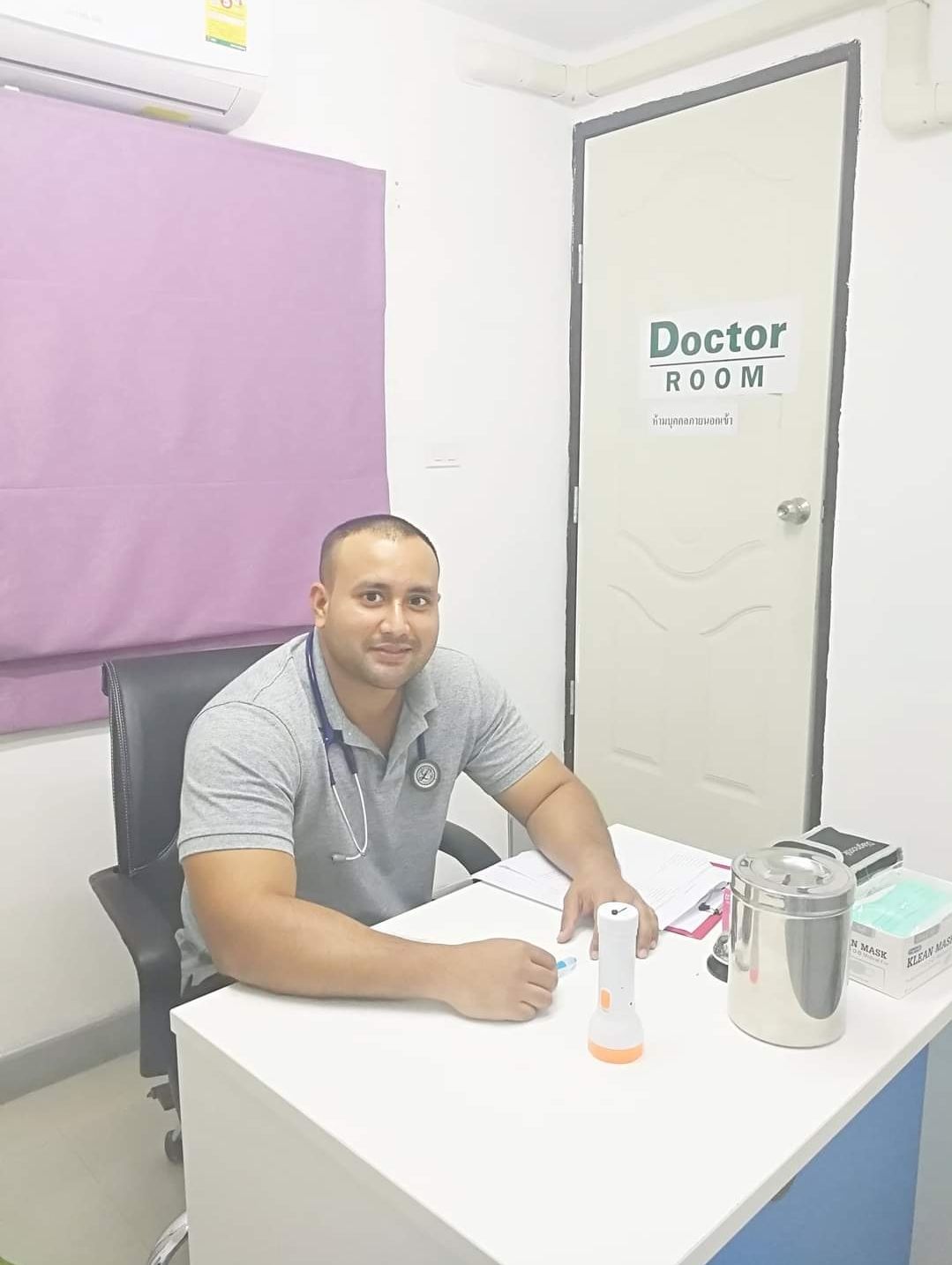
Dr. Ponlawat Pitsuwan is a physician at Doctor Bangkok, a private clinic in central Bangkok. He sees expats, residents, and medical tourists for general medicine, wellness consultations, and IV therapy. His focus is straightforward, evidence-based care delivered in plain language.