
Clinically reviewed by Dr. Ponlawat Pitsuwan, Physician, Doctor Bangkok. Last reviewed: August 2026
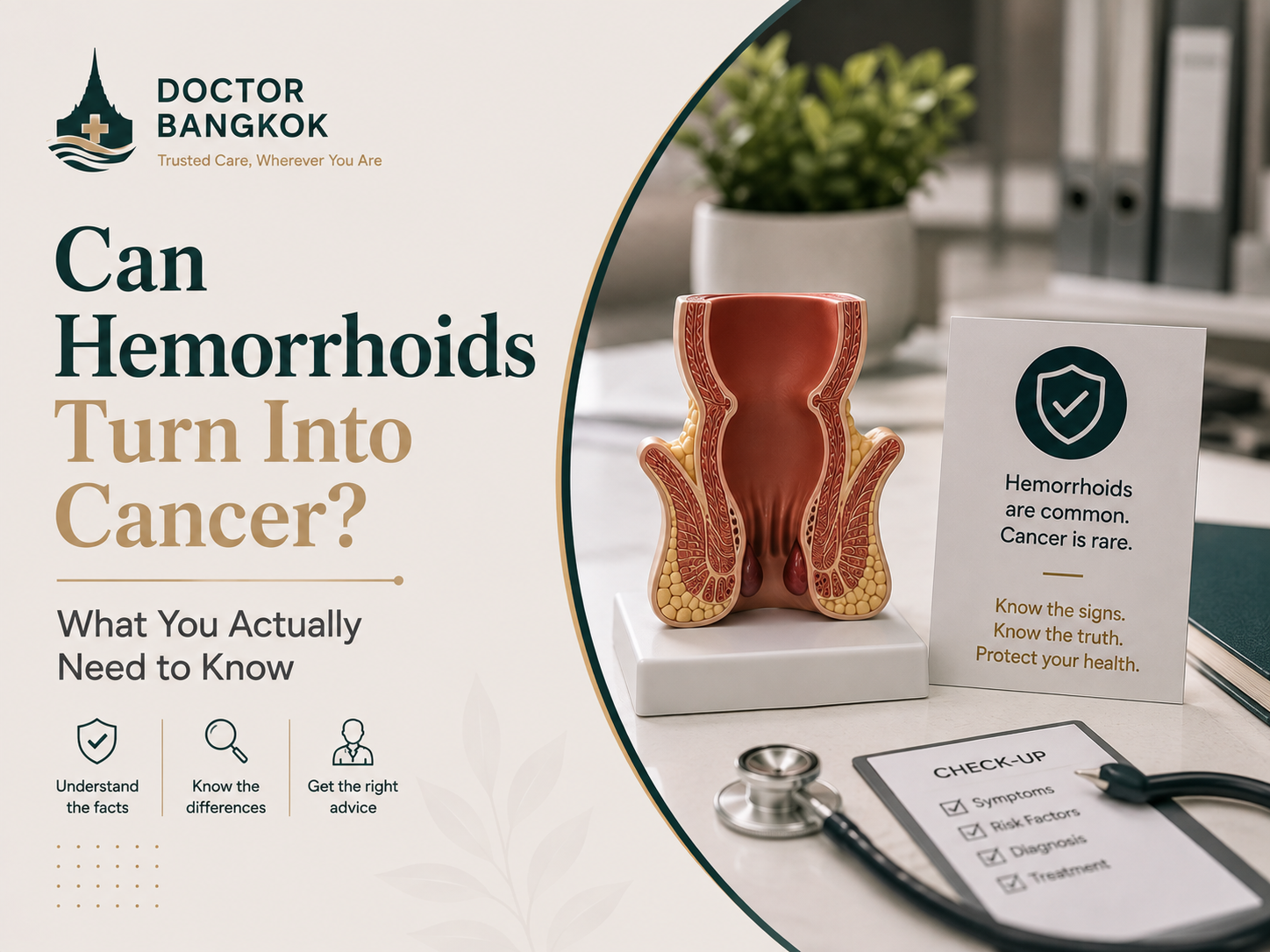
Hemorrhoids cannot cause cancer and cannot turn into cancer. They are swollen blood vessels, not abnormal cell growth. But hemorrhoids and colorectal cancer share enough symptoms that one is regularly mistaken for the other, and that delay can be dangerous. If you have rectal bleeding that does not resolve, or any symptoms that feel off, get it checked.
Most people who come in about this have been sitting on the worry for weeks. They noticed some blood, told themselves it was probably just piles, and hoped it would go away. By the time they walk through the door, they are not really asking about hemorrhoids anymore. They are asking whether it could be something worse.
The direct answer is no. Hemorrhoids do not turn into cancer and do not cause it. But the reason this question matters clinically is that the two conditions can look almost identical from the outside. Bright red blood on the tissue, discomfort after a bowel movement, something that feels like a lump. Hemorrhoids cause all of those things. So does colorectal cancer, sometimes. And so does anal cancer, which most people have never even considered. That is why this conversation is worth having properly.

The Direct Answer: Can Hemorrhoids Cause Cancer?
No. Hemorrhoids are swollen veins in and around the rectum. Cancer is abnormal cell growth that invades tissue. One does not become the other.
What does exist is a real overlap in symptoms, and a tendency to assume that rectal bleeding in a younger or otherwise healthy person must be hemorrhoids. That assumption can delay a cancer diagnosis by months. That delay is the actual risk.
There is also a research angle worth knowing. People who have had hemorrhoids are diagnosed with colorectal cancer at a higher rate than the general population. This does not mean hemorrhoids cause cancer. It means they share common risk factors, including low-fibre diets, chronic constipation, and sedentary habits. It also reflects the fact that people with hemorrhoids see a doctor about bowel symptoms, which leads to earlier cancer detection. The hemorrhoids are not the problem. They are a prompt to look more carefully.
Internal, External, and Thrombosed: What Kind Do You Have?
Internal hemorrhoids sit inside the rectum. You usually cannot feel them, but they bleed. The blood is typically bright red and appears on the tissue paper or in the bowl. They can also prolapse, meaning they slide out of the anal opening after straining.
External hemorrhoids develop under the skin around the anus. These cause pain, itching, and that uncomfortable lump sensation. When a clot forms inside one, it becomes a thrombosed hemorrhoid, which can be intensely painful for several days.
None of these types have any malignant potential. They are a plumbing problem, not a cellular one. Treatment depends on severity, from dietary changes and topical relief through to procedures like rubber band ligation in more persistent cases.

How to Tell the Difference Between Hemorrhoid Bleeding and Cancer Bleeding
This is the question I spend the most time on in consultation.
Hemorrhoid blood is almost always bright red. It shows up right after a bowel movement, on the tissue or sitting in the bowl, not mixed through the stool. It tends to come and go with changes in diet, hydration, or bowel habits.
Cancer-related bleeding behaves differently. It may be dark or tarry, suggesting bleeding higher up in the colon. It may be mixed through the stool rather than sitting on top. Sometimes there is no visible blood at all, but a stool occult blood test, a simple check that detects hidden blood, picks it up. It tends to persist regardless of what you eat or drink.
| Feature | Hemorrhoids | Colorectal Cancer |
|---|---|---|
| Blood colour | Bright red | Dark, maroon, or hidden |
| When it appears | After bowel movement | Any time, or not visible |
| Mixed in stool | No | Often |
| Associated pain | Sometimes (external) | Usually none early on |
| Bowel habit changes | Uncommon | Common |
| Weight loss | No | Possible |
| Fatigue | No | Possible |
| Resolves with diet changes | Often | No |
That said, self-diagnosis using this table is not reliable. I have seen patients with textbook hemorrhoid bleeding who had a polyp sitting nearby. The only way to know is an examination.
Anal Cancer: The Condition That Gets Confused With Both
This is the one nobody talks about, and it is clinically important.
Anal cancer shares symptoms with hemorrhoids almost completely: bleeding, itching, a sensation of a lump, discomfort. Studies suggest that anal cancer is misdiagnosed as hemorrhoids in roughly a quarter of first presentations. Patients often reach the same wrong conclusion themselves for months before coming in.
Here is what separates anal cancer from the others. Nearly all cases are caused by HPV, the human papillomavirus. This is the same virus responsible for cervical cancer and several other cancers. It is sexually transmitted and common. For patients who are already thinking about their sexual health, this is a direct and relevant connection.
If you have had an HPV diagnosis, have had multiple sexual partners, or are immunocompromised, your risk of anal cancer is meaningfully higher than average. Hemorrhoids do not raise that risk. HPV does. Early-stage anal cancer can feel just like a hemorrhoid. Over time it becomes a persistent, visible mass that bleeds without stopping and causes pain that does not fit the usual pattern. But early on, it is easily dismissed.
Red Flag Symptoms That Need a Doctor, Not a Wait-and-See Approach
One episode of bright red blood after a hard stool, with no other symptoms, in a person under 40 with no risk factors, is probably hemorrhoids. It still warrants a check if it keeps happening. But the following symptoms should not wait.
Bleeding that continues beyond two to three weeks, or keeps returning, needs assessment. A change in bowel habits, going more or less frequently, or noticing a different shape or consistency, is a flag. Unexplained weight loss alongside bowel symptoms is one I take seriously every time. Fatigue and pallor that could suggest anaemia from slow blood loss, a lump inside or around the anus that is not resolving, and pain that feels different from the discomfort of a typical external hemorrhoid all warrant clinical review.
If you are over 45 and have never had a colorectal cancer screening, that is also a reason to come in, independent of symptoms.
What Happens When You Come In: Examination and Next Steps
A lot of expats delay this appointment because they do not know what to expect.
The first step is a conversation about your symptoms, bowel habits, diet, and history. Most presentations then warrant a physical examination including a digital rectal exam, which is quick and not as uncomfortable as people expect. If internal hemorrhoids or something higher up is suspected, a proctoscopy is the next step. This uses a small tube with a light to look at the lower rectum and anal canal. It takes a few minutes and can usually be done at the clinic.
A colonoscopy is not always the first line. It becomes the right step when the clinical picture does not fit simple hemorrhoids, when there are additional red flags, when the patient is over 45 with no prior screening, or when there is a family history of colorectal cancer or polyps. A stool occult blood test is sometimes a useful first step to guide that decision. At Doctor Bangkok, we can assess your symptoms, perform the initial examination, and coordinate referral for colonoscopy with an English-speaking specialist if that is what the situation calls for.
Getting Checked in Bangkok as an Expat
Bangkok is a city where people put things off. Life moves fast, clinic navigation feels uncertain, and if your Thai is limited, a sensitive bowel symptom is the last thing you want to try to explain at a busy hospital.
Consultations at Doctor Bangkok are in English. Appointments are available the same day or next day, and everything stays confidential. Whether you have been worried about this for a week or quietly stressed about it for months, the process starts with a single appointment, not a referral chain.
Colorectal cancer is highly treatable when caught early. The biggest obstacle I see is not access to care. It is the assumption that it is probably just hemorrhoids, so there is no rush. There is almost never a good reason to wait.
If you have rectal bleeding, persistent bowel changes, or you have been putting off a check because you assumed it was hemorrhoids, Doctor Bangkok can help. We offer confidential, English-speaking consultations at our Sukhumvit clinic, with same-day and next-day appointments available. Our physicians can assess your symptoms, carry out an initial examination, and coordinate further investigation including colonoscopy referral if needed. Walk in or book ahead at doctorbangkok.co.th.
Can hemorrhoids turn into cancer if left untreated?
No. Hemorrhoids are swollen blood vessels and they cannot transform into cancer cells, no matter how long they go untreated. The real risk is that their symptoms, particularly bleeding, may be confused with colorectal or anal cancer, leading to a delayed diagnosis. Persistent or changing symptoms always warrant assessment, not just reassurance.
How can I tell if my rectal bleeding is from hemorrhoids or something more serious?
Hemorrhoid bleeding is usually bright red, appears right after a bowel movement, and often settles with diet changes. Cancer-related bleeding may be dark or tarry, mixed through the stool, or invisible to the eye but detectable on a stool test. These patterns overlap more than people realise, and a clinical examination is the only reliable way to tell them apart.
What is the link between hemorrhoids and anal cancer?
They share almost identical symptoms in the early stages, which is why anal cancer is misdiagnosed as hemorrhoids in roughly a quarter of first presentations. Almost all anal cancer is caused by HPV, not by hemorrhoids themselves. If you have had an HPV diagnosis or have risk factors for sexually transmitted infections and you have persistent anal symptoms, an examination is worth doing sooner rather than later.
Should I get a colonoscopy if I have hemorrhoids?
Not automatically. A colonoscopy becomes the right step if your bleeding cannot be fully explained by hemorrhoids, if you have other red flag symptoms, if you are 45 or older without prior screening, or if colorectal cancer runs in your family. A doctor will usually start with a physical examination and possibly a proctoscopy before deciding. Doctor Bangkok can guide you through that process in English.
As an expat in Bangkok, where can I get checked if I am worried about hemorrhoids or rectal bleeding?
Doctor Bangkok on Sukhumvit offers English-speaking consultations for exactly this concern, with no referral needed to book. Same-day and next-day appointments are available. The clinic can assess your symptoms, carry out an initial examination, and coordinate specialist referral or further investigation if needed. You do not need to navigate a large Thai hospital for a first assessment.
Do shared risk factors mean I need cancer screening if I have hemorrhoids?
Not because of the hemorrhoids themselves, but possibly yes for other reasons. Hemorrhoids and colorectal cancer share common risk factors including low dietary fibre, chronic constipation, and a sedentary lifestyle. If you have hemorrhoids and you are over 45, or have a family history of bowel cancer, a conversation about screening makes sense. The hemorrhoids did not cause the risk. They are a prompt to look at the bigger picture.
Dr. Ponlawat Pitsuwan
Physician, Doctor Bangkok
a private medical clinic in central Bangkok. He sees expats, residents, and medical tourists for general medical consultations, gastrointestinal concerns, colorectal symptom assessment, and health check coordination. His focus is straightforward, evidence-based care delivered in plain language.
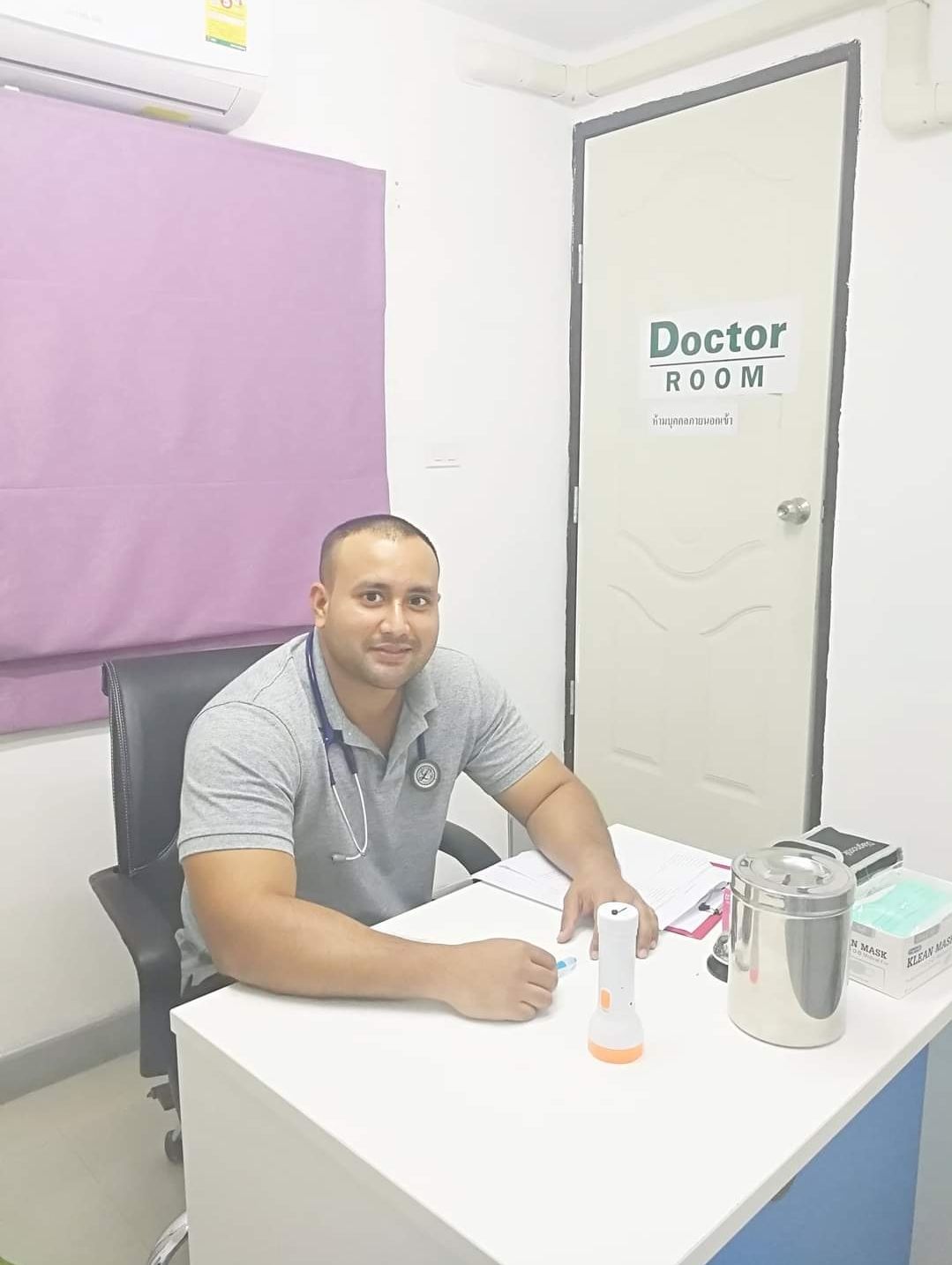
Dr. Ponlawat Pitsuwan is a physician at Doctor Bangkok, a private clinic in central Bangkok. He sees expats, residents, and medical tourists for general medicine, wellness consultations, and IV therapy. His focus is straightforward, evidence-based care delivered in plain language.