
Clinically reviewed by Dr. Ponlawat Pitsuwan, Physician, Doctor Bangkok. Last reviewed: July 2026
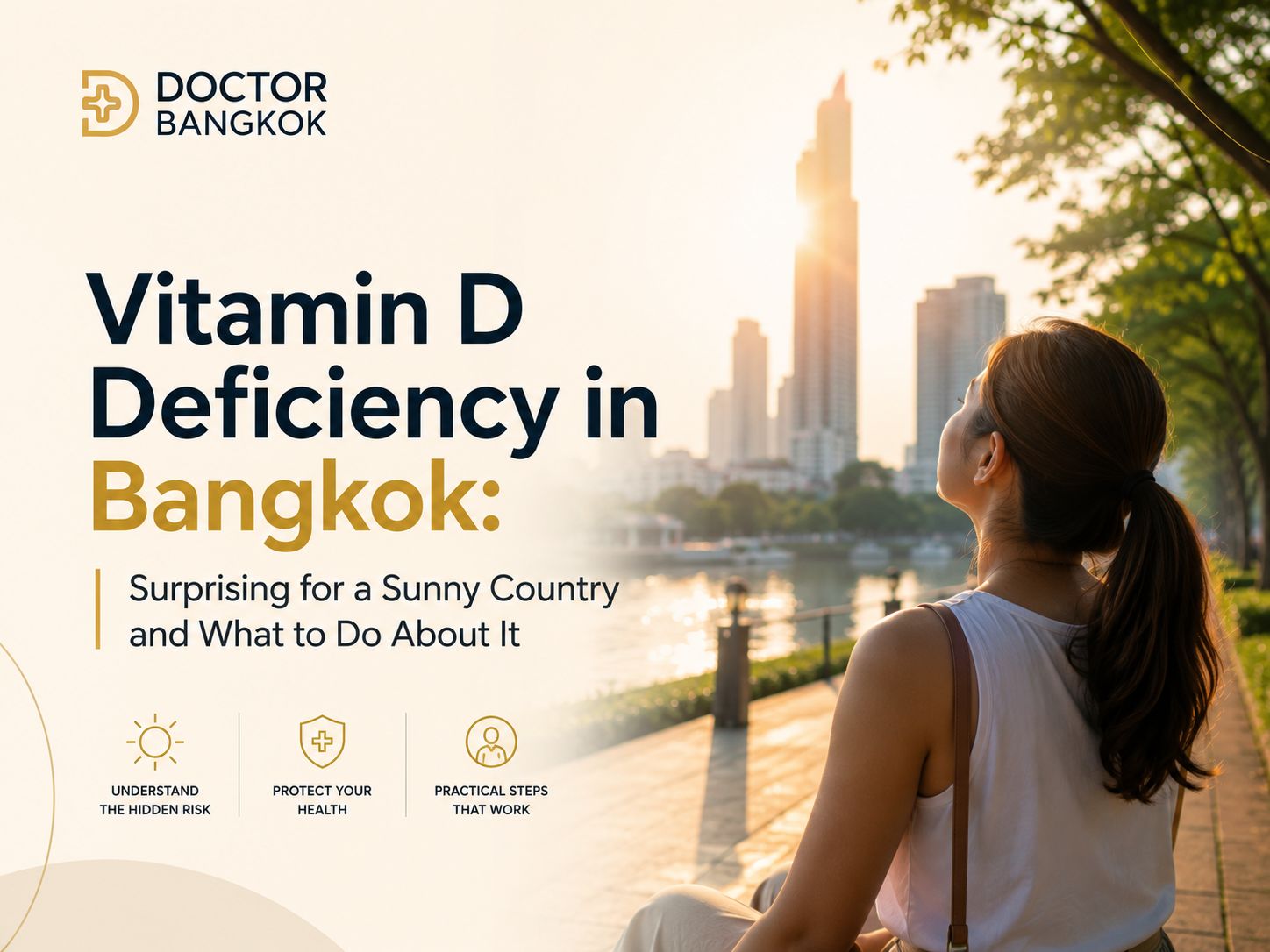
Vitamin D deficiency is surprisingly common in Bangkok, affecting a large proportion of the city’s adult population despite year-round sunshine. The main reasons are air-conditioned office culture, glass-filtered indoor light, sun-avoidance habits, and a local diet without mandatory vitamin D fortification. A simple blood test measures your level, and a doctor can guide you through safe, monitored supplementation if your levels are low.
If you moved to Bangkok from a grey, overcast country expecting the sun to fix everything, you are not alone. A lot of expats arrive here thinking vitamin D deficiency is something that happens back home in winter, not in a tropical city with sun almost every day. Then they spend months feeling run-down, catching every cold going around, and wondering what is wrong.
Vitamin D deficiency is one of the most common findings on routine wellness blood panels here. Many patients are genuinely surprised. If you are living in Bangkok, working indoors, and relying on the Thai climate to top up your levels, there is a good chance it is not working the way you assume.

The Bangkok Paradox — Sun Every Day, Still Deficient
Research shows that a large majority of Bangkok adults, including younger healthy adults, have vitamin D levels below what is considered sufficient. That number is consistently high in urban studies across the city, and it surprises almost everyone who hears it for the first time.
The climate is not the problem. The problem is that most Bangkok residents, expats included, are barely exposed to it. Think about a typical weekday. You wake up inside, take the BTS or MRT to work, sit in an air-conditioned office all day, and go home the same way. You may not see direct sunlight for days at a stretch.
Bangkok’s infrastructure is specifically designed to keep you out of the heat, and it does its job very well. Urban smog also filters out a portion of the UVB radiation your skin needs. And glass, including office windows and condo windows, blocks UVB almost entirely. Sitting by a sunny window does not count.
Who Is Most at Risk in Bangkok
The expat pattern is one I see repeatedly. Someone arrives from northern Europe or North America, assumes the sunshine will be a health upgrade, and never thinks to check. Brief weekend exposure rarely compensates for five days of near-zero UV contact.
Thai-born residents face a different but equally real pressure: sun avoidance for skin-whitening purposes. This is deeply ingrained in Thai beauty culture. Whitening sunscreen, long sleeves, gloves on motorbikes, umbrellas in mild weather. These habits cut UV exposure significantly and are widespread across age groups.
Others at higher risk include anyone over 50, people with darker skin tones, those on plant-based diets, anyone with gut absorption issues such as coeliac disease or inflammatory bowel disease, and people taking certain medications including some anticonvulsants and steroids.

Symptoms That Bangkok Residents Often Miss
The tricky thing about vitamin D deficiency is that the symptoms are easy to explain away. Tired all the time? Bangkok is exhausting. Low mood? Big move, new city, work pressure. Getting sick every few weeks? Must be the air conditioning.
These explanations are not always wrong. But they can also mask a deficiency that a simple blood test would catch.
Symptoms worth paying attention to include persistent fatigue that does not improve with rest, low mood or a flat feeling you cannot shake, frequent infections that seem to last longer than they should, muscle weakness or aching, and dull bone or joint pain, particularly in the lower back, hips, or legs. Severe or long-standing deficiency can lead to softening of the bones, called osteomalacia, and raises the risk of osteoporosis over time.
There is also a link between low vitamin D and immune function, and some evidence that it plays a role in mood and serotonin regulation. I am not saying it is a treatment for depression. But if you are feeling persistently flat and everything else checks out, low vitamin D is worth ruling out.
Why Bangkok’s Food Scene Does Not Fill the Gap
People assume you can eat your way out of this. In Bangkok especially, where the food is extraordinary, that feels like it should be easy. Unfortunately, it is not.
Very few foods contain meaningful amounts of vitamin D naturally. The best sources are oily sea fish like salmon, mackerel, and sardines, egg yolks, and certain UV-exposed mushrooms. Street food in Bangkok is built around freshwater fish, pork, chicken, and rice. The oily sea fish that would actually help are not a staple.
Thailand also does not mandate vitamin D fortification the way some countries do. In the US, UK, and parts of Europe, milk, cereal, and orange juice are commonly fortified as a public health measure. In Thailand, fortified foods exist but are not widely or consistently consumed. You cannot rely on what you find at a convenience store or market to cover the gap.
If you follow a vegan or plant-based diet, your options narrow further. Almost all natural dietary vitamin D comes from animal sources, and mushrooms generally do not provide enough to correct a deficiency.
Sun Exposure in Bangkok — What Actually Helps
Some sun exposure helps, and if you can manage it, it is worth doing. The midday sun in Bangkok, roughly 10am to 2pm, provides the UVB wavelengths your skin needs. Fifteen to twenty minutes of direct sun on the arms and legs, without sunscreen on those areas, a few times a week can contribute meaningfully.
The reality is that this is harder than it sounds. Bangkok at midday in March is close to 40 degrees with full humidity. The rainy season reduces useful UV days significantly. And if you are applying sunscreen to your arms and legs out of habit, you are blocking most of the benefit.
I am not telling you to stop wearing sunscreen. Skin protection matters here. But if you are using it constantly and spending most of your time indoors, you cannot assume you are getting enough UV to keep your levels adequate.
Getting Tested and What Your Results Mean
If you are uncertain about your levels, test. Do not guess.
The test is a blood test measuring 25-hydroxyvitamin D, written as 25(OH)D. Results come in either nmol/L or ng/mL depending on the lab. Levels below 50 nmol/L (20 ng/mL) are considered deficient. Levels between 50 and 75 nmol/L (20 to 30 ng/mL) are considered insufficient, meaning not dangerously low but not where you want to be. Levels above 75 nmol/L (30 ng/mL) are considered sufficient for most adults.
A lot of the Bangkok residents I test fall into the insufficient range. They do not feel dramatically unwell, which is exactly why they have not tested before. Insufficient is not the same as fine, and leaving it unaddressed has long-term consequences for bone density and immune function.
At Doctor Bangkok, we include 25(OH)D as part of our wellness blood panels. If you are due for a general health check, it makes sense to include it rather than run a separate test later. Results come back within a day or two, and we walk you through what the numbers mean for you specifically.
Supplementation — Getting the Dose Right Safely
This is where I see people go wrong most often.
Vitamin D is a fat-soluble vitamin. Unlike water-soluble vitamins that pass out of the body when you take too much, vitamin D builds up in body fat over time. Taking a high dose you found online, without knowing your baseline level, runs a real risk of pushing your levels too high. Excessive vitamin D causes calcium to rise in the blood, which can affect your kidneys and heart. It is preventable by testing first.
The right dose depends on where you are starting from. Someone at 30 nmol/L needs a different plan than someone at 60 nmol/L. Your doctor will usually prescribe vitamin D3, also called cholecalciferol, which is the form most easily used by the body. Dosage varies depending on your baseline and any conditions affecting absorption.
After starting supplementation, a follow-up blood test at eight to twelve weeks tells us whether your levels are responding as expected. If they are not, that itself is useful clinical information. It may point to a gut absorption issue, a problem with how your kidneys process vitamin D, or simply a dose that needs adjusting.
Do not buy the highest-dose supplement you can find at a Bangkok pharmacy and take it without guidance. Test first, supplement based on the result, and retest to confirm it is working.
Feeling tired, getting sick often, or just overdue for a proper check? A vitamin D blood test is a quick, straightforward way to know where you stand. At Doctor Bangkok, our English-speaking physicians offer wellness blood panels that include 25(OH)D testing, same-day appointments, and clear results you can act on. We are centrally located in Bangkok with BTS access. Book a consultation at doctorbangkok.co.th.
Frequently Asked Questions
Can I really be vitamin D deficient if I live in sunny Bangkok?
Yes, and it is more common than most people expect. Research consistently shows that a large majority of Bangkok adults have insufficient vitamin D despite living in one of the sunniest cities in the world. The combination of indoor air-conditioned living, glass-filtered light, urban air pollution, and a diet without fortified foods means the sunshine around you is doing far less for your levels than you would assume.
What is the difference between vitamin D deficiency and vitamin D insufficiency?
Deficiency means your 25(OH)D level is below 50 nmol/L (20 ng/mL). Insufficiency means you are in the 50 to 75 nmol/L range, which is better but still below optimal. A lot of Bangkok residents fall into the insufficient range and have no idea, because the symptoms are mild or easy to blame on something else. Either way, both are worth discussing with a doctor.
What symptoms should I look out for as a Bangkok expat?
Persistent fatigue, low mood, frequent colds or infections, muscle weakness, and dull bone or joint pain are the main ones to watch for. The challenge in Bangkok is that most of these are easy to blame on heat, stress, or air conditioning. If these symptoms are ongoing and nothing obvious explains them, a blood test is a much better next step than guessing.
Should I just buy vitamin D supplements from a Bangkok pharmacy?
Not without testing first. Vitamin D builds up in the body over time, and taking high doses without knowing your baseline can cause calcium levels to rise too high, affecting your kidneys and heart. A 25(OH)D blood test gives your doctor the information needed to prescribe the right dose. At Doctor Bangkok, we test, interpret the result with you, and recheck at eight to twelve weeks to confirm your levels are moving in the right direction.
How long does it take to correct vitamin D deficiency?
Most patients see meaningful improvement within four to six weeks of starting the right dose, with a proper retest at eight to twelve weeks confirming whether supplementation is working. How quickly you correct depends on your starting level, your dose, how well your gut absorbs vitamin D, and whether any other conditions are affecting the process.
Does spending weekends outdoors in Bangkok fix vitamin D deficiency?
It helps at the margins, but it is rarely enough on its own to correct an existing deficiency. If you are spending five days a week indoors and getting a couple of hours outside on weekends, the numbers do not work in your favour, especially with sunscreen on. Supplementation guided by a blood test is a far more reliable way to bring your levels up and keep them there.
Dr. Ponlawat Pitsuwan
Physician, Doctor Bangkok
a private medical clinic in central Bangkok. He sees expats, residents, and medical tourists for general health consultations, wellness blood panels, vitamin D assessment, and ongoing health management. His focus is straightforward, evidence-based care delivered in plain language.
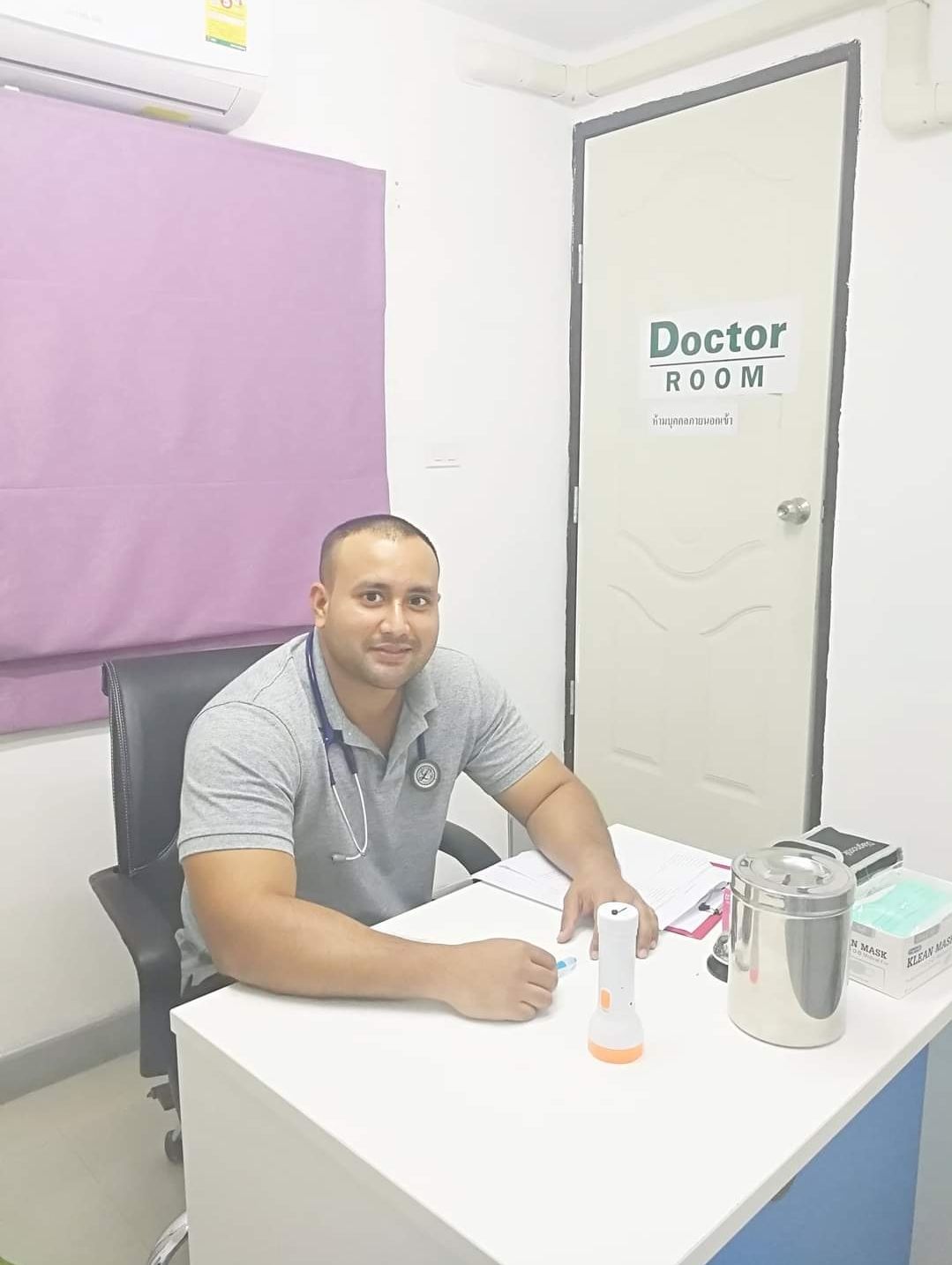
Dr. Ponlawat Pitsuwan is a physician at Doctor Bangkok, a private clinic in central Bangkok. He sees expats, residents, and medical tourists for general medicine, wellness consultations, and IV therapy. His focus is straightforward, evidence-based care delivered in plain language.