

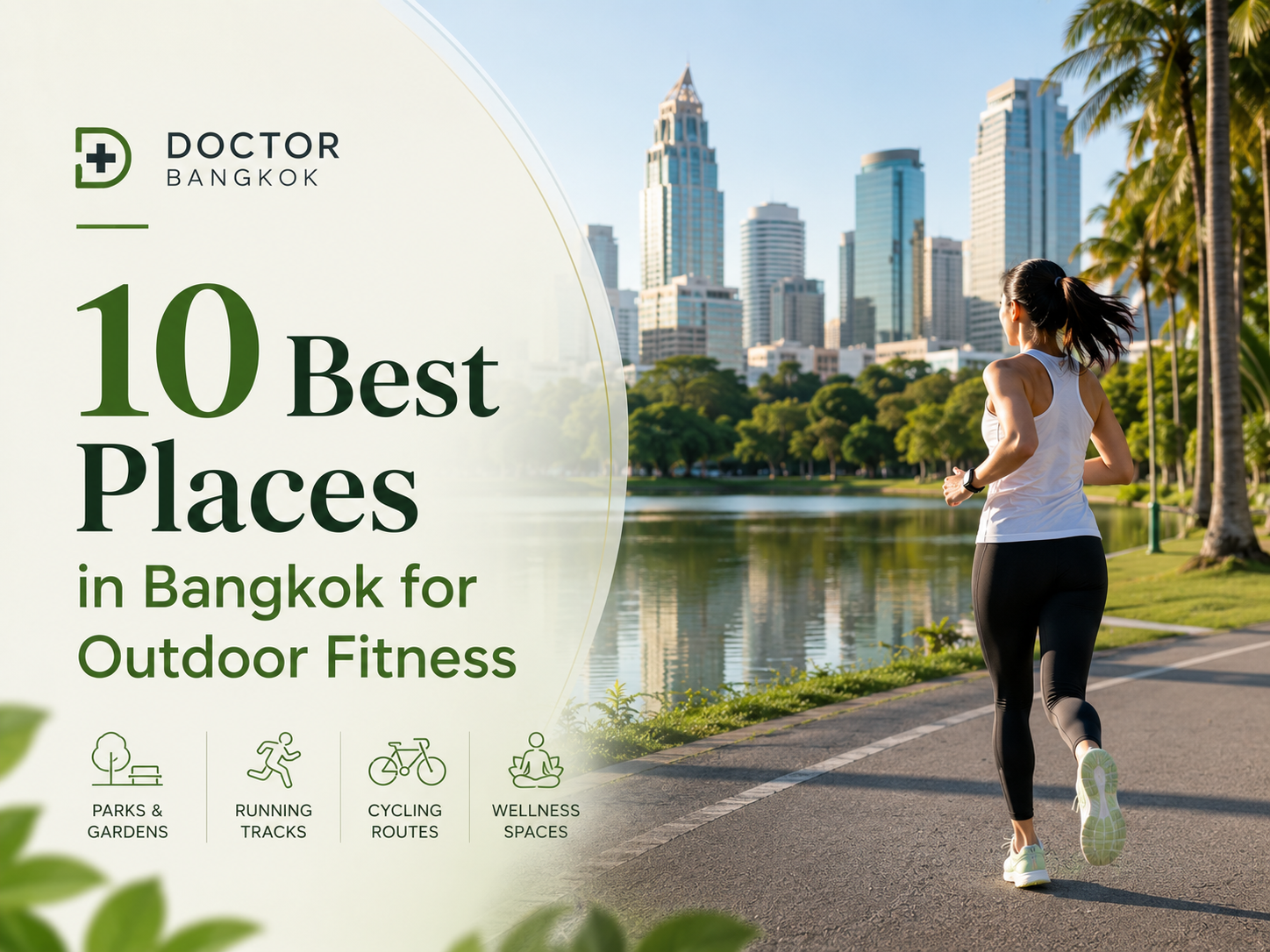
Clinically reviewed by Dr. Ponlawat Pitsuwan, Physician, Doctor Bangkok. Last reviewed: July 2026
Bangkok has excellent outdoor fitness options, from free park gyms to long running circuits, but the heat is real and it catches people off guard. The safest windows are before 7am and after 6pm. If you are new to the city, give your body two to four weeks before pushing hard. The parks below are the best starting points, whatever your fitness level.
If you have just landed in Bangkok and you are trying to keep up your fitness routine, the first thing you will notice is the heat. Not just warm. Properly hot, humid, and relentless for most of the year. A lot of expats and visitors arrive thinking they will train the same way they did back home, then wonder why they feel awful after twenty minutes outside.
The good news is that Bangkok has some genuinely great outdoor fitness spots. Free gym equipment, long running tracks, cycling paths, even open-air Muay Thai training. You just need to know where to go, when to go, and what to watch out for. This guide covers all of it.

The 10 Best Outdoor Fitness Spots in Bangkok
1. Lumphini Park
Lumphini is the obvious starting point, and for good reason. It has a 2.5km running track, shaded paths, pull-up bars, and an outdoor exercise area used by hundreds of people every morning. The park opens at 4:30am, which matters when you are trying to beat the heat.
Free aerobics classes run in the early morning and are open to anyone. Just turn up and join in. It sits on both the Silom and Lumphini MRT lines, so it is easy to reach from most parts of the city.
2. Benjakitti Forest Park
This is the one that surprises most new arrivals. Benjakitti now has an elevated skywalk through a forest zone, a lake circuit, and a dedicated cycling path. The newer forest section feels almost nothing like central Bangkok.
The park opens at 5am. It connects directly to Benjakitti Pavilion MRT station and is walkable from Asok BTS. For anyone based on Sukhumvit, this is your closest serious green space.
3. Chatuchak Park
Right next to the weekend market, Chatuchak Park has a large open field, shaded walking paths, and outdoor gym stations. It is quieter on weekdays, which makes it a good option if you want space to move without crowds.
MRT Chatuchak Park station drops you almost at the entrance. Early mornings here are genuinely pleasant, especially in the cooler months between November and February.
4. Wachirabenchathat Park (Rot Fai Park)
One of the most underrated parks in Bangkok. Rot Fai has a large lake with a running loop, outdoor gym equipment, and a decent amount of shade. It tends to attract a local crowd, which keeps it from feeling touristy.
It is further north near Ladprao, so it suits expats in that part of the city better than those on Sukhumvit. BTS Mo Chit station is a short motorcycle taxi ride away.
5. Rama IX Park
Rama IX is huge. Free outdoor gym equipment, a long running circuit, wide open space, and some of the best shade coverage of any park on this list. On weekends it fills up with families and fitness groups.
It sits further east along Petchaburi Road, accessible via MRT Rama 9 station. If you are willing to grab a taxi, it is worth the trip.
6. Suan Luang Rama IX (Southeast Bangkok)
This is a large, undervisited park with a solid running track and outdoor fitness stations. If you live in the eastern or southeastern parts of Bangkok, this is your best local option. It is big enough that it never feels crowded, even on weekend mornings.
7. The Chao Phraya Riverside Paths
The riverside promenades between Tha Tien and Pak Khlong Talat give you a different kind of workout. It is flat, there is some breeze off the river, and the views are unlike anything you will get in a park. Running here early morning, before the tourist boats start up, is a genuinely enjoyable experience.
8. Sirikit Park (Ratchadapisek)
A compact, clean neighbourhood park near MRT Cultural Centre station. It has a running track and outdoor equipment, and it is consistently used by locals in the early morning. Good for an easy run or a quick bodyweight session if you live in the Ratchada area.
9. King Rama IX Cycling Lane (Sukhumvit to Bangna)
Bangkok has been expanding its cycling infrastructure, and this corridor is the most established. If you have a bike or can rent one, this gives you a proper distance cycling option outside the parks. It is best used early on weekend mornings when traffic is manageable.
10. Outdoor Muay Thai Training Camps
Several gyms in Bangkok offer outdoor or open-air training sessions. Gyms in On Nut, Bang Na, and Ratchadapisek often run outdoor bag work and pad sessions in the early morning. This is a Bangkok-specific fitness option you simply would not get anywhere else. It is worth trying even if you have no background in it.
Best Time of Day for Outdoor Fitness in Bangkok
This matters more here than anywhere else I can think of. Bangkok’s heat index can sit above 40 degrees Celsius between 10am and 4pm. Exercising hard in that window is not just uncomfortable. It is genuinely risky.
The two safe training windows are before 7am and after 6pm. Most parks above open by 5am. That early morning window is when you will see the city at its most active outdoors. The UV index is low, temperatures are still manageable, and there is usually a light breeze.
Evening training after 6pm works well too. Many parks stay lit and open until 9pm. You will still sweat heavily, but the risk of serious heat illness drops significantly after sunset.

Tips for Newcomers: Your First Weeks of Outdoor Fitness in Bangkok
If you have just arrived from a temperate country, do not try to replicate your home training in week one. Your body needs time to adjust. This is not a fitness issue. Even very fit people struggle in the first two to four weeks of exercising in tropical heat.
What I tell patients who are newly arrived and want to keep training: cut your intensity by about a third, keep sessions shorter than usual, and prioritise hydration above everything else. Take rest days more seriously than you would at home.
After two to four weeks, most people start feeling more comfortable. Your sweat response improves, your heart rate stabilises faster, and you can push harder without hitting a wall. Be patient with that curve.
Staying Safe While Exercising Outdoors in Bangkok
Heat exhaustion is something I see in the clinic more than most people expect, and it is almost always preventable. The warning signs are heavy sweating, dizziness, nausea, muscle cramps, and a faster-than-normal heartbeat. If you notice any of these, stop. Move to shade or air conditioning. Drink water with electrolytes, not just plain water.
Heat stroke is a different situation. If someone stops sweating, becomes confused, or loses consciousness, that is a medical emergency. Get them into a cool environment immediately and call for help.
A few practical rules: wear high-SPF sunscreen even in the early morning, carry at least 750ml of water for any session over 30 minutes, and wear light, moisture-wicking clothing. Green spaces like Lumphini and Benjakitti carry some dengue mosquito risk, especially after rain. Use insect repellent and cover exposed skin where you can.
Plain water is not enough if you are sweating heavily for more than 45 minutes. Sports drinks, electrolyte tablets, or coconut water all work well here.
Outdoor Fitness by Neighbourhood: Where to Train Near You
If you live on Sukhumvit, Benjakitti Forest Park and Lumphini Park are your closest serious options. Both are BTS and MRT accessible. Benjakitti is the easier walk from Asok and Phrom Phong.
In the Silom and Sathorn area, Lumphini Park is right there and earns its reputation. For the Ari and Phahonyothin corridor, Chatuchak Park is your nearest large green space and is pleasant in the early morning.
Further east along Sukhumvit, Rama IX Park and Suan Luang are the best options. They are larger, less crowded, and worth the slightly longer journey if you want more space to move. More options for fitness-focused visitors are covered in our travel health and fitness guide for Bangkok.
When to See a Doctor After an Outdoor Workout in Bangkok
Most post-workout fatigue in Bangkok is dehydration and heat. Rest, fluids, and a cool room will sort it. But come in if you have persistent vomiting, confusion, a temperature above 39.5 degrees Celsius, chest pain, or you simply feel wrong in a way that rest is not fixing.
Doctor Bangkok is on Sukhumvit Soi 13, a short walk from BTS Nana and Asok. We are open 24 hours, seven days a week, and all our physicians speak English. We see a lot of patients after heat episodes and sporting injuries. IV rehydration therapy is available on-site, which works significantly faster than drinking fluids alone when someone is properly dehydrated.
Sports injuries from running, cycling, or Muay Thai training are something we handle here too. Sprains, tendon pain, falls, minor lacerations. No appointment needed. Walk in and we can assess you the same day. If you are not sure whether what you are feeling warrants a visit, the honest answer is: when in doubt, come in.
Exercising outdoors in Bangkok is entirely doable, and these parks make it genuinely enjoyable. But heat, humidity, and dehydration are real risks. If you feel unwell after a workout, experience dizziness, vomiting, or confusion, or pick up a sports injury, Doctor Bangkok on Sukhumvit Soi 13 is open 24 hours a day. English-speaking doctors, no appointment needed, IV rehydration and injury assessment on-site. Visit doctorbangkok.co.th or walk in. We are two minutes from BTS Nana.
Frequently Asked Questions
What is the best time of day to exercise outdoors in Bangkok?
The two safe windows are before 7am and after 6pm. Lumphini Park opens at 4:30am if you want an early start. Between 10am and 4pm, the heat index can exceed 40 degrees Celsius, which makes strenuous outdoor exercise genuinely dangerous, not just uncomfortable.
How long does it take to acclimatise to exercising in Bangkok’s heat?
Most people need two to four weeks. Even if you are very fit, your body needs time to adjust to tropical heat and humidity. In the first few weeks, reduce your intensity and keep sessions shorter than usual. Pushing hard too soon is how heat exhaustion happens.
What are the warning signs of heat exhaustion when exercising outdoors in Bangkok?
Heavy sweating, dizziness, nausea, muscle cramps, and a fast heartbeat are the main signs. Stop exercising, move to shade or air conditioning, and drink water with electrolytes. If someone becomes confused, stops sweating, or loses consciousness, that is heat stroke and needs immediate medical attention. Doctor Bangkok is open 24 hours for rapid assessment or IV rehydration.
Are the outdoor gyms in Bangkok parks free to use?
Yes, outdoor gym equipment in Benjakitti, Chatuchak, Wachirabenchathat, and Rama IX parks is free and open to anyone. Lumphini Park has an indoor gym area that charges a small fee, around 50 THB. Equipment typically includes pull-up bars, resistance stations, and bodyweight benches.
What should I do if I feel unwell after an outdoor workout in Bangkok?
Rest in an air-conditioned space and rehydrate with water and electrolytes. If you have vomiting, confusion, chest pain, or a temperature above 39.5 degrees Celsius, seek medical care without delay. Doctor Bangkok on Sukhumvit Soi 13 is open 24 hours, offers IV rehydration therapy, and has English-speaking physicians. No appointment needed.
Is there a dengue fever risk when exercising in Bangkok parks?
There is some risk in green spaces, particularly after rain and in areas with standing water. Use insect repellent before outdoor sessions and cover exposed skin where practical. If you develop a fever within two weeks of spending time outdoors in Bangkok, get tested. Dengue responds well to early care, and Doctor Bangkok offers same-day dengue testing.
About the author: Dr. Ponlawat Pitsuwan is a physician at Doctor Bangkok, a private medical clinic in central Bangkok. He sees expats, residents, and medical tourists for general medicine, heat illness assessment, travel health, sports injuries, and post-workout complications. His focus is straightforward, evidence-based care delivered in plain language.
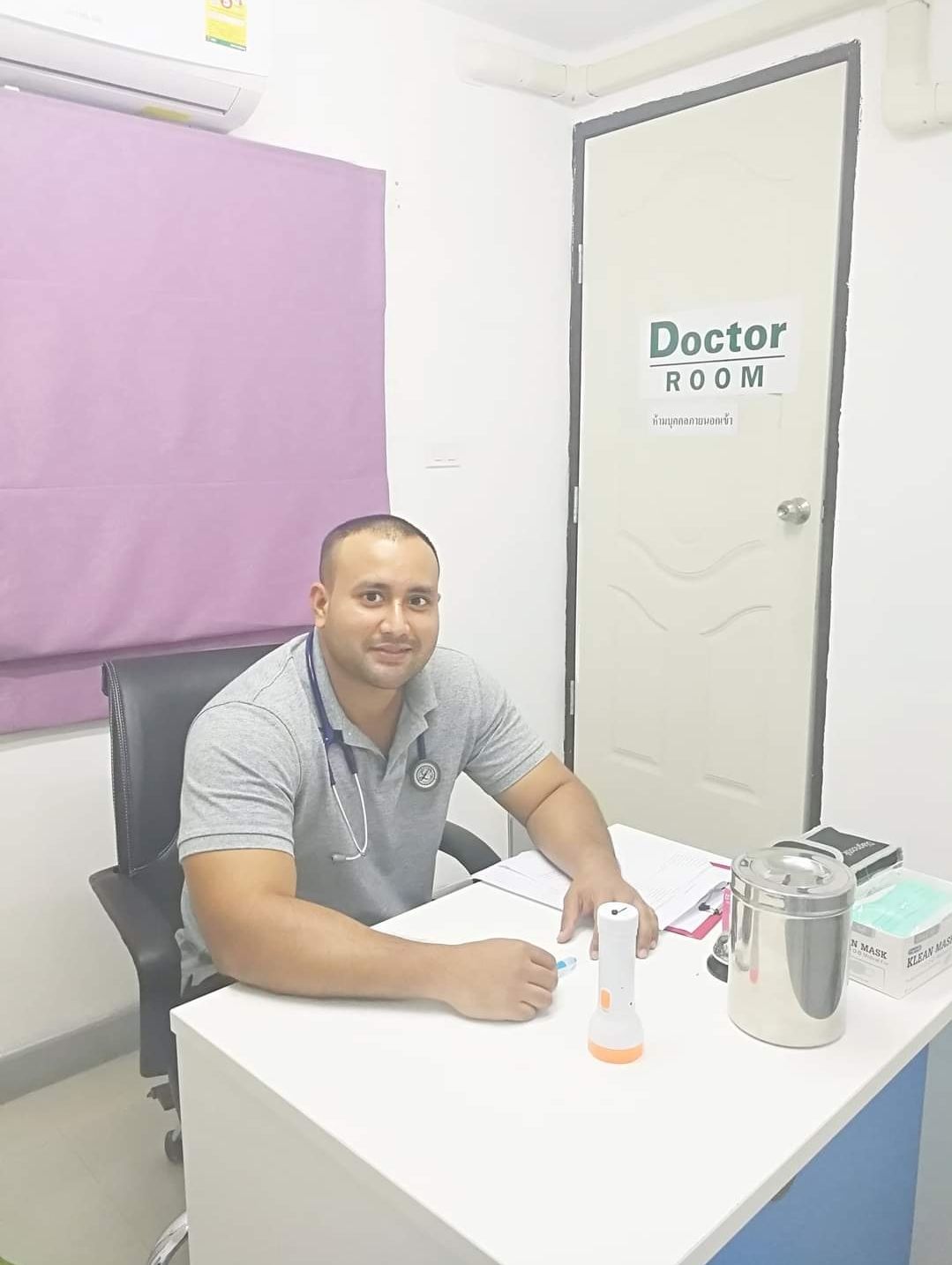
Dr. Ponlawat Pitsuwan is a physician at Doctor Bangkok, a private clinic in central Bangkok. He sees expats, residents, and medical tourists for general medicine, wellness consultations, and IV therapy. His focus is straightforward, evidence-based care delivered in plain language.