

Clinically reviewed by Dr. Ponlawat Pitsuwan, Physician, Doctor Bangkok.
Last reviewed: August 2026
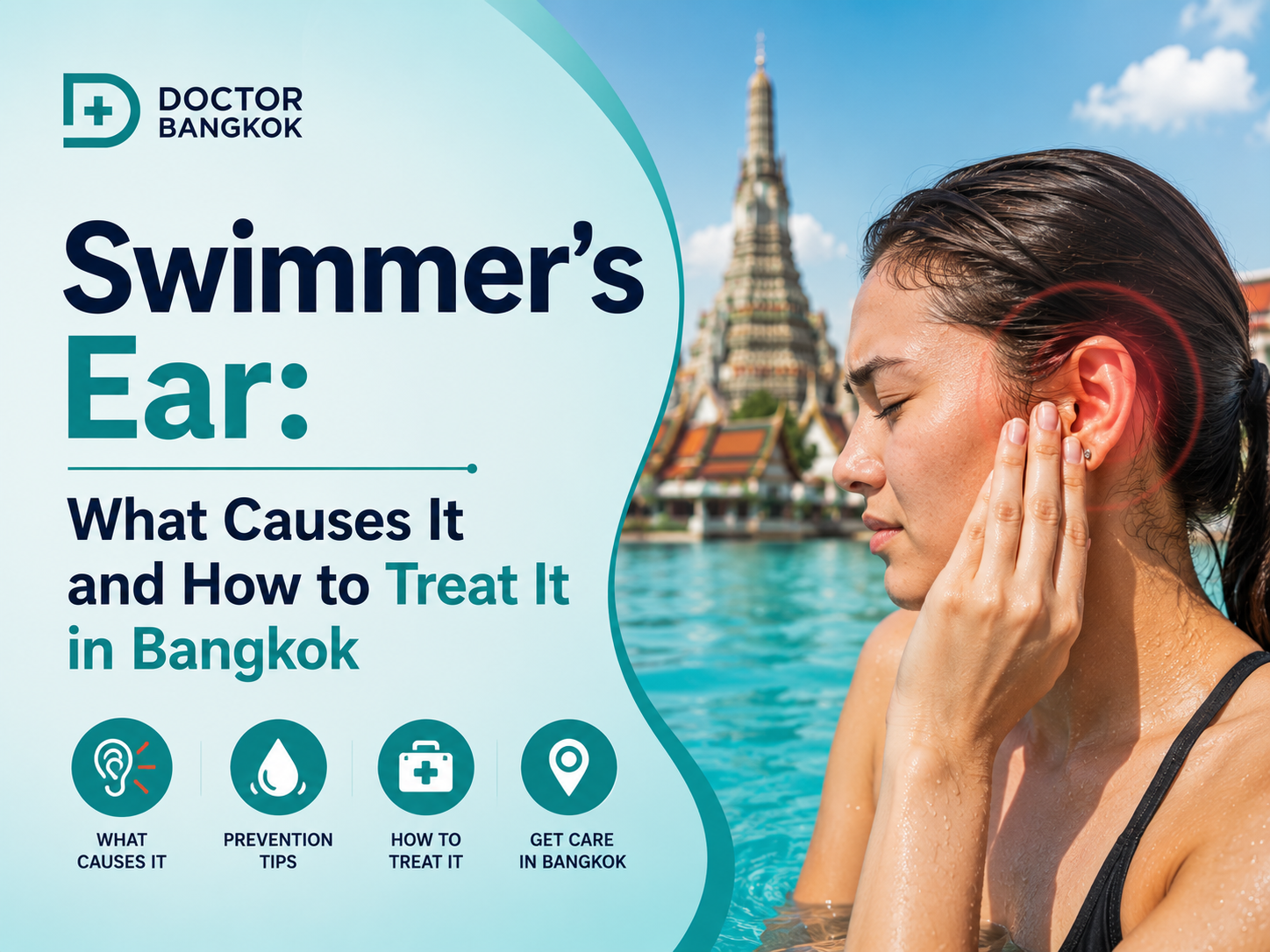
Swimmer’s ear is an infection of the outer ear canal, usually caused by bacteria or fungi that grow when moisture gets trapped in the ear. In Bangkok, the year-round heat and humidity make it a risk even when you have not been near a pool. Most cases clear up within seven to ten days with the right ear drops, but getting the correct diagnosis matters because bacterial and fungal infections need different treatments.
If your ear started hurting after a swim in a Bangkok hotel pool, or you have been waking up with a blocked, tender ear for the past few days, you are probably in the right place. This is one of the more common things I see in expats and travellers here, and it is also one of the conditions people tend to sit on too long before coming in.
The good news: swimmer’s ear is very treatable. The part that matters is getting the right treatment for the right type of infection. Not all ear drops work the same way, and buying something off the shelf at a Thai pharmacy before you know what you are dealing with can make things worse. Here is what you need to know.

What Is Swimmer’s Ear and What Causes It
Swimmer’s ear is an infection of the outer ear canal, the narrow tube between your outer ear and your eardrum. When it stays wet for too long, the skin breaks down, your natural earwax barrier weakens, and bacteria or fungi move in.
You do not need to be a swimmer to get it. I see patients who have never been near a pool but developed it after heavy sweating, daily hot showers, or simply because Bangkok’s humidity had already softened the skin in their ear canal. The warm, moist environment here does a lot of the work on its own.
Most cases are bacterial. But roughly one in ten is fungal, and that changes everything about how it needs to be treated.
Why Bangkok Makes Swimmer’s Ear More Likely
Most of my patients from Europe, North America, or Australia have had swimmer’s ear once or twice in their lives, usually after a summer holiday. In Bangkok, the risk does not go away because there is no real dry season.
Humidity stays high year-round. Hotel rooftop pools, beach day trips, Muay Thai training with sweat-soaked headgear, even just walking around in 35-degree heat can trap moisture in the ear canal. If you are also cleaning your ears with cotton buds, you are removing the earwax that would normally protect you.
Bangkok’s canal water and some public pools carry a higher bacterial load than pools in colder countries. If you have been in any open water here, including khlongs, your exposure risk goes up significantly.

Bacterial vs Fungal Swimmer’s Ear: Why It Matters
This is the distinction most generic swimmer’s ear articles skip, and it is genuinely important. If you have a fungal infection and treat it with antibiotic drops, it will not get better. It will probably get worse.
Bacterial swimmer’s ear usually comes on quickly. The ear feels tender, slightly blocked, and there may be a thin discharge. Fungal swimmer’s ear tends to itch more than it hurts, and you may notice white or black debris in the canal. But these symptoms overlap enough that I would not rely on self-diagnosis here.
The only way to know for sure is to have a doctor look directly into your ear canal. At Doctor Bangkok, we do this in the same visit and prescribe the right drops based on what we find. If there is any doubt, a swab can confirm the organism.
Three Stages of Swimmer’s Ear
Thinking about this in stages helps you decide how urgently you need to be seen.
In the early stage, you feel mild itching or discomfort. The canal is not swollen shut. If you catch it here, treatment is straightforward and fast. Most people try to wait it out at this point, which usually moves them into the next stage.
The moderate stage means the pain is real. Pressing on the small flap of cartilage at the front of your ear canal causes sharp pain, and the canal may be partially swollen. You need treatment now, not tomorrow.
The advanced stage means the canal is nearly or fully blocked by swelling. Pain may spread to the jaw or neck, and you may have swollen lymph nodes. At this point, oral antibiotics alongside drops are often needed. Come in the same day.
When Swimmer’s Ear Becomes Serious
Most cases stay manageable. But there is a rare complication called necrotising otitis externa, where the infection spreads beyond the canal into the bone and tissue at the base of the skull.
This is almost exclusively a concern in people with diabetes or a weakened immune system. If that describes you and you have severe ear pain not responding to drops, pain spreading to your jaw or face, or any facial weakness, you need urgent assessment. Do not wait.
For otherwise healthy patients, untreated swimmer’s ear can still lead to a spreading skin infection around the outer ear and temporary hearing loss. Early treatment prevents both.
What Not to Do
Cotton buds are the most common thing that turns mild ear irritation into a proper infection. They push earwax deeper, scratch the canal lining, and remove the natural protection your ear depends on. Stop using them.
Do not buy ear drops from a Thai pharmacy without a diagnosis first. Thai pharmacies can dispense without a prescription, which sounds convenient but is risky if you do not know whether your infection is bacterial or fungal, or whether your eardrum is intact. Some common antibiotic drops can cause allergic reactions in the canal, and certain drops are unsafe if your eardrum has a perforation.
Keep water out while you are being treated. A cotton ball lightly coated in petroleum jelly placed at the ear opening during showers works well. Avoid earbuds and headphones until the canal has healed.
How Swimmer’s Ear Is Diagnosed and Treated
Treatment starts with looking in the ear. An examination tells us whether the canal is inflamed, what the discharge looks like, and whether the eardrum is intact. That last point determines which drops are safe to use.
If the swelling is significant, a thin gauze ear wick may be placed in the canal. This keeps the canal open and lets drops reach where they need to go. It sounds uncomfortable but most patients tolerate it well.
For bacterial infections, antibiotic drops are the first-line treatment. For fungal cases, antifungal drops are required. For moderate to advanced cases, a short course of oral antibiotics may be added. Most patients with mild to moderate infection feel significantly better within three to four days and are clear by ten days.
Getting Treated for Swimmer’s Ear in Bangkok
If you are in Bangkok with ear pain and want to be seen today, Doctor Bangkok at Sukhumvit Soi 13 offers walk-in care around the clock with no appointment needed. English-speaking doctors, BTS accessible. We will examine your ear, determine whether the infection is bacterial or fungal, and get you started on the right treatment in a single visit.
If the pain is bad enough that you do not want to travel, we also offer hotel visits across central Bangkok. A doctor comes to you, carries out the examination, and can start treatment on the spot. For swimmer’s ear after a rooftop pool session at a Sukhumvit hotel, I have done this more times than I can count.
Our swimmer’s ear treatment in Bangkok page covers what to expect from your visit, what we treat, and how we work with expats and short-stay visitors. Ear infections are one of the most common reasons people come through our door.
Ear pain in Bangkok? Doctor Bangkok at Sukhumvit Soi 13 is open 24 hours. Walk in without an appointment for same-day examination, diagnosis, and treatment. If you cannot travel, we offer hotel and residence visits across central Bangkok. English-speaking doctors. No referral needed. Visit doctorbangkok.co.th or walk in today.
Frequently Asked Questions
Can I get swimmer’s ear in Bangkok even if I have not been swimming?
Yes, and I see this regularly. Bangkok’s humidity, combined with daily sweating and hot showers, can trap enough moisture in the ear canal to break down its natural defences. You do not need pool exposure. If your ear is itching, tender, or feels blocked, it still warrants a check.
How do I know if my ear infection is swimmer’s ear or a middle ear infection?
Pressing on the small flap of cartilage at the front of your ear canal causes sharp pain in swimmer’s ear but not in a middle ear infection. Middle ear pain tends to feel deeper and duller, and often worsens when you swallow or lie down. Only an examination confirms which type it is, and getting that wrong means wrong treatment.
Can I buy swimmer’s ear treatment from a pharmacy in Bangkok without seeing a doctor?
You can, but I would not recommend it. Without knowing whether the infection is bacterial or fungal, and whether your eardrum is intact, you may end up with drops that do not work or drops that should not be used at all. A short ear examination first is the smarter move.
How quickly can I be seen for swimmer’s ear in Bangkok?
At Doctor Bangkok, same-day walk-in care is available around the clock. A doctor will examine your ear, determine the type of infection, and prescribe the correct treatment in the same visit. If you cannot travel due to pain, a doctor can come to your hotel or residence across central Bangkok.
Is swimmer’s ear dangerous if left untreated in a tropical country?
Most cases are not dangerous if treated promptly. Left untreated, they can progress from mild irritation to significant swelling, spreading skin infection, and temporary hearing loss. In people with diabetes or a weakened immune system, untreated cases carry a small but serious risk of the infection spreading into surrounding tissue. Early treatment prevents all of this.
How long does swimmer’s ear take to heal with treatment?
With the correct drops, most patients feel noticeably better within three to four days. Full resolution usually takes seven to ten days. Fungal infections sometimes take a little longer. If you are not improving after five days of treatment, come back in so we can reassess.
About the author: Dr. Ponlawat Pitsuwan is a physician at Doctor Bangkok, a private medical clinic in central Bangkok. He sees expats, residents, and medical tourists for ear infections, travel-related illnesses, and general medical concerns. His focus is straightforward, evidence-based care delivered in plain language.
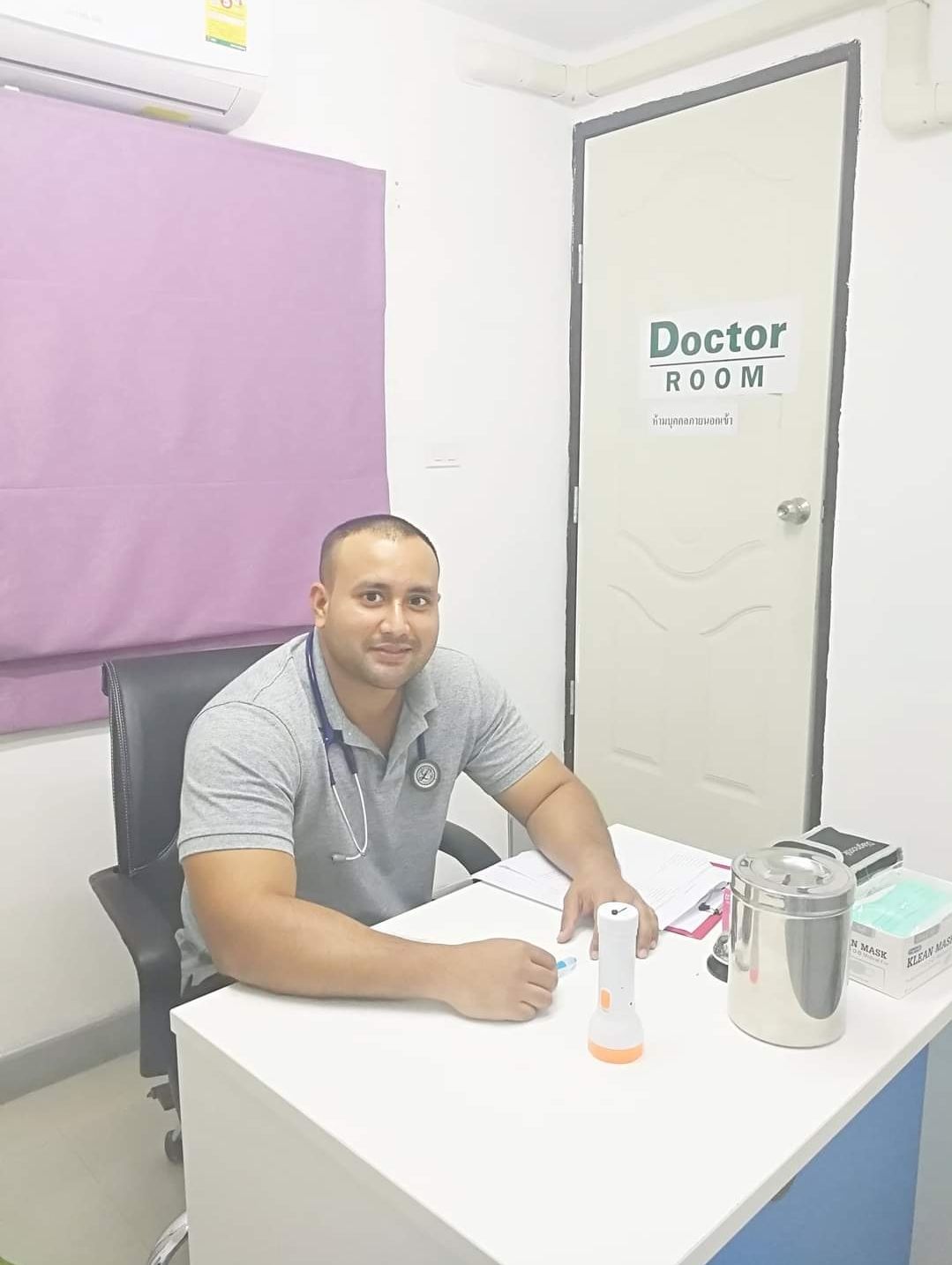
Dr. Ponlawat Pitsuwan is a physician at Doctor Bangkok, a private clinic in central Bangkok. He sees expats, residents, and medical tourists for general medicine, wellness consultations, and IV therapy. His focus is straightforward, evidence-based care delivered in plain language.