

Clinically reviewed by Dr. Ponlawat Pitsuwan, Physician, Doctor Bangkok. Last reviewed: August 2026
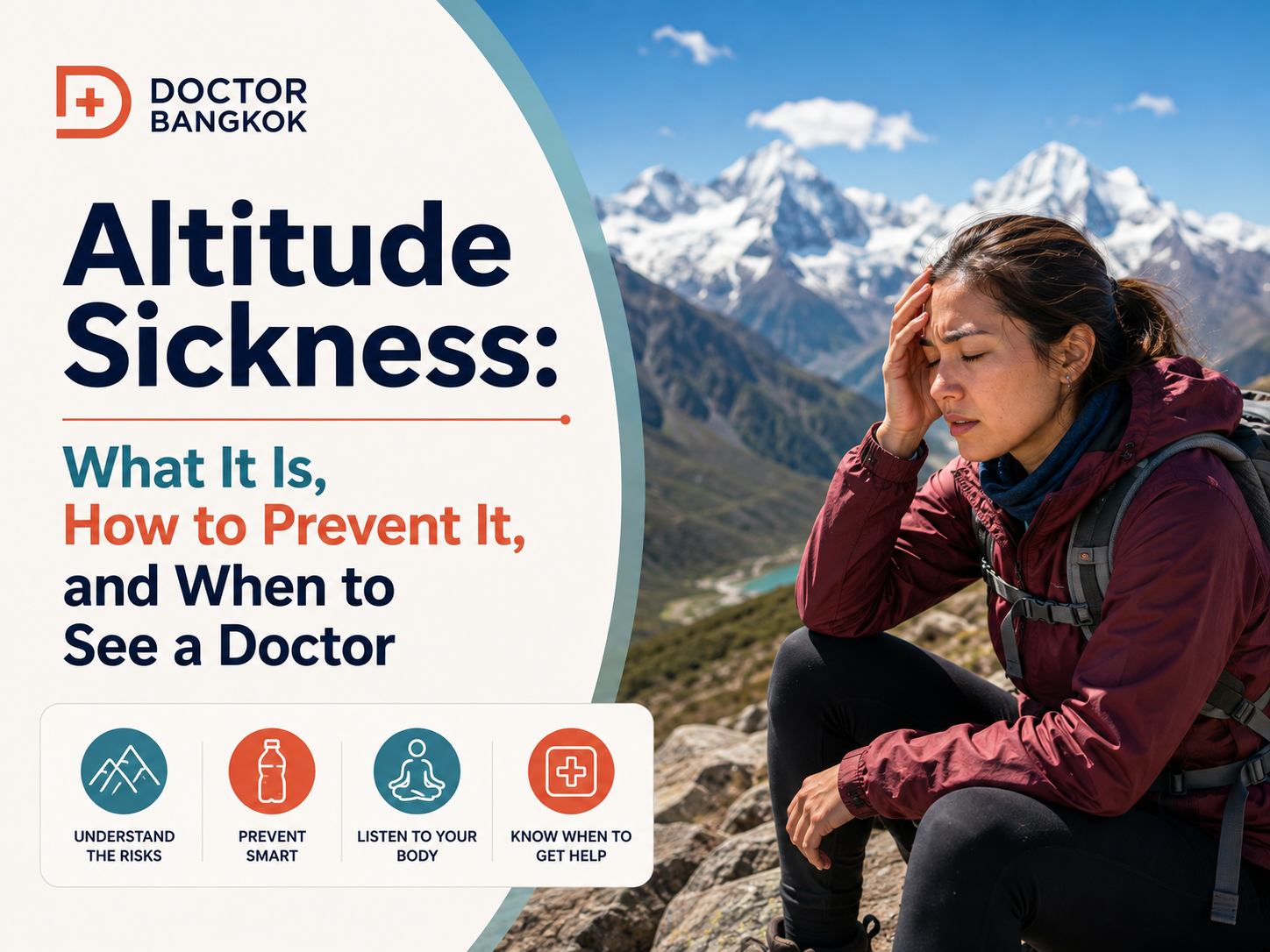
Altitude sickness happens when you climb too high too fast and your body does not get enough oxygen. Symptoms include headache, nausea, dizziness, and fatigue. Mild cases improve with rest and descent. Severe cases can become life-threatening within hours and require emergency treatment.
You booked the trek. Maybe it is Everest Base Camp, a hill village in northern Thailand, or somewhere in the Andes. You feel fine right now, sitting in Bangkok. But a lot of people who felt fine at sea level feel terrible at 3,000 metres, and some of them wait too long to do anything about it.
Altitude sickness is not rare, and it does not only affect unfit people. It can hit anyone, regardless of age or fitness level. The good news is that it is almost entirely preventable with the right preparation. This guide covers what to watch for, what to take, when to descend, and how to prepare properly before you leave.

What Happens to Your Body at High Altitude
At high altitude, air pressure drops. Each breath delivers less oxygen to your blood than it would at sea level. Your body tries to compensate, but it takes time. Go up too fast and your system cannot keep up.
Most people start feeling effects above 2,500 metres. Some feel it lower. There is no reliable way to predict who will be affected based on fitness alone.
The Three Types of Altitude Sickness
Acute Mountain Sickness
This is the common one. Acute mountain sickness, or AMS, usually starts within a few hours of arriving at altitude. You get a headache, feel tired, lose your appetite, and sometimes feel nauseous. It feels a lot like a hangover.
Most people with mild AMS improve if they stop ascending and rest. The mistake is pushing on through symptoms hoping they will pass on the way up. They often do not.
High-Altitude Pulmonary Edema
This one is serious. High-altitude pulmonary edema, or HAPE, means fluid is building up in your lungs. You feel short of breath even at rest, and you may cough up pink or frothy mucus. HAPE is one of the most common causes of altitude-related death.
If you or anyone in your group has these symptoms, descend immediately. Do not sleep on it. Do not wait until morning.
High-Altitude Cerebral Edema
High-altitude cerebral edema, or HACE, means fluid is building up in the brain. The telltale sign is loss of coordination. If someone is stumbling, confused, or cannot walk a straight line, that is a medical emergency.
Descend immediately. Every metre of altitude you lose buys time.

Who Is Most at Risk
Fitness does not protect you. Previous altitude experience helps somewhat, but it does not guarantee anything the next time. What raises your risk most is how fast you ascend, how high you sleep, and certain pre-existing health conditions.
Coronary artery disease, heart failure, chronic lung disease, and obstructive sleep apnea all increase the risk of severe altitude illness. Prior episodes of HAPE also put you in a higher-risk group. If any of these apply to you, a medical review before you book the trek is not optional. It is part of the planning.
Altitude Sickness in Thailand: What Bangkok Travellers Need to Know
A lot of people assume altitude sickness only happens on Himalayan treks. It does not. Doi Inthanon, Thailand’s highest peak at 2,565 metres, sits above the threshold where AMS becomes a real risk. Multi-day trekking trips in northern Thailand where you sleep at altitude are a different story from a day drive up and back.
The bigger concern I see in my clinic is people flying from Bangkok to Kathmandu or Lhasa for a longer trek without seeing a doctor first. By the time they land, it is too late to start preventive medication properly. Planning ahead from Bangkok makes all the difference.
Altitude Sickness Medication: What to Know Before You Leave Bangkok
The main preventive medication is acetazolamide, sold under the brand name Diamox. It helps your blood carry more oxygen by stimulating faster breathing. It does not make you immune to altitude sickness. It reduces the chance of getting it.
Acetazolamide requires a prescription in Thailand and cannot be bought over the counter. Timing matters: you need to start it one to two days before your ascent, not on the day you arrive at altitude. If you have a sulfa allergy, you cannot take it. A doctor will check this before prescribing. Dexamethasone is an alternative for people who cannot take acetazolamide, but it carries more side effects and is generally reserved for treatment rather than prevention.
If you are flying out of Bangkok for a high-altitude destination, the most practical step is a pre-travel consultation at Doctor Bangkok before your departure. We review your health history, discuss your itinerary, and prescribe preventive medication if it is appropriate for you.
How to Prevent Altitude Sickness Without Medication
The most effective non-medication strategy is gradual ascent. Above 3,000 metres, the standard rule is to increase your sleeping altitude by no more than 300 to 500 metres per day, with a rest day every third day.
Stay well hydrated. Avoid alcohol and sleeping pills in the first few days at altitude, as both can suppress breathing during sleep and worsen low oxygen levels overnight. Keep physical activity light on day one.
Do not let competitive pressure from your trekking group push you faster than your body is ready for. Altitude does not care how fit anyone is.
Treatment: What to Do When Symptoms Start
For mild AMS, stop ascending. Rest at the same altitude. Take paracetamol or ibuprofen for the headache and drink plenty of fluids. Give your body 24 hours to adjust before going higher.
If symptoms are not improving or are getting worse after 24 hours, descend. Even dropping 300 to 500 metres can bring real relief. Descent is always the right call when you are uncertain.
For HAPE, nifedipine can help reduce pressure in the lung blood vessels while you prepare to descend. For HACE, dexamethasone can reduce brain swelling and buy time. Both are emergency treatments, not substitutes for getting lower.
Some trekking groups carry a Gamow bag, a portable pressure chamber that simulates lower altitude. It is used when immediate descent is not possible. It buys time. It is not a cure.
When to See a Doctor: Red Flags You Cannot Ignore
Come down and see a doctor if you have shortness of breath at rest, loss of coordination, confusion, chest tightness, or a cough producing pink or frothy sputum. These are not mild symptoms.
After recovering from mild AMS, most people do not need a formal follow-up. But if you experienced HAPE or HACE symptoms, lost coordination or consciousness, or received emergency dexamethasone on the trail, see a doctor before boarding your flight home. Cabin pressure on commercial flights is lower than sea level, and that is not trivial if your lungs or brain were recently under stress.
Doctor Bangkok offers same-day consultations for travellers returning to Bangkok after high-altitude trips. If you are unsure whether you are safe to fly, come in.
Getting a Pre-Travel Consultation in Bangkok Before Your Trek
Most people I see for this are expats a few weeks out from a Nepal trek who realise they should probably talk to someone first. That is fine. A pre-travel consultation covers what actually matters: your health history, your itinerary, whether preventive medication is right for you, and what to do if symptoms start on the trail.
Start about two weeks before your departure. That gives enough time for any necessary tests, prescriptions, and vaccinations relevant to your destination. You can book through the travel health clinic at Doctor Bangkok.
Planning a high-altitude trek from Bangkok? Doctor Bangkok’s travel health clinic offers pre-travel consultations for trekkers and adventure travellers heading to Nepal, northern Thailand, Tibet, and beyond. We can prescribe preventive medication, review your fitness to trek, and give you a clear plan for handling symptoms on the trail. Book your appointment at doctorbangkok.co.th.
Frequently Asked Questions
Can I get altitude sickness trekking in northern Thailand?
Yes. Doi Inthanon reaches 2,565 metres, which is above the altitude where AMS risk becomes real. Day-trippers who drive up and come back down are unlikely to have serious problems. Multi-day trekkers who sleep at altitude need to plan their ascent carefully, just as they would for any other high-altitude destination.
Where can I get a prescription for Diamox in Bangkok before my trek?
Acetazolamide requires a doctor’s prescription in Thailand and cannot be bought over the counter. A pre-travel consultation at Doctor Bangkok is the most straightforward route. You need to start the medication one to two days before your ascent, so do not leave this until the day before you fly.
How do I know if it is altitude sickness or just a hangover or jet lag?
They can feel identical. The practical rule: if you ascended above 2,500 metres in the last 24 hours and have a new headache plus at least one other symptom such as nausea, fatigue, or dizziness, treat it as altitude sickness until a doctor says otherwise. A pulse oximeter reading and a quick clinical assessment can clarify how serious the situation is.
Is altitude sickness more dangerous if I have a heart condition or asthma?
Yes, meaningfully so. Conditions like coronary artery disease, COPD, asthma, and obstructive sleep apnea increase your risk of developing severe altitude illness. If any of these apply to you, get a medical review before planning any high-altitude trip. Doctor Bangkok can assess your fitness to trek and advise on a safe itinerary.
Do I need to see a doctor after recovering from altitude sickness before I fly home?
For mild AMS that resolved with rest and descent, usually not. But if you had HAPE or HACE symptoms, received emergency dexamethasone, or lost coordination or consciousness on the trail, see a doctor before boarding. Cabin pressure on commercial flights is lower than sea level, and that matters if your lungs or brain were recently under stress. Doctor Bangkok offers same-day post-trek reviews in Bangkok.
Can children get altitude sickness?
Yes, and they may not be able to describe their symptoms clearly, which makes it harder to catch early. Children who are unusually irritable, refusing to eat, or sleeping more than normal at altitude should be assessed and, if in doubt, taken lower. Acetazolamide is not routinely used in young children, so discuss this with a doctor before any family high-altitude trip.
Dr. Ponlawat Pitsuwan
Physician, Doctor Bangkok
a private medical clinic in central Bangkok. He sees expats, residents, and medical tourists for travel health consultations, pre-trek medical reviews, and general medical care. His focus is straightforward, evidence-based advice delivered in plain language.
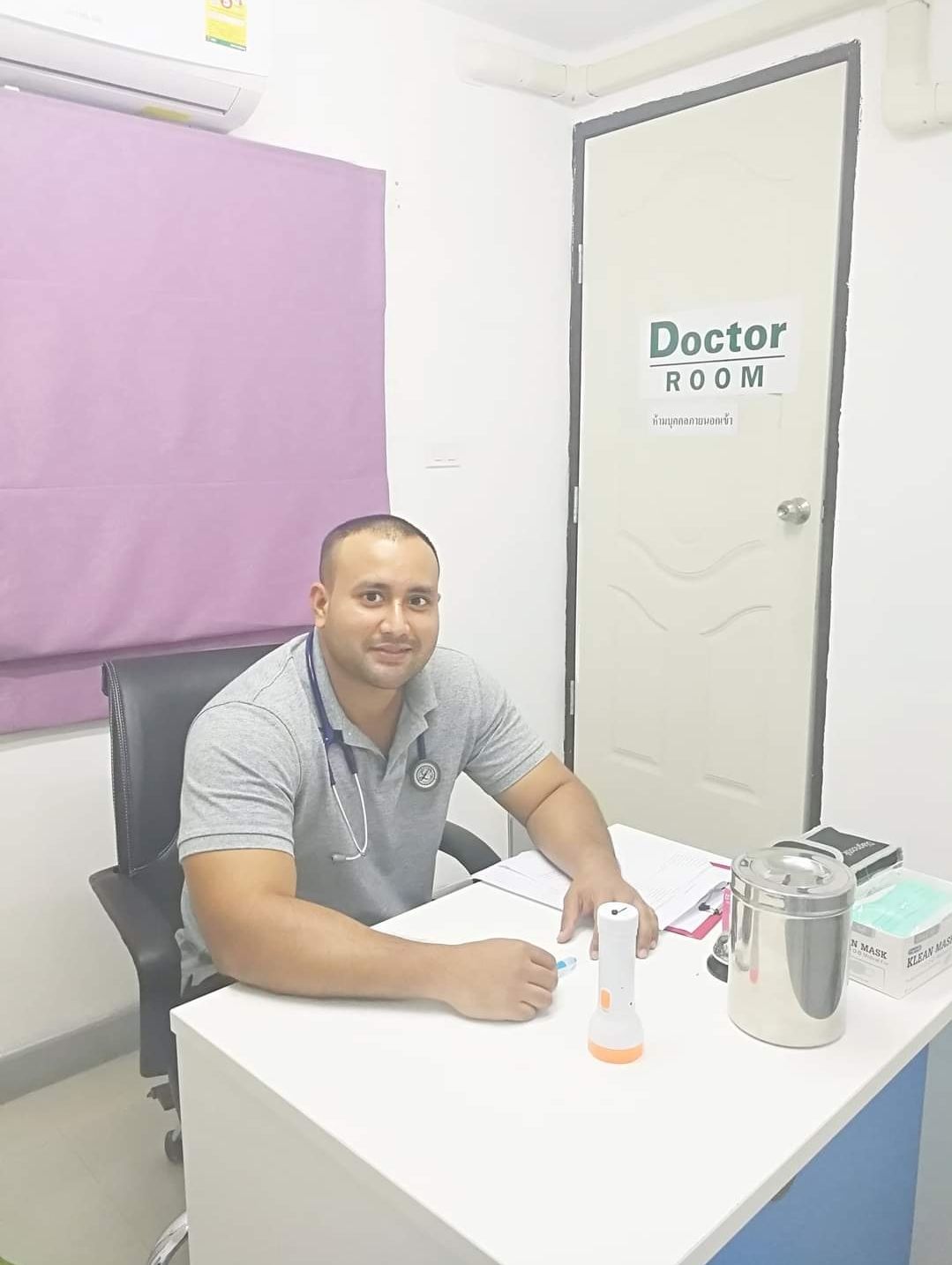
Dr. Ponlawat Pitsuwan is a physician at Doctor Bangkok, a private clinic in central Bangkok. He sees expats, residents, and medical tourists for general medicine, wellness consultations, and IV therapy. His focus is straightforward, evidence-based care delivered in plain language.