
Clinically reviewed by Dr. Ponlawat Pitsuwan, Physician, Doctor Bangkok. Last reviewed: July 2026
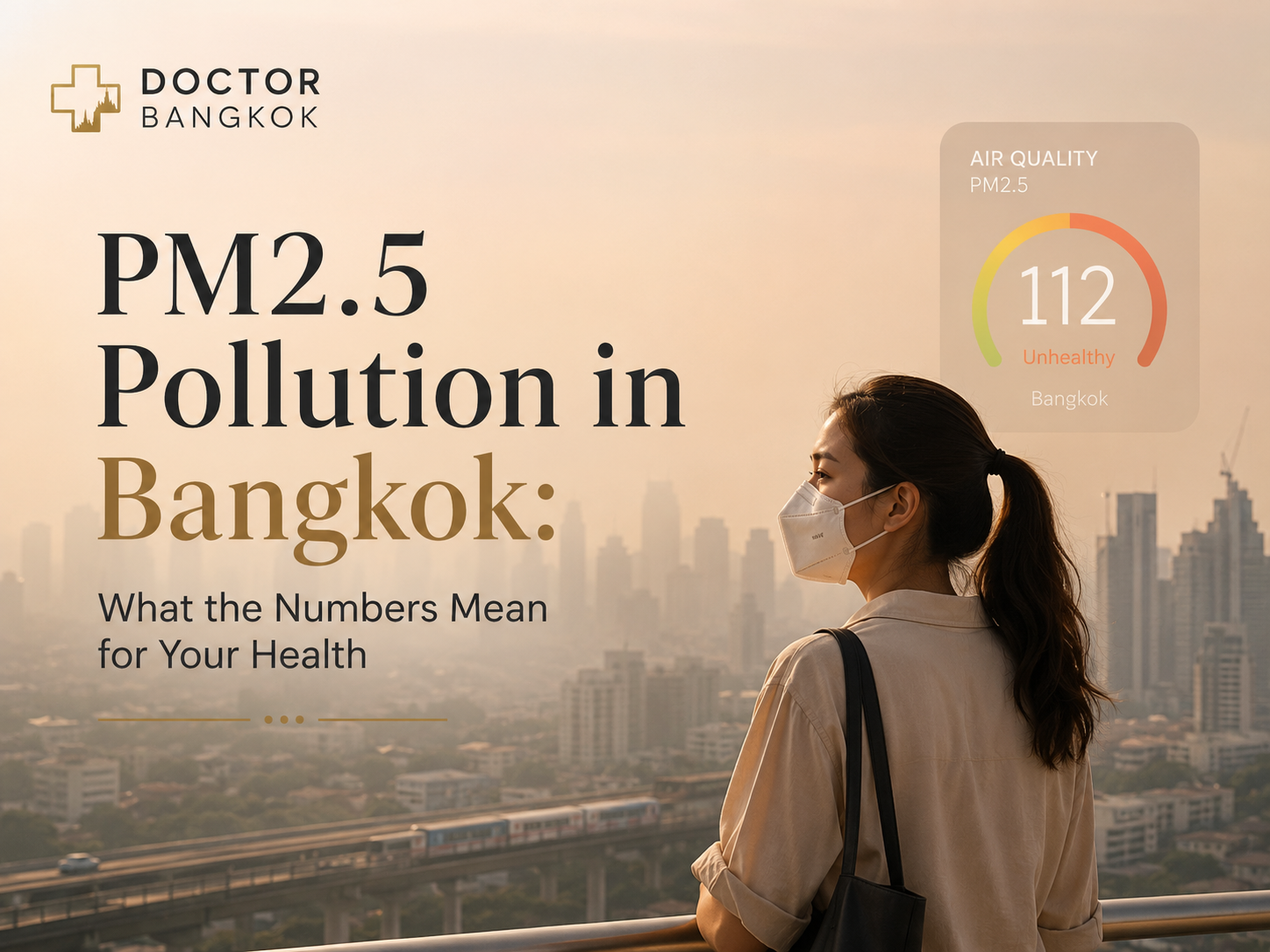
Bangkok’s PM2.5 levels frequently exceed WHO guidelines even on days when local apps show green. For long-term residents, cumulative exposure is the real concern. Mild symptoms like throat irritation and itchy eyes can often be managed at home. Chest tightness, shortness of breath at rest, or a persistent cough with discoloured mucus need same-day medical review.
If you have been living in Bangkok for a while, you have probably woken up to a hazy skyline and wondered whether you should be worried. Maybe you have a cough that will not go away, or your eyes are always irritated, and you are not sure if that is just Bangkok life or something worth taking seriously. You are not overreacting. The air quality here affects health in ways that are easy to dismiss until they are not.
Bangkok’s air regularly sits above safe levels, and if you are spending years here, that exposure adds up. This article covers what the numbers actually mean, when your symptoms need a doctor, and what you can do today to reduce your risk.

What the Numbers Actually Mean
Here is the part most apps and websites leave out. Thailand’s official PM2.5 limit is 37.5 micrograms per cubic metre over 24 hours. The WHO guideline is 15 micrograms per cubic metre for the same period, and just 5 micrograms annually for long-term exposure. Those are very different standards.
On a day when the Thai AQI app shows green and labels the air "Good," the actual PM2.5 reading can still be two to three times above what the WHO considers safe. For someone visiting Bangkok for a week, that is a minor concern. For someone living here for two or three years, it matters a lot.
I always tell long-term expat patients to cross-reference two apps. Use Air4Thai for the official Thai readings and IQAir for the WHO-aligned scale. When both show elevated, take precautions seriously.
Why Bangkok Air Gets So Bad
Bangkok sits in a flat basin with limited natural ventilation. In the cooler months, a layer of warm air forms above the city and traps cooler, polluted air at street level. Think of it as a lid on a pot. Traffic fumes and industrial emissions have nowhere to go.
From roughly November through January, this trapping effect peaks. Then from February through April, it compounds. Agricultural burning across Thailand and cross-border smoke from Cambodia and Myanmar drifts into the city. Those months often produce the worst readings of the year.
Traffic remains the dominant daily source of PM2.5 in Bangkok year-round. Diesel vehicles, motorcycle exhausts, and construction dust all contribute. What makes the February to April window so harsh is local emissions plus imported smoke with almost no wind to clear either.
What Makes Bangkok PM2.5 Especially Harmful
The particles in Bangkok air carry a mixture of heavy metals and compounds called polycyclic aromatic hydrocarbons, or PAHs. PAHs are produced by vehicle exhaust, agricultural fires, and industrial burning. Research has linked PAH exposure to increased cancer risk, including a type of lung cancer called adenocarcinoma.
Bangkok’s humidity also plays a role. Moisture causes fine particles to swell slightly, which changes how deeply they settle in the lungs and how long they linger there.
This is not meant to alarm you. It is meant to explain why Bangkok PM2.5 is not something to shrug off.
Symptoms: Short-Term vs Long-Term
Short-term exposure, even over a few days during a high-pollution event, can cause throat irritation, a dry cough, itchy or watering eyes, and a tight feeling in the chest. Most people notice these during February to April and assume they have a mild cold. Often it is the air.
Longer exposure builds a different picture. Patients who have been in Bangkok for two or more years sometimes come in with a cough they have had for months, reduced exercise tolerance, or recurrent chest infections. Many have not connected it to air quality at all.
The groups I am most concerned about are people with asthma, COPD, or any cardiac history, as well as elderly patients, pregnant women, and children. I am also concerned about expats who exercise outdoors, which dramatically increases how much PM2.5 you breathe in. If you run along Sukhumvit during smog season, you are inhaling far more than someone sitting in an air-conditioned office.
When to See a Doctor in Bangkok
Most mild symptoms do not need a clinic visit. Throat irritation, mild eye irritation, a bit of sneezing: stay indoors, run your air purifier, and see if things settle within 24 to 48 hours.
These symptoms need same-day review. Chest tightness or pain. Shortness of breath at rest, not just during exercise. A cough producing yellow or green mucus. Palpitations or a racing heart during normal activity. Worsening symptoms in someone with known asthma, COPD, or heart disease. A pulse oximeter reading below 95%, which means your blood oxygen is starting to drop.
At Doctor Bangkok, we check oxygen levels on the spot and can do a basic lung function test called spirometry, which measures how well air moves in and out of your lungs. For patients with an existing respiratory condition, this gives us real information to work with rather than guessing.
If you have lived in Bangkok for two or more years and have never had a lung function or cardiovascular check, a health assessment at our clinic is worth considering, particularly if you have a smoking history alongside ongoing air quality exposure.
Practical Protection That Actually Works in Bangkok
The single most effective thing you can do on high-pollution days is wear a correctly fitted N95, KN95, or FFP2 respirator. Surgical masks and cloth masks do not filter PM2.5. The particles are too fine. The respirator must seal to your face. If air leaks around the edges, it is not working.
KN95 masks are widely available at pharmacies and convenience stores across Bangkok. Check for certification markings on the packaging. Quality varies significantly between brands.
Indoors, a HEPA air purifier running in your bedroom makes a measurable difference, particularly overnight when you are breathing the same room air for seven or eight hours. Set your split air conditioner to recirculate mode so it is not drawing outdoor air in, and keep windows closed during high-AQI periods.
Limit outdoor exercise during the worst months. If you run, shift to early morning before traffic builds, or move your workout indoors from February through April. This is seasonal management, not a permanent change.
Reading Bangkok Air Quality Data Correctly
Check IQAir alongside Air4Thai. IQAir uses the US AQI scale and WHO-aligned thresholds, giving you a clearer picture of actual health risk. Air4Thai uses Thailand’s official standards, which are significantly more lenient.
As a rough guide: when IQAir shows above 100, I would reduce outdoor time and mask up if going out. Above 150, everyone should limit outdoor exposure, not just people with existing health conditions. Above 200, stay inside if you can and run your purifier. You can check real-time government monitoring data by Bangkok district at air4thai.com.
For long-term residents, the bigger picture matters as much as any single daily reading. Cumulative annual exposure is what drives long-term health risk, and it is worth speaking to a doctor if you have not had a respiratory review since moving here.
Concerned about pollution-related symptoms or due for a respiratory check? Doctor Bangkok offers same-day GP consultations at our clinic near BTS Nana, Sukhumvit Soi 13. We see expats and visitors for chest assessments, lung function testing, oxygen monitoring, and general health checks. English-speaking physicians, no appointment needed for walk-ins. Visit doctorbangkok.co.th or call us to book.
Frequently Asked Questions
Is Bangkok’s air quality safe if the Thai AQI app shows "Good"?
Not necessarily, and this is the gap most people miss. Thailand’s PM2.5 "Good" threshold is much higher than the WHO standard, so a green reading on a Thai app can still mean the air is two to three times above WHO guidelines. Cross-referencing with IQAir gives you a more accurate picture of actual health risk, especially if you are a long-term resident.
What PM2.5 symptoms should make me see a doctor the same day?
If you have chest pain, shortness of breath at rest, a cough with discoloured mucus, palpitations, or a pulse oximeter reading below 95%, come in the same day. Mild eye irritation and a dry throat can usually be managed at home with indoor time and an air purifier. Doctor Bangkok offers walk-in GP appointments at Sukhumvit Soi 13 if you need same-day assessment.
Which months are worst for PM2.5 in Bangkok?
The two worst windows are November through January, when temperature inversions trap traffic pollution at street level, and February through April, when cross-border agricultural burning adds a second layer of smoke. Stock up on N95 or KN95 masks and have a HEPA purifier running before November if you can.
Do surgical masks protect against PM2.5 in Bangkok?
No. PM2.5 particles are too fine for surgical or cloth masks to filter. You need a properly fitted N95, KN95, or FFP2 respirator that seals to your face. KN95 masks are easy to find in Bangkok pharmacies, but check the packaging for certification markings since quality varies between brands.
Can long-term PM2.5 exposure in Bangkok permanently damage my lungs?
Chronic exposure is linked to reduced lung function, development of COPD, certain types of lung cancer, and cardiovascular disease. Expats on multi-year postings in Bangkok are accumulating exposure that exceeds WHO annual guidelines. If you have been here two or more years, a lung function check and cardiovascular review as part of a routine health assessment is sensible, particularly if you have any smoking history.
Should I exercise outdoors in Bangkok during high-pollution periods?
During the worst months, February through April especially, I would move outdoor exercise to early morning before traffic peaks, or shift indoors entirely. The harder you breathe during exercise, the more PM2.5 settles deep in your lungs. Adjusting your routine for two or three months a year is worth it.
Dr. Ponlawat Pitsuwan
Physician, Doctor Bangkok
a private medical clinic in central Bangkok. He sees expats, residents, and medical tourists for respiratory concerns, general health assessments, and pollution-related symptoms. His focus is straightforward, evidence-based care delivered in plain language.
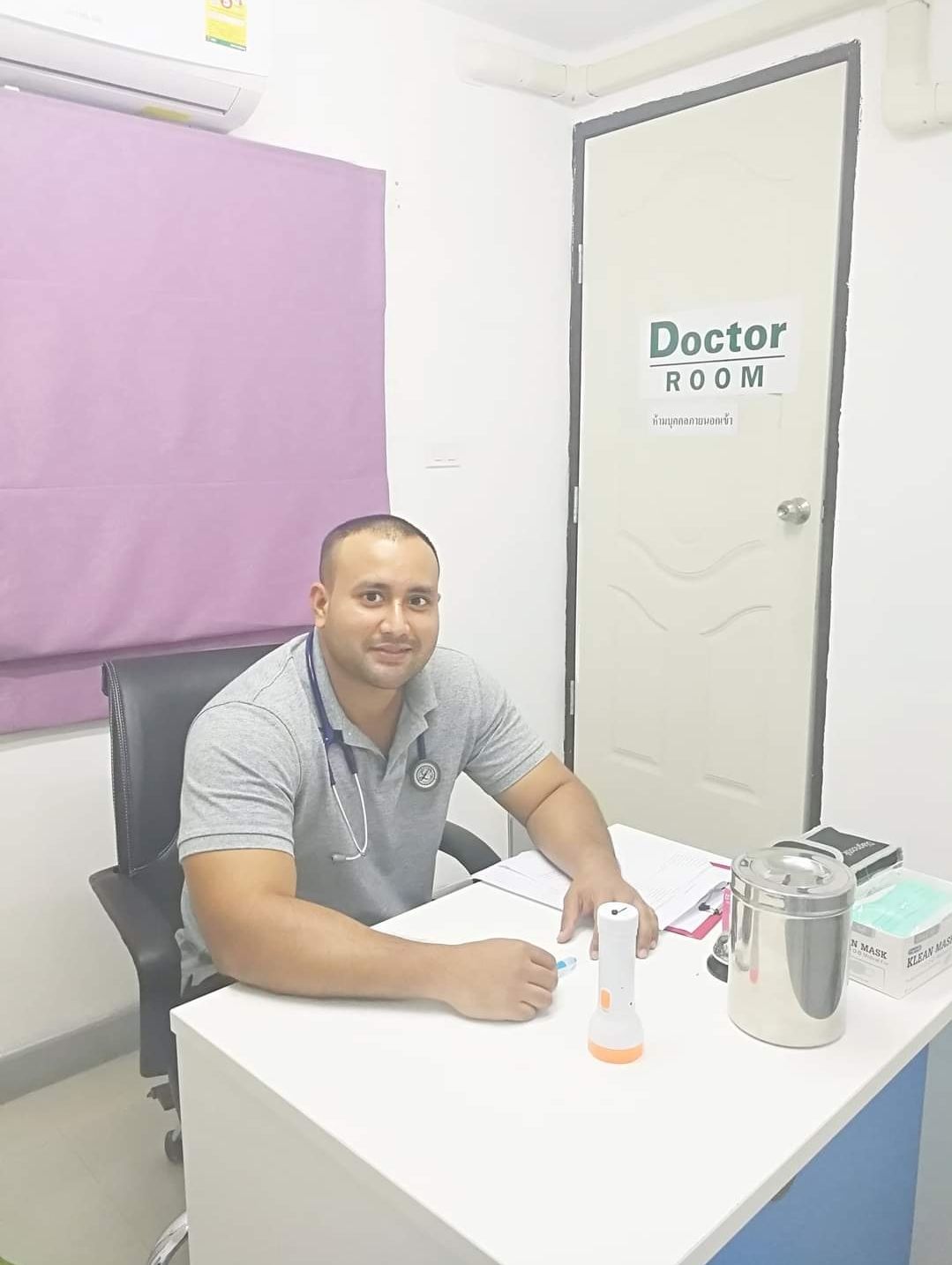
Dr. Ponlawat Pitsuwan is a physician at Doctor Bangkok, a private clinic in central Bangkok. He sees expats, residents, and medical tourists for general medicine, wellness consultations, and IV therapy. His focus is straightforward, evidence-based care delivered in plain language.