
Clinically reviewed by Dr. Ponlawat Pitsuwan, Physician, Doctor Bangkok. Last reviewed: July 2026
Thailand has recorded mpox cases since 2022, including a confirmed Clade 1b imported case in late 2024. Most cases are self-limiting, but anyone in Bangkok with a fever, swollen glands, or an unexplained rash, especially after close physical or sexual contact with a new partner, should get assessed. Doctor Bangkok offers confidential, same-day mpox assessment on Sukhumvit, seven days a week.
If you are in Bangkok and you have noticed a rash, a fever, or swollen glands after a night out, this article is for you. You do not need a lecture on virology. You need to know what the risk actually is, what symptoms to look for, and what to do next.
The honest answer is that mpox is present in Thailand, the risk for most people is low but not zero, and the biggest mistake I see is people waiting too long to get checked. Here is what you need to know.

What Is Mpox
Mpox is a viral infection that has been circulating in parts of Africa for decades. Since 2022 it has spread globally, including across Southeast Asia and into Thailand.
It spreads mainly through close physical contact. That includes skin-to-skin contact, sexual contact, and sharing bedding or clothing with someone who has active lesions. You do not catch it by walking past someone in a shopping mall.
Mpox in Thailand: The Current Situation
Thailand confirmed its first mpox cases in 2022. Cases were concentrated in Bangkok and involved mostly men who have sex with men, though the virus does not exclusively affect any one group.
The more significant development came in August 2024, when Thailand confirmed its first imported Clade 1b case. This was part of a wider WHO-declared public health emergency triggered by a Clade 1b outbreak originating in Central Africa. By 2025, Thailand’s Department of Disease Control had reported a modest case count with no evidence of widespread community transmission. The situation is being actively monitored.
Clade 1b vs Clade 2: Why It Matters to You
Most cases in Thailand up to 2024 were Clade 2, the strain behind the 2022 global outbreak. It tends to cause moderate illness and is rarely fatal in healthy adults.
Clade 1b appears to spread more easily through close contact and has caused higher death rates in outbreak settings in Africa. That is why the WHO declared a public health emergency in 2024. In Thailand, Clade 1b cases have so far been imported and contained.
The practical point is this: if you have symptoms and a possible exposure, the strain does not change what you should do. Get assessed. Do not wait to see if it resolves on its own.
Who Is at Risk in Bangkok
Anyone can get mpox through close physical contact with an infected person. In the current outbreak pattern in Thailand, though, the highest risk sits with a few specific groups.
Men who have sex with men with multiple partners are the group most affected in Bangkok. People living with HIV who are not on treatment face higher risk of severe illness. Healthcare workers with unprotected exposure to suspected cases carry occupational risk. Travellers arriving from countries with active Clade 1b outbreaks, particularly parts of Central and East Africa, represent the main import risk.
If you are immunocompromised for any reason, mpox can hit harder. I would not wait to see a doctor if you fall into that category and you have any of the symptoms below.
Mpox Risk in Bangkok Tourist Areas
Bangkok’s entertainment districts, particularly along Sukhumvit, Silom, Nana, and Patpong, are high-footfall areas where close physical and sexual contact between residents, expats, and tourists is common. The risk is person-to-person, not environmental.
If you are sexually active with new partners in Bangkok, and especially if you have multiple partners, your exposure risk is real enough to think about. Expats and travellers spending time in Bangkok’s nightlife areas benefit from knowing where to get checked quickly if something does not feel right.
Doctor Bangkok’s clinic is on Sukhumvit Soi 13, a few minutes from BTS Nana. You can walk in the same day, or a doctor can come to your hotel. Our travel health service covers mpox risk assessment as part of broader pre-travel and during-travel care.
Recognising Mpox Symptoms: What to Watch For
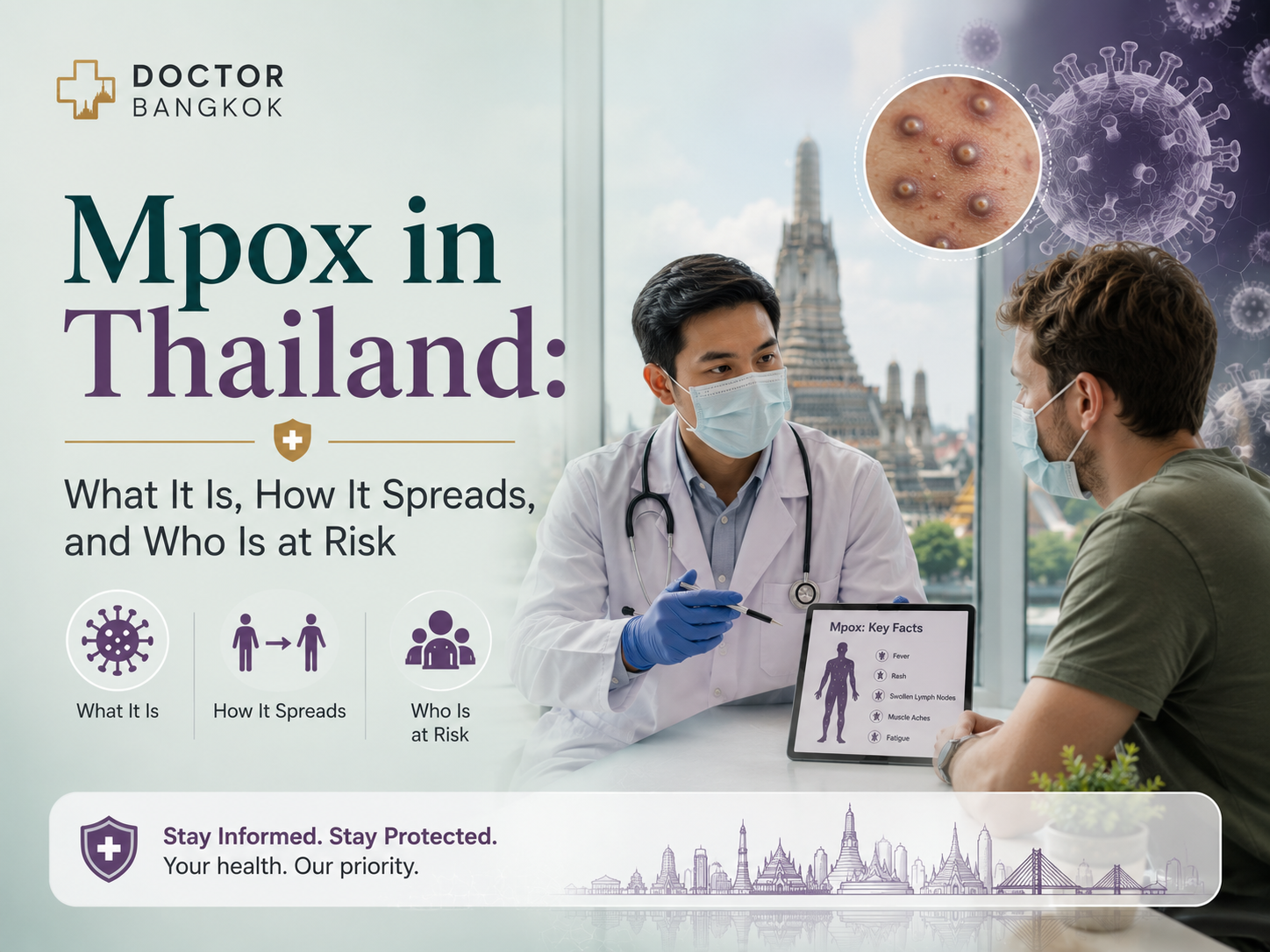
Classic mpox starts with fever, headache, muscle aches, and noticeably swollen lymph nodes. The rash follows one to five days later. Lesions start as flat red spots, then raise up, fill with fluid and pus, then crust over.
Here is what a lot of people miss: in the current outbreak, many cases do not look like that. Some patients have only a few lesions, sometimes just one. Lesions are often genital or perianal, not spread across the body. Some people never get a pronounced fever. I have seen patients who nearly dismissed it as an ingrown hair.
If you have any lesion, blister, or ulcer in the genital or anal area after a potential exposure, do not assume it is something minor. A sudden rash on the face, palms, or soles of the feet also warrants a proper assessment, as this pattern is more characteristic of mpox than most other common rashes.
Getting Tested for Mpox in Bangkok
Mpox is confirmed with a PCR swab taken directly from an active lesion. Results typically take one to three days.
At Doctor Bangkok, you come in or we come to you. The doctor takes a clinical history, asks about your symptoms and any possible exposure, and does a physical assessment. If there is an active lesion, we swab it the same day. You do not need to explain yourself in detail before you arrive.
All consultations are confidential, with no judgement and no unnecessary disclosure. If you want to discuss anything privately first, WhatsApp us before coming in. Hotel visits are available for patients who prefer not to travel while symptomatic. Mpox assessment can also be combined with a broader sexual health screen at the same visit.
Mpox Vaccination in Bangkok: Who Should Consider It
The JYNNEOS vaccine is the primary mpox vaccine available in Bangkok. It is given as two doses, 28 days apart, and has strong evidence behind it for preventing mpox or reducing severity after exposure.
Who should consider it: men who have sex with men with multiple or new partners, anyone who has had recent close contact with a confirmed mpox case, healthcare workers with potential exposure risk, and people planning travel to countries with active Clade 1b outbreaks. JYNNEOS is available through the Thai Red Cross and select private clinics in Bangkok, though availability can fluctuate.
If you have had a confirmed mpox exposure in the last four days, post-exposure vaccination may still reduce your risk. This is something to discuss with a doctor urgently, not something to research for a week and act on later. A consultation at Doctor Bangkok can include a vaccination eligibility assessment and help you access the vaccine through the right channel.
What to Do If You Think You Have Mpox Right Now
First, do not panic. Most mpox cases in otherwise healthy adults are self-limiting and resolve without specific antiviral treatment.
Avoid close physical contact with other people, including sex and skin-to-skin contact, and avoid sharing towels or bedding until you have been assessed. Do not scratch or break the lesions. Wash your hands regularly.
Contact Doctor Bangkok. If you are on Sukhumvit, you can walk in. If you are in a hotel, WhatsApp us and we will arrange a visit. Be as honest as you can about your recent exposure history. That information helps us assess you accurately and it stays with us.
If you test positive, we will guide you through isolation requirements and supportive care. Pain, fever, and skin care are all manageable. Antiviral treatment with tecovirimat exists for severe cases and is considered for immunocompromised patients. A doctor will assess whether you need anything beyond supportive management.
Worried about mpox in Bangkok? Doctor Bangkok is open 24 hours, seven days a week at Sukhumvit Soi 13, BTS Nana. We offer same-day confidential mpox assessment, PCR testing, vaccination advice, and hotel visits for patients who prefer not to travel. WhatsApp us or walk in. No appointment needed. Visit doctorbangkok.co.th to book or learn more about our sexual health and travel health services.
FAQ
Is mpox a real risk for tourists and expats in Bangkok?
Yes, though the overall risk is low for most visitors. Thailand has had confirmed mpox cases since 2022, and Clade 1b was imported in late 2024. If you are sexually active with new partners during your time in Bangkok, your risk is higher than the general population. Knowing the symptoms and where to get checked quickly is the most practical thing you can do.
What does mpox look like, and how is it different from other rashes?
Classic mpox causes fever and swollen glands before the rash appears, followed by lesions that progress from flat spots to fluid-filled blisters to scabs. In the current outbreak, many cases show only a few lesions, often genital or perianal, without a classic fever first. If you have any unexplained genital lesion or a rash you cannot explain after a potential exposure, get it assessed rather than waiting.
Where can I get tested for mpox in Bangkok, and is it confidential?
Mpox is confirmed with a PCR swab from an active lesion, not a blood test. At Doctor Bangkok, we offer same-day confidential assessment with no judgement and no unnecessary disclosure. Hotel visits are available for patients who prefer not to travel while symptomatic, and you can WhatsApp us before arriving if you want to discuss anything privately first.
Should I get the mpox vaccine in Bangkok?
If you are a man who has sex with men with multiple partners, have had a recent mpox exposure, or are travelling to a country with an active Clade 1b outbreak, vaccination is worth discussing with a doctor. The JYNNEOS vaccine requires two doses given 28 days apart and has strong evidence behind it. Availability in Bangkok can vary, so a consultation at Doctor Bangkok can help you check eligibility and current stock.
I think I have been exposed to mpox in Bangkok. What do I do right now?
Avoid close physical or sexual contact with others until you have been assessed. Monitor for fever, swollen glands, or any skin changes for up to 21 days after exposure. Contact Doctor Bangkok for a confidential assessment, either by walking in at Sukhumvit Soi 13 or via a hotel visit. If a lesion is present, we can swab it the same day.
How long does it take to develop symptoms after mpox exposure?
Symptoms usually appear between five and 21 days after exposure, most commonly within one to two weeks. During that window, monitor yourself and avoid close contact with others if you know or suspect you were exposed. If symptoms appear at any point in that period, get assessed promptly rather than waiting to see if they progress.
Can mpox be treated?
Most healthy adults recover fully with supportive care, meaning pain relief, fever management, and good skin care for the lesions. Antiviral medication exists for severe cases and is considered for people who are immunocompromised. A doctor will assess whether you need anything beyond supportive management.
Dr. Ponlawat Pitsuwan
Physician, Doctor Bangkok
a private medical clinic in central Bangkok. He sees expats, residents, and medical tourists for sexual health consultations, mpox assessment, travel medicine, and general medical care. His focus is straightforward, evidence-based care delivered in plain language.
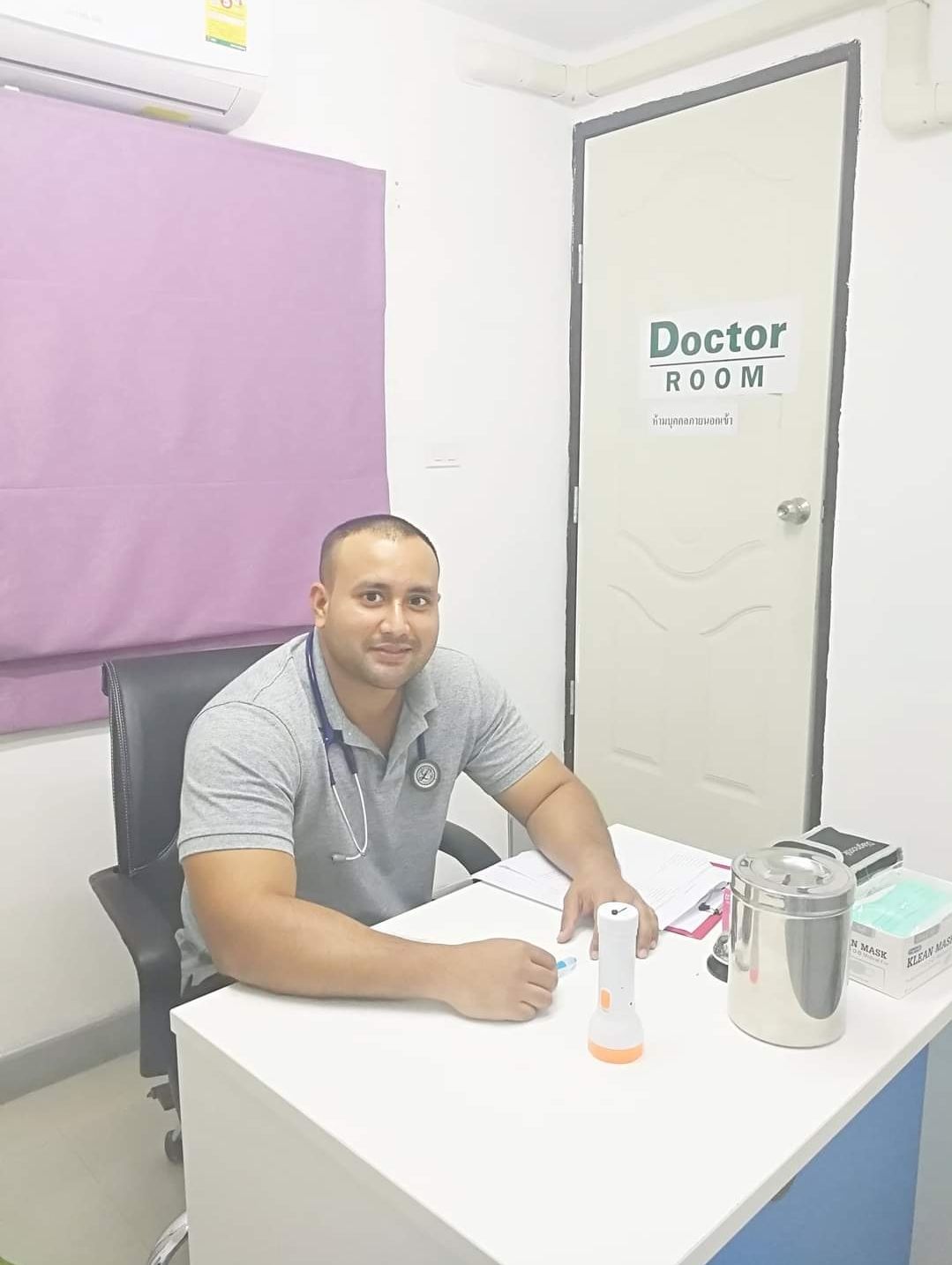
Dr. Ponlawat Pitsuwan is a physician at Doctor Bangkok, a private clinic in central Bangkok. He sees expats, residents, and medical tourists for general medicine, wellness consultations, and IV therapy. His focus is straightforward, evidence-based care delivered in plain language.