
Clinically reviewed by Dr. Ponlawat Pitsuwan, Physician, Doctor Bangkok. Last reviewed: July 2026
Thailand has good private healthcare, especially in Bangkok. As a foreign visitor, tourist, or expat, you will not have access to the subsidised public system. Your practical options are private clinics and private hospitals. English-speaking doctors are available, costs are reasonable compared to Western countries, and most treatments can start the same day.
If you have just arrived in Bangkok, or you are planning a longer stay, healthcare is probably somewhere on your list of things to figure out. Most people do not think about it until something goes wrong. Then they are Googling at midnight with a fever, a rash, or something they are not quite ready to say out loud.
The honest answer is that Bangkok has excellent private medical care, and the system is easy to use once you understand it. This guide covers what you actually need to know: where to go, what it costs, what health risks are real here, and what to do in an emergency. I see patients at Doctor Bangkok every day who wish someone had explained this to them earlier.

Public Healthcare in Thailand — What Expats Actually Get
Thailand’s public healthcare is built around three schemes for Thai citizens, employed Thai workers, and government employees. If you are a tourist, a non-working expat, or a retiree, you have no route into any of them.
Since 2019, foreigners pay the highest rate in a tiered pricing structure at public hospitals. Depending on the service, that can mean paying significantly more than a Thai patient for the same consultation. Public hospitals in Bangkok are also busy, with wait times of several hours being normal. English-language communication is inconsistent outside of international wings, which charge private-level fees anyway. For most expats and visitors, a private clinic or private hospital is the more practical choice from day one.
Private Clinics vs Large Private Hospitals — Knowing the Difference
This distinction matters, and most guides skip it. A large private hospital like Bumrungrad or BNH is excellent. They have specialists, imaging, surgery, and 24-hour emergency departments. They are also expensive, and not always necessary for everyday care.
A private clinic handles most of what expats and visitors actually need: fever assessment, IV drips, wound care, STI testing, vaccinations, and general consultations. Wait times are shorter, the environment is quieter, and the whole visit often takes under an hour. For anything serious, a large hospital is the right call. For everything else, a private clinic is faster, more personal, and typically less expensive.
Cost Expectations
Private consultations in Bangkok usually start from a few hundred baht and go up depending on tests and treatment. IV drips, STI panels, and blood tests are a fraction of what you would pay in the UK, US, or Australia. You are not trading quality for price. Bangkok’s private sector is well-equipped and well-staffed.

Health Insurance for Expats in Thailand — What You Actually Need
Travel insurance covers most tourist visits. If you are on a Non-Immigrant O-A visa, you are required to show health insurance with at least THB 40,000 outpatient and THB 400,000 inpatient coverage. Other visa types have different requirements, so check yours specifically.
For longer stays, local Thai health insurance is cheaper than international plans but may have limitations on pre-existing conditions. International expat plans cost more but give you flexibility across countries and typically offer better limits.
One thing worth knowing: direct billing means the insurer pays the hospital directly, while reimbursement means you pay upfront and claim back later. Not every clinic has a direct-billing arrangement with every insurer. At Doctor Bangkok, you pay at the time of your visit and we provide full itemised documentation for your insurance claim.
Health Risks in Bangkok Every Expat and Visitor Should Know
Bangkok is a safe city for your health if you know what to watch for. These are the risks I see most often in my clinic.
Dengue fever is the one I want you to take seriously. It is mosquito-borne, it is year-round in Bangkok, and it gets worse during rainy season. If you have a high fever with severe headache and body aches, come in. Do not wait and hope it passes. A blood test tells us quickly whether dengue is the cause.
Food and water-borne illness is extremely common, especially in the first few weeks. Traveller’s diarrhoea is usually short-lived. Typhoid is rarer but more serious. If you have a fever alongside stomach symptoms, get it checked.
Rabies is real here. Street dogs and cats in Bangkok carry the risk. If an animal bites or scratches you, even lightly, seek medical assessment the same day. Post-exposure treatment is time-sensitive and must be started promptly.
Heat exhaustion affects more people than you would think, especially before your body adjusts to the climate. Bangkok’s heat accelerates dehydration fast. IV fluids help significantly when you cannot keep anything down or you have been overheating for hours. Air pollution is also a seasonal concern, typically worse between January and April. If you have asthma or a respiratory condition, monitor air quality daily.
Sexual Health and STI Testing in Bangkok
I get asked about this more than almost anything else, and I am glad people ask. Bangkok is an international city with an active social scene. STIs are common worldwide, and Bangkok is no different.
If you have had unprotected sex and you are worried, get tested. The window period matters: HIV tests are most reliable from 45 days after exposure. Tests for chlamydia, gonorrhoea, syphilis, and hepatitis B have different timelines, and I can walk you through what makes sense for your situation.
At Doctor Bangkok, STI testing is confidential. You do not need to show ID. Results for many tests come back the same day or within 24 to 48 hours. If you are sexually active with new partners, routine screening every three to six months is what I recommend.
PrEP, pre-exposure prophylaxis, is available for HIV prevention. If you are HIV-negative and at ongoing risk, PrEP is effective and well-supported by evidence. PEP, post-exposure prophylaxis, is for after a potential HIV exposure. It must start within 72 hours. If you think you need PEP, this is urgent. Come in now. Our clinic is open 24 hours.
Emergency Care in Bangkok — What to Do
If you have a genuine emergency in Bangkok, do not wait for an ambulance. Response times can be slow, and English communication with emergency operators is not guaranteed.
If you can move, take a taxi or Grab directly to the nearest large private hospital emergency department. Bumrungrad, BNH, Samitivej, and Bangkok Hospital are the most equipped for international patients. Tell reception it is an emergency and you will be triaged quickly.
If you cannot move safely, call your hotel front desk first. They deal with medical situations regularly and can organise transport and communicate with emergency services in Thai.
For urgent but non-life-threatening situations, a clinic visit or a hotel doctor visit is often faster than sitting in an emergency department. Doctor Bangkok can send a physician to your hotel within 45 to 75 minutes across central Bangkok.
Vaccinations Before and During Your Time in Thailand
If you are travelling to Thailand, these are the vaccinations worth discussing with a travel health clinic before you go. Hepatitis A and typhoid cover makes sense for most visitors. Hepatitis B is recommended for anyone staying longer than a month. Rabies pre-exposure vaccination is worth considering for long stays or adventure travel. Routine vaccinations should be up to date: tetanus, diphtheria, and measles at minimum.
If you did not get vaccinated before arriving, it is not too late. You can get travel health consultations and vaccinations in Bangkok at Doctor Bangkok, covering most common travel vaccines. I discuss individual eligibility and timing with each patient during the consultation.
If you are in Bangkok and need a doctor today, Doctor Bangkok is open 24 hours a day, 7 days a week, with no appointment needed. We are on Sukhumvit Soi 13, a short walk from Nana BTS. We handle general consultations, fever assessment, dengue testing, STI screening, IV drips, wound care, vaccinations, and travel health. We can also send a physician to your hotel across central Bangkok. Visit doctorbangkok.co.th or walk in any time.
Can I just walk into a private clinic or hospital in Bangkok without an appointment?
Yes, most private clinics and many private hospitals in Bangkok accept walk-ins. Doctor Bangkok is open 24 hours a day with no appointment required. If you are too unwell to travel, we can also send a doctor to your hotel within 45 to 75 minutes across central Bangkok.
Is STI or STD testing available in Bangkok, and is it confidential?
Yes. Private clinics in Bangkok offer STI testing covering HIV, syphilis, gonorrhoea, chlamydia, and hepatitis B. At Doctor Bangkok, testing is completely confidential and no ID is required. Same-day PEP for HIV post-exposure is available when you come in within the 72-hour window.
Will my travel insurance cover a private clinic visit in Bangkok?
Most international travel insurance policies cover private medical consultations in Bangkok. Doctor Bangkok does not offer direct billing, but we provide itemised receipts and full documentation for reimbursement claims. Check your policy before you travel to confirm whether outpatient care is included.
What are the biggest health risks for expats and tourists in Bangkok?
Dengue fever, food and water-borne illness, rabies from street animal bites, heat exhaustion, and seasonal air pollution are the risks I see most often. Dengue and rabies exposures both need prompt clinical assessment. Doctor Bangkok treats all of these and can visit your hotel if you are too unwell to come to us.
As a non-working expat or tourist, can I use Thailand’s public hospitals?
You can attend a public hospital but you will pay the highest foreigner rate under Thailand’s tiered pricing system, and wait times can be several hours. You have no access to the subsidised public schemes. For most visitors and non-working expats, a private clinic is the faster and more practical option.
What is PEP and how quickly do I need it after an HIV exposure?
PEP, post-exposure prophylaxis, is a course of medication that can significantly reduce the risk of HIV infection after a potential exposure. It must start within 72 hours, and sooner is better. If you think you need PEP, come to Doctor Bangkok immediately. We are open 24 hours and can start treatment the same visit.
Do I need vaccinations before travelling to Thailand?
Several are worth getting before you arrive. Hepatitis A, typhoid, and hepatitis B are the most commonly recommended for Thailand. Rabies pre-exposure vaccination is worth considering for longer stays. If you missed vaccinations before travelling, you can get them at a travel health clinic in Bangkok, including at Doctor Bangkok.
Dr. Ponlawat Pitsuwan
Physician, Doctor Bangkok
a private medical clinic on Sukhumvit Soi 13 in central Bangkok. He sees expats, residents, and visitors for general consultations, travel health, STI testing, fever assessment, and urgent care. His focus is straightforward, evidence-based care delivered in plain language.
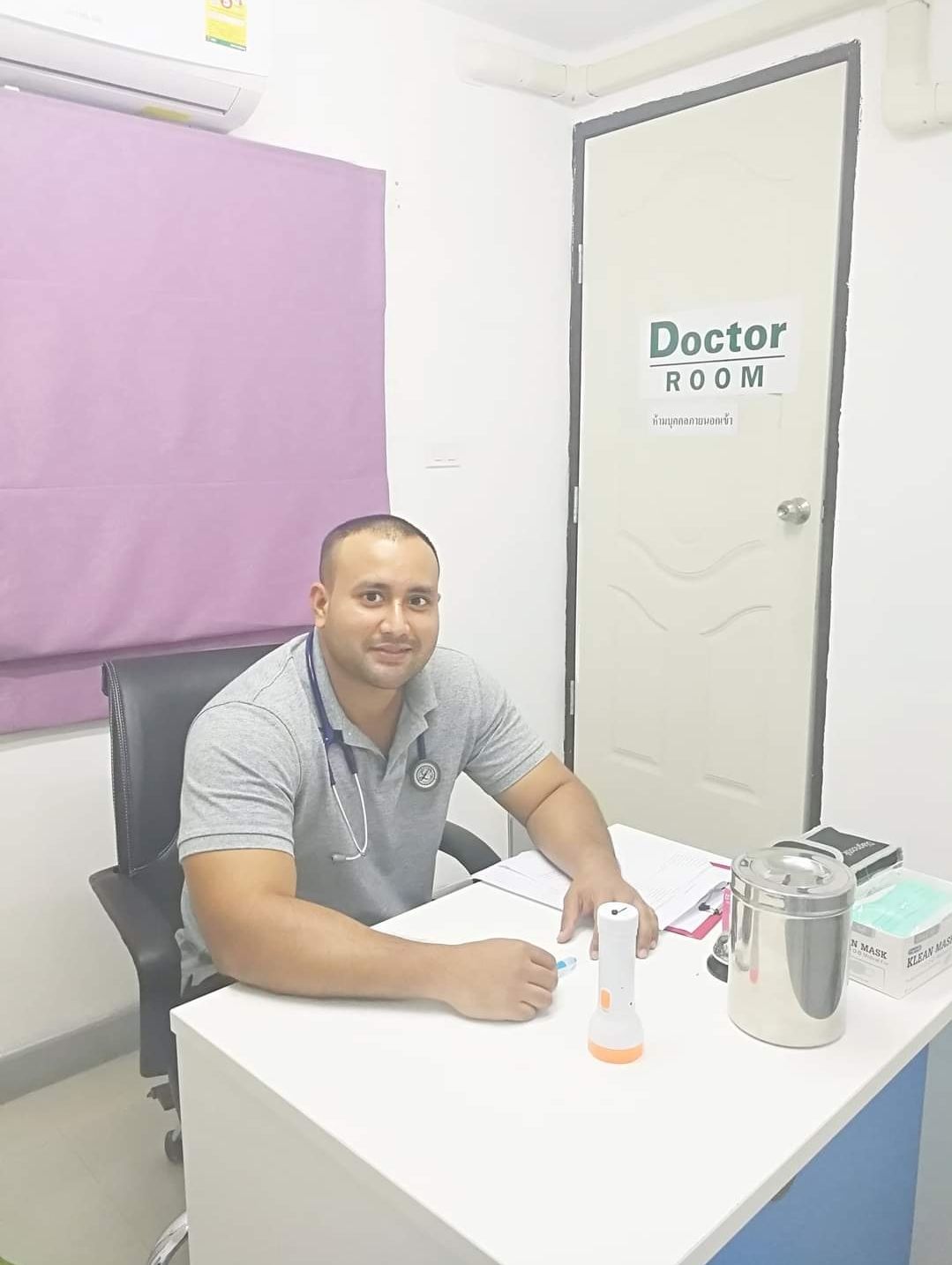
Dr. Ponlawat Pitsuwan is a physician at Doctor Bangkok, a private clinic in central Bangkok. He sees expats, residents, and medical tourists for general medicine, wellness consultations, and IV therapy. His focus is straightforward, evidence-based care delivered in plain language.