
Clinically reviewed by Dr. Ponlawat Pitsuwan, Physician, Doctor Bangkok.
Last reviewed: November 2026
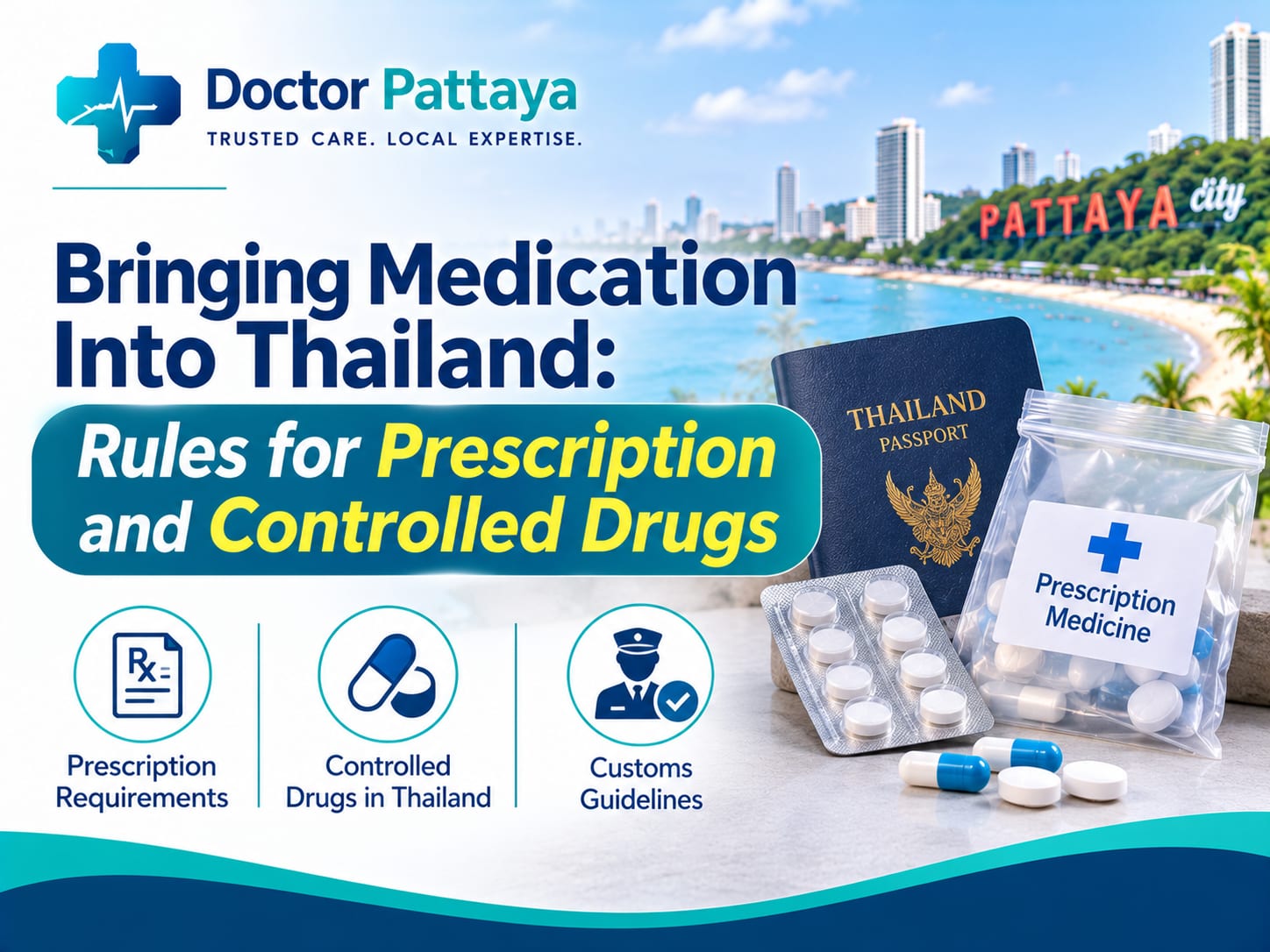
Most prescription medicines are fine to bring into Thailand for personal use, up to a 30-day supply without special paperwork. Controlled drugs, including ADHD medications, strong painkillers, and sleeping pills, require a permit from the Thai FDA before you arrive. Amphetamine-based drugs such as Adderall are broadly prohibited regardless of prescription. Always carry your original packaging and a doctor’s letter in English.
You are packing for Bangkok and your pill organiser is sitting next to your passport. For most travellers, the answer is straightforward: yes, your medication will clear customs with no extra paperwork. But if you take ADHD medication, opioid painkillers, benzodiazepines, or prescription sleeping pills, the rules are specific and the penalties for getting them wrong are serious.
Thailand’s drug laws are strict. Bringing in a controlled substance without the right permit is not a minor customs issue. This guide covers what you can carry, what needs a permit, and what to do if something goes wrong after you land.

General Rules for Personal Prescription Medication
For standard prescription medicines, the Thai FDA allows a personal-use supply of up to 30 days without a permit. Some sources quote 90 days, but the Thai FDA’s own published guidance for travellers sets 30 days as the threshold for importing prescription drugs without additional authorisation. If you are staying longer and rely on a specific medicine, plan to have it reviewed and refilled locally.
Keep everything in its original packaging. Bring the pharmacy label, your prescription, and a doctor’s letter on clinic letterhead. These do not need to be in Thai, but they must be in English or have an English version. Loose pills in an unmarked container are a problem.
If you are travelling with insulin, syringes, or other medical devices, a supporting letter from your doctor is strongly recommended. Use the Red Channel on arrival if you are unsure about anything.
Controlled Medicines That Need a Permit
Thailand classifies narcotics and psychotropic substances under the Narcotics Act and the Psychotropic Substances Act. If your medicine falls under these laws, you cannot arrive with a prescription and expect to walk through customs. You need a permit before you travel.
The application form is called IC-1 and the permit issued is IC-2. You apply through the Thai FDA’s traveller portal at permitfortraveler.fda.moph.go.th. Apply at least 15 days before your departure date. The application requires your passport details, your doctor’s prescription, a supporting medical certificate, and the medication name, quantity, and dosage. Start early, as processing is not guaranteed within a tight window.
Once approved, carry the permit with your medication and use the Red Channel at Thai customs on arrival. Present the permit, your prescription, and the original packaging to the customs officer.
ADHD Medicines, Strong Painkillers and Sleeping Pills
This is where the rules get critical, and where the most confusion exists.
Amphetamine-based ADHD medications, including Adderall and dextroamphetamine, are classified as Category 1 narcotics under Thai law. Category 1 substances are broadly prohibited from import. A valid prescription from your home country does not change this. If you take Adderall and are travelling to Thailand, speak to a doctor before you leave about alternative management options.
Methylphenidate-based medications, including Ritalin and Concerta, are Category II psychotropic substances under the Thai Psychotropic Substances Act. A personal supply of up to 30 days does not require a permit. A supply of 31 to 90 days requires an IC-2 permit, applied for via the IC-1 form at least 15 days before departure. Arriving without the permit means the medication may be confiscated.
Some opioid painkillers fall under Thailand’s narcotics or psychotropic schedules and may require an IC-2 permit. Check the specific medication on the Thai FDA’s permit portal at permitfortraveler.fda.moph.go.th before you travel, as classifications vary by drug. Benzodiazepines, including diazepam and alprazolam, are listed under Thailand’s psychotropic substance schedules. A personal supply of up to 30 days generally does not require a permit, but a supply of 31 to 90 days does. Verify the specific drug on the Thai FDA’s permit portal before you travel. Do not assume a sleeping pill or anti-anxiety medication from a Western pharmacy is straightforward to bring in. Check the classification before you pack.

Documents to Carry for Bringing Medication Into Thailand
For every prescription medicine, controlled or not, carry the following. A doctor’s letter on clinic letterhead stating your name, the medication name and dose, the medical reason, and the duration of treatment. A pharmacy-labelled original container for each medicine. A copy of your prescription. Your Thai FDA IC-1 permit, if the medication is a controlled substance.
For controlled substances, you must use the Red Channel at Thai customs on arrival. Do not use the Green Channel. Present all documents proactively. Customs officers are accustomed to this process for legitimate travellers with permits.
Keep a digital copy of every document in your email or cloud storage. If originals are lost or confiscated, you will need copies quickly.
What to Do if Customs Holds Your Medicine
Stay calm. Confiscation usually happens when a permit is missing, the supply exceeds the personal-use limit, or the medication is prohibited. Ask for a written receipt or seizure notice for anything taken. That document matters for your embassy and for any follow-up.
Contact your home country’s embassy or consulate in Bangkok. They can advise on procedures and provide documentation support. The British Embassy, US Embassy, and Australian Embassy all have consular services for these situations.
If your medication has been held and you are now in Bangkok without it, Doctor Bangkok can help. Our doctors can assess your situation, issue a supporting medical letter, and in many cases issue a local Thai prescription for an equivalent medicine to bridge the gap. The walk-in clinic on Sukhumvit is open around the clock, and the doctor-on-call service can come to your hotel if you cannot travel.
Refilling Your Prescription Safely Once You Arrive
If you are an expat or on a long stay, your home-country prescription will eventually run out. Thai pharmacies cannot dispense controlled substances on a foreign prescription. For those medicines, you need a prescription from a Thai-licensed doctor.
Thai pharmacies stock many equivalent medicines under local or international brand names. A doctor at a private clinic in Bangkok can review your existing treatment, confirm the equivalent Thai medication, and issue a valid local prescription. This is a routine service for expats and long-stay visitors. You do not need a large Thai hospital to do it.
For planning before your next trip, or if you need a supporting letter for medication import purposes, Doctor Bangkok’s travel health service in Bangkok covers this. The clinic is at Trendy Office, Soi Sukhumvit 13, open 24 hours, walk-in or by appointment. If you are planning a longer stay, a travel health consultation before your prescription runs low gives you time to arrange documentation, check Thai equivalents, and avoid a gap in treatment.
The doctor-on-call service brings a physician to your hotel or condo anywhere in Bangkok, typically within an hour. This is useful if you are managing a medication problem and cannot easily leave.
Need help with a medication issue in Bangkok? If your medication was held at customs, you have run out of a prescription, or you need a doctor’s letter for travel, Doctor Bangkok can help. The clinic at Soi Sukhumvit 13 is open 24 hours with no appointment needed. If you cannot travel, the doctor-on-call service comes to your hotel or condo anywhere in Bangkok, usually within one hour. English-speaking physicians, same-day service.
Frequently Asked Questions
Dr. Ponlawat Pitsuwan
Physician, Doctor Bangkok
a private medical clinic in central Bangkok open 24 hours, with a doctor-on-call service that reaches your hotel or condo within approximately one hour. He sees expats, residents, and medical tourists for travel health consultations, prescription reviews, medical certification, and general medical care, with a focus on clear, evidence-based advice delivered in plain language.
References
- Thai FDA. Guidance for Travelers who Travel out of Thailand (Version dated 21 September 2024). Thai Food and Drug Administration.
- Thai FDA. Restrictions on Psychotropic Substances for Travellers, Version 4 (21 September 2024). Thai Food and Drug Administration.
- Thai FDA. Knowledge on Narcotics in Thailand in Terms of Import for Personal Use. Thai Food and Drug Administration permit portal.
- Royal Thai Embassy London. Bringing Medications to Thailand. Royal Thai Embassy, London.
- CDC. Traveling Abroad with Medicine. Centers for Disease Control and Prevention.
- Tourism Authority of Thailand Newsroom. Thailand FDA Issues Traveller-Friendly Guidelines for Importing Personal Health Products. TAT, November 2024.
The information in this article is for educational purposes only and does not constitute medical advice. It should not be used to self-diagnose or replace a consultation with a qualified physician. If you have concerns about your health, contact a licensed medical professional. For appointments at Doctor Bangkok, visit doctorbangkok.co.th.
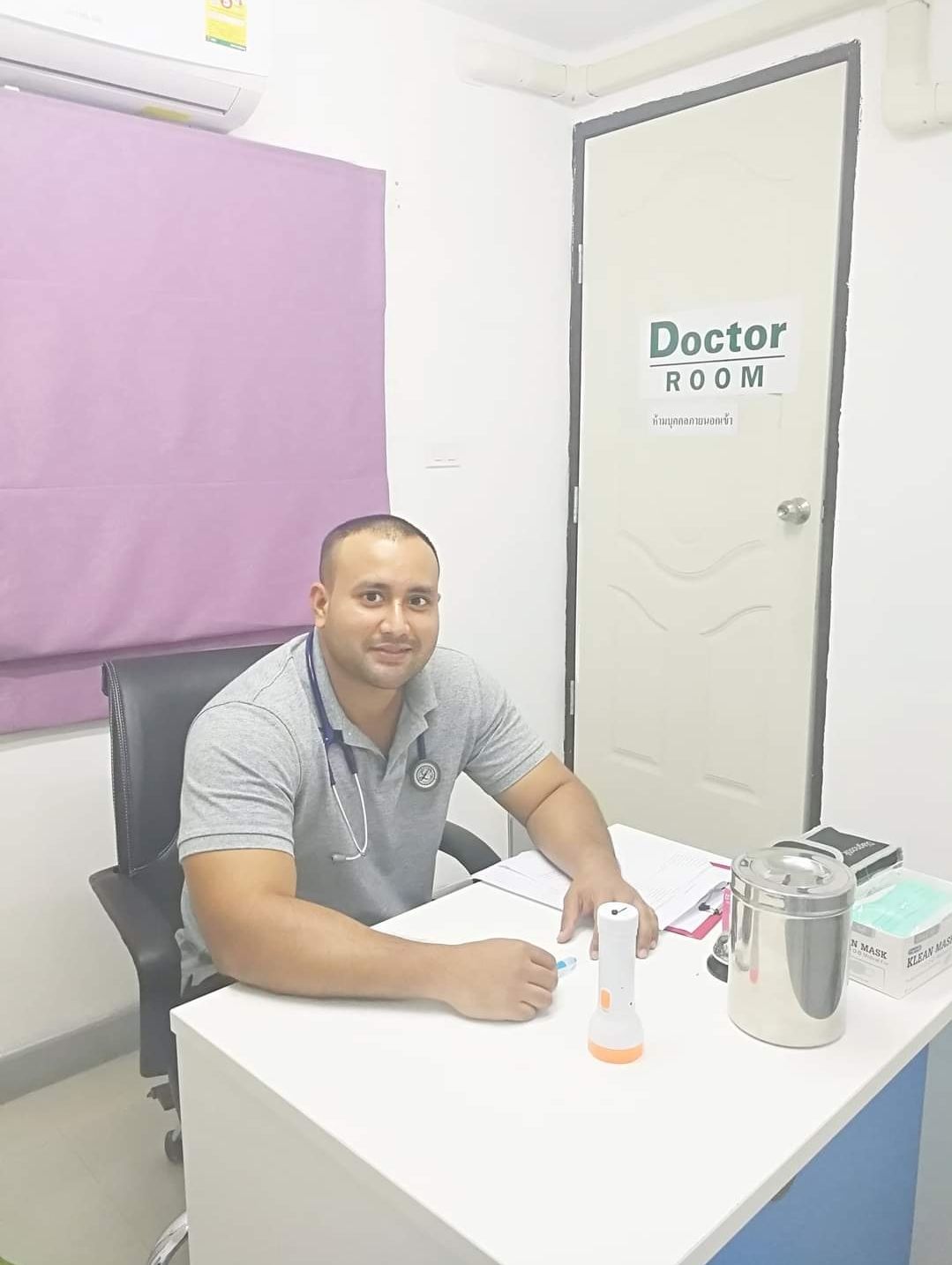
Dr. Ponlawat Pitsuwan is a physician at Doctor Bangkok, a private clinic in central Bangkok. He sees expats, residents, and medical tourists for general medicine, wellness consultations, and IV therapy. His focus is straightforward, evidence-based care delivered in plain language.