
Clinically reviewed by Dr. Ponlawat Pitsuwan, Physician, Doctor Bangkok. Last reviewed: July 2026
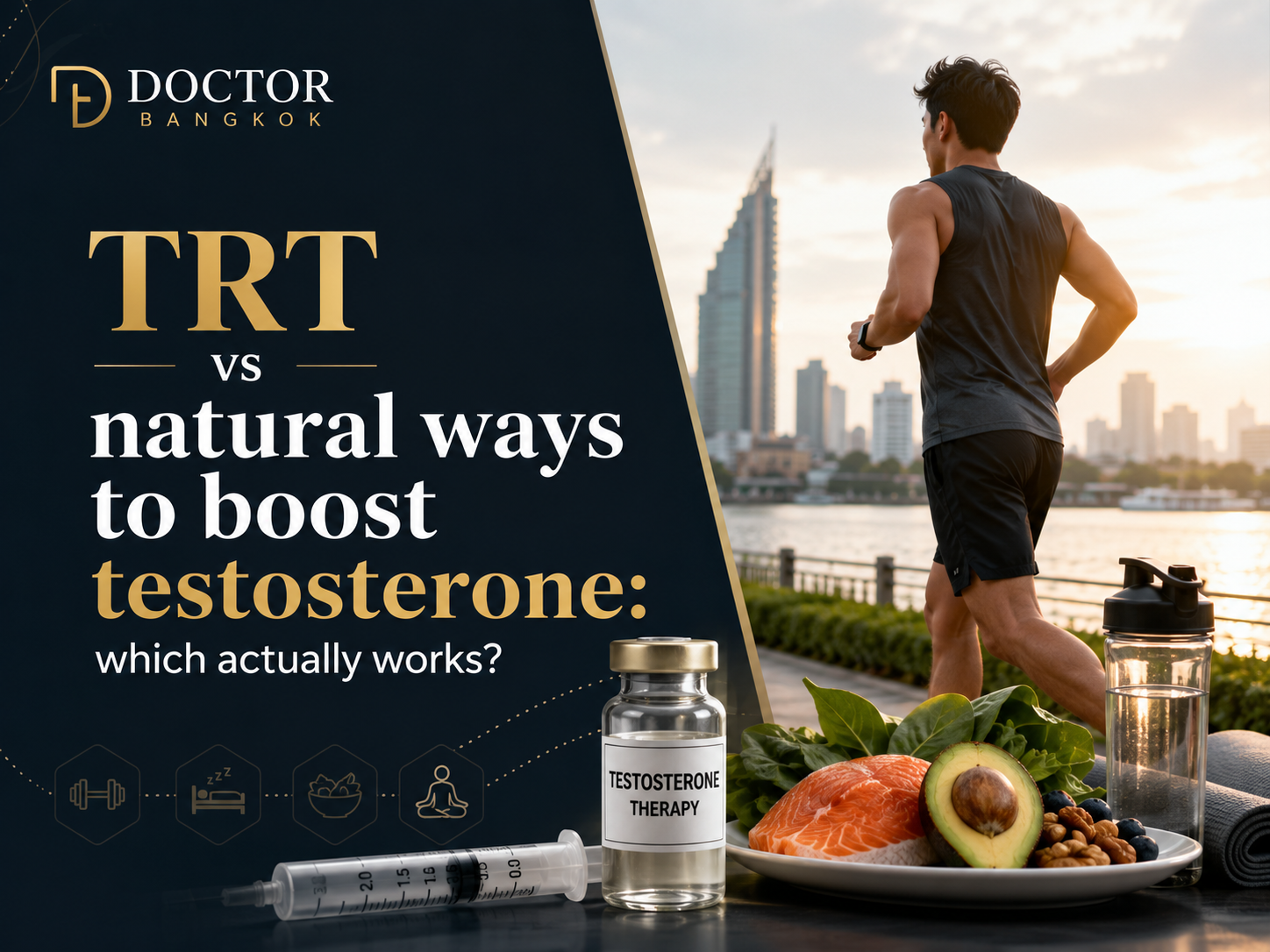
Testosterone replacement therapy and natural lifestyle changes work for different problems. If your testosterone is clinically low, below roughly 8 nmol/L, natural methods are unlikely to restore it on their own. If your levels are borderline or your symptoms have lifestyle roots, trying natural changes first is a reasonable starting point. A blood test is the only way to know which category you are in.
Most men who come to see me about this have already spent a few weeks Googling symptoms. They land somewhere between convinced they need testosterone injections and wondering if they just need to sleep more. The honest answer is that both routes work, but they work for different problems. Choosing the wrong one wastes time and, in the case of TRT, carries risks worth knowing before you start.
Living in Bangkok adds a layer to this. You may not have a GP you trust here. You may be sleeping badly, drinking more than usual, and working long hours. All of that affects testosterone. But so does genuine hormonal deficiency, and the two feel almost identical. The only way to tell them apart is a proper blood test, interpreted by someone who will actually talk you through what it means.

Why This Feels Harder When You Are Living Abroad
Back home, you would probably see your GP, get referred, and have someone walk you through the options. Here, you are working with a system you do not know, often in a language you do not speak, and the internet fills the gap with supplement ads and bodybuilding forums. Neither is useful when you are making an actual medical decision.
I see this pattern often with expats in Bangkok, particularly men who have been here six months or more. The disrupted sleep is real. The testosterone drop from lifestyle factors is real. But so is the possibility that what you are experiencing is something more than lifestyle. You need to know which one you are dealing with before you commit to any treatment.
What Low Testosterone Actually Feels Like
Low energy, low libido, difficulty building muscle, mood changes, brain fog, poor sleep. These are the symptoms men describe when they come in. They are also the exact symptoms of sleep deprivation, chronic stress, excess alcohol, vitamin D deficiency, and thyroid issues.
This is not me saying it is probably nothing. It is me saying that symptoms alone cannot diagnose low testosterone. A man with testosterone at 15 nmol/L and four months of Bangkok nightlife behind him may feel identical to a man with genuinely low levels at 6 nmol/L. The treatment for those two men is very different.

How to Get Properly Diagnosed Before Choosing Either Route
Before you decide anything, you need blood work. A single testosterone number is not enough. You need total testosterone and free testosterone, which is the portion your body can actually use. You also need SHBG, or sex hormone-binding globulin, because high SHBG reduces the testosterone available to your tissues even when total levels look normal.
A full pre-treatment panel should include LH and FSH to understand why your levels are low, estradiol to check how much testosterone is converting to oestrogen, PSA for prostate safety, a full blood count including hematocrit, and liver enzymes. Timing matters too. Testosterone peaks in the morning, so blood should be drawn between 7am and 10am. At Doctor Bangkok, we run this full panel before recommending anything.
Free Testosterone vs Total Testosterone
Many men come in having had a total testosterone test elsewhere that looked borderline normal. Total testosterone does not tell the whole story. If your SHBG is high, a large portion of that testosterone is bound and inactive. Free testosterone is what your cells can actually use, and both numbers matter for a complete picture.
What Natural Methods Can and Cannot Do
Here is the honest version. Resistance training, quality sleep, losing visceral fat, reducing alcohol, managing chronic stress, and getting enough vitamin D and zinc all have good evidence for supporting testosterone. These are not minor tweaks. A man who is overweight, sleeping five hours a night, and drinking most evenings can genuinely raise his testosterone through lifestyle changes alone.
Visceral fat specifically converts testosterone to oestrogen through a process called aromatisation. Less body fat means less of that conversion. That is a real and clinically significant effect.
The clinical ceiling matters though. Natural changes can restore testosterone when lifestyle is the root cause. They are unlikely to do much if the cause is primary hypogonadism, meaning your testes are not producing enough regardless of what you do. If your levels are below roughly 8 nmol/L and there are no obvious lifestyle factors, no amount of sleep and resistance training will get you to a normal range.
What About Supplements
Ashwagandha, zinc, D-aspartic acid, fenugreek. These are marketed heavily and the evidence is far weaker than the packaging suggests. Ashwagandha has modest evidence for reducing cortisol, which may indirectly support testosterone, but the effect is small. Zinc and vitamin D supplementation makes sense if you are actually deficient. Taking them when you are not deficient does nothing measurable.
Supplements are not TRT and they are not a substitute for lifestyle changes that have real evidence behind them. If you are spending money on testosterone-boosting supplements but not sleeping enough or still drinking heavily, your priorities are in the wrong order.
TRT and Fertility — What You Need to Know Before You Start
This is the conversation I have with every man under 45 before prescribing anything. TRT suppresses sperm production. This is not a rare side effect. It is the direct result of shutting down the hormone signals that drive sperm production. For most men on TRT, sperm counts drop significantly within months. Azoospermia, meaning no sperm in the ejaculate at all, can occur.
If you have any possibility of wanting children, this matters. Options include HCG, human chorionic gonadotropin, which can be used alongside TRT to help maintain testicular function. Clomiphene citrate, sometimes called Clomid, is a fertility-preserving alternative that stimulates your own testosterone production instead of replacing it. Sperm banking before starting TRT is also worth considering. At Doctor Bangkok, we discuss this before prescribing, not after.
TRT Side Effects and What Monitoring Should Look Like
The main risks of TRT that need ongoing monitoring are elevated hematocrit, which means your blood thickens and raises clot risk, rising PSA in older men, mood changes, and excess conversion of testosterone to oestrogen. Rising estradiol can cause fluid retention, breast tissue sensitivity, and mood instability if left unmanaged.
Monitoring should include a full blood panel at three months after starting, then every six months once stable. That includes testosterone levels, hematocrit, estradiol, PSA, and liver function. Some men require an aromatase inhibitor to manage oestrogen conversion, but this should only be prescribed based on actual blood results.
One thing I see regularly in Bangkok: men who have obtained testosterone from a pharmacy without a prescription, without baseline blood work, and without any monitoring. Testosterone is a controlled substance in Thailand and legally requires a prescription. Unsupervised use without monitoring is genuinely risky, particularly around hematocrit. Please do not do this.
TRT Delivery Methods Available in Bangkok
The most common option is injectable testosterone. Short-acting forms like testosterone enanthate or cypionate are given weekly. Testosterone undecanoate, known as Nebido, is a long-acting injection given roughly every ten to twelve weeks. For men who travel frequently around the region, Nebido’s infrequent schedule is often practical. For men who want more control over dose adjustments early in treatment, weekly injections allow faster fine-tuning.
Testosterone gels are applied daily to the skin. They are convenient but require caution if you have children or a partner who might have skin contact before the gel dries, as testosterone transfer is a real concern. The right delivery method should match your lifestyle, not just clinical preference, which is worth discussing properly at your consultation.
Who Should Try Natural Methods First and Who Needs TRT
If your testosterone is above 12 nmol/L and your symptoms have plausible lifestyle explanations, try genuine lifestyle changes first. Three to four months of consistent resistance training, better sleep, alcohol reduction, and weight loss can meaningfully move the needle. Get retested before making any further decisions.
If your testosterone is below 8 nmol/L on two separate morning tests and there is no obvious reversible cause, TRT is likely the appropriate step. The borderline range of roughly 8 to 12 nmol/L is where it gets nuanced. Men in this range with significant symptoms may benefit from TRT, but a proper clinical assessment including LH and FSH should guide the decision. Secondary hypogonadism, where the brain signal is the problem rather than the testes, sometimes responds to treatments other than direct testosterone replacement.
Starting at Doctor Bangkok — What to Expect
If you come in for a testosterone consultation at Doctor Bangkok, here is what happens. We discuss your symptoms, medical history, lifestyle, and fertility intentions. We then run the full hormone panel on a morning blood draw. Once results are back, we go through them with you properly.
If TRT is appropriate, we explain your delivery options and start you on a monitored programme. If lifestyle changes should come first, we tell you that clearly and give you a realistic plan. We are English-speaking, centrally located with easy BTS access, and we see a lot of expats in exactly this situation. You can find out more about our testosterone therapy programme and what it involves on our testosterone therapy page.
Wondering whether you need TRT or just need to address some lifestyle factors? The answer starts with a proper blood test. At Doctor Bangkok, we run a full hormone panel, explain your results in plain English, and only recommend treatment that is genuinely appropriate for your levels and situation. We also talk through fertility before prescribing anything. Book a testosterone consultation at doctorbangkok.co.th or visit us in central Bangkok, a short walk from BTS.
FAQ
Can I try natural methods first before committing to TRT?
Yes, and for many men it is the right starting point. If your levels are borderline, roughly 8 to 12 nmol/L, and symptoms are mild, three to four months of consistent lifestyle changes is worth trying before committing to long-term therapy. Get a proper blood test first so you know your actual levels and can make an informed decision.
Will TRT affect my fertility or sperm count?
Yes, and this is something I raise with every patient before prescribing. TRT shuts down the hormone signals that drive sperm production, and azoospermia can develop within a few months. If you may want children, we discuss options including HCG alongside TRT, Clomid as a fertility-preserving alternative, and sperm banking before you start.
Can I buy testosterone over the counter in Bangkok?
No. Testosterone is a controlled substance in Thailand and requires a prescription from a licensed physician. Obtaining it without proper baseline blood work and monitoring carries real risks, particularly elevated hematocrit and unmanaged estradiol. Our supervised testosterone programme is the safe, legal, and clinically appropriate route.
How quickly will I feel results from TRT versus natural methods?
TRT typically produces noticeable improvements in energy and libido within two to six weeks, with full benefits over three to six months as the dose is fine-tuned. Natural lifestyle changes are slower, often taking three to six months of real consistency. If your testosterone is genuinely low, natural methods alone are unlikely to produce the same degree of improvement no matter how long you give them.
What blood tests do I need before starting TRT?
At minimum you need total testosterone, free testosterone, SHBG, LH, FSH, estradiol, PSA, hematocrit, and liver enzymes, all drawn in the morning when levels are at their peak. Two separate morning draws on different days are needed to confirm low levels before any treatment is prescribed. Some clinics in Bangkok run a minimal panel. We do not.
Does TRT mean I am on it forever?
Not necessarily, but it is a long-term commitment for most men. Stopping TRT requires a managed taper and recovery of natural testosterone production is not guaranteed to be quick or complete. Some men with secondary hypogonadism may do well on alternatives like Clomid that stimulate their own production instead. This is worth discussing before you start, which is exactly what we do at Doctor Bangkok.
Dr. Ponlawat Pitsuwan
Physician, Doctor Bangkok
a private medical clinic in central Bangkok. He sees expats, residents, and medical tourists for hormone health, men’s health consultations, and testosterone assessment and therapy. His focus is straightforward, evidence-based care delivered in plain language.
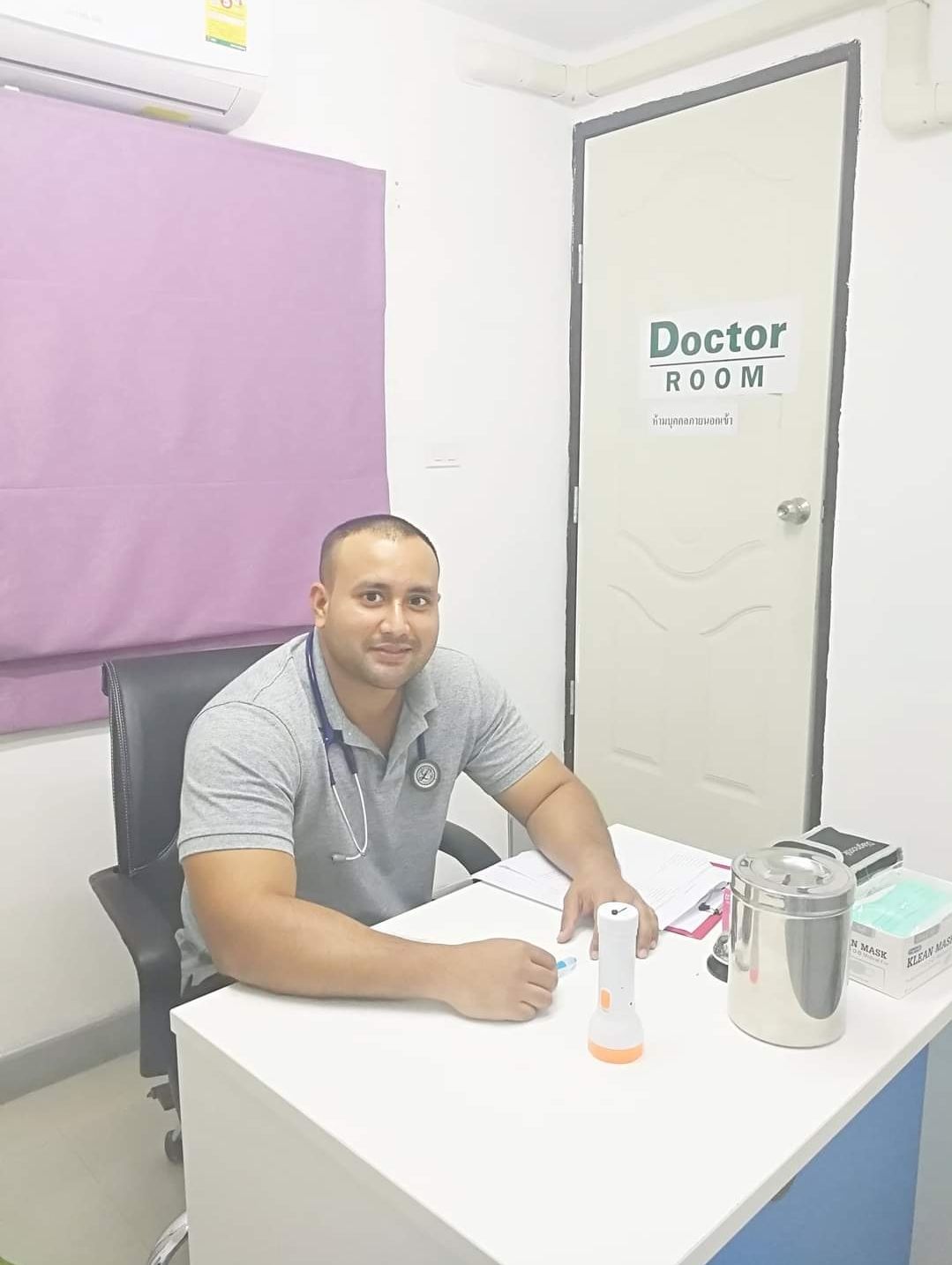
Dr. Ponlawat Pitsuwan is a physician at Doctor Bangkok, a private clinic in central Bangkok. He sees expats, residents, and medical tourists for general medicine, wellness consultations, and IV therapy. His focus is straightforward, evidence-based care delivered in plain language.