
Clinically reviewed by Dr. Ponlawat Pitsuwan, Physician, Doctor Bangkok.
Last reviewed: November 2026
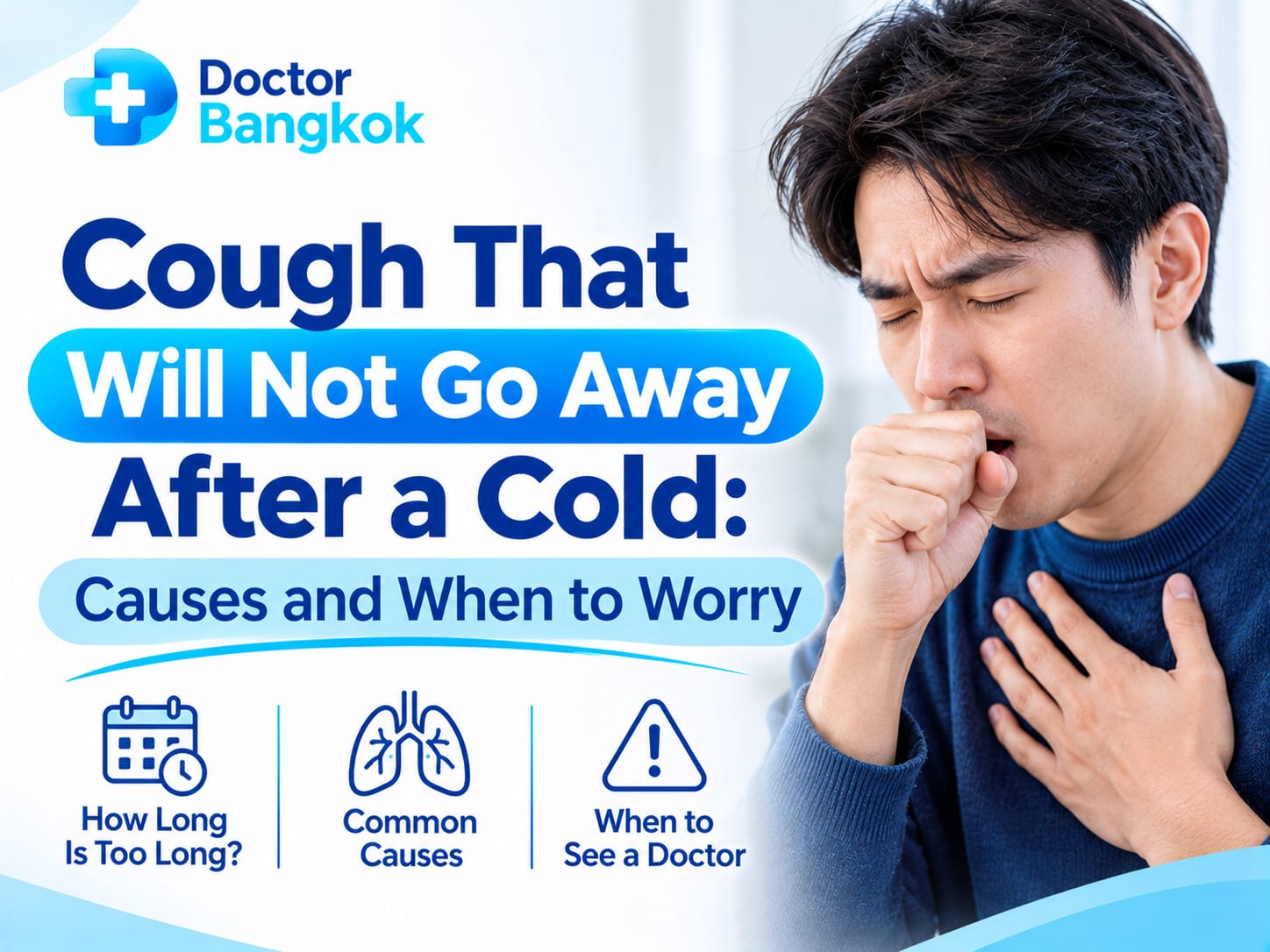
A cough that lingers after a cold is common and usually not serious. Most post-cold coughs resolve within three to eight weeks. If yours has lasted longer than three weeks, or if you have chest pain, shortness of breath, or blood in your mucus, you need to see a doctor.
You got over the cold two weeks ago. The sore throat is gone, the fever is gone, but the cough is still there. It wakes you up at night. It follows you into meetings. And now you are wondering whether something else is going on.
Most of the time, a cough that hangs around after a cold is called a post-infectious cough. Your airways were inflamed during the infection and they take time to settle. That is normal. But there are other reasons a cough can drag on, some of which are specific to living in Bangkok, and knowing the difference helps you decide whether to wait it out or get checked.

How Long a Post-Cold Cough Normally Lasts
Clinicians use a rough three-phase rule. An acute cough lasts up to three weeks. That covers the cold itself and early recovery. A subacute cough runs from three to eight weeks, which is where most post-viral coughs sit. A chronic cough is anything beyond eight weeks and always needs investigation.
If you are at week two and slowly improving, you are probably still in normal territory. If you are at week four and nothing is changing, that is worth a look. If you have been coughing for more than two months, do not keep waiting.
Common Causes of a Lingering Cough
Post-Viral Cough
After a respiratory infection, your airway lining stays irritated and hypersensitive for weeks. Your cough reflex is essentially stuck on a hair trigger. Cold air, dust, or even a deep breath can set it off. This type of cough is usually dry or produces only small amounts of clear mucus. It tends to ease gradually on its own, though the pace can feel frustratingly slow.
Post-Nasal Drip
Mucus dripping from the back of your nose down your throat keeps triggering the cough reflex. You may notice it most when you lie down at night or first thing in the morning. Nasal congestion, frequent throat-clearing, and a sensation of something dripping at the back of your throat are signs this may be the cause. Clinicians sometimes call this upper airway cough syndrome.
Asthma and Reflux
A cold can unmask asthma or make existing asthma worse. If the cough is worse at night, after exercise, or in cold or dusty air, asthma is worth considering. Acid reflux, also known as GERD, is another common driver. Stomach acid irritating the lower airway does not always cause heartburn. The cough can be the only symptom.
If you are on a blood pressure medication from the ACE inhibitor class, such as ramipril, lisinopril, or perindopril, that drug may itself be causing the cough. It is a dry, persistent cough that does not respond to cough suppressants. Switching to a different class usually resolves it. Mention any current medications when you come in.
Air Pollution and PM2.5
This is the one that catches a lot of people off guard in Bangkok. Between November and February, PM2.5 levels in the city regularly reach levels that irritate the airways even in healthy people. If your cold happened during this period, pollution may be extending your recovery, or it may be why the cough is not clearing at all.
The smoky season, driven by agricultural burning in the north and regional factors, can keep airway inflammation going long after a virus is gone. If your cough is worse on high-pollution days, or improves when you are indoors with good air filtration, that is a useful clue. This is also a good reason to track Bangkok’s daily AQI before heading out.
For more on staying healthy while in the city, the travel health Bangkok page covers common issues for expats and visitors.

Warning Signs That Need a Doctor
Some symptoms mean you should not wait. Blood in your mucus always needs same-day assessment. So does shortness of breath at rest, chest pain, a fever that returns after improving, or night sweats combined with unexplained weight loss. These can point to conditions that need proper investigation, including pneumonia or tuberculosis.
If you are not sure whether your symptoms cross that line, Doctor Bangkok’s doctor-on-call service can send a physician to your hotel or condo in Bangkok within one hour. There is no need to find a hospital in an unfamiliar part of the city. For a full assessment at the clinic, the walk-in clinic Bangkok on Sukhumvit Soi 13 is open 24 hours a day.
You can also check whether your travel insurance covers a private clinic visit, as many policies do.
What Helps a Lingering Cough
For a straightforward post-viral cough, the goal is reducing irritants while your airways heal. Stay well hydrated. Avoid smoke and dusty environments. If pollution is high, wear a properly fitted N95 mask outdoors and use an air purifier indoors.
If post-nasal drip is the driver, a saline nasal rinse can help clear mucus from the upper airway. If reflux is suspected, eating smaller meals, avoiding lying down after eating, and cutting back on coffee and spicy food can reduce acid irritation to the airway. If asthma is the cause, it needs a proper diagnosis and appropriate inhaler therapy, not over-the-counter cough medicine.
If the cough has lasted more than three weeks and self-care is not shifting it, a clinical assessment at Doctor Bangkok includes listening to your chest, checking oxygen levels, and reviewing your history to narrow down the cause. If a chest X-ray is needed, we can arrange a referral for imaging. You can also read more about asthma treatment in Bangkok and bronchitis treatment in Bangkok if either condition applies to what you are experiencing.
Still coughing weeks after a cold? Doctor Bangkok’s 24/7 clinic on Sukhumvit Soi 13 offers same-day assessment for lingering coughs, chest checks, and oxygen monitoring. If you would rather not travel, our doctor hotel visit service sends a physician to your hotel or condo in Bangkok within one hour. Walk in anytime or call ahead to arrange a home visit.
Frequently Asked Questions
Dr. Ponlawat Pitsuwan
Physician, Doctor Bangkok
a private medical clinic in central Bangkok open 24 hours a day, with a doctor-on-call service that reaches your hotel or condo within one hour. He sees expats, residents, and medical tourists for respiratory illness, post-viral recovery, fever assessment, and general medical consultations.
References
- Irwin RS, French CL, Chang AB, Altman KW; CHEST Expert Cough Panel. Classification of Cough as a Symptom in Adults and Management Algorithms: CHEST Guideline and Expert Panel Report. Chest. 2018;153(1):196-209.
- Morice AH, Millqvist E, Bieksiene K, et al. ERS guidelines on the diagnosis and treatment of chronic cough in adults and children. Eur Respir J. 2020;55(1):1901136.
- Dicpinigaitis PV. Angiotensin-converting enzyme inhibitor-induced cough: ACCP evidence-based clinical practice guidelines. Chest. 2006;129(1 Suppl):169S-173S.
- Nation Thailand. Farm burning fuels smog risk as Bangkok’s PM2.5 levels rise ahead of winter. Nation Thailand, 2024.
The information in this article is for educational purposes only and does not constitute medical advice. It should not be used to self-diagnose or replace a consultation with a qualified physician. If you have concerns about your health, contact a licensed medical professional. For appointments at Doctor Bangkok, visit doctorbangkok.co.th.
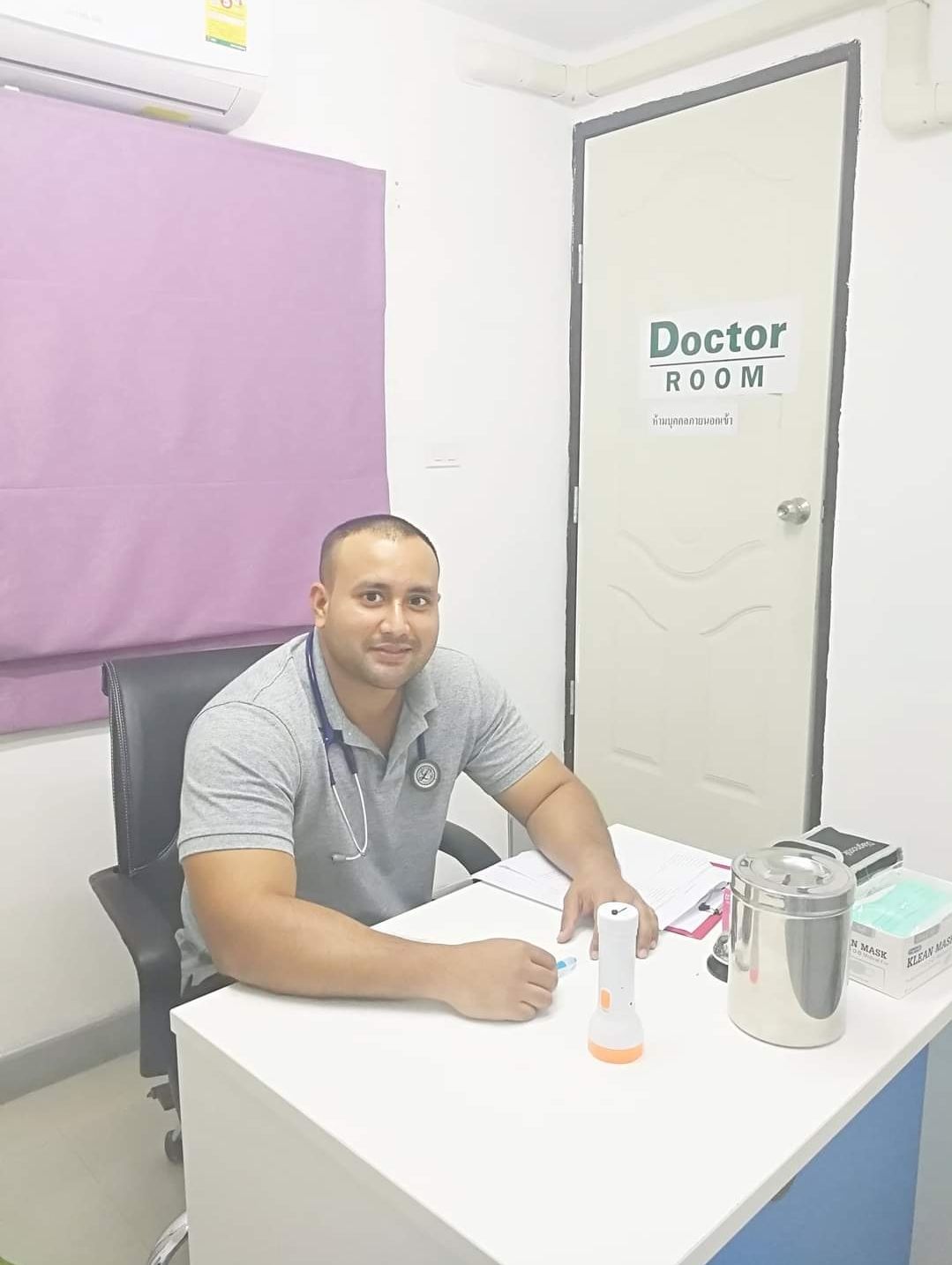
Dr. Ponlawat Pitsuwan is a physician at Doctor Bangkok, a private clinic in central Bangkok. He sees expats, residents, and medical tourists for general medicine, wellness consultations, and IV therapy. His focus is straightforward, evidence-based care delivered in plain language.