
Clinically reviewed by Dr. Ponlawat Pitsuwan, Physician, Doctor Bangkok.
Last reviewed: November 2026
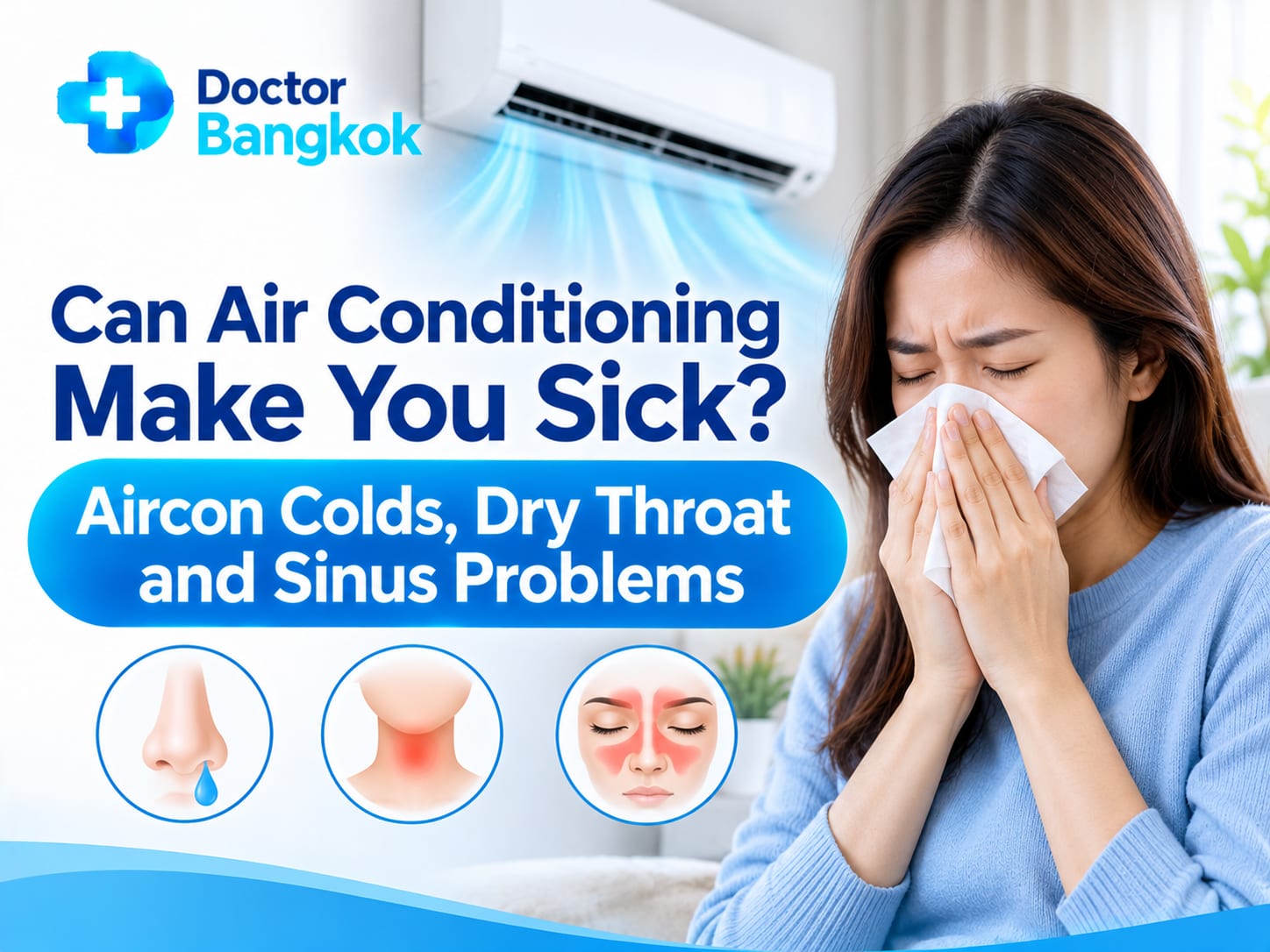
Air conditioning does not give you a virus. But it creates conditions that irritate your airways, dry out your sinuses, and make it easier for infections to take hold. In Bangkok, the humidity drop between outside and an air-conditioned room is severe enough to cause symptoms within hours. Dry throat, nasal congestion, and watery eyes are the most common complaints, and most resolve with simple changes to your environment.
You step off Sukhumvit in 34-degree heat, walk into your condo or hotel room, and wake up the next morning with a raw throat and blocked nose. It is not a coincidence. Bangkok’s air conditioning runs hard, often all night, and the gap between outdoor humidity and indoor air is wide enough to irritate airways quickly.
Aircon itself does not infect you. What it does is strip moisture from your nose, throat, and eyes, making those surfaces more vulnerable to whatever else is circulating. If you have been in Bangkok a week and your sore throat improves by mid-morning, aircon is almost certainly the cause. If it does not improve, or if you develop a fever, that is a different conversation.

What Aircon Actually Does to Your Airways
Your nose and throat are lined with a thin layer of mucus. That layer is your first filter: it traps particles, viruses, and bacteria before they reach your lungs. When indoor air is very dry, that layer thins. The tiny hairs lining your airway, which sweep debris away, slow down in dry conditions. The result is irritation, mild congestion, and a scratchy throat.
Air conditioning also recirculates indoor air rather than bringing in fresh air from outside. In a closed room, whatever is in the air, including dust, allergens, and skin cells, stays in circulation. If someone nearby has a virus, it concentrates. This is why a true cold can still spread in a heavily air-conditioned office, even without direct contact.
One detail that is easy to miss: dry air can dry out the skin on the lips, which is a commonly cited trigger for cold sore outbreaks in people who already carry the herpes simplex virus. If you get recurrent cold sores and they seem to flare in Bangkok, dryness is a possible trigger. A doctor can review whether that pattern fits and discuss your options, including whether a dry throat from air conditioning is contributing to your outbreaks.
Hot-Cold Temperature Swings in Bangkok Are Worse Than Elsewhere
Bangkok’s outdoor humidity regularly sits between 70 and 90 percent. Most air-conditioned rooms drop that considerably, often to around 40 to 60 percent or lower. That is a large and rapid shift for your body every time you walk through a door.
Your nose responds to sudden cold, dry air with a reflex runny nose triggered by temperature change rather than infection. It is called vasomotor rhinitis. It feels exactly like a cold starting. It is not. It usually settles once you are in a stable environment.
The same temperature swing adds low-level physiological strain. Coming in from 34 degrees to a room set at 20 degrees and back again, repeatedly throughout the day, compounds airway dryness and fatigue over days. This is not dangerous for healthy adults, but it does add up.
Dirty Filters and Mould
A neglected aircon filter is a health risk most people in Bangkok ignore until it smells. Bangkok’s high outdoor humidity means moisture collects inside the evaporator coil and drip tray faster than in cooler climates. Mould, including species such as Aspergillus, can colonise these surfaces over time, particularly in Bangkok’s high humidity.
When the unit runs, it blows spores and particles directly into the room. For most healthy adults, this causes airway irritation, sneezing, and a worsening of any existing respiratory condition. For anyone with asthma, a compromised immune system, or allergies, the effect can be more significant. Filters should be checked regularly, and in Bangkok’s humid climate they tend to need cleaning more often than manufacturers’ standard intervals suggest, especially if the unit runs continuously.
There is a less common but serious risk worth knowing. Poorly maintained large building water systems, including cooling towers and hot water systems of the kind found in hotels and office buildings, can harbour Legionella bacteria in standing water. Legionnaires disease presents like a severe pneumonia, with high fever, chest pain, and difficulty breathing. This is rare. But if you develop those symptoms after checking into a hotel, get assessed properly, not just for a sore throat but for your breathing and temperature.
Dry Eyes and Skin
The same low humidity that dries your throat dries your eyes. Aircon reduces the tear film on your eye surface, causing grittiness, redness, and a burning sensation by end of day. This is more pronounced if you are working at a screen, because the eyes blink less during screen use.
Your skin loses water through its surface more quickly in dry air. If you are already prone to dry skin or eczema, Bangkok’s heavy aircon use can make that worse. Moisturising before bed rather than in the morning helps, because your skin repairs itself overnight.
When Symptoms Mean Something More Serious
Most aircon-related symptoms resolve within hours of leaving the air-conditioned environment or making simple changes. If yours do not, pay attention.
A temperature above 38.5 degrees Celsius, symptoms that persist beyond five days, a severe headache, muscle aches, or any difficulty breathing are not signs of dry air. These warrant a clinical assessment. Persistent sinus pain that does not shift with steam inhalation may be a sinus infection rather than aircon irritation. A throat that gets worse rather than better, or starts producing pus, may be strep throat and needs a rapid test.
If you are in a hotel room and cannot control the AC unit, and you develop respiratory symptoms plus fever, do not wait. Doctor Bangkok’s doctor-on-call service can bring a physician to your room anywhere in Bangkok, day or night. Managing a deteriorating chest or high fever with paracetamol alone is not the right call.
Simple Fixes for Your Room
Set your thermostat to 25 or 26 degrees Celsius. This keeps the room comfortable without creating a large temperature differential that stresses your airways. Settings below 22 degrees are where most dryness and thermal shock symptoms originate.
A cool-mist humidifier next to your bed makes a noticeable difference overnight. If you are in a hotel and cannot change the AC settings, leave a wet towel over a chair near the vent. It is low-tech but it works.
Use the sleep timer on the unit. Running the aircon at full cold for eight hours straight is the most concentrated exposure you will get. Setting it to switch off or raise its temperature after a couple of hours reduces overnight airway dryness significantly.
Drink more water than you think you need. Bangkok heat, combined with indoor dryness, adds up to a meaningful daily fluid deficit. Staying well hydrated keeps your mucous membranes functioning properly.
If your sore throat, blocked nose, or eye symptoms are not settling with simple changes, or if you have a fever alongside them, get a proper assessment. Doctor Bangkok is open 24 hours a day at Trendy Office on Soi Sukhumvit 13. If you cannot come in, the doctor-on-call service brings a physician to your hotel or condo anywhere in Bangkok. Walk-ins are welcome at any time.
Frequently Asked Questions
Dr. Ponlawat Pitsuwan
Physician, Doctor Bangkok
a private medical clinic in central Bangkok open 24 hours a day, with a doctor-on-call service that reaches your hotel or condo within one hour. He sees expats, residents, and medical tourists for respiratory illness, general medical complaints, and conditions aggravated by Bangkok’s climate and environment. His approach is straightforward, evidence-based care delivered in plain language.
References
- Centers for Disease Control and Prevention. How Legionella Spreads. CDC, 2024.
- Mayo Clinic. Nonallergic rhinitis — Symptoms and causes. Mayo Clinic, 2023.
- Cleveland Clinic. What Triggers Cold Sores? Cleveland Clinic Health Essentials, 2023.
- World Health Organization. WHO Guidelines for Indoor Air Quality: Dampness and Mould. WHO Regional Office for Europe, 2009.
- OSHA. Legionellosis (Legionnaires’ Disease and Pontiac Fever): Medical Information. US Department of Labor, 2024.
- CDC. Strategies for Identifying Cooling Towers. CDC Legionella Investigation Toolkit, 2024.
The information in this article is for educational purposes only and does not constitute medical advice. It should not be used to self-diagnose or replace a consultation with a qualified physician. If you have concerns about your health, contact a licensed medical professional. For appointments at Doctor Bangkok, visit doctorbangkok.co.th.
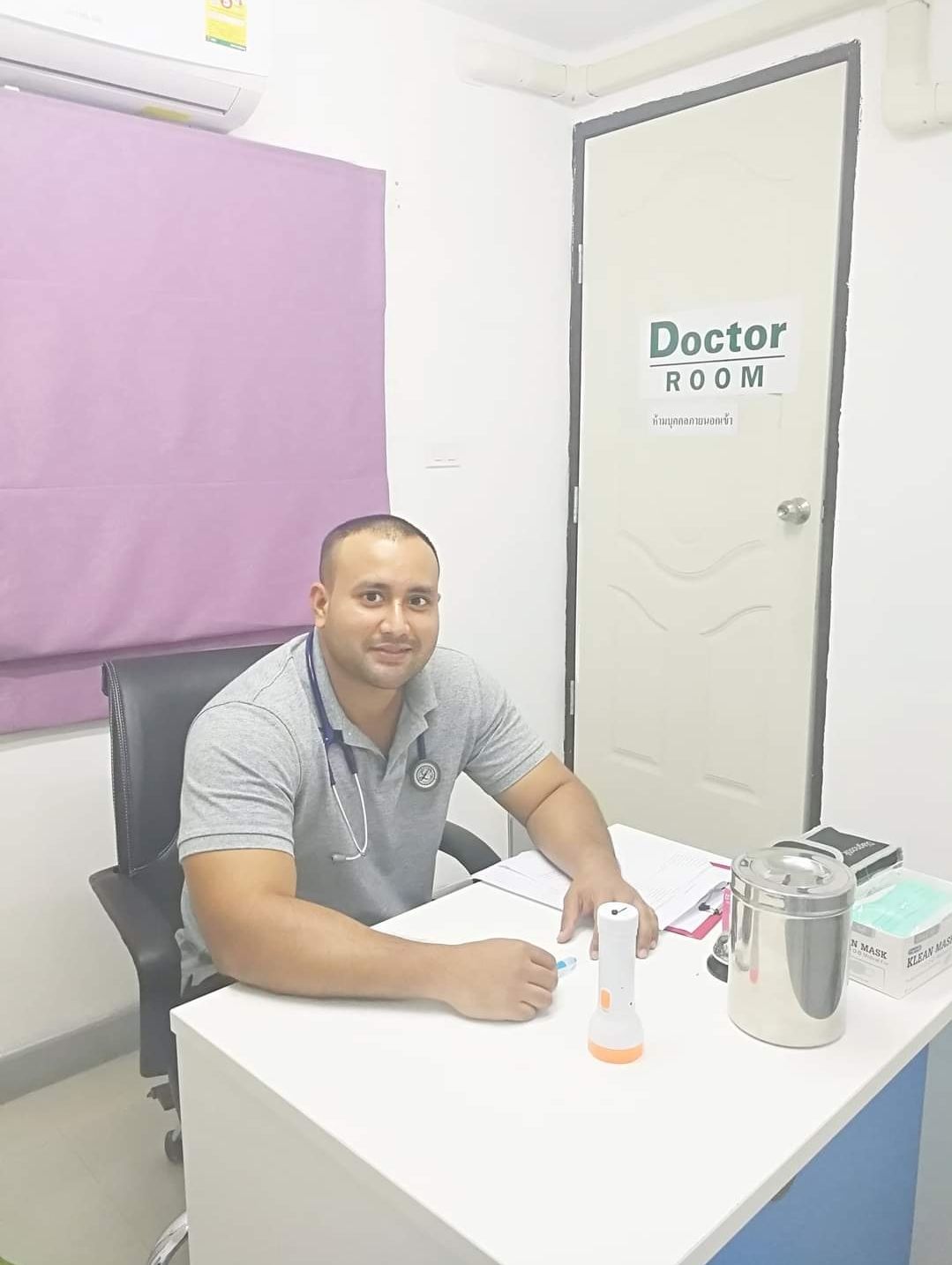
Dr. Ponlawat Pitsuwan is a physician at Doctor Bangkok, a private clinic in central Bangkok. He sees expats, residents, and medical tourists for general medicine, wellness consultations, and IV therapy. His focus is straightforward, evidence-based care delivered in plain language.