
Clinically reviewed by Dr. Ponlawat Pitsuwan, Physician, Doctor Bangkok.
Last reviewed: November 2026
Rabies immunoglobulin (RIG) is a one-time injection given alongside your first rabies vaccine dose after a high-risk animal bite or scratch. It is only for people who have never been vaccinated against rabies before. RIG must be given on the same day as your first vaccine dose. It cannot be given once your immune response has already started, which is roughly from day 7 onwards. Not every clinic in Bangkok stocks it.
You got bitten last night. You washed the wound, you searched online, and now you are reading this wondering whether you need more than just the vaccine. The answer depends on the exposure. If the bite bled, was deep, or the animal’s saliva touched your eyes, mouth, or an open wound, you likely need RIG alongside the shot.
RIG is the part of post-exposure treatment that most patients do not know exists until they are already in the chair. It bridges the gap between your first vaccine dose and the moment your body starts producing its own antibodies, which takes roughly a week. That window matters. This article covers who needs RIG, how supply works in Bangkok, and how to access it at any hour.

What Rabies Immunoglobulin Does
Your body takes roughly a week to build its own antibodies after the first rabies vaccine dose. RIG fills that gap by delivering ready-made neutralising antibodies directly at the wound site, right away. This is borrowed protection while your own immune response catches up.
RIG is injected into and around the bite wound itself. Under the current 2018 WHO guidance, any volume that cannot be anatomically injected at the wound site should still be infiltrated as close to the wound as possible, not into a distant muscle. The dose is calculated by body weight. This is a single administration, not a course.
Without RIG in a high-risk exposure, you have no antibody cover for the first week. The vaccine alone eventually works, but it starts too slowly for a wound that may already have live virus at its margins.
Who Needs Rabies Immunoglobulin: Category III Exposures
The World Health Organization classifies animal exposures into three categories. Category I is contact with unbroken skin: no treatment needed. Category II is minor scratches or nibbles without bleeding: vaccine only. Category III is where RIG may come in.
Category III includes any bite that breaks the skin and bleeds, deep scratches that bleed, an unprovoked attack, or any contact between animal saliva and mucous membranes: eyes, mouth, nose, or an open wound. Bat exposures are always treated as Category III regardless of how minor they appear. Under the 2018 WHO position, RIG is prioritised for high-risk Category III exposures: multiple bites, deep wounds, or bites to the head, neck, or hands. A doctor assesses which Category III cases require RIG.
A doctor makes the final call, not a checklist. If you are unsure whether your exposure qualifies, that uncertainty is itself a reason to come in. Waiting to find out is not a strategy when rabies is involved.

HRIG vs ERIG: Which Type Is Available in Bangkok
There are two types of RIG. Human rabies immunoglobulin (HRIG) is derived from human donors. Equine rabies immunoglobulin (ERIG) comes from horses. Both are WHO-approved for post-exposure use.
HRIG carries a lower risk of allergic reaction than ERIG. ERIG requires a sensitivity test before it is given and carries a small but real risk of reaction. HRIG is the preferred product when available, but it is harder to source in Thailand and costs more.
At many Bangkok private clinics, ERIG is what is in stock. The Queen Saovabha Memorial Institute holds both products. If you receive ERIG, your doctor will explain the sensitivity test beforehand. Both are effective when given correctly and on time.
The Time Limit for RIG After a Bite
RIG must be given on day zero, the same visit as your first rabies vaccine dose. This is not a guideline preference. It is a clinical requirement based on how passive and active immunity interact.
Once your vaccine-driven immune response begins, adding RIG can interfere with the antibody levels your body produces. WHO guidance states that RIG should not be given after day 7 from the first vaccine dose. That is a hard cutoff in current international protocols.
If you started your vaccine course without RIG and your exposure was Category III, do not wait. See a doctor the same day to confirm whether you are still within the window. If you are past day 7, the focus shifts to completing the vaccine course and clinical review.
RIG Availability in Bangkok
RIG availability in Bangkok is uneven. Not every private clinic stocks it, and supply can be intermittent even at clinics that usually carry it. HRIG is particularly difficult to source outside specialist centres. This is a documented issue globally, not just in Thailand.
If you are bitten near Sukhumvit or anywhere else in central Bangkok late at night, your options narrow fast. A hospital emergency room is always available, but it is not your only option.
Doctor Bangkok confirms RIG availability before you arrive. If you cannot travel, our doctor-on-call service can reach your hotel or condo within one hour. Do not assume the nearest clinic has stock. Call ahead, or contact a clinic you know holds it. If you are reading this after a bite today, contact us directly to confirm availability.
Cost and Travel Insurance for RIG in Bangkok
A full post-exposure treatment course includes four vaccine doses plus a single RIG injection for most healthy adults, or five doses for people who are immunocompromised. The vaccine doses are the smaller cost. RIG is dosed by body weight, so the total scales with how much product you need.
Out-of-pocket costs in Bangkok can range from roughly THB 10,000 to THB 25,000 or more, depending on body weight, the type of RIG used, and the number of clinic visits. Get an itemised quote at your first visit.
Travel insurance often covers post-exposure treatment including RIG as an emergency medical expense. Check your policy before you travel, not while you are sitting in a clinic. Doctor Bangkok provides itemised receipts for all treatment. If your insurer offers direct billing, see the travel insurance clinic page for details on how that works with us.
Been bitten or scratched by an animal in Bangkok? Do not wait until morning. Doctor Bangkok is open 24 hours, 7 days a week. Our doctor-on-call service can come to your hotel or condo anywhere in Bangkok within one hour. We stock RIG and can begin your full post-exposure treatment on the same visit. Walk in to our clinic on Sukhumvit Soi 13, or call ahead to confirm availability and have a doctor come to you. Book a doctor hotel visit or walk in now.
FAQ
Dr. Ponlawat Pitsuwan
Physician, Doctor Bangkok
a private medical clinic in central Bangkok open 24 hours, 7 days a week, with a doctor-on-call service that reaches your hotel or condo within one hour. He sees expats, residents, and medical tourists for animal bite assessment, rabies post-exposure treatment including RIG administration, wound care, and travel medicine. His focus is straightforward, evidence-based care in plain language.
References
- World Health Organization. Rabies vaccines: WHO position paper. Weekly Epidemiological Record, 2018; 93(16): 201–220.
- Sudarshan MK, et al. The WHO position on rabies immunization – 2018 updates. Vaccine, 2019; 37 Suppl 1:A85–A91. PMC6863036.
- Centers for Disease Control and Prevention. Rabies post-exposure prophylaxis (PEP). CDC, 2024.
The information in this article is for educational purposes only and does not constitute medical advice. It should not be used to self-diagnose or replace a consultation with a qualified physician. If you have concerns about your health, contact a licensed medical professional. For appointments at Doctor Bangkok, visit doctorbangkok.co.th.
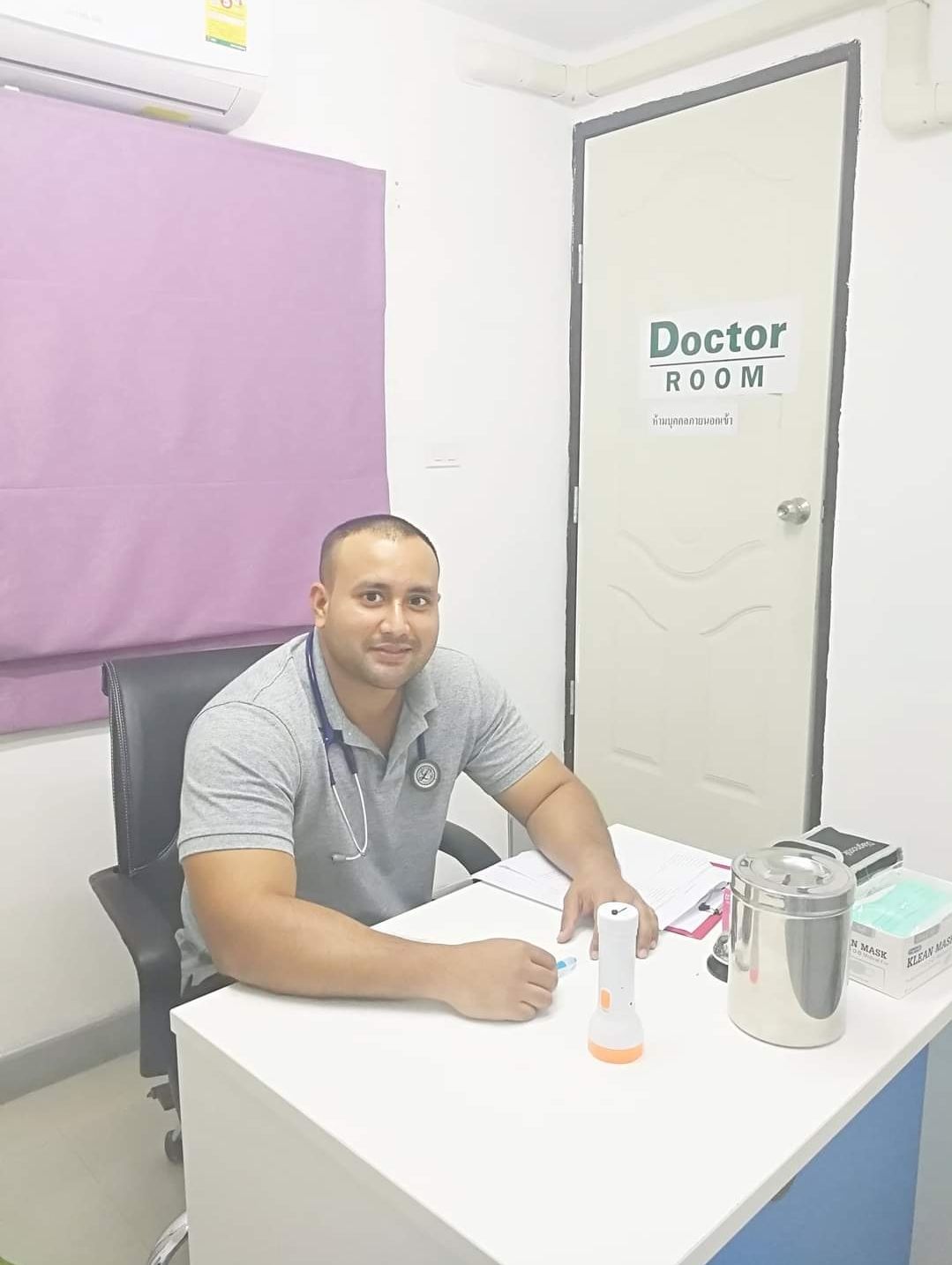
Dr. Ponlawat Pitsuwan is a physician at Doctor Bangkok, a private clinic in central Bangkok. He sees expats, residents, and medical tourists for general medicine, wellness consultations, and IV therapy. His focus is straightforward, evidence-based care delivered in plain language.