
Clinically reviewed by Dr. Ponlawat Pitsuwan, Physician, Doctor Bangkok. Last reviewed: July 2026
Thailand has one of the highest HIV rates in Southeast Asia, with around 580,000 people living with the virus. For expats and visitors, personal risk depends almost entirely on behaviour, not location. Getting tested, knowing your prevention options, and acting quickly after any exposure are the things that actually matter.
If you are living in Bangkok, visiting for a few weeks, or considering a longer stay, you have probably wondered about HIV at some point. Maybe you had unprotected sex and are now Googling at midnight. Maybe a friend mentioned PrEP and you are not sure if it applies to you. Either way, you are in the right place.
The honest answer is that HIV in Thailand is a real public health issue, but your personal risk is not determined by simply being here. It comes down to specific situations and behaviours. This article covers what the numbers actually mean for you, what to do after a potential exposure, and how to get tested or start prevention treatment in Bangkok, with no judgement and no runaround.

HIV in Thailand — what the numbers actually mean for you
Thailand has made real progress on HIV over the past two decades. According to UNAIDS 2023 data, roughly 580,000 people in Thailand are living with HIV, and around 9,100 new infections occur each year. The adult prevalence rate sits at approximately 1.1%.
That number means something different depending on who you are and how you live. Risk is not spread evenly across the population. It is concentrated in specific groups: men who have sex with men, people who inject drugs, and sex workers. For the general expat population in Bangkok, casual social contact carries no risk at all. HIV does not spread through sharing food, swimming pools, toilet seats, or everyday physical contact.
Risk comes in through unprotected sex, sharing needles, or blood-to-blood contact. Bangkok has a visible nightlife scene, and some expats do have sex with multiple partners. If that applies to you, the relevant question is not what the national prevalence rate is, but whether you are protecting yourself consistently.
Early symptoms of HIV — and why they are so easy to miss in Bangkok
Most people develop some symptoms two to four weeks after contracting HIV. Fever, fatigue, a body rash, swollen glands, sore throat, muscle aches. Sound familiar? It should. Those symptoms are almost identical to dengue fever, which is endemic in Bangkok. I see this exact confusion in my clinic regularly.
Symptoms alone cannot tell you whether you have HIV, dengue, or a common viral illness. Your exposure history is the key piece. If you had a potential HIV exposure in the past month and you now have a fever and rash, you need to be tested for both. Do not assume it is just dengue and wait it out.
Some people have no symptoms at all during this early phase. If you have had a risk exposure, do not wait for symptoms before getting tested. Symptoms are not a reliable signal either way.

HIV testing in Bangkok — which test and when
The right test depends on how much time has passed since your potential exposure. Getting this wrong means getting an unreliable result.
If it has been fewer than 10 days since the exposure, a standard antibody test will not pick anything up yet. Ask for an HIV RNA PCR test instead. This looks for the virus itself, not your immune response to it. A result within that window should still be confirmed with a follow-up test.
If it has been two to six weeks, a 4th generation Ag/Ab test is the right choice. It detects both an early viral protein and HIV antibodies together. A negative result at six weeks is highly reliable. A negative result at 90 days is considered conclusive by most guidelines.
For routine screening with no recent specific exposure, a 4th generation test is the standard. If you test positive, a confirmatory test is done before any diagnosis is made.
We also routinely check for syphilis, hepatitis B, and hepatitis C at the same time. If you are being tested for one, it makes sense to test for the others. You can book same-day testing at the Doctor Bangkok HIV testing clinic.
| Time since exposure | Best test | Window period |
|---|---|---|
| Under 10 days | HIV RNA PCR | ~10 days |
| 2 to 6 weeks | 4th Gen Ag/Ab | ~45 days |
| 6 weeks or more | 4th Gen Ag/Ab | Negative at 90 days is conclusive |
| Routine screening, no recent exposure | 4th Gen Ag/Ab | Standard |
PrEP and PEP — prevention before and after exposure
These are the two most important prevention tools available in Bangkok, and both are accessible without a prescription from home.
PEP stands for post-exposure prophylaxis. You take it after a potential exposure. It must start within 72 hours, and the sooner the better. Within 24 hours gives you the strongest protection. PEP is a 28-day course of antiretroviral medication. It is highly effective when taken correctly and started in time. If you think you need PEP, do not wait to see if symptoms develop. Come in now.
PrEP stands for pre-exposure prophylaxis. You take it before any potential exposure to prevent infection. The standard option is a daily pill. For travellers or people without frequent exposure, on-demand PrEP, also called 2-1-1 dosing, is a valid alternative. You take two pills two to 24 hours before sex, one pill 24 hours after, and one more 24 hours after that. This approach has solid evidence behind it for men who have sex with men.
At Doctor Bangkok, we can start PrEP on the same day after a short consultation and baseline blood tests. No Thai residency or prior prescription is needed. The cost is often significantly lower than what patients pay out of pocket in the UK, US, or Australia.
One important point: PrEP requires a negative HIV test before starting. If you already have HIV and take PrEP alone, it will not work and may cause drug resistance. That is why the baseline test always comes first.
If your test comes back positive — what actually happens next
A positive result on a screening test does not immediately mean a confirmed diagnosis. A confirmatory test is done first. If that is also positive, we run a CD4 count, which shows how well your immune system is functioning, and a viral load, which measures the amount of virus in your blood. Those two results guide everything that comes next.
Antiretroviral therapy, or ART, is started as soon as possible after a confirmed diagnosis. Rapid-start ART is now the standard of care and is available at private hospitals in Bangkok. Modern ART is a single tablet taken once daily. Side effects are generally mild, and most patients tolerate it well.
The principle that changes everything is U=U: Undetectable equals Untransmittable. Once ART brings your viral load to an undetectable level, you cannot sexually transmit the virus to a partner. That conclusion is backed by large-scale clinical studies including the PARTNER study published in The Lancet.
For expats, Thai medical law protects patient confidentiality. A private clinic result is not automatically reported anywhere. Insurance disclosure is a separate matter that depends on your specific policy. That conversation is worth having with your insurer or a legal adviser.
If you are based in Bangkok long-term, private hospitals manage ongoing ART well with English-speaking specialists. If you are relocating, your treating physician can prepare documentation to support continuity of care. People live long, healthy lives with HIV on treatment.
How to reduce your risk — practical steps for Bangkok life
Consistent condom use remains the most reliable barrier against HIV during sex. That sounds obvious, but I see many patients who use condoms "mostly" or "usually." Consistent means every time.
If you are having sex with new or multiple partners, PrEP is worth considering seriously. You can start PrEP at Doctor Bangkok after a single consultation. If you are sexually active with new partners in Bangkok, testing every three to six months is a reasonable schedule. Many people living with HIV in Thailand do not know their status, so you cannot rely on a partner’s appearance as any kind of indicator.
If you use recreational drugs, particularly any that involve needles or affect your judgement around sex, that changes the risk picture. There is no judgement here, but it is a real clinical conversation worth having.
If you have had a potential HIV exposure, need a confidential test, or want to start PrEP or PEP in Bangkok, Doctor Bangkok offers same-day appointments with English-speaking physicians. No referral needed. Walk in or book online at doctorbangkok.co.th/hiv-testing-bangkok.
FAQ
How high is the HIV risk in Bangkok for expats and visitors?
The risk depends on your behaviour, not your postcode. Thailand has around 580,000 people living with HIV, but the vast majority of new infections involve unprotected sex or needle sharing in specific high-risk groups. Casual social contact carries no risk. If you are sexually active with new partners and not using condoms consistently, that is where the real conversation starts.
I had unprotected sex in Bangkok last night. What should I do right now?
Come in today. PEP must start within 72 hours of exposure, and the sooner it starts, the better it works. You will need a baseline HIV test before PEP can be prescribed, and you should not wait to see if symptoms develop before acting.
Could my symptoms be dengue instead of HIV? How do I tell the difference?
You cannot tell from symptoms alone. Early HIV infection and dengue can feel almost identical: fever, rash, fatigue, muscle aches. If you had a potential HIV exposure in the past month and now have those symptoms, you need to be tested for both. Your exposure history matters far more than how you feel.
If my HIV test comes back positive in Bangkok, what happens next?
A confirmatory test is done first. If that is also positive, we check your CD4 count and viral load, then discuss starting antiretroviral therapy, available in Bangkok as a single daily tablet. With treatment, most people reach an undetectable viral load and cannot pass the virus to partners. Your result at a private clinic in Bangkok is protected by Thai medical confidentiality law.
Can I get PrEP in Bangkok without a prescription from home?
Yes. At Doctor Bangkok, we can start PrEP on the same day after a consultation and baseline blood tests. No prior prescription or Thai residency is required. Both daily PrEP and on-demand 2-1-1 dosing are available, and the cost is often lower than what patients pay out of pocket in Western countries.
How often should I get tested for HIV if I am living in Bangkok?
If you are sexually active with new or multiple partners, every three to six months is a reasonable schedule. If you are on PrEP, testing every three months is required as part of the protocol. Regular testing is the only reliable way to know your status.
What is the difference between HIV and AIDS?
HIV is the virus. AIDS is the late stage of untreated HIV infection, when the immune system has been severely damaged and the body becomes vulnerable to serious opportunistic infections. With modern treatment, the vast majority of people with HIV never develop AIDS. Early diagnosis and treatment prevent that progression.
Dr. Ponlawat Pitsuwan
Physician, Doctor Bangkok
a private medical clinic in central Bangkok. He sees expats, residents, and medical tourists for HIV testing, PrEP and PEP consultations, STI screening, and general sexual health. His focus is straightforward, evidence-based care delivered in plain language.
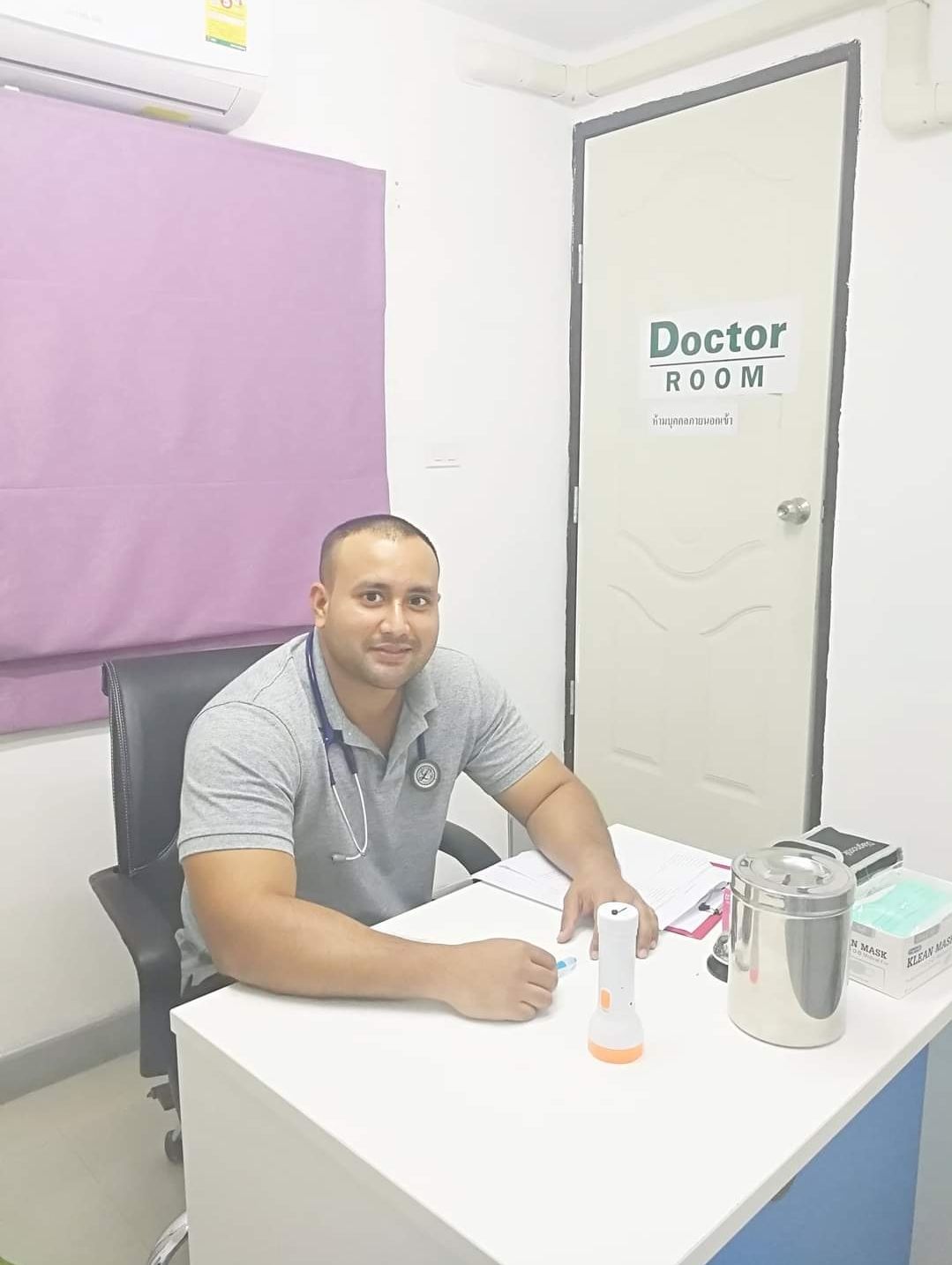
Dr. Ponlawat Pitsuwan is a physician at Doctor Bangkok, a private clinic in central Bangkok. He sees expats, residents, and medical tourists for general medicine, wellness consultations, and IV therapy. His focus is straightforward, evidence-based care delivered in plain language.