
Clinically reviewed by Dr. Ponlawat Pitsuwan, Physician, Doctor Bangkok.
Last reviewed: August 2026
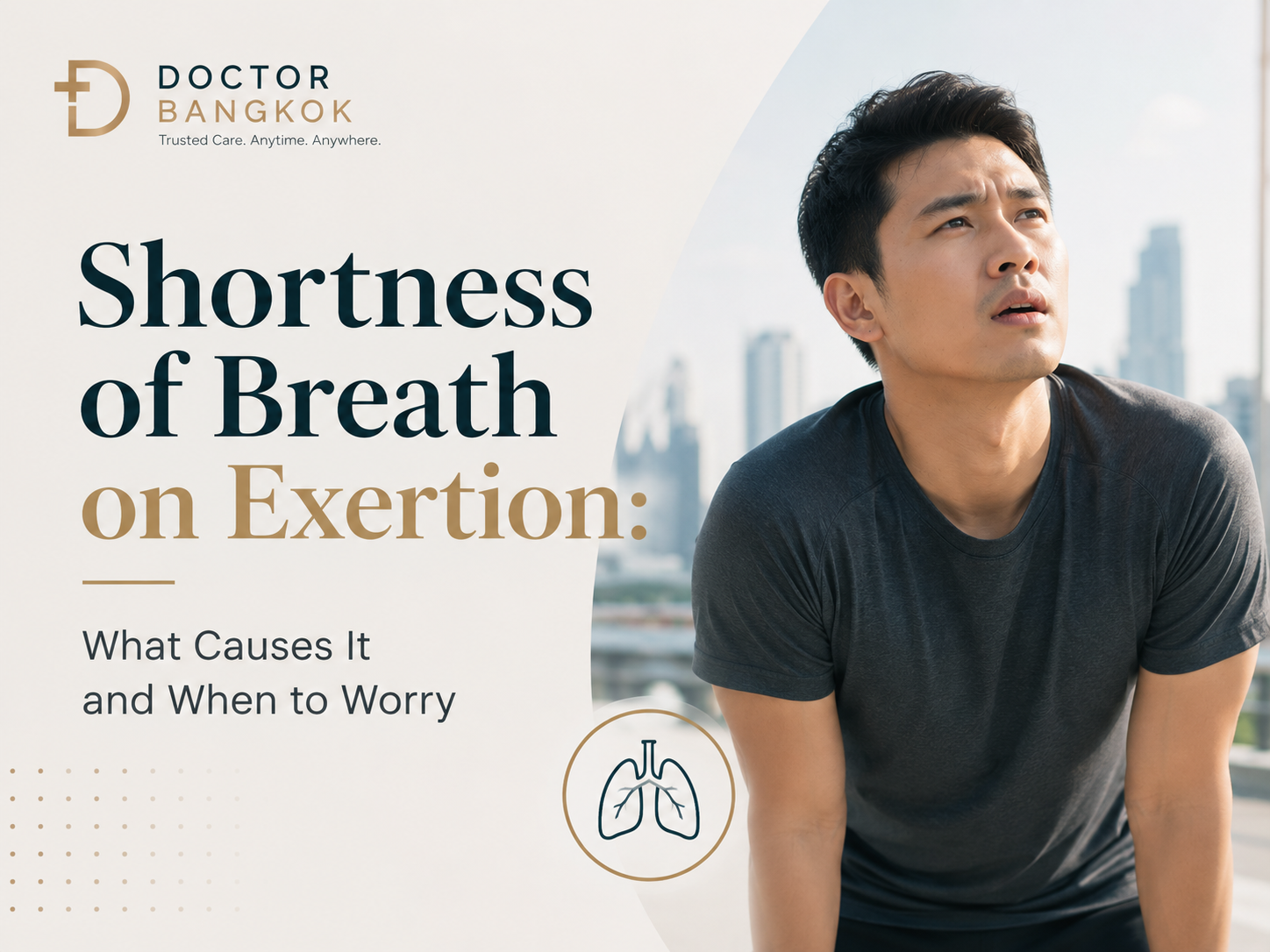
Shortness of breath on exertion means feeling unusually breathless during physical activity — climbing stairs, walking to the BTS, or carrying bags. It can be caused by deconditioning, heat, anaemia, asthma, or heart and lung conditions. Some causes are harmless. Others need prompt attention. If your breathlessness is new, getting worse, or comes with chest pain or dizziness, get assessed the same day.
You notice it on the Sala Daeng skywalk. Or carrying groceries up one flight. Something that used to feel fine now feels like effort. That gap between what your body could do before and what it can do now is worth paying attention to. A basic workup can usually give you a clear answer in a single visit.
Sometimes the explanation is simple: the Bangkok heat, a few months off exercise, or mild anaemia that crept up on you. Sometimes it is your heart or lungs trying to tell you something. Either way, you need to know which one you are dealing with.

What is Normal Breathlessness and What is Not?
Everyone gets breathless when they push hard enough. The question is whether your breathlessness matches the effort you are putting in.
Getting winded after sprinting up four flights of stairs is normal. Getting winded walking slowly along Sukhumvit is not. If you are breathless on level ground at a normal walking pace, that warrants a medical review. The other key question is whether this is new. If you have been fine for years and something changed in the last few weeks or months, that matters a great deal.
What Does Shortness of Breath on Exertion Actually Feel Like?
Patients describe it differently. Some say they cannot get a full breath in. Others say their chest feels tight, or that they have to stop and rest when they never used to.
Some notice they are breathing faster than the person walking next to them. What patients usually say is: "I just cannot keep up anymore." That feeling of falling behind your own usual pace, especially when it is getting worse, is the detail I focus on most.
If breathlessness comes on at rest, wakes you from sleep, or makes you sit upright to breathe, those are more urgent signals. Come in that day.

Common Causes of Shortness of Breath on Exertion
The most common cause I see in otherwise healthy expats is deconditioning. A few months of desk work, Bangkok traffic, and skipping the gym adds up. The body becomes less efficient at using oxygen during effort. This is not dangerous, and it improves with consistent exercise over weeks.
Anaemia is the next most common finding. Low iron means fewer red blood cells carrying oxygen around the body. It often goes undetected for months. A simple blood test picks it up. Asthma is also common here, and in Bangkok it can present purely as breathlessness during effort, without any classic wheeze.
On the more serious end, heart failure, coronary artery disease, and valve problems all reduce the heart’s ability to keep up during activity. These cause breathlessness that tends to worsen over time, at lower and lower levels of effort, and they need proper cardiac investigation.
Less Obvious Causes Your Doctor Needs to Rule Out
Thyroid problems can cause breathlessness. An overactive thyroid speeds everything up, including your breathing rate. Post-COVID breathlessness is something I see regularly now. Patients who recovered months ago but feel like their stamina never fully came back. This is real, it has a name, and it responds to graded exercise in most cases.
Medication is something patients rarely think to mention. Beta-blockers, commonly prescribed for blood pressure or anxiety, can reduce exercise capacity and make effort feel harder. If your breathlessness started around the time you began a new medication, say so at your consultation. That connection matters and it is one of the most reversible causes I see.
Obesity places mechanical pressure on the diaphragm and restricts breathing during exertion. Anxiety can also mimic and amplify breathlessness during activity, sometimes making the symptom feel more severe than any physical cause explains.
Bangkok-Specific Triggers: Heat, Humidity, and Air Quality
Most clinical information about breathlessness is written for temperate climates. Bangkok is not a temperate climate, and that changes things.
At 35 degrees and 80 to 90 percent humidity, your cardiovascular system is already working harder just to keep you cool. Blood is diverted to the skin. The heart works more. Even fit, healthy people feel the effort of walking outdoors here in a way they would not at home. If you have an underlying lung or heart condition, the heat amplifies everything.
Bangkok’s PM2.5 air pollution is the other factor. During haze season, fine particulate matter inflames the airways and can trigger breathlessness even in people without asthma. If you notice you are more breathless on high-pollution days, check the AQI before exercising outdoors and come in if it keeps happening. Dehydration from the heat also reduces blood volume and makes the heart work harder. Stay well hydrated, especially if you are physically active in the city.
Red Flag Symptoms: When Shortness of Breath on Exertion Needs Urgent Care
Most cases of new breathlessness on exertion are not emergencies. But some are, and it is important to know the difference.
Go directly to an emergency department if you have breathlessness with chest pain or pressure, a bluish tinge to your lips or fingertips, fainting or near-fainting, a racing or irregular heartbeat, or breathlessness that comes on suddenly at rest. These may point to a blood clot in the lungs, a heart attack, or acute heart failure. Do not wait for an appointment.
If your breathlessness is new or worsening over days to weeks but none of those emergency features are present, a same-day clinic assessment is the right first step.
How Shortness of Breath on Exertion is Diagnosed
A clinical history comes first. When did it start? Is it getting worse? Any ankle swelling, chest tightness, or night sweats? Then a physical exam: listening to the heart and lungs, checking your oxygen saturation with a pulse oximeter.
From there, first-line tests are straightforward. An ECG to look at heart rhythm, a chest X-ray, and blood tests covering a full blood count for anaemia, thyroid function, and a D-dimer if a clot is a concern. These can all be done at Doctor Bangkok in a single visit.
If those tests point toward a lung condition, a breathing test that measures airflow is the next step. If a heart problem looks likely, an echocardiogram — an ultrasound of the heart — follows, and we can organise that referral directly.
Treatment Depends on What We Find
There is no single treatment for breathlessness because there is no single cause. That is why the workup matters.
Anaemia gets treated with iron supplements or further investigation into why the iron is low. Asthma gets an inhaler, a clear action plan, and a review. Post-COVID breathlessness usually improves with graded activity and time, though some patients benefit from a structured rehabilitation approach. Heart failure and coronary disease need specialist care, and we refer you to the right team quickly if that is what we find.
What I can tell you from my clinic: most patients who come in worried about their breathing leave with a clear answer. And in most cases, that answer is manageable.
What to Expect When You Come in to Doctor Bangkok
Walk-in appointments are available. You do not need a referral. You do not need to speak Thai. Every consultation at Doctor Bangkok is in English, and we are used to seeing patients who are new to Bangkok, uninsured, between countries, or just want a straight answer.
Your first visit will include a clinical history, physical examination, oxygen saturation check, and a discussion of which tests make sense for you. Same-day results are available for most blood tests and ECG. If you need imaging or specialist referral, we organise that and explain clearly what the next step looks like.
The biggest mistake I see is people putting this off. Breathlessness that is new and worsening is not something to monitor indefinitely from your apartment. Come in, get the workup done, and know what you are dealing with.
If you have noticed increasing shortness of breath during everyday activity in Bangkok, Doctor Bangkok offers same-day general medical consultations with on-site ECG, blood testing, and oxygen saturation monitoring. Our English-speaking physicians see expats, residents, and medical tourists for exactly this kind of assessment. Walk-ins welcome. BTS accessible. Contact us to book or come in directly.
Frequently Asked Questions
Dr. Ponlawat Pitsuwan
Physician, Doctor Bangkok
a private medical clinic in central Bangkok. He sees expats, residents, and medical tourists for general medical consultations, respiratory and cardiac symptom assessment, and health checks. His focus is straightforward, evidence-based care delivered in plain language.
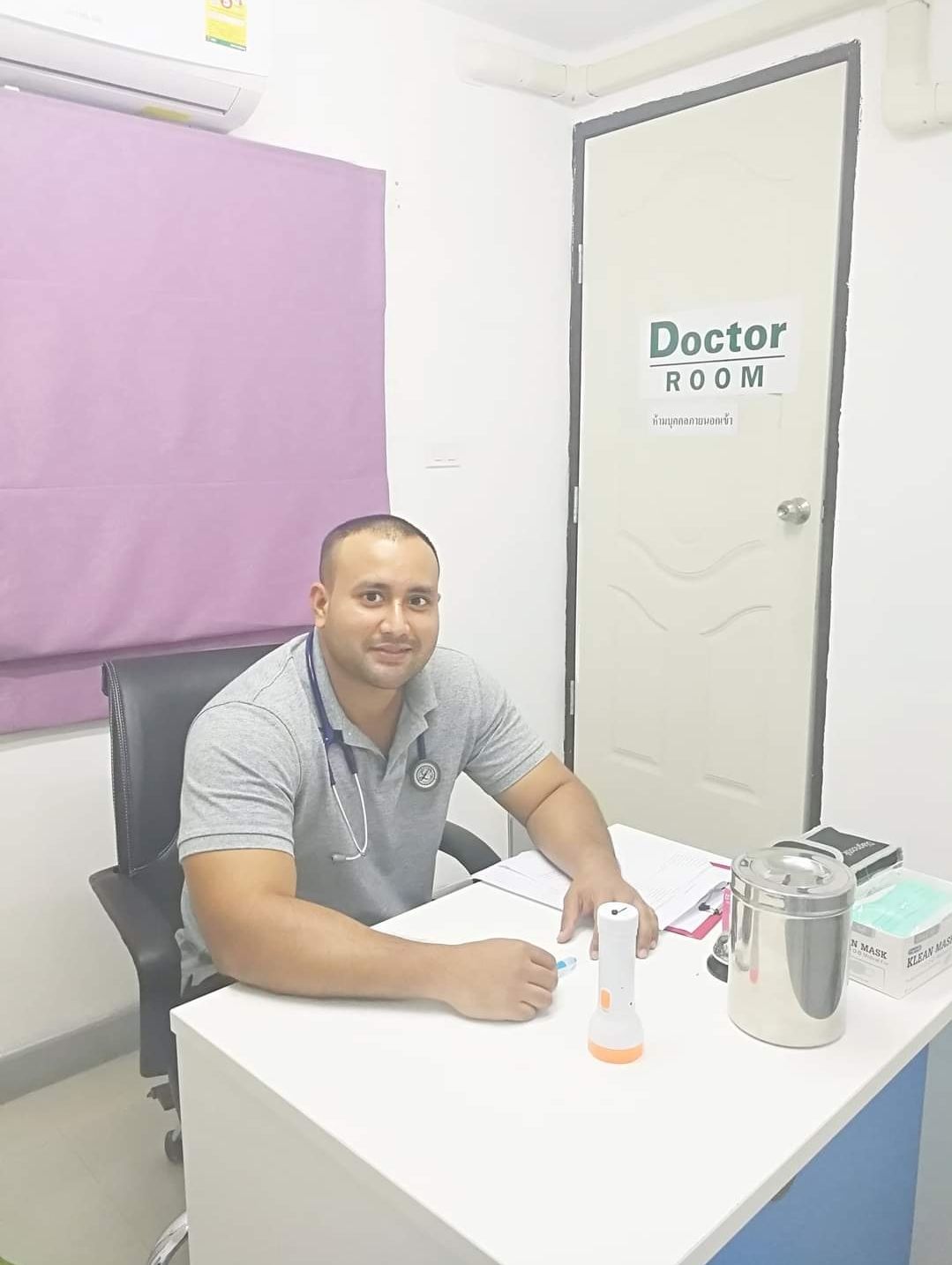
Dr. Ponlawat Pitsuwan is a physician at Doctor Bangkok, a private clinic in central Bangkok. He sees expats, residents, and medical tourists for general medicine, wellness consultations, and IV therapy. His focus is straightforward, evidence-based care delivered in plain language.