
Clinically reviewed by Dr. Ponlawat Pitsuwan, Physician, Doctor Bangkok.
Last reviewed: September 2026
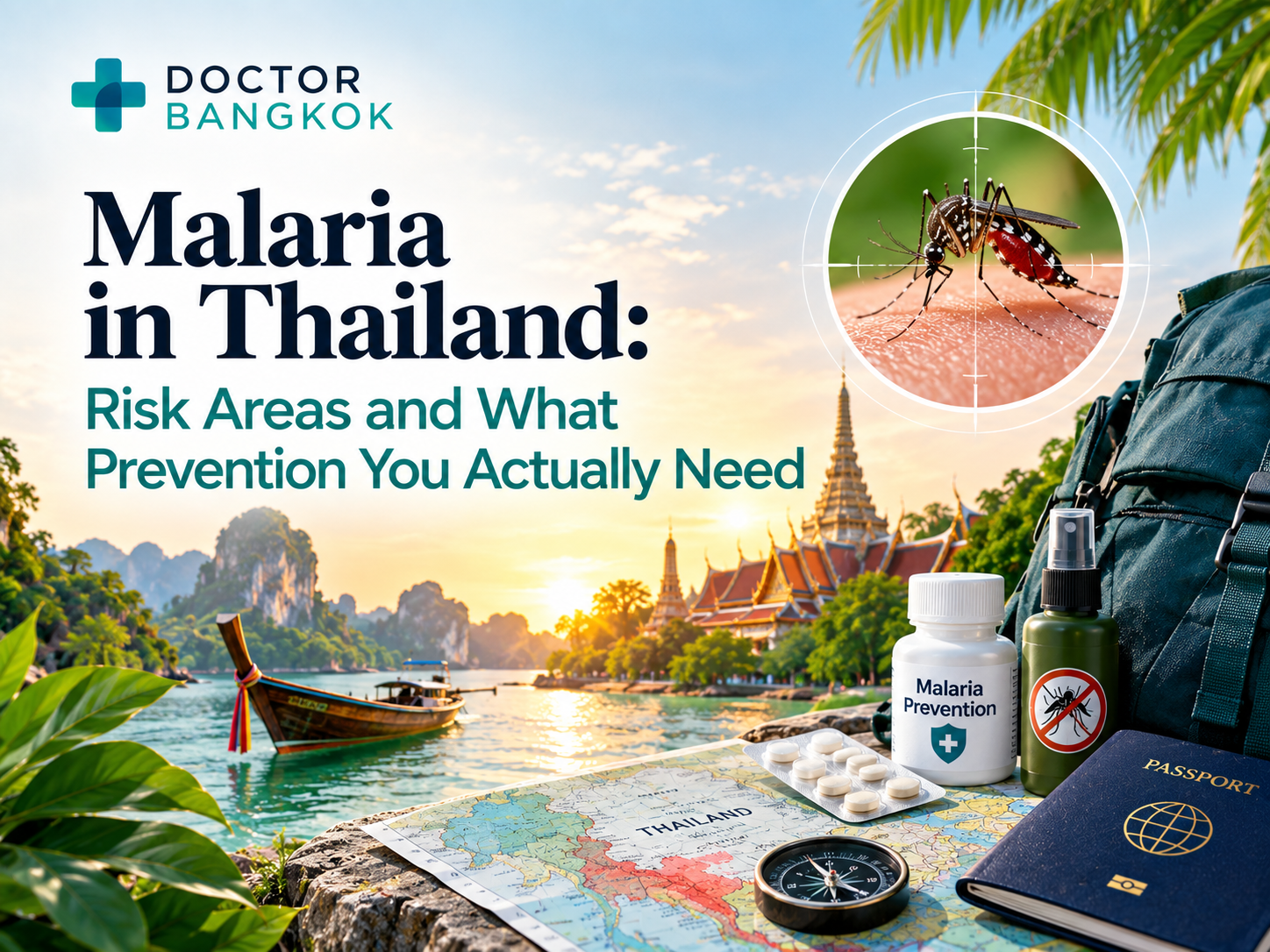
Malaria in Thailand is real but geographically specific. Bangkok and major cities carry no meaningful risk. The danger is in forested border areas near Myanmar, Cambodia, and Malaysia. If you have fever after travel to those regions, get a blood test the same day. A fever that starts weeks after your trip can still be malaria.
Someone comes in at least once a month after a trek near Mae Hong Son or a week close to the Cambodian border, running a fever they assumed was a cold. The question is always the same: could this be malaria? Sometimes they took tablets. Sometimes they did not. Either way, the answer requires a blood test, not a guess.
Most expats in Bangkok do not need to think about malaria day to day. The city is low risk. But Thailand is a large country, and parts of it carry genuine exposure. Knowing which parts, what symptoms to watch for, and what to do if you get sick is worth understanding before you need it.

Is There Malaria in Bangkok?
No. Bangkok has no active malaria transmission. The mosquito that carries malaria does not breed in urban environments the way the dengue mosquito does. If you live and work in central Bangkok, you do not need malaria prevention tablets.
The mosquito-borne illness to take seriously in the city is dengue fever. It is active year-round and does not require a forest or a border crossing. If you have an unexplained fever in Bangkok, dengue is a far more likely explanation than malaria.
Where Malaria Risk in Thailand Is Actually Located
Risk is concentrated in rural, forested areas along Thailand’s land borders. The Thai-Myanmar border provinces — Mae Hong Son, Tak, Kanchanaburi, Ranong — carry the highest burden. The Thai-Cambodia border in Ubon Ratchathani and Sa Kaeo is also a concern. Parts of southern Thailand near Malaysia carry lower but real risk.
Chiang Mai city is low risk. The airport, the Night Bazaar, the temples — none of that puts you at meaningful exposure. The risk rises sharply when you leave urban areas, sleep in forested settings, or travel close to any of those borders.
The pattern here in clinic is consistent. Patients who stayed in towns are almost never the ones we test positive. Patients who trekked, camped, or worked near the border are a different story.

Malaria Species in Thailand and Why Vivax Still Matters
Thailand has two main malaria species. Plasmodium falciparum is the more dangerous of the two and can progress to serious illness quickly if untreated. Plasmodium vivax is now far more common in Thailand, but do not underestimate it.
Vivax can hide. It has a dormant stage in the liver that can reactivate weeks or even months after the original infection. You feel better, your initial test comes back clear, and then the fever returns. If vivax is confirmed, treatment needs to include a second drug called primaquine to clear the liver stage and prevent relapse.
Before prescribing primaquine, we screen for a condition called G6PD deficiency, a genetic enzyme issue that makes primaquine dangerous in affected patients. This step gets skipped more often than it should elsewhere. At Doctor Bangkok, we do not skip it.
Drug-Resistant Malaria in Thailand: What You Should Know
The Thai-Cambodia border region is one of the world’s known focal points for drug-resistant malaria. A genetic mutation is driving partial resistance to the main drug class used in treatment. This does not mean treatment fails, but it does mean the right drug combination matters more than it would elsewhere.
Resistance is also why prophylaxis choice is not one-size-fits-all. Doxycycline and atovaquone-proguanil (Malarone) remain effective for prevention in Thailand. Chloroquine is not appropriate given current resistance levels. The right option depends on your specific destination, trip length, and medical history.
Do You Need Malaria Tablets for Thailand?
It depends entirely on your itinerary. There is no single yes or no for the whole country.
If you are visiting Bangkok, Chiang Mai city, Phuket, Koh Samui, or the main tourist beaches, you almost certainly do not need antimalarial tablets. If you are trekking near the Myanmar or Cambodian border, sleeping in rural forest areas, or doing extended fieldwork in high-risk provinces, prophylaxis is a serious consideration.
For genuine risk zones, atovaquone-proguanil or doxycycline are the standard options. A pre-travel consultation at Doctor Bangkok will give you a recommendation based on your actual route, not a generic one.
One option worth knowing about is stand-by emergency treatment, sometimes called SBET. This means carrying a course of treatment with you for use if fever develops in a remote area without quick access to a clinic. It is not a substitute for testing, but it can be appropriate for certain travellers in isolated locations.
Symptoms: What Malaria Feels Like and When to Suspect It
The main symptoms are fever, chills, sweating, headache, and muscle aches. What sets malaria apart is the cyclical pattern: waves of high temperature followed by drenching sweats, a period of feeling almost normal, then the cycle repeating. That pattern is a strong clinical clue.
Timing matters more than most people realise. Falciparum typically causes symptoms within 9 to 14 days of the bite. Vivax averages 12 to 18 days but can surface months later. This is why you need to tell any doctor about travel from the past three to six months, not just the last two weeks.
Malaria shares symptoms with several other conditions common in Thailand, including dengue fever, scrub typhus, and leptospirosis. You cannot tell them apart without testing. Post-travel fever after a rural Thailand trip needs a clinical assessment the same day, not a wait-and-see.
Took Antimalarial Tablets and Still Got Sick
This is a real clinical problem that does not get discussed enough. Prophylaxis significantly reduces your risk but does not eliminate it. Drug-resistant strains along the Thai-Myanmar and Thai-Cambodia borders can partially overcome prevention tablets. Missing doses or starting them too late also increases the risk.
There is a second issue: prophylaxis can delay when symptoms appear. Fever can surface after you finish your tablet course and return home. A traveller who completed their antimalarials correctly and then develops fever three weeks later still needs a malaria test.
If you took tablets, had border or forest exposure in Thailand, and now have a fever, come in. Do not assume the tablets mean malaria is ruled out.
How Malaria Is Diagnosed and Treated at a Bangkok Clinic
We start with a rapid diagnostic test, which gives an initial result quickly. If clinical suspicion remains high and the first result is negative — particularly when prophylaxis has been taken — we repeat testing or use blood film microscopy. A single negative result is not always the final word.
Treatment depends on the species. Falciparum requires prompt combination therapy. Vivax requires that combination plus primaquine for the liver stage, with G6PD screening first. Severe malaria requires hospital admission, not outpatient management. We assess for severity at the point of diagnosis.
If you are also worried about dengue, we can test for both on the same visit. The two conditions overlap in symptoms, and testing together is the efficient approach after border or forest travel in Thailand.
Fever after a border or forest trip in Thailand? Do not wait to see if it passes. Same-day malaria testing is available at Doctor Bangkok, centrally located and BTS accessible. We also offer pre-travel consultations for anyone heading into high-risk areas who wants an itinerary-specific plan. English-speaking physicians. Walk-ins welcome. Contact Doctor Bangkok to book or walk in today.
FAQ
Dr. Ponlawat Pitsuwan
Physician, Doctor Bangkok
a private medical clinic in central Bangkok. He sees expats, residents, and medical tourists for fever assessment, post-travel illness, malaria and dengue testing, travel medicine consultations, and general medical care. His approach is evidence-based, direct, and delivered in plain language.
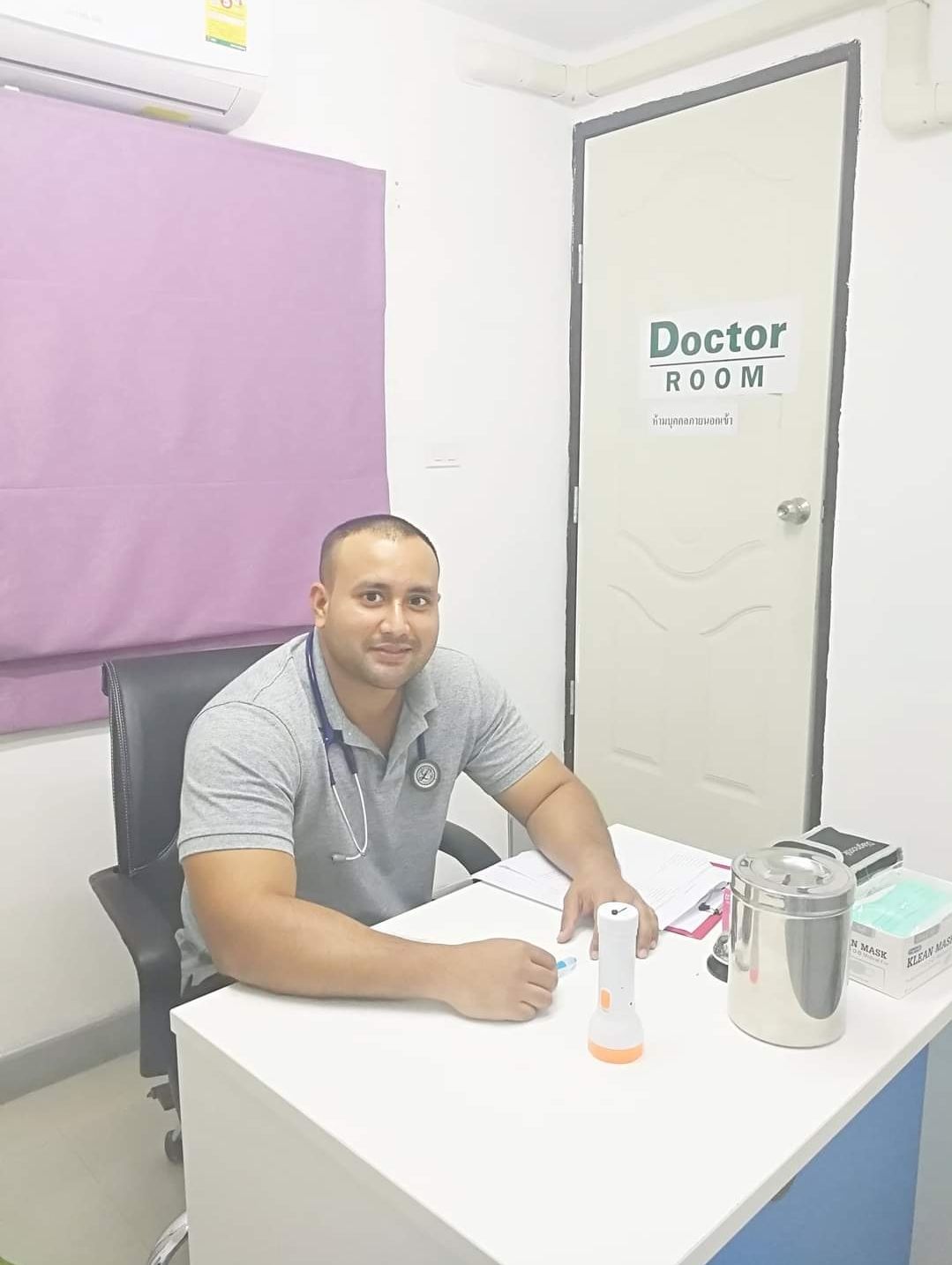
Dr. Ponlawat Pitsuwan is a physician at Doctor Bangkok, a private clinic in central Bangkok. He sees expats, residents, and medical tourists for general medicine, wellness consultations, and IV therapy. His focus is straightforward, evidence-based care delivered in plain language.