


Clinically reviewed by Dr. Ponlawat Pitsuwan, Physician, Doctor Bangkok. Last reviewed: August 2026
Laryngitis is only contagious when a virus or bacteria is causing it. Most cases in adults are viral and spread through coughs, sneezes, and close contact. You are most contagious during the first few days when fever is present. Non-infectious causes, like air conditioning, voice overuse, or acid reflux, cannot spread to anyone else.
Lost your voice after a long week in Bangkok? I hear this one often, especially from expats who have been sitting in heavily air-conditioned offices or who picked something up on the BTS. The first question is almost always the same: can I still go to work without making people sick?
The honest answer depends entirely on what caused it. Some laryngitis is contagious. A lot of it is not. Knowing which type you have changes how you manage the next few days, and whether you need to see a doctor.

Is Laryngitis Contagious? A Clear Breakdown by Type
This is the question most people actually need answered, so here it is cleanly.
Viral laryngitis, caused by a cold, flu, or COVID-19, is contagious and spreads through respiratory droplets and contaminated surfaces. Bacterial laryngitis, most often linked to strep throat, is also contagious until you have been on the right antibiotic for at least 24 to 48 hours. Fungal laryngitis, which usually only affects people on inhaled steroids or with weakened immunity, is not contagious at all. Neither is laryngitis caused by acid reflux, voice overuse, or irritants like smoke and pollution.
The majority of acute laryngitis I see in clinic is viral. That means it is contagious, but it is also self-limiting and clears on its own within one to two weeks.
What Is Actually Happening When You Lose Your Voice
Your larynx, or voice box, sits at the top of your airway. When it becomes inflamed, your voice goes hoarse or disappears entirely. That inflammation is laryngitis.
It can happen because of an infection your immune system is fighting. It can also happen because something irritated the lining directly: dry air, cigarette smoke, acid coming up from your stomach, or straining your voice at a concert. These two categories behave very differently when it comes to spreading to other people.

How Long Are You Contagious With Laryngitis?
If your laryngitis is viral, you are most contagious during the first two to five days, especially while you have a fever. Once the fever breaks and symptoms start to improve, the risk to others drops significantly, though you can still spread the virus for a few days after that.
Bacterial laryngitis works differently. You stay contagious until you have been on the right antibiotic for at least 24 to 48 hours. A rapid strep test tells us within minutes whether bacteria are involved and whether antibiotics are actually needed. If there is no fever and no sign of infection, you are almost certainly not contagious at all.
Non-Contagious Causes: When You Cannot Spread It to Anyone
Not all laryngitis comes from an infection. I see a lot of non-infectious cases, and patients are usually relieved to hear they are not putting anyone at risk.
Voice overuse is one of the most common causes. Teachers, singers, and anyone who had a loud Saturday night out fall into this category. Your vocal cords swell from physical strain, not from any infection.
Acid reflux is another common trigger. Stomach acid travels up and reaches the larynx, causing irritation. Many patients have no idea they have reflux because they never feel classic heartburn. Postnasal drip, where mucus from the nose or sinuses drips down onto the larynx, can cause the same kind of chronic hoarseness.
Bangkok-Specific Triggers That Make Laryngitis More Likely
This comes up almost every week in clinic, because Bangkok has a particular combination of conditions that hit the larynx hard.
The air conditioning here is relentless. Offices, malls, taxis, and restaurants are often set far colder than they need to be. Moving repeatedly between 35-degree heat outside and 20-degree air-conditioned chill dries out the mucosal lining of your throat and larynx quickly. That dryness reduces your local defences and makes you more vulnerable to both infection and direct irritation.
Then there is the air quality. Bangkok’s PM2.5 pollution, particularly during burning season from February through April, is a direct irritant to the airway. If you are already dealing with a mild viral infection, the pollution slows recovery and makes symptoms worse.
If you use an inhaled corticosteroid for asthma, fungal laryngitis is also worth knowing about. The steroid can allow Candida, a yeast, to grow in the airway. It is not contagious, but it does need antifungal treatment. Rinsing your mouth and gargling after every puffer dose significantly reduces the risk.
What Actually Helps: Treatment That Works
Voice rest is the single most effective thing for most cases of laryngitis. Not whispering, which actually strains the cords more than speaking normally. Real voice rest means talking as little as possible for a day or two.
Stay hydrated. Warm fluids help. Steam inhalation can ease the dryness. Avoid anything that irritates further: smoking, alcohol, spicy food if you have any reflux tendency, and extended time in heavily air-conditioned spaces without humidity.
For viral laryngitis, antibiotics will not help. The virus has to run its course. For bacterial laryngitis, antibiotics are appropriate once we confirm bacteria are the cause. At Doctor Bangkok, we do a rapid strep test in clinic and results are back in around ten to fifteen minutes, so there is no guessing. Fungal laryngitis is treated with antifungal medication. Reflux-related laryngitis often responds well to acid-suppressing medication and dietary changes.
When to See a Doctor for Laryngitis in Bangkok
Most uncomplicated viral laryngitis does not need a clinic visit if you are otherwise well. But some situations do need prompt attention.
Come in the same day if you have difficulty breathing or swallowing, a very high fever, or blood when you cough. These are not signs of typical laryngitis. For children under three with a hoarse or barking cough, do not wait.
Come in within a few days if you are not improving after a week, if your fever is not settling, or if you want a strep test before deciding on antibiotics. At Doctor Bangkok, walk-in appointments are available and the clinic is a short walk from BTS Asok and MRT Sukhumvit.
Book a non-urgent review if your voice has been hoarse for more than two to three weeks with no obvious cause. At that point, we need to consider other explanations, and a referral for laryngoscopy, a camera examination of the voice box, may be appropriate.
How to Stop Spreading Laryngitis if Yours Is Infectious
The basics still matter. Wash your hands regularly, cover your mouth when you cough or sneeze, and avoid close contact with others during the first few days. The BTS and Bangkok’s indoor malls make this genuinely difficult, but a mask helps.
If you are in a shared office, working from home for two or three days at the start of a viral illness is reasonable. You are most contagious before your symptoms peak, which is often when you feel like you can push through it.
Do not share cups, utensils, or phones during the acute phase. It is easy to overlook in a shared kitchen or at a meeting table, but it matters.
Not sure whether your laryngitis is contagious, or your voice still has not come back after a few days? Come and see us at Doctor Bangkok. We offer same-day walk-in consultations, rapid strep testing, and clear answers so you know exactly what you are dealing with. We are near BTS Asok and MRT Sukhumvit and see patients in English. If you cannot come in, our 24/7 hotel doctor service can come to you.
Frequently Asked Questions
Dr. Ponlawat Pitsuwan
Physician, Doctor Bangkok
a private medical clinic in central Bangkok. He sees expats, residents, and medical tourists for general consultations, respiratory and throat complaints, fever assessment, and travel medicine. His focus is straightforward, evidence-based care delivered in plain language.
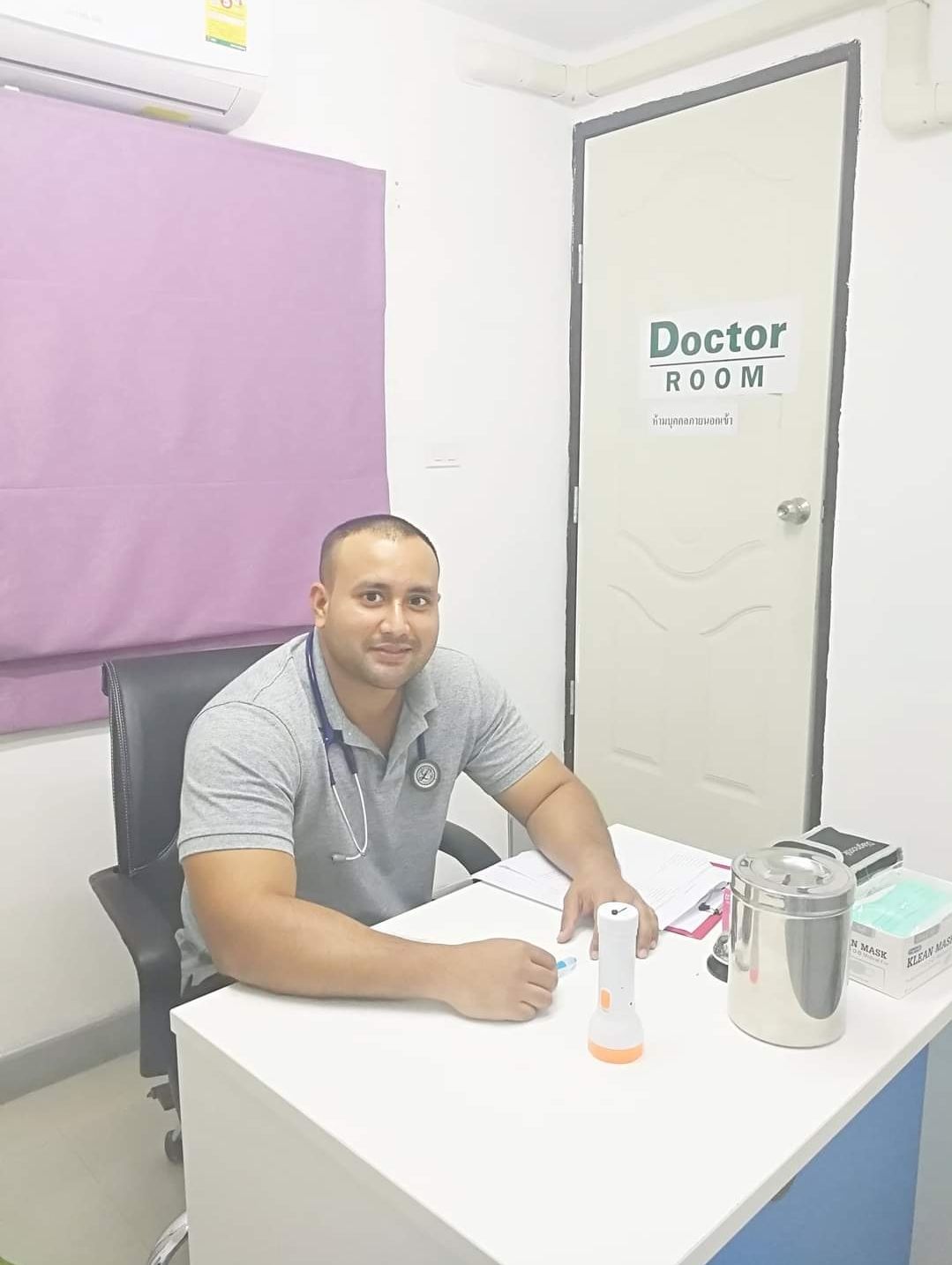
Dr. Ponlawat Pitsuwan is a physician at Doctor Bangkok, a private clinic in central Bangkok. He sees expats, residents, and medical tourists for general medicine, wellness consultations, and IV therapy. His focus is straightforward, evidence-based care delivered in plain language.