

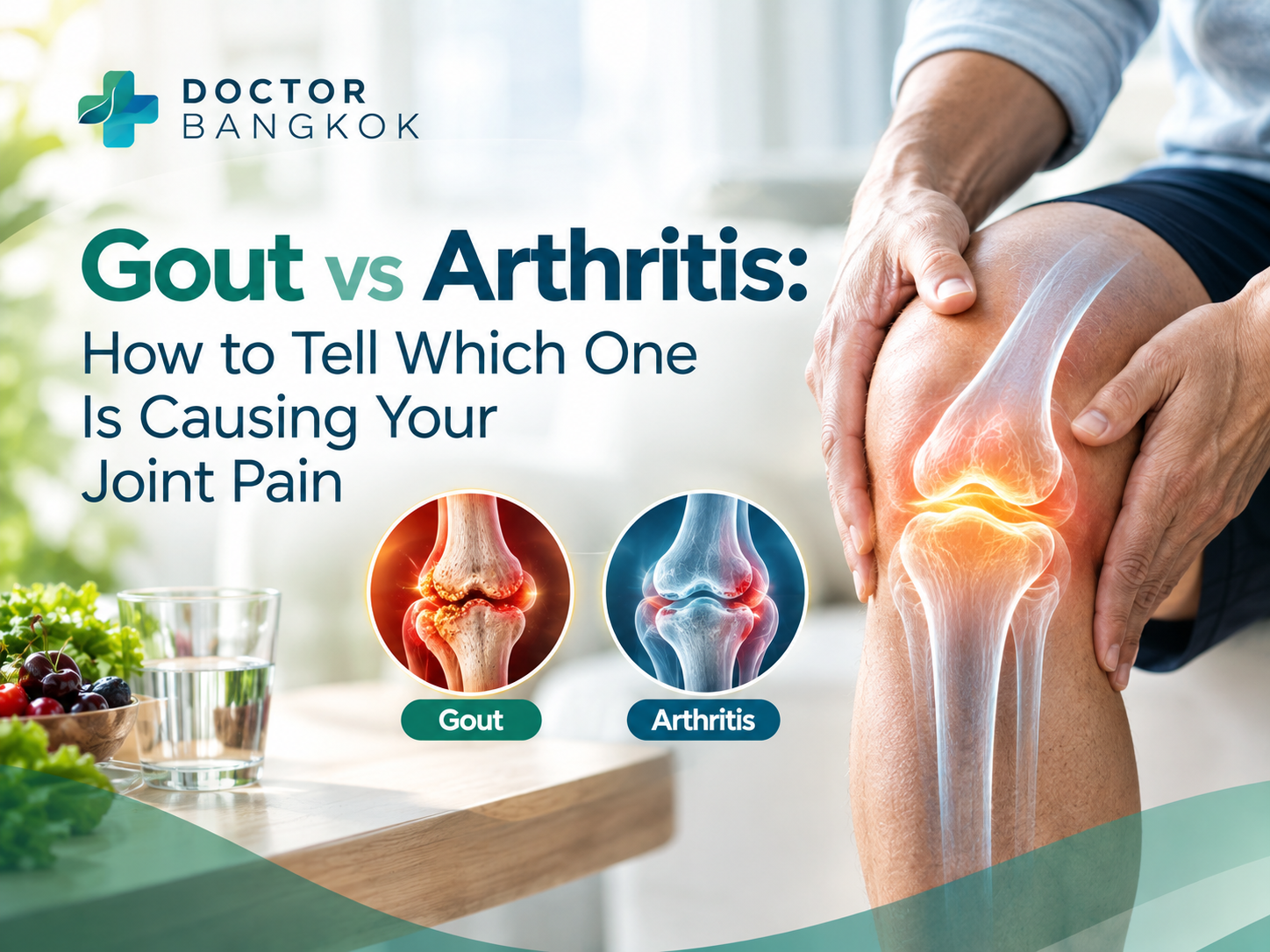
Clinically reviewed by Dr. Ponlawat Pitsuwan, Physician, Doctor Bangkok. Last reviewed: September 2026
Gout is technically a form of arthritis, but it works differently from osteoarthritis and rheumatoid arthritis. Gout is caused by uric acid crystals building up in a joint, usually striking suddenly and severely. Osteoarthritis is wear and tear. Rheumatoid arthritis is autoimmune. Getting the right diagnosis matters because the treatment for each is completely different.
You went to bed fine and woke up at 3am with a toe that feels like someone pressed a hot iron against it. Or your knee has been aching for weeks and you cannot tell if it is the long-haul flight, the heat, the food, or something more serious. I hear both of these at the clinic regularly, and the first question is always the same: is this gout or is this arthritis?
The honest answer is that gout and arthritis are not opposites. Gout is a type of arthritis. But that label covers more than a hundred different conditions, and knowing which one you have changes everything about how we treat it.

Wait — Is Gout Actually a Type of Arthritis?
Yes. Gout is classified as inflammatory arthritis. So when someone says "I have gout, not arthritis," they are not quite right.
The confusion happens because most people use "arthritis" to mean osteoarthritis, the stiff, achy joint pain that comes with age or overuse. Gout feels nothing like that. It comes on suddenly, it is intensely painful, and then it can disappear completely for weeks or months. That cycle of attack and remission is one of gout’s most distinctive features.
Rheumatoid arthritis, or RA, is also inflammatory like gout, but it is driven by your immune system attacking your own joints. Gout is driven by uric acid crystals. Same broad category, completely different cause, completely different treatment.
What Gout Actually Is — and Who Gets It
Gout happens when uric acid builds up in the blood and starts forming needle-shaped crystals inside a joint. Those crystals trigger intense inflammation. The big toe joint is by far the most common starting point, but the ankle and knee are also frequent targets.
Men are more commonly affected than women, particularly between the ages of 30 and 60. Women tend to develop gout after menopause. Being overweight, drinking alcohol regularly, eating a high-purine diet, and having kidney disease all increase the risk.

The Three Types of Arthritis Most Often Confused With Gout
Osteoarthritis is the most common type. It is wear and tear on the cartilage inside a joint, building up over years. It causes a dull, persistent ache that gets worse with activity and eases with rest. It is not usually red or hot, and it does not come on overnight.
Rheumatoid arthritis is autoimmune. Your immune system attacks the lining of your joints. It typically affects joints on both sides of the body at the same time, causes morning stiffness lasting more than an hour, and progresses without treatment.
Psoriatic arthritis is worth knowing about too. It occurs in people who have or have had psoriasis. It can affect any joint, cause swelling in whole fingers or toes, and is sometimes mistaken for gout or RA. If you have a history of psoriasis and joint pain, mention it when you come in.
Gout vs Arthritis — Symptoms Side by Side
The fastest way to tell these apart is by how the pain starts and where it lands.
| Feature | Gout | Osteoarthritis | Rheumatoid Arthritis |
|---|---|---|---|
| Onset | Sudden, often overnight | Gradual, over months or years | Gradual, may flare |
| Pain character | Severe, burning | Dull ache, stiffness | Aching, throbbing, tender |
| Joints affected | Big toe first, ankle, knee | Knees, hips, hands, spine | Hands, wrists, knees, symmetric |
| Skin over joint | Red, shiny, hot | Normal | Warm, sometimes swollen |
| Symmetry | Usually one joint at a time | Often asymmetric early | Typically symmetric |
| Duration | Flares then clears completely | Chronic and progressive | Chronic with flares |
| Morning stiffness | Short or none | Under 30 minutes | Often over 1 hour |
One pattern I see often: a patient comes in convinced they have arthritis because their uric acid was borderline a year ago. But the pain came on in hours, the big toe is red and swollen, and they cannot wear a shoe. That is gout until proven otherwise.
Gout Triggers in Bangkok — What Expats Need to Know
Bangkok is an easy city to trigger a gout flare without realising it. The diet here is genuinely high in purines, and most expats do not connect what they ate Tuesday night to the joint pain they woke up with Wednesday morning.
Tom yum with shellfish, pad krapow with pork offal, seafood buffets, fish sauce in almost every dish — these are all high in purines. Beer is a double trigger: Chang and Leo both raise uric acid production and slow your kidneys from clearing it. Spirits carry lower risk than beer, but alcohol in general is not gout-friendly.
Bangkok’s heat adds another layer. Dehydration concentrates uric acid in the blood and makes a flare far more likely. If you are walking around Sukhumvit in 35-degree heat and drinking more beer than water, your risk goes up significantly. I tell patients who have had one attack to treat hydration like medication in this climate.
How Gout Is Diagnosed at a Bangkok Clinic
The first test we run is a serum uric acid blood test. But there is an important catch: during an active flare, uric acid can temporarily drop to a seemingly normal level as crystals shift from the blood into the joint. A normal result during an attack does not rule out gout.
The definitive test is synovial fluid analysis, where a small amount of fluid is taken from the swollen joint and examined for uric acid crystals. In practice, for a classic presentation — big toe, sudden onset, severe pain — most doctors will treat on clinical grounds without needing that step.
At Doctor Bangkok, we run blood work including uric acid, kidney function, and inflammatory markers on the same day. If your case is straightforward, we can start treatment at the same visit. If we need to rule out RA or another condition, we can refer you to a rheumatologist with your results already in hand.
Treatment Differences — Gout vs Arthritis
Getting the right diagnosis matters because the treatments are genuinely different. Treating gout as if it were RA, or the other way around, will not work.
For a gout flare, the immediate goal is stopping the inflammation. We typically use colchicine or NSAIDs. For longer-term prevention, allopurinol lowers uric acid production and reduces the frequency of flares. Both are available and affordable in Thailand. Urate-lowering therapy is usually started several weeks after the acute flare settles, not during it.
For osteoarthritis, treatment focuses on pain management, physiotherapy, weight management, and joint protection. For rheumatoid arthritis, disease-modifying drugs and biologics suppress the abnormal immune response and slow joint damage. These require ongoing specialist oversight. A general medical consultation at Doctor Bangkok is the right starting point to work out which path applies to you.
Can You Have Both Gout and Another Type of Arthritis?
Yes, and this is more common than most people realise. Having osteoarthritis actually increases the risk of gout developing in the same joint. I see this fairly regularly in patients in their 50s and 60s who have background knee arthritis and then have an acute gout flare on top of it.
Gout can also occur alongside rheumatoid arthritis, and there is a recognised overlap between gout and psoriatic arthritis where both conditions are present at the same time. When conditions overlap, symptoms are harder to read and treatment needs to address both. This is another reason why testing matters more than guessing.
When to See a Doctor in Bangkok for Joint Pain
If a joint is red, hot, swollen, and the pain came on within hours, come in. Do not wait. That pattern can mean gout, a joint infection, or another form of inflammatory arthritis. A joint infection is a medical emergency. You cannot tell them apart without an examination and blood work.
If joint pain has been building for weeks, is affecting multiple joints, or comes with morning stiffness lasting more than an hour, that also warrants a proper assessment rather than managing it yourself with painkillers.
For expats and visitors, one friction point I hear about is not having a regular doctor or not knowing whether travel insurance covers this. Doctor Bangkok operates with English-speaking physicians and can provide itemised receipts for insurance reimbursement. Colchicine and allopurinol are both available here. If a flare has left you unable to walk comfortably, come in — we will sort out how to get you seen.
A blood test at the clinic is a straightforward first step if you want to know your uric acid level before a flare ever happens.
Joint pain in Bangkok and not sure what is causing it? Doctor Bangkok is a private medical clinic on Sukhumvit Soi 13, close to BTS Nana. We see expats, residents, and medical tourists for joint pain assessment, same-day blood testing including uric acid and inflammatory markers, and general medical consultations in English. Walk-ins welcome.
FAQ
Dr. Ponlawat Pitsuwan
Physician, Doctor Bangkok
a private medical clinic in central Bangkok. He sees expats, residents, and medical tourists for joint pain assessment, general medical consultations, and acute illness. His focus is straightforward, evidence-based care delivered in plain language.
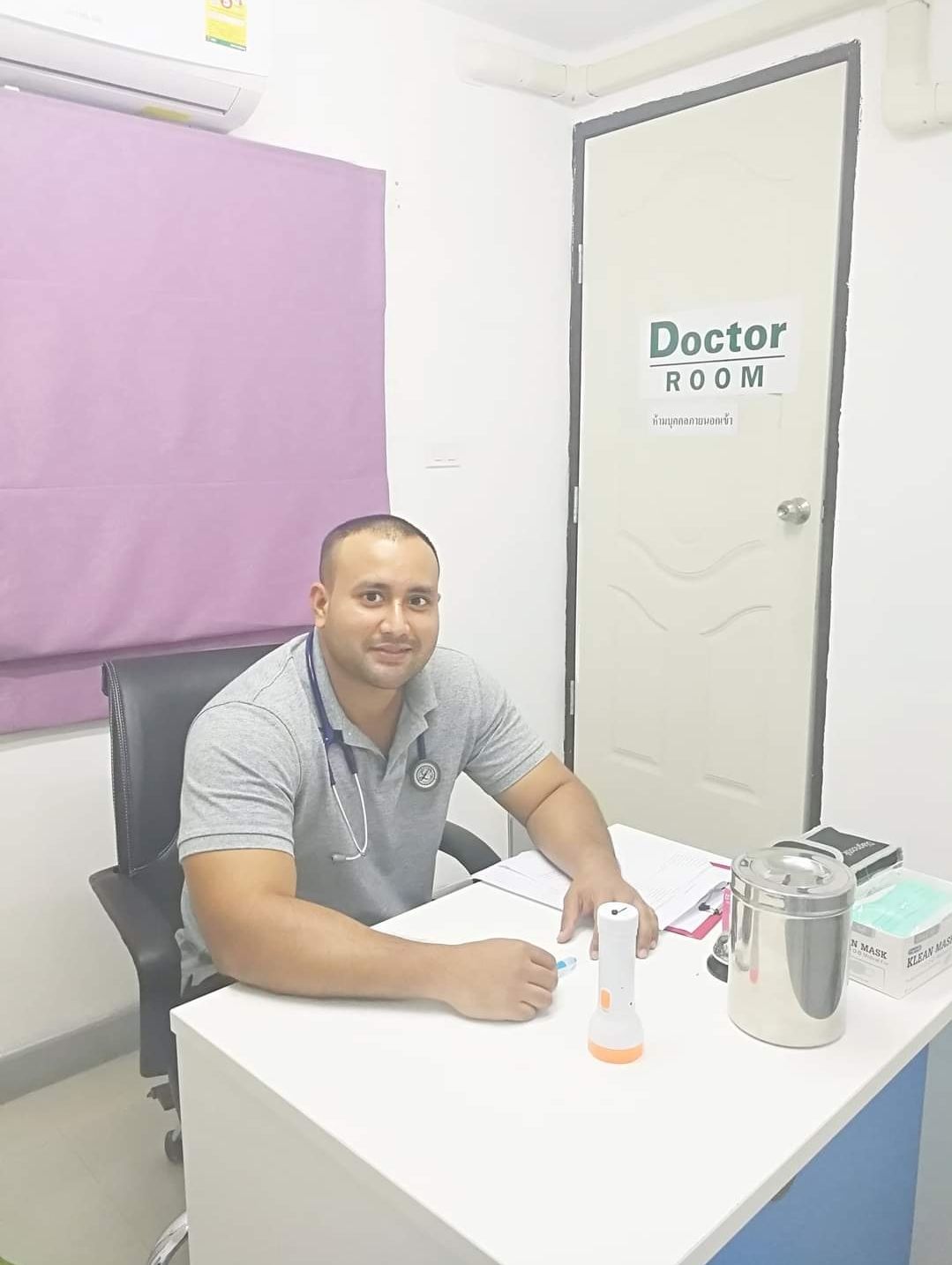
Dr. Ponlawat Pitsuwan is a physician at Doctor Bangkok, a private clinic in central Bangkok. He sees expats, residents, and medical tourists for general medicine, wellness consultations, and IV therapy. His focus is straightforward, evidence-based care delivered in plain language.