
Clinically reviewed by Dr. Ponlawat Pitsuwan, Physician, Doctor Bangkok. Last reviewed: July 2026
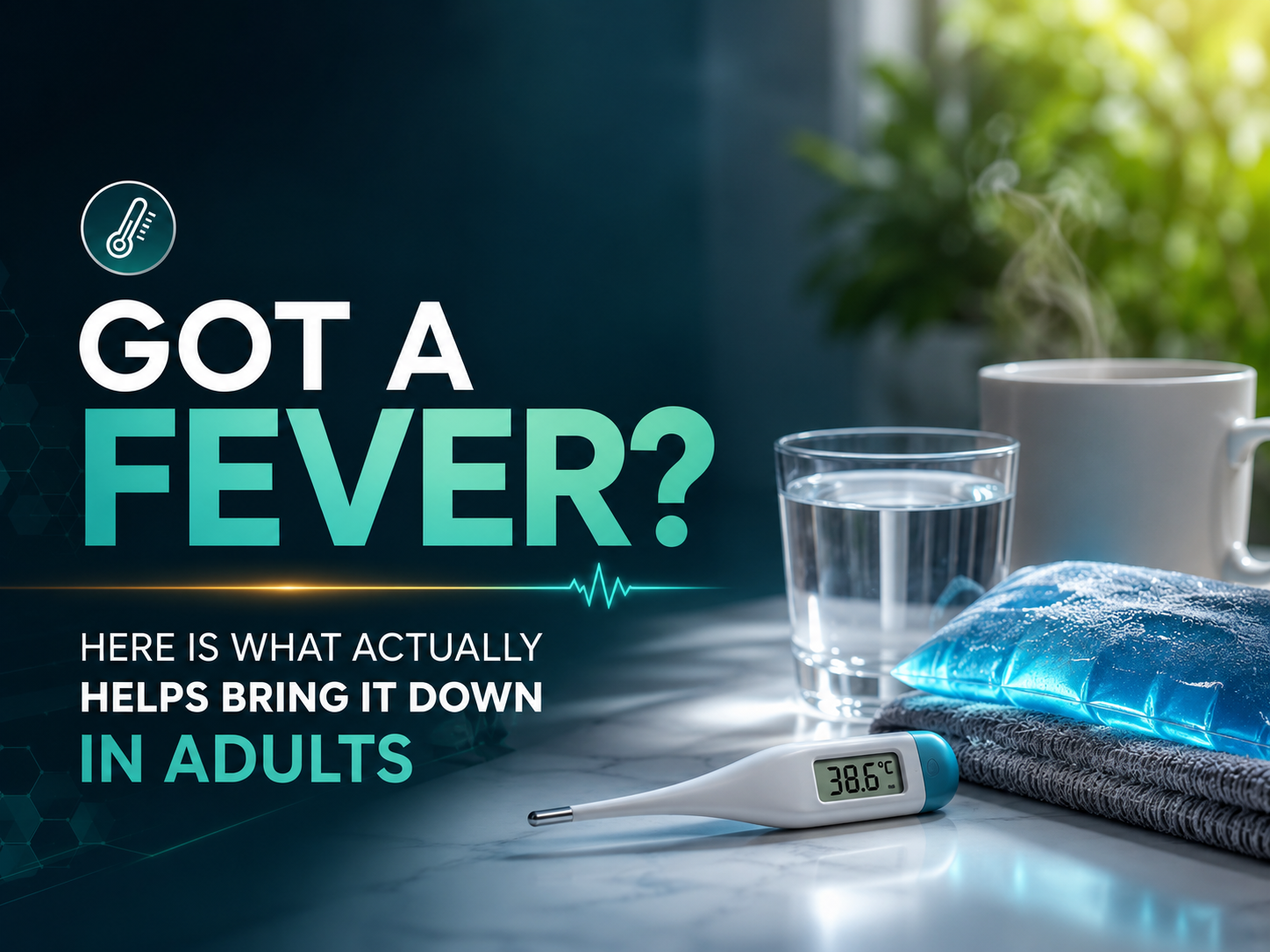
Paracetamol (sold as Panadol or Sara here in Bangkok) and ibuprofen are the two medications that reliably reduce fever in adults. Take one, stay hydrated, wear light clothing, and rest in a cool room. Do not pile on blankets, do not rub alcohol on your skin, and do not take ibuprofen if dengue is even a remote possibility. If your fever hits 40°C or comes with a rash, severe headache, or confusion, stop treating at home and get assessed the same day.
You are probably reading this because you have had a fever for a day or two and you want to know what will actually help. Maybe you tried paracetamol and it came back. Maybe someone told you to sweat it out. Maybe you are new to Bangkok and not sure what to buy at the pharmacy. All of that is normal, and most of it has a straightforward answer.
The part that complicates things here in Thailand is that fever can sometimes be more than a standard virus. Dengue is common in Bangkok year-round. Typhoid happens. Leptospirosis happens. A fever that looks routine may need a closer look here. I will walk you through what works, what is a waste of time, and when to stop guessing and come in.

Paracetamol or Ibuprofen for Fever: Which One and When?
Both work. The real question is which one is right for your situation.
Paracetamol, sold here as Panadol, Sara, or generic paracetamol, is what I reach for first in most cases. It is gentle on the stomach, safe for most adults, and available at every pharmacy in Bangkok. The standard adult dose is 500mg to 1000mg every four to six hours, up to a maximum of 4000mg in a day. If you drink alcohol regularly or have liver concerns, stay at the lower end or ask a doctor first.
Ibuprofen lasts slightly longer, around six to eight hours versus four to six for paracetamol. It is a reasonable option when fever comes with muscle aches or joint pain. But there is one critical exception: if there is any chance you have dengue, do not take ibuprofen. Dengue can cause your platelet count to fall, and ibuprofen raises your bleeding risk. In Bangkok, where dengue is genuinely common, this matters. When in doubt, stick to paracetamol.
Some people ask about alternating the two. There is some evidence this keeps fever lower for longer, but it also makes it easy to lose track of doses and accidentally take too much. If you want to try it, do it with medical guidance rather than from memory.
Can You Sweat Out a Fever or Is That a Myth?
It is a myth. And in Bangkok, it can make things worse.
When you have a fever, your brain has deliberately raised your body temperature to fight infection. The sweating you see when a fever breaks is your body cooling down after the fight, not the cause of recovery. Bundling up in blankets or sitting in a hot room just traps heat and pushes your temperature higher.
In Bangkok, where outdoor temperatures sit at 33 to 38°C for much of the year, this is genuinely risky. You can end up with heat exhaustion on top of a febrile illness, and that is not something you want to manage at home. Do the opposite: a cool, air-conditioned room, light clothing, and a fan. Let your body do its job without cooking itself.

How to Get Rid of a Fever Fast: What Works and What Does Not
The honest answer is that you cannot force a fever to disappear in an hour. What you can do is manage it safely while your body clears whatever is causing it.
Take paracetamol or ibuprofen at the correct dose. Drink more fluids than you think you need, because fever increases fluid loss faster than most people realise, and Bangkok’s heat makes this worse. Water is fine. Oral rehydration salts are better if you are also sweating heavily or have had vomiting or diarrhoea. Wear light, breathable clothing and keep the room cool.
That is genuinely the list. I know it sounds underwhelming, but it is the honest one.
What does not help: ice baths, rubbing alcohol on the skin, extra blankets, or loading up on vitamin supplements expecting a quick turnaround. None of these reliably lower fever and some actively cause problems. If your fever is not responding to medication, or has lasted more than three days, a blood test is the next step, not another dose of paracetamol. Dengue, typhoid, and other tropical infections do not clear faster with more home treatment. You can get a same-day fever assessment with results that tell you what is actually going on.
Rubbing Alcohol on Skin to Break a Fever: Does It Work?
No, and it is not safe either.
Rubbing alcohol on skin creates a brief cooling sensation as it evaporates, but isopropyl alcohol absorbs through the skin and gets inhaled as vapour. In sufficient amounts this causes nausea, dizziness, and neurological effects. It also triggers a shivering reflex that can raise your core temperature, the opposite of what you want. Skip it entirely and use paracetamol instead.
Does a Cold Towel on the Forehead Actually Help?
A little, but mostly as comfort rather than treatment.
A cool, damp cloth on the forehead is not going to bring your temperature down in any meaningful way. What it does is make you feel more comfortable when you feel terrible, and that matters. If you want a slightly better effect, try a lukewarm cloth on your neck, armpits, or wrists, where blood vessels sit closer to the skin. Keep it lukewarm, not cold. A cloth that is too cold can trigger shivering and backfire. Think of it as comfort care while the medication does the real work.
When to Stop Treating at Home and Come In
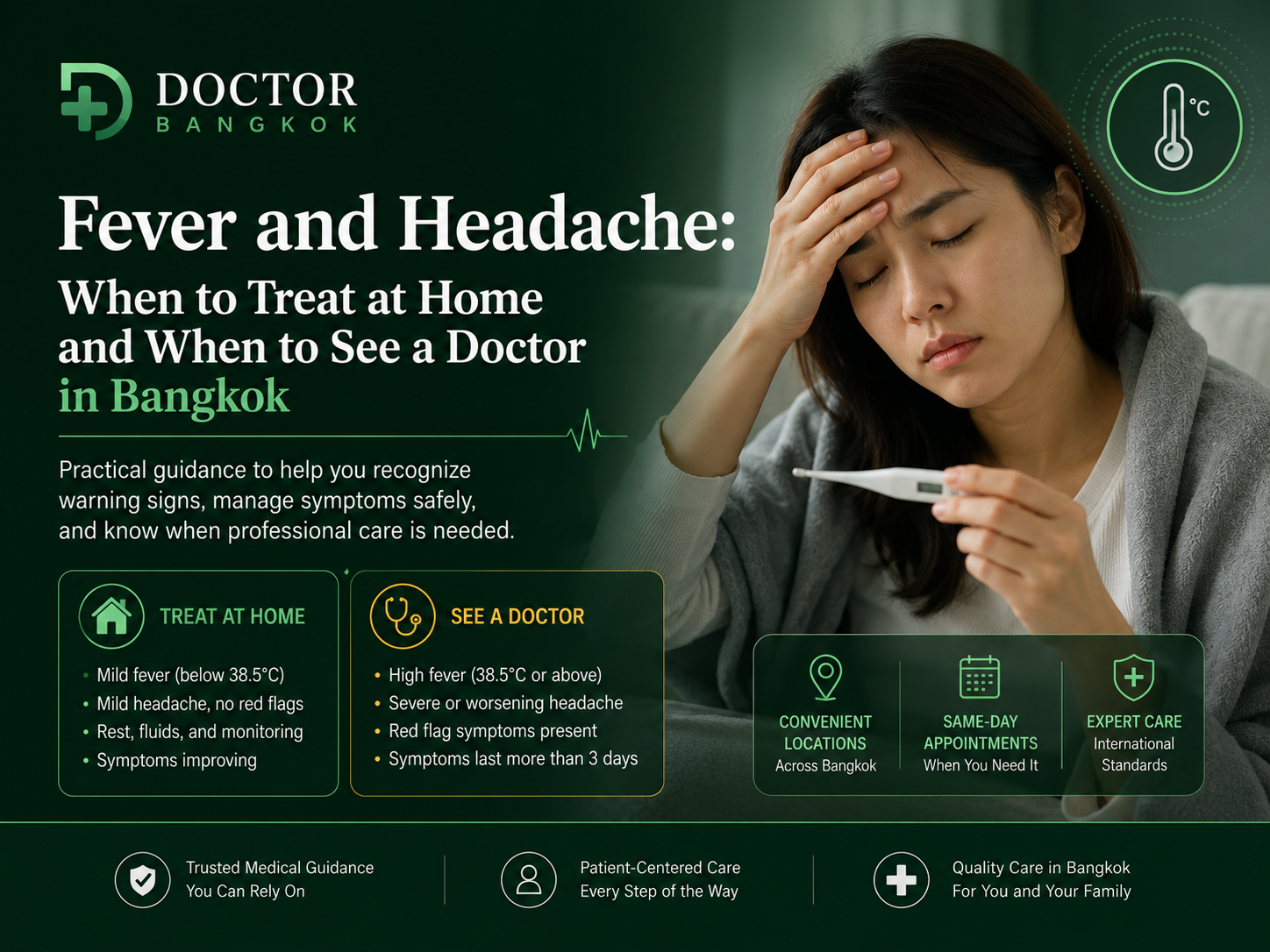
Most fevers in adults resolve within three to five days with rest and the right medication. But some do not, and some should never have been treated at home in the first place.
Come in the same day if your fever reaches 40°C or higher, if you have a rash anywhere on your body, severe headache behind the eyes, a stiff neck, confusion, difficulty breathing, or if you cannot keep fluids down. These signs mean the cause needs identifying, not just managing.
Come in after two to three days if the fever is not improving, if you have significant muscle or joint pain, or if you are simply not sure what is going on. In Bangkok, a blood test can rule out dengue, flag a bacterial infection, and give you a real answer the same day. The team at Doctor Bangkok sees febrile illness regularly and can assess you in English with no referral needed.
Do not wait a week hoping it will resolve on its own. The biggest mistake I see is patients arriving on day five with a falling dengue platelet count, knowing they should have come in on day two.
Fever not going down? Not sure if it is something more serious? Doctor Bangkok offers same-day fever assessments with English-speaking physicians in central Bangkok, BTS accessible. We run blood tests on-site, including dengue testing, and give you clear answers fast. Book your visit at doctorbangkok.co.th or walk in during clinic hours.
Frequently Asked Questions
Can I take ibuprofen for a fever in Bangkok if I might have dengue?
No. Ibuprofen increases bleeding risk, and dengue causes your platelet count to fall sharply. Taking ibuprofen when dengue is even a possibility is genuinely dangerous. Stick to paracetamol only until dengue has been ruled out with a blood test.
How quickly does paracetamol or ibuprofen bring a fever down?
Both typically start working within 30 to 60 minutes. Ibuprofen tends to last a little longer, around six to eight hours versus four to six for paracetamol. If your fever returns before the next dose is due, that is normal. If it is not responding at all after two doses, that is worth a clinical look.
What temperature means I need to see a doctor in Bangkok?
A temperature at or above 39.5°C that is not coming down with medication is worth calling about. At 40°C or above, come in the same day. Any fever with a rash, confusion, stiff neck, or difficulty breathing means go now, regardless of the number on the thermometer.
Is rubbing alcohol safe for bringing down a fever in adults?
No. Isopropyl alcohol absorbs through the skin and its vapour is inhaled, which can cause dizziness and neurological effects. It can also trigger shivering that raises your core temperature rather than lowering it. Paracetamol and a cool room are safer and actually work.
Should I sweat out a fever with blankets or a hot room?
No, and in Bangkok this is especially bad advice. Trapping heat pushes your temperature higher, and in a warm Bangkok apartment without air conditioning, you can move from fever to heat exhaustion quickly. Wear light clothing, use a fan, and keep the room cool.
Where can I buy paracetamol in Bangkok?
Every pharmacy in Bangkok stocks it. Look for Panadol, Sara, or generic paracetamol. Tylenol as a brand is less common here, but the active ingredient is the same. Any 7-Eleven or Boots pharmacy will have it.
My fever has lasted four days. Should I be worried?
Yes, that warrants a blood test. A fever lasting more than three days in Bangkok should be investigated, not just managed with more paracetamol. Dengue, typhoid, and other infections need to be ruled out. Visit Doctor Bangkok for a fever assessment and get a clear answer the same day.
Dr. Ponlawat Pitsuwan
Physician, Doctor Bangkok
a private medical clinic in central Bangkok. He sees expats, residents, and medical tourists for fever assessment, tropical illness, general consultations, and acute care. His focus is straightforward, evidence-based care delivered in plain language.
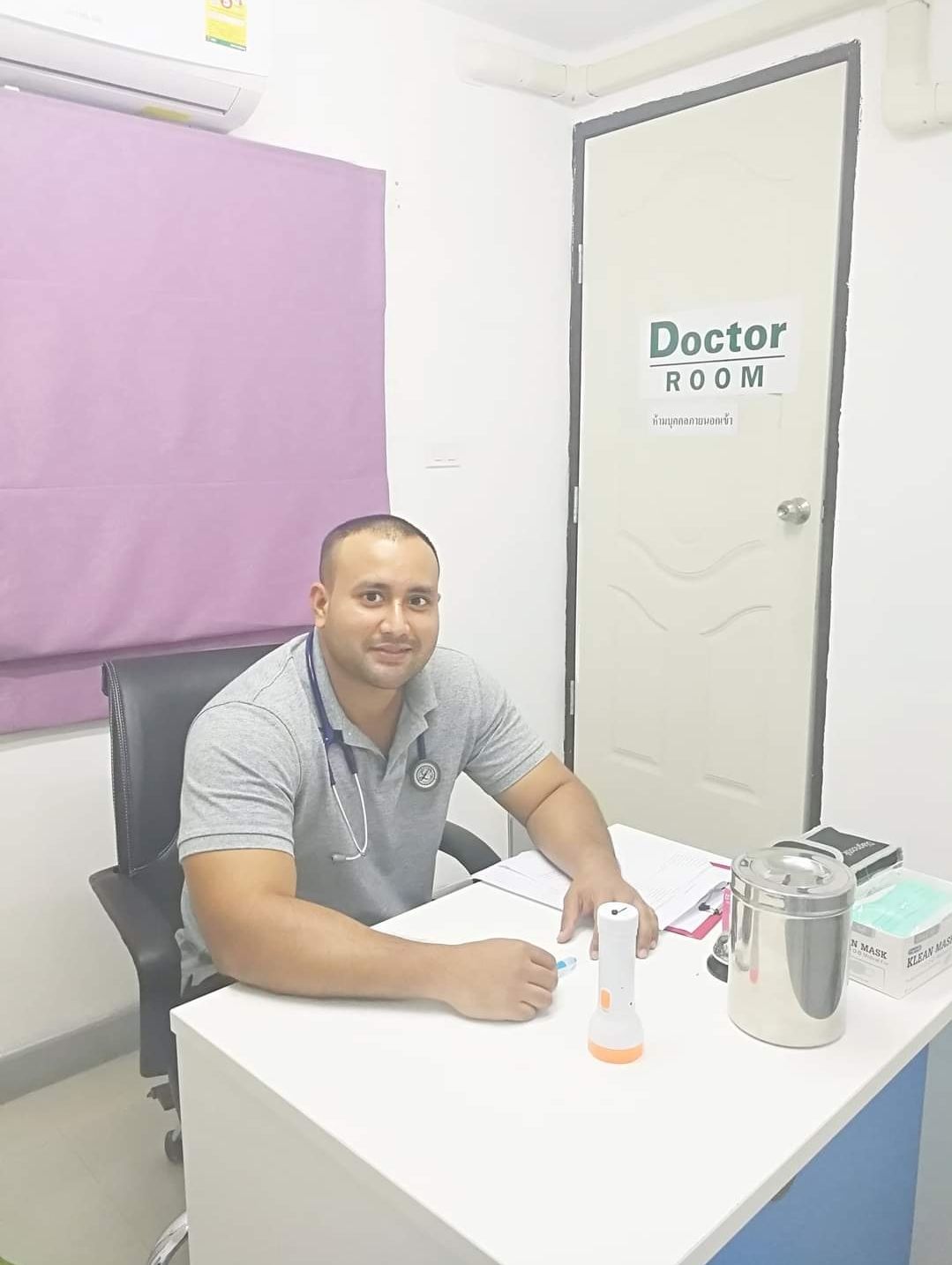
Dr. Ponlawat Pitsuwan is a physician at Doctor Bangkok, a private clinic in central Bangkok. He sees expats, residents, and medical tourists for general medicine, wellness consultations, and IV therapy. His focus is straightforward, evidence-based care delivered in plain language.