
Clinically reviewed by Dr. Ponlawat Pitsuwan, Physician, Doctor Bangkok.
Last reviewed: July 2026
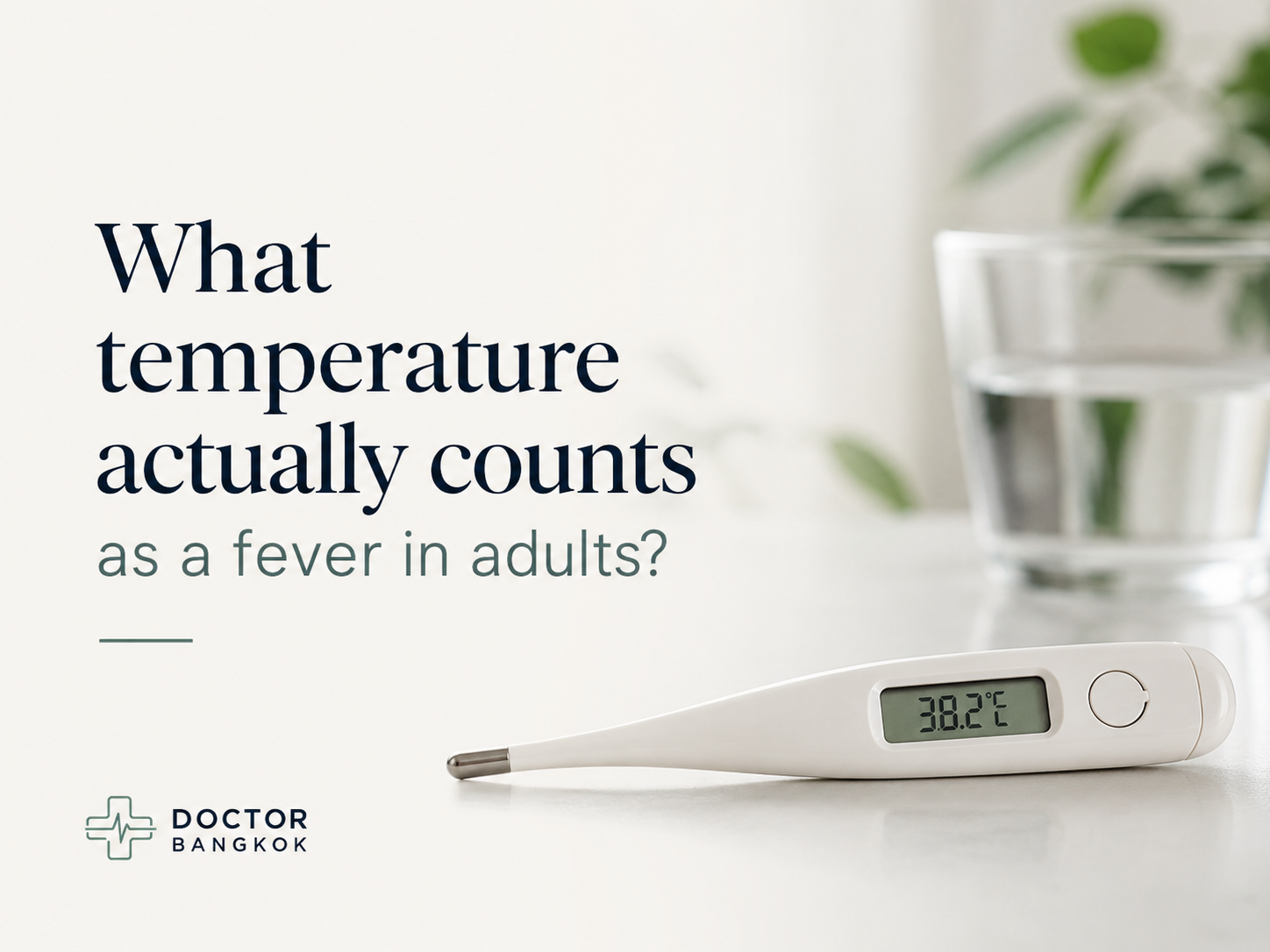
In adults, a temperature of 38°C (100.4°F) or above is considered a fever. Anything between 37.5°C and 37.9°C is a grey zone — not quite normal, not a confirmed fever. If your temperature hits 39°C or above, or a fever lasts more than 48 to 72 hours, you should see a doctor.
You are sitting in your Bangkok apartment at midnight, thermometer in hand, reading 38.2°C. You feel awful but you are not sure if this is serious or something you can sleep off. That is exactly the question I get asked most often, and the answer depends on more than just the number on the screen.
A fever is your body’s response to something it is fighting, usually an infection. In Bangkok, that infection could be anything from a common cold to dengue fever. The number matters, but so does how you feel, how long you have had it, and what other symptoms you have.

What temperature officially counts as a fever?
Most medical guidelines set the fever threshold at 38°C (100.4°F). Below that, your temperature is either normal or in a borderline range.
Normal body temperature sits around 37°C (98.6°F), but this varies from person to person. Some people naturally run at 36.5°C. Others sit at 37.3°C and feel fine. Your own baseline matters. A reading of 37.8°C in someone whose normal is 36.5°C is more meaningful than the same reading in someone who usually sits at 37.4°C.
Your temperature also shifts throughout the day. It is lower in the morning and higher in the late afternoon. A reading taken at 4pm will almost always be slightly higher than one taken at 7am.
37, 38, or 39 degrees — which ones are actually a fever?
Here is a simple way to think about it.
| Temperature (°C) | Temperature (°F) | What it means |
|---|---|---|
| Below 37.5°C | Below 99.5°F | Normal range for most adults |
| 37.5°C to 37.9°C | 99.5°F to 100.2°F | Low-grade or borderline — monitor closely |
| 38°C to 38.9°C | 100.4°F to 102°F | Confirmed fever — mild to moderate |
| 39°C to 39.9°C | 102.2°F to 103.8°F | High-grade fever — see a doctor if it persists |
| 40°C and above | 104°F and above | Seek same-day medical attention |
The 37.5°C to 37.9°C zone is where patients often feel confused. The NHS classifies this as a high temperature, while some other guidelines only confirm fever at 38°C. My advice: if you feel unwell and your reading is in this range, do not dismiss it. In Bangkok, tropical infections can start with modest readings before climbing fast.

Is 38°C (100.4°F) a fever or just a slightly raised temperature?
At 38°C exactly, you have a fever. That is the cut-off used by most international guidelines.
Where you take your temperature matters a great deal. Oral readings, under the tongue, are the standard reference point. A forehead or ear thermometer typically reads 0.3°C to 0.5°C lower than an oral reading. Armpit readings are even less reliable and can be off by a full degree.
I see this cause real confusion. Someone comes in convinced they do not have a fever because their forehead strip read 37.5°C at home, but their oral temperature in the clinic is 38.2°C. If you are using a forehead thermometer, including the cheap ones sold in Thai pharmacies, add roughly 0.3°C to 0.5°C to get a more accurate picture. Better yet, use a digital oral thermometer.
What is a low-grade fever and should you treat it?
A low-grade fever sits between 37.5°C and 38.9°C. Most healthy adults can tolerate this without medication. Your immune system is doing what it should.
That said, a fever that makes you feel miserable is worth treating for comfort. Paracetamol works well and is safe at the correct dose. One important point: if you are in Bangkok and dengue is a possibility, avoid ibuprofen and other anti-inflammatory painkillers. They can increase bleeding risk in dengue, which can turn serious quickly. Stick to paracetamol until dengue has been ruled out.
A low-grade fever that does not go away within 48 to 72 hours needs a blood test. At Doctor Bangkok, we can run a full fever panel, including dengue, blood count, and inflammation markers, the same day. Also watch for a fever that does not respond to paracetamol at the correct dose. If your temperature barely budges after treatment, come in rather than wait.
High-grade fever: what temperature is it and when does it become serious?
A high-grade fever is 39°C or above. You will feel it: intense chills, sweating, muscle aches, headache, and real fatigue.
This is when you should not be managing things alone at home. A temperature of 39°C or above that has lasted more than a day needs same-day assessment. In Bangkok, a high fever with joint pain and a rash is a classic dengue presentation and needs an urgent blood test. Severe headache, pain behind the eyes, or any confusion alongside a high fever are also reasons to come in the same day.
What fever temperature needs urgent attention?
At 40°C and above, your body is under serious strain. Most adults will not reach this point from a simple cold or flu. When I see 40°C in clinic, I am thinking about a serious bacterial infection, severe dengue, or another tropical illness.
I want to make one distinction clearly: there is a difference between a fever and heat stroke. A fever is your immune system responding to infection. Heat stroke happens when your body overheats from the environment, not from illness. Bangkok’s heat makes this relevant. If you have been in the sun all day and your temperature is high but you have no other signs of illness, paracetamol will not help because you do not have a fever. You need cooling, hydration, and possibly urgent care.
Any temperature of 40°C or above needs same-day attention. So does a fever at any level that comes with a stiff neck, a new rash, difficulty breathing, chest pain, severe confusion, or an inability to keep fluids down. These are red flags regardless of the number.
If you have been in Bangkok for less than a month, or have recently spent time outdoors in rural areas or near water, infections like dengue, leptospirosis, and typhoid are all real possibilities. All of them require blood tests to identify.
What to do if you are older or on long-term medication
Older adults and people taking long-term steroids or immunosuppressant drugs sometimes cannot mount a full fever, even with a serious infection. Their temperature may only reach 37.5°C or 37.8°C, but the underlying illness can be just as severe.
If you are over 65, or if you take medication that affects your immune system, the standard fever thresholds do not fully apply to you. Any significant change from your normal temperature, combined with feeling unwell, is enough reason to get checked. Do not wait for a number that may never come.
If your temperature is 38°C or above, your fever has lasted more than two days, or you have any red-flag symptoms, come in and see us. Doctor Bangkok offers same-day fever assessment with on-site blood tests, dengue testing, and English-speaking doctors. We are BTS accessible and see walk-in patients. Book at doctorbangkok.co.th.
Frequently asked questions
Is 37.5°C a fever in adults?
It sits in a grey zone. The NHS classifies 37.5°C as a high temperature, while other guidelines only confirm fever at 38°C. In Bangkok, I would not dismiss 37.5°C if you feel unwell, because tropical infections like dengue can start low and climb quickly. If your temperature rises or other symptoms develop, come in.
At what temperature should an adult see a doctor in Bangkok?
A fever of 38°C to 39°C with mild symptoms can often be monitored at home for 48 hours. If it hits 39°C and is not improving, or has lasted more than two days, visit a clinic. At 40°C or above, or with any red-flag symptoms like a rash, stiff neck, or confusion, you need same-day care. Doctor Bangkok can see you the same day with blood tests on site.
Can Bangkok’s heat cause a high temperature reading that is not actually a fever?
Yes, and it matters. A fever is driven by your immune system fighting infection. Heat stroke is caused by your body overheating from the environment. If you have been outdoors in Bangkok’s heat and your temperature is high, paracetamol will not bring it down because it is not a fever. You need cooling and hydration, not fever medicine, and possibly urgent care.
Does a 38°C fever in Bangkok mean I could have dengue?
It is possible, especially during rainy season from May to October. Classic dengue presents as a sudden high fever with severe headache, pain behind the eyes, and muscle and joint pain. A dengue NS1 antigen blood test can confirm it within the first few days. If you have these symptoms, get tested the same day rather than waiting.
Should I take paracetamol or ibuprofen for a fever?
Both work for most adults. In Bangkok, if there is any chance you could have dengue, use paracetamol only. Ibuprofen and other anti-inflammatory drugs increase the risk of bleeding in dengue, which can become dangerous. If you are taking a combination cold remedy, check whether it already contains paracetamol to avoid double-dosing.
How do I know if my thermometer reading is accurate?
Oral readings, under the tongue, are the most reliable for adults. Forehead and ear thermometers typically read 0.3°C to 0.5°C lower than oral readings. Armpit readings are the least accurate. If you are using a forehead device, add about 0.3°C to 0.5°C to get closer to your true temperature.
Dr. Ponlawat Pitsuwan
Physician, Doctor Bangkok
a private medical clinic in central Bangkok. He sees expats, residents, and medical tourists for fever assessment, tropical illness, general medical consultations, and urgent care. His focus is straightforward, evidence-based care delivered in plain language.
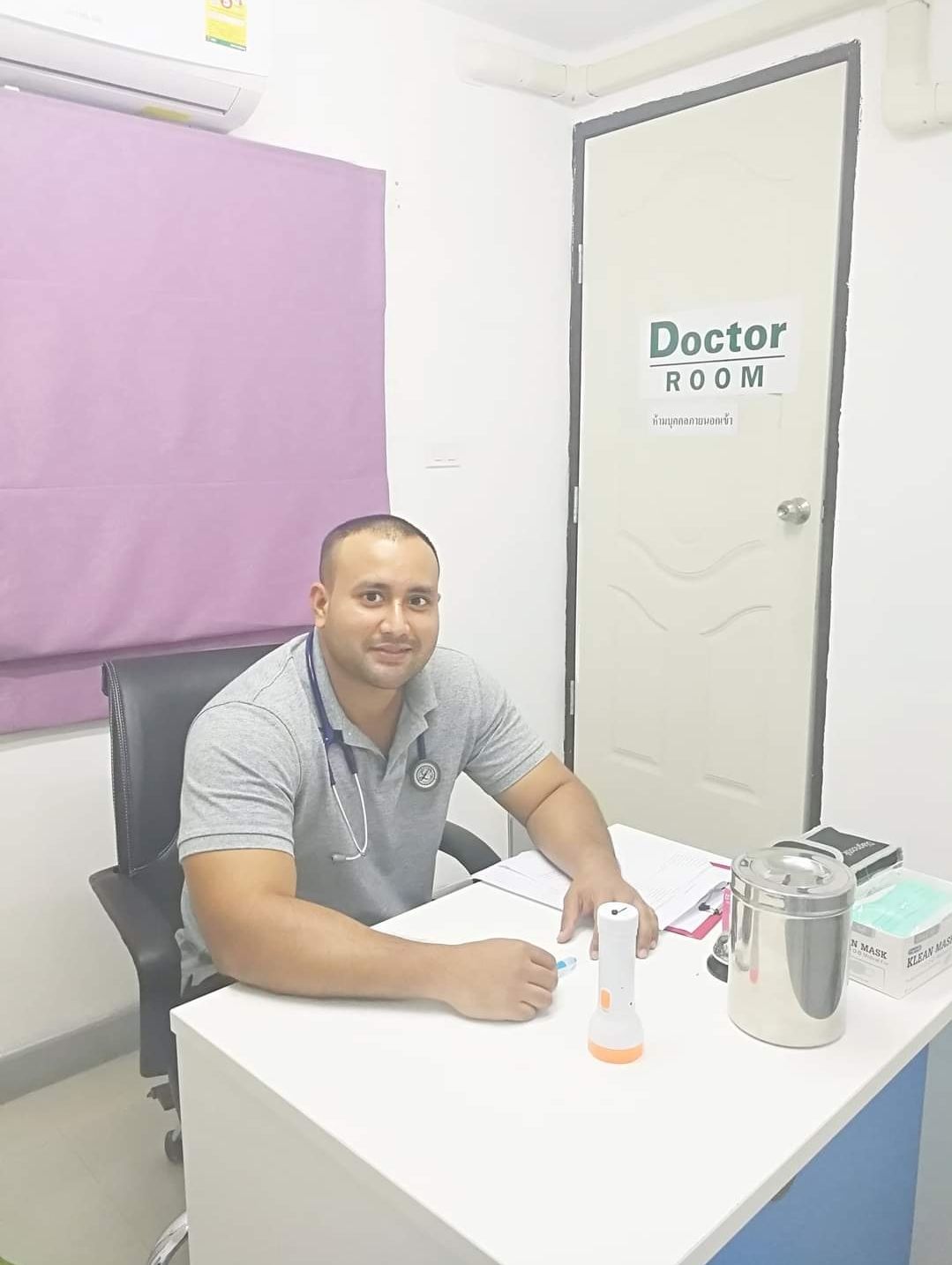
Dr. Ponlawat Pitsuwan is a physician at Doctor Bangkok, a private clinic in central Bangkok. He sees expats, residents, and medical tourists for general medicine, wellness consultations, and IV therapy. His focus is straightforward, evidence-based care delivered in plain language.