
Clinically reviewed by Dr. Ponlawat Pitsuwan, Physician, Doctor Bangkok. Last reviewed: July 2026
Dengue fever has no antiviral cure. Treatment is supportive: paracetamol for fever, fluids to stay hydrated, and close monitoring of your blood counts. The most dangerous window is not the fever itself but the 24 to 48 hours after it breaks, typically around day 4 to 6. If you are in Bangkok with a high fever, a rash, and severe muscle pain, get tested today.
Bangkok is a year-round dengue city. Most people associate it with the rainy season, which runs from May to October, but transmission happens in the dry months too. If you are an expat or visitor and you have developed a sudden high fever, aching bones, and feel like you have been hit by a truck, dengue is near the top of my list until we rule it out.
The good news is that most people recover fully with the right care and clinical monitoring. The part that catches people off guard is this: the fever breaking does not mean you are out of danger. That moment is actually when I watch patients most closely. This article explains what to expect, what to do, and exactly when to come in or go straight to a hospital.

Dengue fever symptoms: what to expect from day 1 to recovery
Dengue tends to arrive fast. One day you feel fine. The next, your fever is 39 to 40 degrees Celsius, your eyes hurt when you move them, and your muscles ache deeply. Patients often call it breakbone fever, and that name is not an exaggeration.
The first two to three days bring high fever, headache behind the eyes, joint pain, and nausea. Some people vomit. Appetite disappears. This phase feels brutal, but it is not the most dangerous window.
Around day 4 to 6, the fever drops. Many patients feel relieved and think the worst is over. This is the critical phase, and it is where I see people get into trouble. Your platelet count, which is the part of your blood that helps with clotting, hits its lowest point here.
Warning signs during this phase mean go to the ER now: severe abdominal pain, persistent vomiting, bleeding from the gums or nose, blood in your urine or stool, rapid breathing, cold or clammy skin, or sudden confusion. Do not wait for a clinic appointment if any of these appear.
After day 7 or so, most patients enter the recovery phase. The fever stays down, appetite returns, and your platelet count begins to recover. A recovery-phase rash often appears at this point.
Rash and fever together: could it be dengue?
The dengue rash changes depending on where you are in the illness, which is part of why it confuses people.
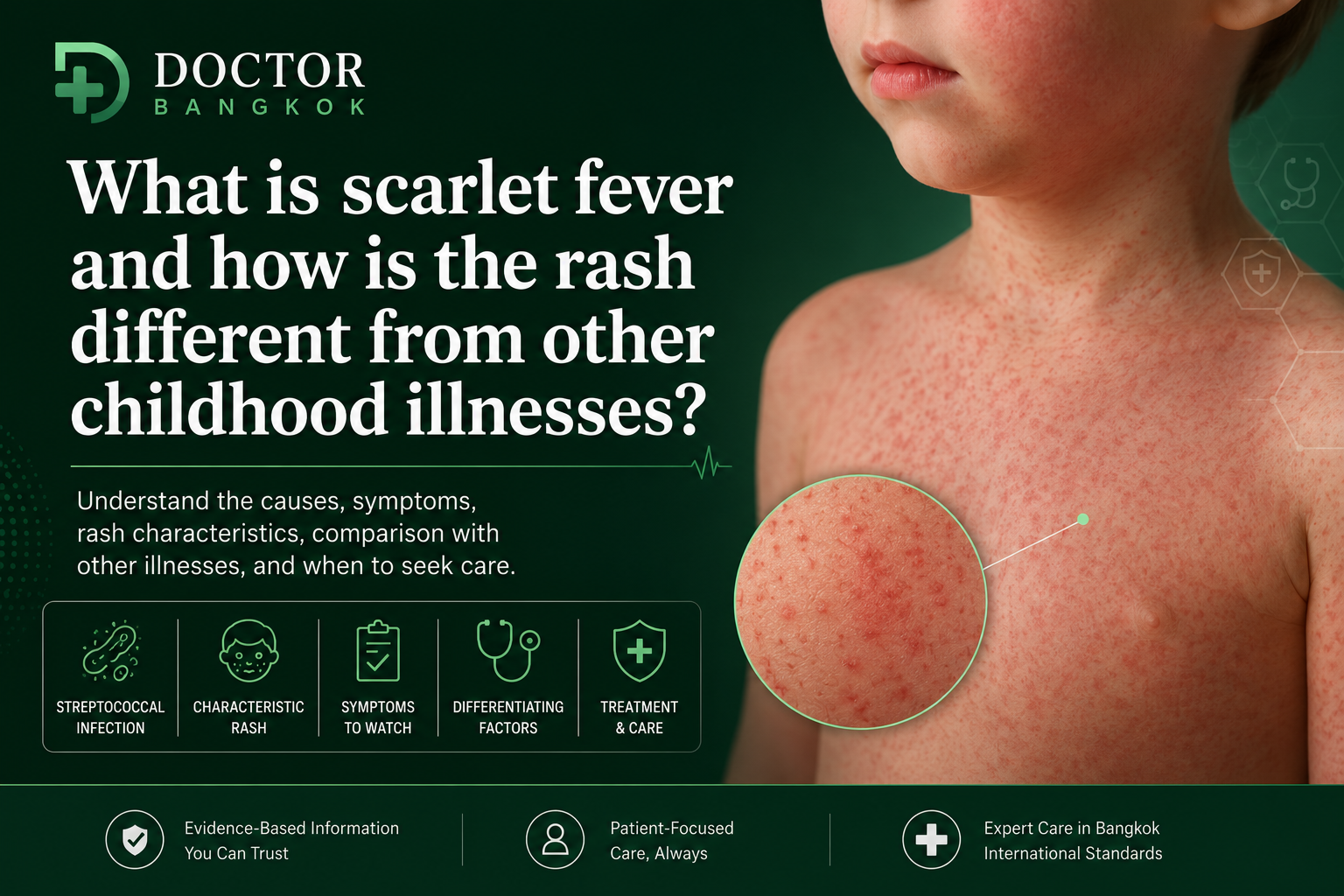
In the first couple of days, many patients notice a red flush across the face and chest. It is easy to miss or mistake for sunburn. From around day 3 to 5, flat and raised red patches spread across the trunk and limbs. It can be itchy, and on darker skin it can be harder to see.
The recovery-phase rash looks different. It is often described as red patches with white islands in between, as if the rash is breaking up. This is actually a sign you are turning the corner, though it can look alarming.
A rash with fever could also be chikungunya, Zika, a drug reaction, or several other tropical illnesses. Rash plus high fever plus significant joint or muscle pain in Bangkok means come in for a blood test. Do not try to diagnose it from a photo.
How dengue is diagnosed
When you come in, we start with a blood test. Which test we use depends on how many days you have been sick.
In the first five days, we use the NS1 antigen test, which detects the virus directly in your blood. From around day 5 onward, we use IgM and IgG antibody tests instead. IgG is often elevated in a second infection, which matters because second infections carry higher risk.
We also run a full blood count at every visit. This tells us your platelet count and your haematocrit, which is the concentration of red blood cells. A rising haematocrit can be an early marker of severe dengue. At Doctor Bangkok, we run these tests in-clinic with results fast enough to guide same-day decisions.

Dengue fever treatment: what a doctor will actually do for you
There is no antiviral drug for dengue. Treatment focuses on managing symptoms and watching for complications while your immune system clears the virus.
Paracetamol is the only safe fever reducer for dengue. Do not take ibuprofen or aspirin. Both increase your bleeding risk by affecting platelet function, exactly what you do not want when your platelets are already falling. This is not a minor caution. I have seen patients arrive having taken ibuprofen for days, and it genuinely makes the situation harder to manage.
Hydration is the other pillar of treatment. Drink water, oral rehydration salts, or coconut water for mild cases. Avoid sweet fizzy drinks. If you cannot keep fluids down or your blood counts suggest fluid leakage, IV fluids are needed.
Rest properly. This is not a push-through-it illness.
Whether you manage at home or need admission depends on your blood counts, your symptoms, and which phase you are in. You should have your blood count checked every 24 to 48 hours during the critical phase. A drop from 150,000 platelets to 60,000 over 24 hours tells me something very different from a slow, stable decline.
Hospital admission is needed if your platelet count falls dangerously low, if you develop warning signs, or if you cannot maintain hydration. If you are unsure, coming to a clinic first is the right call. We can assess you, run bloods, and make that decision with you.
Platelet count in dengue: what the numbers mean
Normal platelet count is roughly 150,000 to 400,000 per microlitre. A count above 100,000 with no warning signs is something we monitor closely but does not automatically mean you need a hospital. Below 100,000, we watch more carefully. Below 20,000 to 30,000, especially with any bleeding signs, we are talking about hospital management.
The speed of the drop matters as much as the number itself. So does how you feel, whether you are bleeding from anywhere, and what your haematocrit is doing. Do not interpret your dengue blood results without a doctor. A low platelet number is one piece of information that needs clinical context.
Platelet transfusions are not given routinely in dengue and do not improve outcomes in most cases. The count recovers on its own as the infection resolves, usually from day 7 onward.
Second dengue infection: the risk Bangkok expats need to know
There are four dengue serotypes. A previous infection gives you strong protection against that one serotype, but you remain vulnerable to the other three. A second infection with a different serotype carries a higher risk of severe dengue, including dengue haemorrhagic fever.
Long-stay Bangkok residents are not less at risk than first-time visitors. In some ways, the risk profile is higher. If you have had dengue before and develop a fever here, do not assume it will be mild. Come in early, tell us your history, and we will run an IgG test alongside the NS1. A high IgG in the context of acute fever tells us this is likely a secondary infection, and we monitor more aggressively from day one.
Dengue prevention in Bangkok: the Qdenga vaccine
The Qdenga vaccine is available in Thailand and worth discussing if you are a long-stay expat or planning extended time here. Unlike the earlier Dengvaxia vaccine, Qdenga does not require prior dengue infection to be used safely. It covers all four serotypes with moderate evidence of protection, though it is not 100% effective.
Standard mosquito precautions remain essential alongside the vaccine. The mosquito that transmits dengue bites during the day, especially in the early morning and late afternoon. Repellent, long sleeves, and eliminating standing water around your home all reduce risk. Our team at Doctor Bangkok can walk you through whether Qdenga is right for your situation based on your history and how long you plan to stay.
Fever, rash, and bone pain in Bangkok? These symptoms need a blood test today, not tomorrow. At Doctor Bangkok, we offer same-day dengue testing including NS1 antigen, full blood count, and antibody testing, with English-speaking doctors who can explain your results and guide your next steps. We are centrally located and BTS accessible. Visit our dengue fever assessment and treatment page or book a consultation at doctorbangkok.co.th.
Is it safe to manage dengue fever at home in Bangkok, or do I need to go to a clinic?
Mild dengue without warning signs can be managed at home with paracetamol, fluids, and rest, but all suspected cases should be seen by a doctor first to confirm the diagnosis and get a baseline blood count. You will still need blood monitoring every 24 to 48 hours through the critical phase, which runs from around day 4 to day 7. If you develop warning signs like severe abdominal pain, bleeding, or cold clammy skin, go to a hospital ER directly.
My fever broke after a few days. Does that mean I am getting better?
Not necessarily, and this is the most important thing I want patients to understand about dengue. The 24 to 48 hours after your fever drops is when the disease is most dangerous, and your platelet count hits its lowest point right at this moment. Keep your follow-up blood test appointment, and go to the ER immediately if you feel suddenly worse even though your fever is gone.
I had dengue two years ago. Am I protected if I get it again in Bangkok?
You are protected against the specific serotype you had before, but there are four dengue serotypes in total. A second infection with a different serotype actually carries a higher risk of severe dengue than the first. Come in early, tell us your history, and we will test and monitor you accordingly.
Which dengue blood test do I need, and when should I get tested?
In the first five days of symptoms, the NS1 antigen test is the right one as it detects the virus directly. From day 5 onward, IgM and IgG antibody tests are more useful, especially for detecting a secondary infection. We also check your platelet count and haematocrit at every visit to track how the illness is progressing.
Can I take ibuprofen or aspirin to bring my fever down if I have dengue?
No. Both ibuprofen and aspirin increase your risk of bleeding in dengue by reducing platelet function and irritating the gut lining. Paracetamol at the correct dose is the only safe option for fever. Confirm all medications with your doctor before taking anything.
When should I go to the hospital ER instead of a private clinic?
Go straight to the ER if you have severe abdominal pain, persistent vomiting, bleeding from your gums, nose, urine, or stool, rapid shallow breathing, cold or clammy skin, or sudden confusion. These are dengue warning signs that need hospital-level care immediately. For everything short of those symptoms, a clinic like Doctor Bangkok is the right starting point. We can assess you, test you, and refer you if needed.
Dr. Ponlawat Pitsuwan
Physician, Doctor Bangkok
a private medical clinic in central Bangkok. He sees expats, residents, and medical tourists for fever assessment, dengue evaluation, and general medical consultations. His focus is straightforward, evidence-based care delivered in plain language.
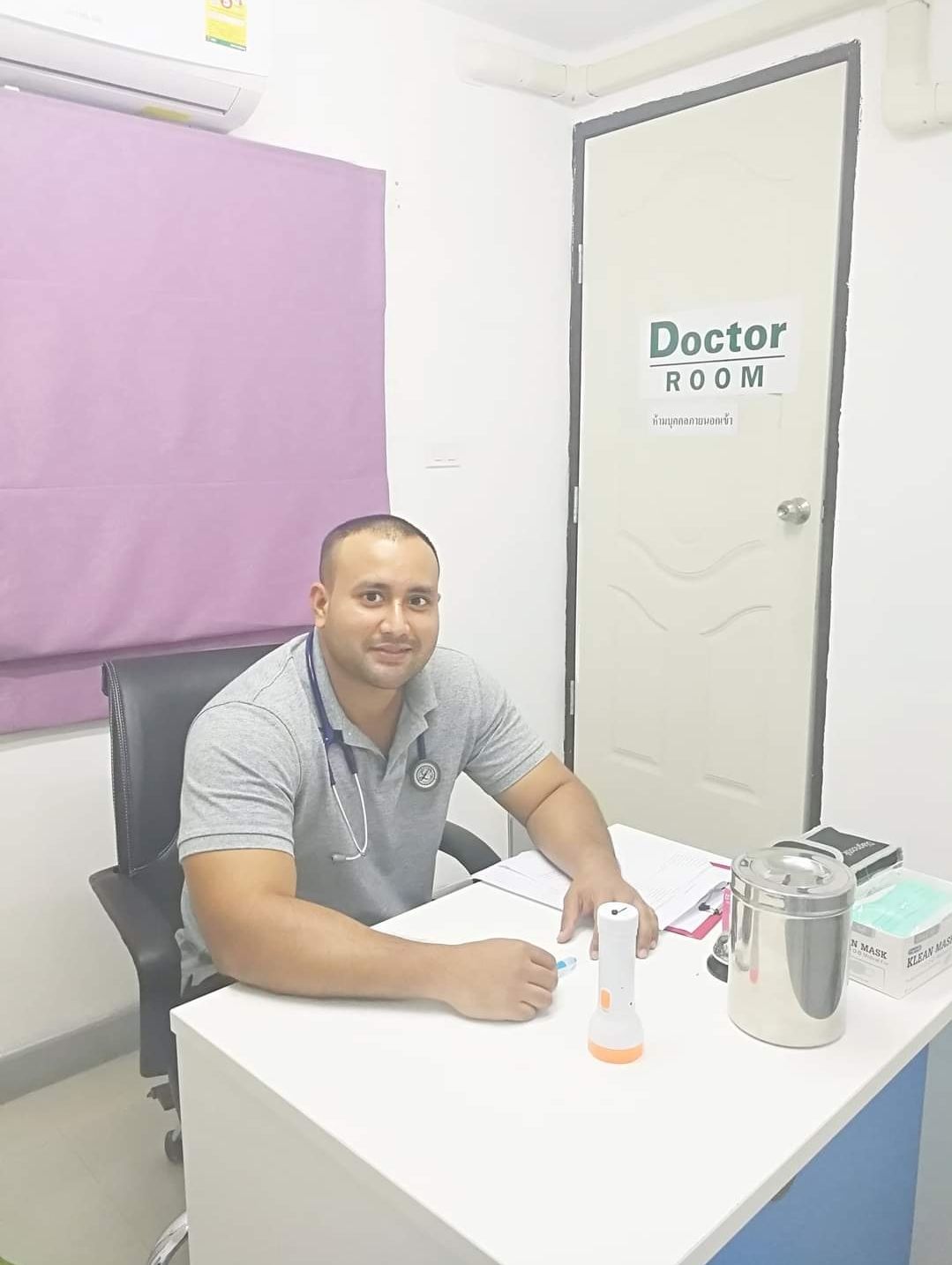
Dr. Ponlawat Pitsuwan is a physician at Doctor Bangkok, a private clinic in central Bangkok. He sees expats, residents, and medical tourists for general medicine, wellness consultations, and IV therapy. His focus is straightforward, evidence-based care delivered in plain language.