Clinically reviewed by Dr. Ponlawat Pitsuwan, Physician, Doctor Bangkok. Last reviewed: July 2026
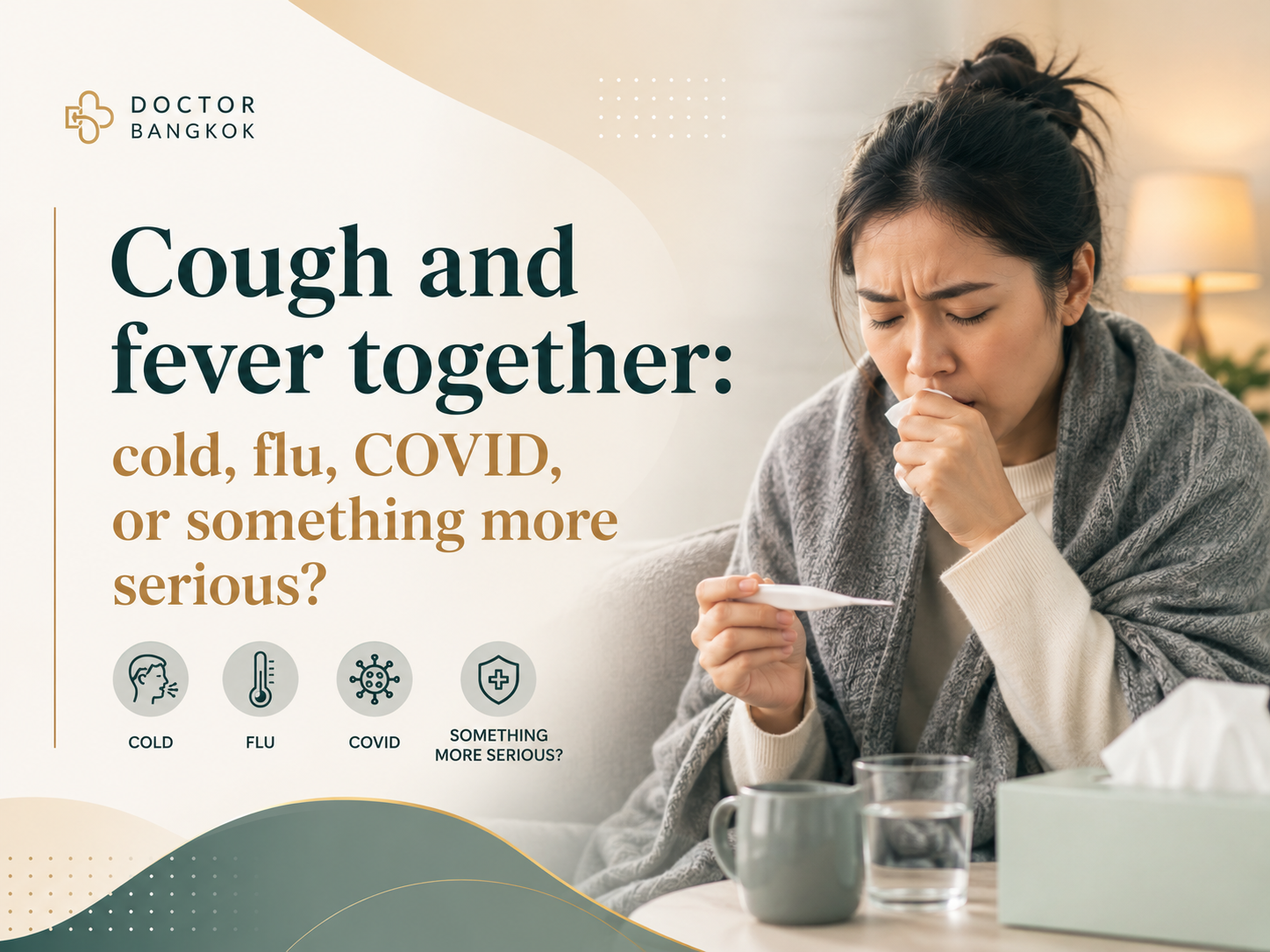
Cough and fever together usually point to a viral infection like flu or COVID-19, both of which get better on their own within a week. In Bangkok, though, you also need to rule out dengue fever, which can look almost identical in the first two days. If your fever is high, came on suddenly, and you have severe body aches or pain behind your eyes, get a blood test the same day.
You woke up feeling off. Now you have a cough, a fever, and you are searching symptoms at midnight trying to figure out whether you need to see a doctor tomorrow or whether this will pass. If you are an expat or visitor in Bangkok, that question is harder than it sounds.
The honest answer is: cough and fever together cover a wide range of conditions. Most of the time it is flu, COVID-19, or a common cold. Sometimes it is something tropical, like dengue. The job right now is figuring out which category you are in.

Cold vs flu vs dengue: a quick comparison for Bangkok
These three look alike early on. The differences start showing up within the first day or two.
Flu hits fast. You feel fine in the morning and terrible by the afternoon. Your fever is high, your whole body aches, and you are exhausted in a way a cold never produces. A dry cough is common. Flu is what I see most often in expats who have just arrived on a long-haul flight or spent a weekend in a crowded venue.
Dengue also hits fast. The fever is often above 39°C, and the body aches can be severe enough that people describe it as pain in the bones. Two things should make you think dengue over flu: pain behind the eyes, and the fact that dengue has no peak season in Bangkok. I see it year-round. If there is any chance this is dengue, do not take ibuprofen or aspirin. These increase bleeding risk. Use paracetamol only until we have ruled it out with a blood test.
A common cold comes on gradually. Runny nose, scratchy throat, mild cough. Fever in adults with a cold is usually low-grade or absent. If you have a proper high fever alongside cold-like symptoms, something else is going on.
| Symptom | Common Cold | Flu | Dengue |
|---|---|---|---|
| Fever onset | Gradual, usually low | Sudden, high | Sudden, very high |
| Body aches | Mild | Severe | Severe, bone-deep |
| Cough | Mild, often wet | Dry, common | Dry, sometimes present |
| Runny nose | Very common | Sometimes | Rare |
| Pain behind eyes | No | No | Yes, classic sign |
| Rash | No | No | Can appear day 3 to 5 |
| Fatigue | Mild | Severe | Severe |
How long does a fever from flu actually last?
Most adults with flu run a fever for three to five days. It usually breaks on its own. By day seven, most people are past the worst of it, though the cough and fatigue can drag on longer.
Here is what I tell patients to watch for. If your fever gets better and then comes back after a day or two of improvement, that rebound is a red flag. It can mean a secondary bacterial infection, like pneumonia or sinusitis, has developed on top of the original illness. That needs a doctor and possibly antibiotics.
There is also a 48-hour window worth knowing about. Antiviral medication like oseltamivir works best when started within 48 hours of symptoms beginning. If you have high-risk factors, such as being over 65, pregnant, or immunocompromised, contact us early rather than waiting to see how things develop.
One Bangkok-specific point: you lose fluids faster here than you would in a cooler climate. Fever plus Bangkok heat plus not eating properly is a recipe for dehydration. Drink more than you think you need to. If you cannot keep fluids down or feel dizzy when you stand, that changes things from a manageable situation at home to one that needs same-day care.

Can a common cold actually cause a fever?
In adults, a true cold rarely causes a high fever. Low-grade temperature is possible. But if your thermometer reads above 38.5°C and your symptoms feel like a cold, I would not assume it is just a cold.
What I see often is that people develop a cold, start to improve, and then feel worse again. That pattern usually means a secondary sinus or ear infection. A new fever at that point is the signal to stop waiting and get assessed.
The cough that lingers after a cold is its own issue. A post-viral cough can last two to three weeks, which is completely normal. It happens because the airways stay irritated after the infection clears. In Bangkok, heavy air-conditioning use and air quality can extend this further. If the cough goes past three weeks, gets worse over time, produces discoloured or blood-tinged phlegm, or comes with chest pain or breathlessness, you need to be seen.
Sore throat with no fever: does it still need antibiotics?
The short answer is: probably not, but it depends on the cause.
The vast majority of sore throats are viral. Antibiotics do nothing for a viral infection. The one you do need antibiotics for is strep throat, caused by the bacterium Streptococcus. Strep tends to cause severe throat pain, visibly swollen and red tonsils, sometimes with white patches, swollen glands in the neck, and usually a fever, though not always. A rapid strep test or throat swab can confirm it in the clinic within minutes.
Strep is worth treating properly. Left untreated, it can in some cases lead to rheumatic fever, which may damage the heart valves. That is exactly why we do not guess on this one.
Red flag symptoms that need same-day attention
Most coughs and fevers get better with rest, fluids, and paracetamol. But some do not.
Breathlessness or chest pain alongside a cough and fever is serious. So is a fever that stays above 39.5°C despite paracetamol, or a fever in someone over 65, pregnant, or with a condition like diabetes or heart disease. A rash appearing alongside fever needs to be assessed the same day.
If you cannot keep any fluids down, feel confused or unusually drowsy, or your fever has lasted more than five days without improving, come in. These are not situations for more searching online. At Doctor Bangkok, we can do a blood test, a rapid dengue test, and a same-day clinical assessment without a long queue.
What actually happens when you see a doctor for cough and fever
I think it helps to know what to expect, especially if you are new to Bangkok’s healthcare system.
When you come in, I will ask when your symptoms started, how they started, whether you have been anywhere outside Bangkok, and what else you are feeling. I will listen to your chest, check your throat, and look at your glands. That clinical picture tells me a lot before any test result comes back.
If there is any concern about dengue, we run a blood test for the NS1 antigen and a full blood count. Results are available the same day. If flu is likely and you are within that 48-hour window, we can confirm with a rapid flu test and start treatment straight away if needed. If your chest sounds abnormal, I will organise an X-ray. For full details on how we assess and manage fever, see our fever assessment and treatment page.
Most patients leave with a clear diagnosis, a treatment plan, and a follow-up plan if things change. That is what a private clinic visit is for.
Cough and fever that is not improving, or any fever in Bangkok where dengue might be a factor, should not be managed on guesswork. Doctor Bangkok offers same-day clinical assessment, rapid dengue and flu testing, and English-speaking physicians in central Bangkok, BTS accessible. Walk-ins welcome. Visit doctorbangkok.co.th or contact us to book.
FAQ
How do I know if my fever is from flu or dengue in Bangkok?
Both hit fast with high fever and body aches, which is why they are easy to confuse in the first day or two. Dengue specifically tends to cause pain behind the eyes, and a rash can appear a few days in. The only way to confirm dengue is a blood test, so until you have ruled it out, stick to paracetamol only and avoid ibuprofen or aspirin.
How long should a cough last after a cold or flu before I see a doctor?
A cough lingering two to three weeks after other symptoms have cleared is normal and usually not a sign of anything serious. If it goes past three weeks, gets worse instead of better, or comes with chest pain, breathlessness, or blood in the phlegm, get it checked. In Bangkok, air quality and heavy air-conditioning use can make post-viral coughs run longer than usual.
Do I need antibiotics for a sore throat with no fever?
Almost certainly not. Most sore throats are viral and will not respond to antibiotics, with or without fever. The exception is strep throat, which a rapid test can confirm in minutes at the clinic. If strep is confirmed, antibiotics are the right call. If not, they will not help and may cause unnecessary side effects.
Can a common cold cause a high fever in adults?
A true common cold in adults rarely causes a fever above 38.5°C. If your fever is high alongside cold-like symptoms, flu, COVID-19, or dengue are more likely explanations. High fever with body aches in Bangkok warrants a blood test rather than assuming it is just a cold.
Is it safe to take ibuprofen for fever in Bangkok?
For a confirmed cold or flu with no dengue risk, ibuprofen is fine for most adults. In Bangkok, if there is any possibility the fever could be dengue, ibuprofen and aspirin must be avoided because they increase bleeding risk. Use paracetamol until dengue has been ruled out by a doctor or blood test.
When should cough and fever send me to a doctor the same day?
Go the same day if you have breathlessness, chest pain, a rash alongside fever, confusion, a fever above 39.5°C that does not come down with paracetamol, or any fever that has lasted more than five days without improvement. These symptoms go beyond home management and need a clinical assessment.
Dr. Ponlawat Pitsuwan
Physician, Doctor Bangkok
a private medical clinic in central Bangkok. He sees expats, residents, and medical tourists for fever, respiratory illness, tropical infections including dengue, and general medical consultations. His focus is straightforward, evidence-based care delivered in plain language.

Dr. Ponlawat Pitsuwan is a physician at Doctor Bangkok, a private clinic in central Bangkok. He sees expats, residents, and medical tourists for general medicine, wellness consultations, and IV therapy. His focus is straightforward, evidence-based care delivered in plain language.