
Clinically reviewed by Dr. Ponlawat Pitsuwan, Physician, Doctor Bangkok. Last reviewed: July 2026
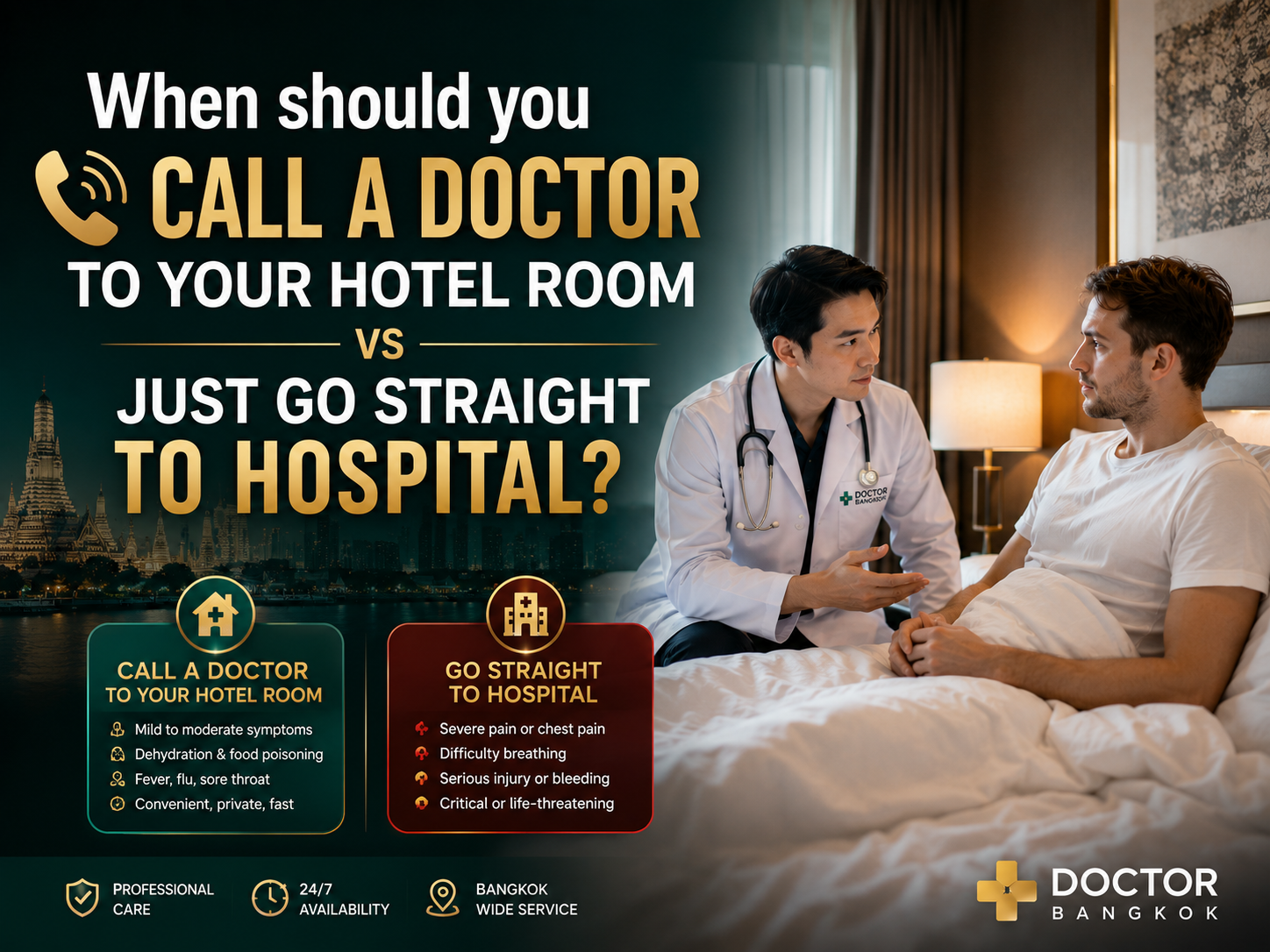
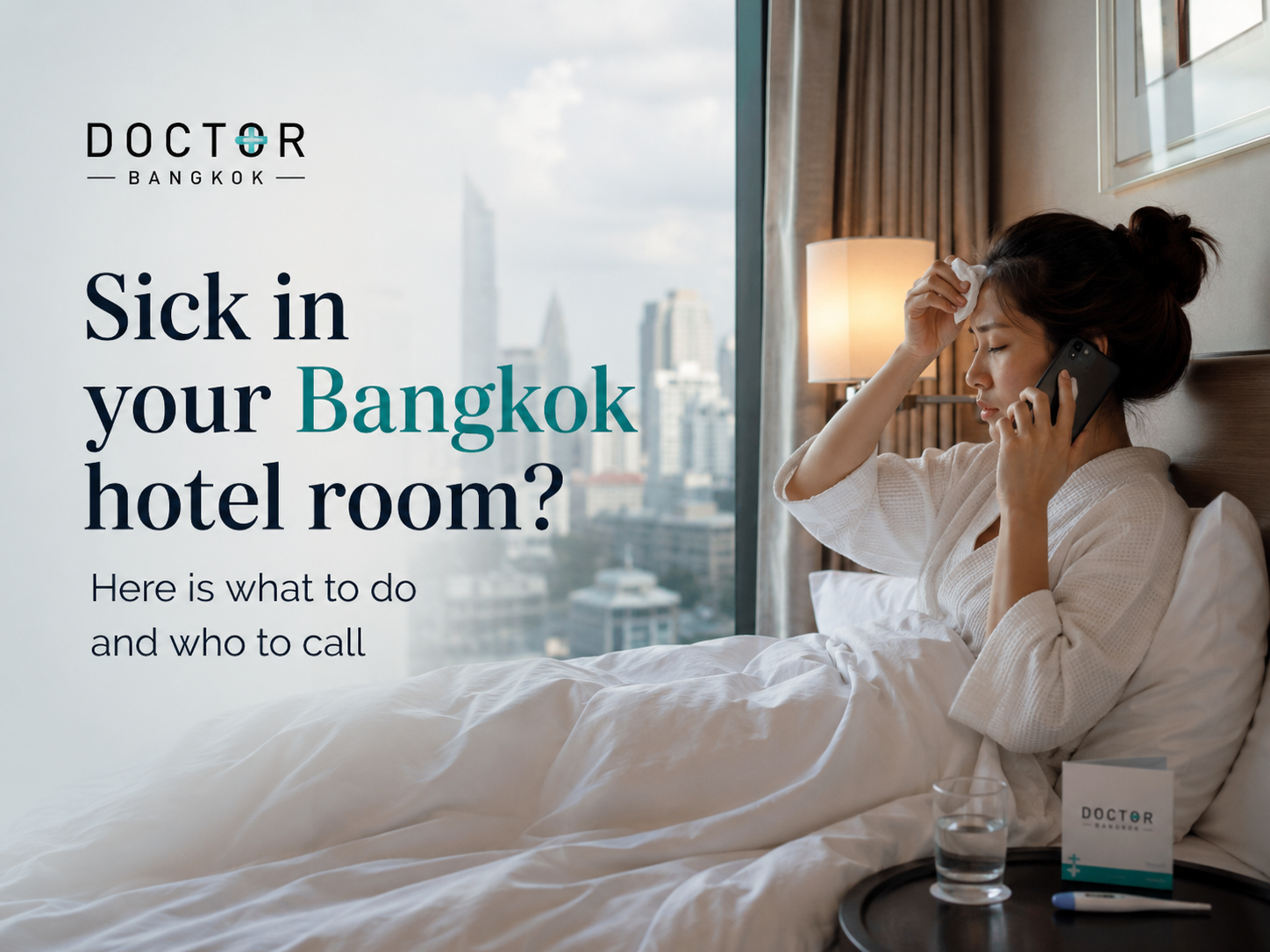
If you are sick in your Bangkok hotel room, you have real options beyond struggling to a hospital alone. A licensed English-speaking doctor can come to you, usually within 45 to 75 minutes, with medication, IV equipment, and rapid tests. For anything life-threatening, call 1669 for an ambulance immediately. For everything else, read this first.
You were fine yesterday. Now you are lying in your hotel room, fever climbing, not sure if it is something you ate or something worse. You do not know the nearest hospital. You do not speak Thai. And you really do not want to get into a taxi feeling like this. I hear this story every week.
The good news is Bangkok has excellent private medical care, and a lot of it can come to you. This guide will help you figure out what you are dealing with, what needs urgent attention, and exactly what to do next.

Why Bangkok specifically makes travellers sick so fast
People are surprised by how quickly they feel unwell here. Bangkok is not just hot, it is intensely humid, and most hotels are air-conditioned to near-freezing. You walk outside into 35-degree heat, sweat for an hour, come back inside to 20 degrees, and your body never quite adjusts. That temperature cycling is genuinely hard on your respiratory system.
Jet lag also lowers your immune defences. You are probably not sleeping normally, not eating on your usual schedule, and drinking more than usual. Then you eat street food your gut has never encountered before. This is not a warning against Bangkok. It is just why fit, healthy people get sick here faster than they expect.
Common reasons travellers get sick in Bangkok hotels
The most common thing I see is traveller’s diarrhoea, often called Bangkok belly. It usually starts within one to three days of eating contaminated food or water. Nausea, cramping, loose stools. Most cases are unpleasant but not dangerous if you stay hydrated.
Fever with body aches and no digestive symptoms is a different picture. This could be a viral infection, heat exhaustion, or in Bangkok specifically, dengue. I will come back to dengue because it deserves its own section.
Upper respiratory infections are common too, usually caused by dry recycled hotel air combined with those extreme temperature swings. Heat exhaustion is another one that catches people off guard. If you have been outdoors for hours in Bangkok heat with limited fluids, heat exhaustion is worth considering before you assume food poisoning.

Red flags: symptoms you must not wait out in your hotel room
Some things need urgent care. Not tomorrow. Now.
Call 1669 for an ambulance if you have chest pain, difficulty breathing, sudden severe headache, loss of consciousness, or signs of a serious allergic reaction such as throat tightening or face swelling.
For serious but non-life-threatening symptoms, a doctor coming to you is the right call. High fever over 39 degrees not responding to paracetamol. Fever lasting more than 48 hours. Severe vomiting where you cannot keep any fluids down. Blood in your stool or vomit. A rash appearing alongside fever. Severe joint or eye pain with fever.
Any bite from a dog, cat, or monkey in Bangkok needs a doctor, not a pharmacy. Rabies post-exposure treatment must start quickly. If you were bitten by a stray animal, do not wait to see how it feels tomorrow.
How to tell if your Bangkok fever might be dengue
This is the question I get most often. Dengue is genuinely common in Bangkok, and it is worth knowing what it looks like.
Dengue usually starts with a sudden high fever, often 38.5 to 40 degrees, that holds for several days. What separates it from a regular viral illness is the combination of fever with severe headache, pain behind the eyes, and joint or muscle aches that feel out of proportion. A blotchy rash can appear a few days in. Dengue does not typically cause a runny nose or a productive cough. If you have those, a respiratory virus is more likely.
Food poisoning, by contrast, hits your gut fast. Nausea, vomiting, diarrhoea, sometimes cramping. The fever is usually lower, and digestive symptoms come first.
A rapid blood test can confirm or rule out dengue early in the illness and can be done at your hotel bedside. Most dengue cases are managed with rest and fluids, but a doctor needs to monitor you because a small number of cases become serious. Do not sit on a suspected dengue fever for more than 24 hours without a doctor’s assessment.
When you are too sick to leave your room
This is where most people get stuck. They know they need a doctor but cannot face the journey. Getting into a taxi, navigating an unfamiliar hospital, explaining symptoms in a country where you do not speak the language, and then getting back to the hotel afterward. It is genuinely overwhelming when you feel terrible.
A hotel doctor visit solves all of that. Doctor Bangkok’s hotel visit service sends a licensed English-speaking physician to your room, typically within 45 to 75 minutes of you getting in touch. You message on WhatsApp, tell us where you are and what is happening, and we come to you.
The doctor arrives with a proper medical kit: medications, IV drip equipment for rehydration, rapid diagnostic tests, and the ability to write prescriptions on the spot. For most acute traveller illnesses, this is everything you need without leaving your room. If your situation genuinely requires hospital-level care, the doctor will tell you clearly and help arrange the right referral.
What happens during a hotel doctor visit
There is nothing complicated about it. The doctor arrives, introduces themselves, and takes a proper history. What you ate, when symptoms started, what your temperature has been, any relevant medical history or medications.
They examine you properly, tell you what they think is going on, and explain what treatment makes sense. If you need an IV drip for dehydration, that happens in your room. If a blood test would help, it is taken at the bedside and sent to a local lab. In many cases the doctor carries the medication with them.
You receive a written clinical note covering the visit, the diagnosis, and the treatment given. Keep this. You will need it for insurance.
Bangkok belly and food poisoning
Most cases of Bangkok belly are caused by contaminated food or water. Street food is not inherently riskier than restaurant food. Badly handled food in either setting can cause problems.
Mild cases, loose stools, nausea, mild cramping, often clear in one to three days with oral rehydration and rest. Oral rehydration salts from any Bangkok 7-Eleven are genuinely useful here.
The situation that needs a doctor is when you cannot keep fluids down at all, when diarrhoea is severe enough to cause real dehydration, when there is blood in the stool, or when fever is climbing alongside digestive symptoms. IV rehydration can turn a miserable two days into recovery by the next morning. Antibiotics may be appropriate in some cases, but that decision belongs with a doctor, not a pharmacy counter.
Bangkok pharmacies: what they can and cannot do
Bangkok pharmacies are useful for a narrow range of things. Paracetamol for a mild fever. Oral rehydration salts for early diarrhoea. Antihistamines. Antacids. These are reasonable first steps for symptoms that are mild and clearly self-limiting.
The problem is Bangkok pharmacies also commonly dispense antibiotics without a prescription. Antibiotics do not treat viral illnesses. Taking them when you do not need them can delay the right diagnosis, cause side effects, and make future infections harder to treat. I see this regularly: a traveller takes antibiotics from a pharmacy, feels no better, and finally sees a doctor several days later when the situation is more complicated.
If symptoms are mild, the pharmacy is a reasonable first stop. If you are considering antibiotics for a fever or diarrhoea, see a doctor first.
Travel insurance and getting reimbursed
Most international travel and health insurance policies cover medically necessary consultations, including hotel doctor visits. The key is documentation.
When the doctor visits, ask for an itemised receipt showing each service and medication, a written diagnosis, and a brief medical report. Doctor Bangkok provides all of this in an insurance-ready format. Most travellers pay upfront and claim reimbursement afterward. Some insurers offer direct billing, but you usually need to arrange this before the visit, so check your policy documents first.
Save everything: receipt, medical note, prescription, and test results. If your insurer asks for a diagnosis code, the attending doctor can provide it.
Sick in your Bangkok hotel and need a doctor now? Doctor Bangkok’s hotel visit service covers central Bangkok 24 hours a day. A licensed English-speaking physician comes to your room with medication, IV equipment, and rapid tests. Most acute traveller illnesses can be assessed and treated without you leaving your bed. Reach us on WhatsApp or visit doctorbangkok.co.th to book your hotel visit. If you prefer to come to us, our clinic is BTS accessible and walk-ins are welcome.
Frequently asked questions
Can a doctor actually come to my Bangkok hotel room, and how quickly?
Yes. Doctor Bangkok dispatches a licensed English-speaking physician to hotels across central Bangkok, with a typical arrival window of 45 to 75 minutes. The doctor brings a full medical kit including medications, IV drip equipment, and rapid diagnostic tests. You book via WhatsApp with no prior appointment needed.
How do I know if my Bangkok fever is dengue or just food poisoning?
Dengue usually means a high persistent fever alongside severe headache, pain behind the eyes, and body aches, without much digestive upset. Food poisoning hits the gut first: nausea, vomiting, and diarrhoea, usually with a lower fever. These are guidelines, not a diagnosis. A rapid blood test done at your bedside can confirm or rule out dengue, and that is exactly what the doctor brings to your room.
Will my travel insurance cover a doctor visit to my Bangkok hotel?
Most international travel and health insurance policies cover medically necessary in-room consultations. Request an itemised receipt, a written diagnosis, and a medical report from the attending doctor. Doctor Bangkok provides all of this. Some insurers require upfront payment and reimbursement afterward, so check your policy before the visit.
Is it safe to just go to a Bangkok pharmacy when I am sick?
For mild, clearly self-limiting symptoms, yes. Paracetamol, oral rehydration salts, and antihistamines are all reasonable pharmacy purchases. The concern is that Bangkok pharmacies routinely dispense antibiotics without a prescription, which is not appropriate for most traveller illnesses and can delay proper diagnosis. If symptoms are worsening, include high fever, or have lasted more than 48 hours, see a doctor rather than relying on the pharmacy counter.
What should I do in the middle of the night if I get seriously sick in my Bangkok hotel?
For anything life-threatening, chest pain, difficulty breathing, or loss of consciousness, call 1669 for an ambulance immediately. For serious but non-life-threatening illness such as high fever, severe vomiting, or significant dehydration, contact Doctor Bangkok for a 24-hour hotel visit. Getting to a Bangkok hospital alone at 2am while feeling terrible is genuinely difficult. An in-room visit from a licensed English-speaking doctor is the practical option for most acute presentations.
What if the hotel doctor decides I need to go to a hospital?
The attending doctor will tell you clearly if your condition needs hospital-level care and will help you understand which facility is appropriate. Having a doctor make that call in your room is far better than trying to make that decision yourself while feeling unwell. Doctor Bangkok can provide a referral note and documentation to take with you.
Can I get an IV drip in my Bangkok hotel room?
Yes. IV rehydration is one of the most common treatments given during hotel visits. If you are severely dehydrated from vomiting or diarrhoea and cannot keep fluids down, an IV drip can be set up at your bedside. The doctor carries the necessary equipment and administers it safely in your room.
Dr. Ponlawat Pitsuwan
Physician, Doctor Bangkok
a private medical clinic in central Bangkok. He sees expats, residents, and medical tourists for acute illness, fever assessment, traveller’s diarrhoea, dengue evaluation, and general medical consultations, including hotel visits across the city. His focus is straightforward, evidence-based care delivered in plain language.
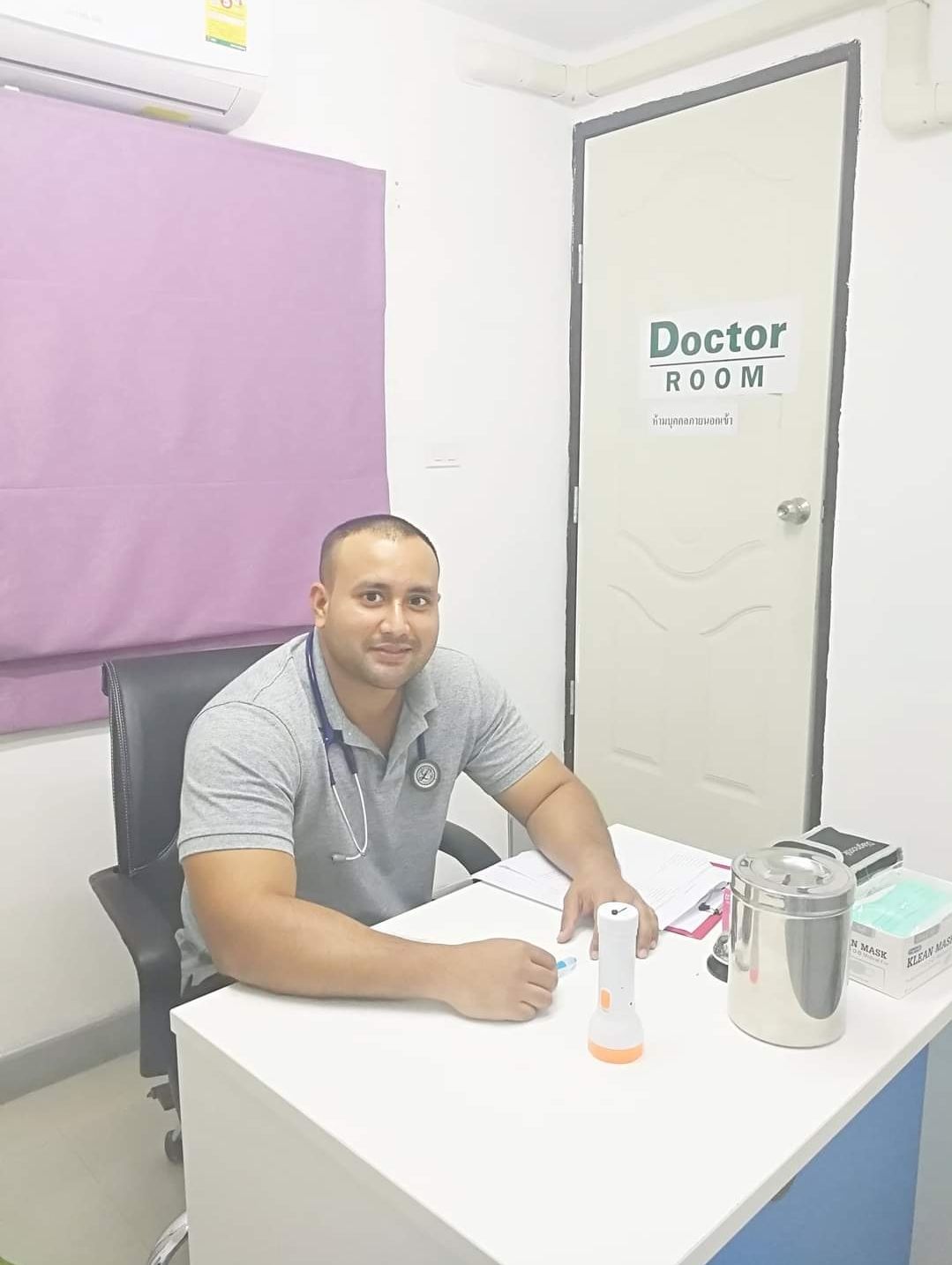
Dr. Ponlawat Pitsuwan is a physician at Doctor Bangkok, a private clinic in central Bangkok. He sees expats, residents, and medical tourists for general medicine, wellness consultations, and IV therapy. His focus is straightforward, evidence-based care delivered in plain language.