
Clinically reviewed by Dr. Ponlawat Pitsuwan, Physician, Doctor Bangkok. Last reviewed: July 2026
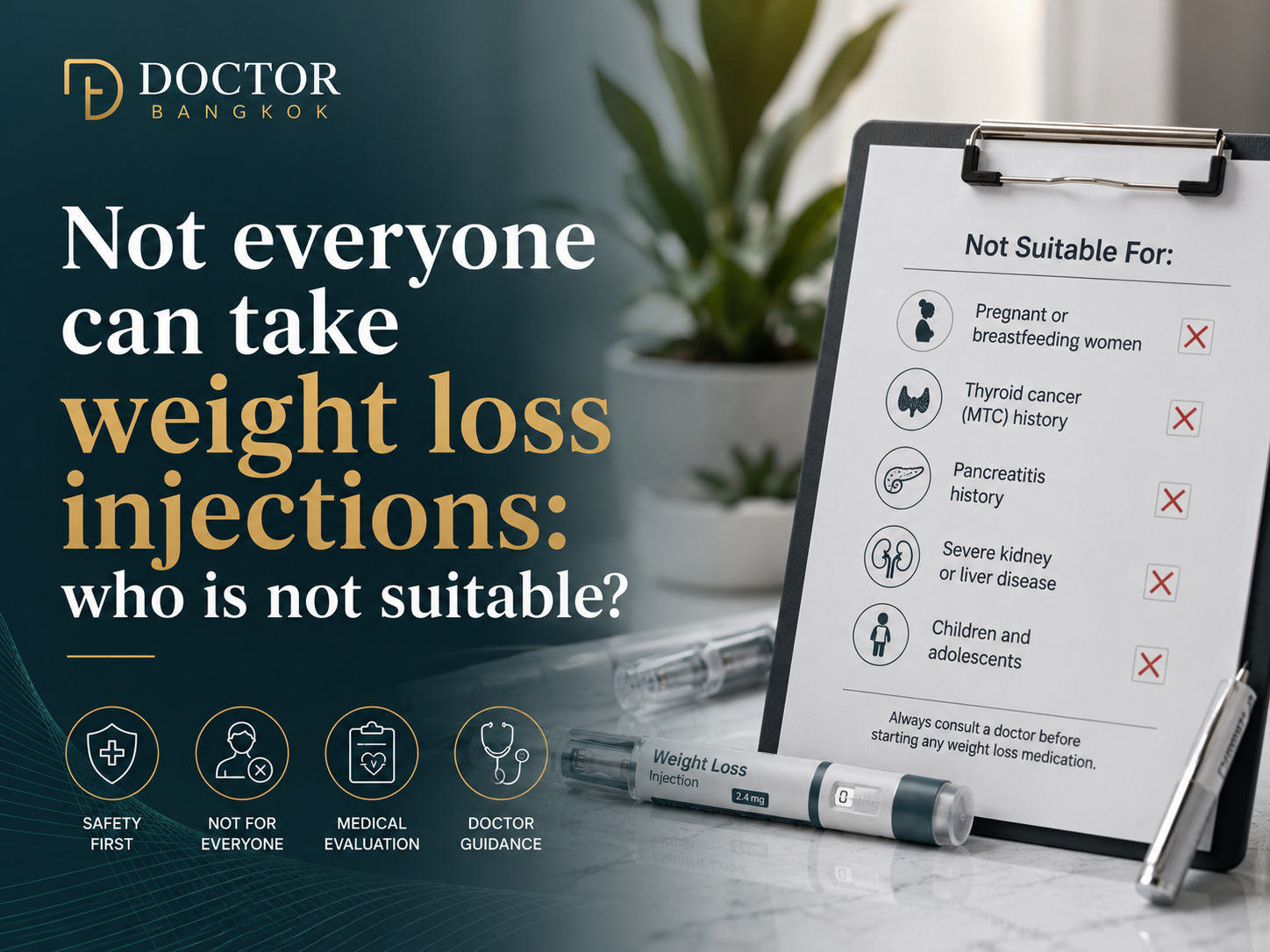
GLP-1 medications like semaglutide and tirzepatide are not suitable for everyone. People with a personal or family history of medullary thyroid cancer, a condition called MEN2, current pancreatitis, or pregnancy should not take them. Other conditions require careful review before starting. A proper medical assessment, not just an online form, is the only way to know if you are a safe candidate.
If you are looking into weight loss injections in Bangkok, you have probably done some research already. You know the names: semaglutide, tirzepatide, Ozempic, Wegovy. You may have friends who have used them. What fewer people talk about is that these medications are not right for everyone. In some cases, taking them without a proper check could cause serious harm.
This is not meant to put you off. For the right patient, GLP-1 therapy is one of the most effective weight management tools available. But the "right patient" part matters. Here is a plain-language guide to who should not take these medications, who needs extra caution, and what to do if you fall into either group.

Absolute contraindications: people who should not take GLP-1 at all
Some conditions make GLP-1 therapy genuinely unsafe. These are not judgment calls. They are hard stops.
If you have a personal history of medullary thyroid carcinoma, a specific type of thyroid cancer, you should not take these medications. The same applies if you have multiple endocrine neoplasia type 2, known as MEN2, a rare genetic condition affecting the thyroid and adrenal glands. A family history of either of these, not just any thyroid condition, is also an absolute contraindication. Papillary or follicular thyroid cancer is a different matter and requires individual review.
Active pancreatitis, which is inflammation of the pancreas, is a definite no. A past episode needs careful discussion with your doctor before anything is prescribed. If you are pregnant or trying to become pregnant, GLP-1 medications should be stopped before conception and are not used during pregnancy or breastfeeding.
Relative contraindications: people who need a careful conversation first
These conditions do not automatically rule you out. They do require honest disclosure and proper assessment before starting.
Severe gastroparesis means your stomach already empties slowly. GLP-1 medications slow stomach emptying further, which can worsen nausea, vomiting, and bloating significantly. Mild cases may be manageable, but severe gastroparesis is usually a no.
Gallbladder disease is worth flagging. GLP-1 therapy is linked to a higher risk of gallstones and gallbladder inflammation. If you have had gallbladder problems before, your doctor needs to know. Significant kidney problems can also affect how well you tolerate the medication, particularly if nausea prevents you from staying hydrated.
If you have type 1 diabetes, GLP-1 is not a standalone treatment. The risk of a serious low blood sugar episode is higher, especially if you are also taking insulin or a sulfonylurea tablet. Any combination like this needs close monitoring.
Diabetic retinopathy, which is damage to blood vessels at the back of the eye, has been linked to short-term worsening with semaglutide in some patients. This does not mean you cannot take it, but your eye specialist and your prescribing doctor should both be involved. Inflammatory bowel disease, including Crohn’s disease and ulcerative colitis, is still being studied in relation to GLP-1 therapy. The gut side effects of these medications can overlap with IBD symptoms, so this is a conversation, not an automatic exclusion.

Mental health history: a nuanced conversation, not an automatic no
A history of depression, anxiety, or an eating disorder does not automatically disqualify you. But it does mean we need to talk properly before you start.
There is a postmarketing signal around suicidal ideation and self-harm with GLP-1 medications. This means it was flagged after the medication was already in widespread use. The absolute risk appears low, but it is real enough that mental health history must be part of any pre-treatment assessment.
For patients with a history of anorexia, bulimia, or binge eating disorder, the way these medications suppress appetite can be helpful for some and destabilising for others. That is exactly the kind of thing that needs a proper clinical conversation, not a tick-box on an online form.
BMI thresholds in Bangkok: why Western cutoffs do not always apply
Most GLP-1 prescribing guidelines from Western countries set a BMI threshold of 27 or 30 before the medication is considered. In clinical practice here in Bangkok, that rule does not always translate directly.
Asian populations carry more visceral fat, the fat around your organs that drives metabolic risk, at lower body weights than Western populations. The metabolic consequences of excess weight can appear at a BMI of 23 or 25 in Asian patients, particularly when combined with high blood sugar, high blood pressure, or abnormal cholesterol. Regional guidelines in Southeast Asia reflect this.
So if your BMI is 25 and you are worried you will not qualify, that is worth discussing. And conversely, a BMI of 28 does not automatically make you a good candidate if your overall health picture does not support it.
If you are planning surgery in Bangkok
This matters particularly for people combining weight management with elective procedures.
GLP-1 medications slow stomach emptying. Under general anaesthesia, that creates a risk of aspiration, where stomach contents enter the airway. It is a serious complication. Most anaesthesiologists now ask specifically whether patients are on GLP-1 therapy before any procedure. Depending on the dose and how you have been tolerating the medication, they may recommend stopping it one to two weeks before surgery.
If you are on a GLP-1 medication and have surgery planned, tell both your prescribing doctor and your surgical team. Do not assume one side knows what the other has prescribed.
The Bangkok-specific risk: unregulated clinics and grey-market products
Some clinics in Bangkok prescribe GLP-1 medications without a proper medical assessment. No bloodwork. No BMI check. No review of your medical history or current medications. You fill out a brief form, pay, and walk out with an injection. That is a problem, because the contraindications covered above are exactly what those assessments are designed to catch.
Compounded and grey-market semaglutide products are also circulating in Bangkok. These are not regulated by the Thai FDA in the same way as approved pharmaceutical-grade medications. Dosing accuracy and product quality are not guaranteed.
At Doctor Bangkok, every patient requesting GLP-1 therapy goes through a full clinical assessment first. That includes medical history, current medications, relevant bloodwork, and a proper discussion of whether this is the right approach. That is not a formality. It is the standard of care.
Who might need a different approach entirely
If GLP-1 is not right for you, that does not mean you have no options.
If your BMI is low but you carry significant abdominal fat, a metabolic health assessment looking at blood glucose, cholesterol, and inflammatory markers may be more useful than any medication. Structured lifestyle changes remain the evidence-based foundation for weight management for most people.
If you have been on GLP-1 before and stopped, weight regain is common. That does not mean the medication failed you. It may mean the approach needs adjusting, the duration was too short, or underlying metabolic issues need separate attention. For patients with significant comorbidities who have not responded to other approaches, bariatric surgery is an option worth discussing with a specialist.
Thinking about weight loss injections in Bangkok? Before you start, find out if you are actually a safe candidate. At Doctor Bangkok, we run a full clinical assessment before any GLP-1 prescription, covering your medical history, bloodwork, and current medications. No shortcuts. Book a consultation at doctorbangkok.co.th or walk in during clinic hours. We are BTS accessible and see patients in English every day.
FAQ
Can I start GLP-1 treatment in Bangkok if my BMI is below 30?
Possibly, yes. Western BMI cutoffs do not apply in the same way for Asian patients, who carry more metabolic risk at lower body weights. At Doctor Bangkok, we assess your full health picture, not just a number, so come in for a consultation and we will tell you honestly whether you qualify.
I have a family history of thyroid cancer. Does that mean I definitely cannot take semaglutide?
It depends on the type. Medullary thyroid carcinoma and MEN2 in the family are absolute contraindications. Other thyroid cancers, like papillary or follicular, are not automatic exclusions but do need to be reviewed by a doctor before you start. Do not assume either way without a proper assessment.
I am planning cosmetic surgery in Bangkok. Should I stop my GLP-1 injections before the procedure?
Yes, in most cases. GLP-1 medications slow stomach emptying, which raises the risk of aspiration under general anaesthesia. Most anaesthesiologists recommend pausing GLP-1 therapy before elective surgery. Tell both your prescribing doctor and your surgical team, and get clear guidance on timing well before the procedure date.
Can I take GLP-1 medication if I have a history of depression or an eating disorder?
Not automatically excluded, but this requires a careful conversation before you start. A history of depression, eating disorders, or related conditions means we review your mental health history as part of the pre-treatment assessment. This is something we do as standard at Doctor Bangkok, and it genuinely matters.
Is it safe to get a GLP-1 prescription at any Bangkok clinic without a full medical assessment?
No. Some clinics in Bangkok prescribe GLP-1 medications without bloodwork, BMI review, or a proper medical history check. That is how serious contraindications get missed. Grey-market and compounded products also carry real dosing risks. A proper in-person clinical assessment is not optional.
I have had pancreatitis before. Can I ever take GLP-1 medications?
A history of pancreatitis is a significant red flag for GLP-1 therapy, and for most patients it is a firm contraindication. It is one of the first things we ask about at Doctor Bangkok, and it requires an honest, detailed discussion before any prescription is considered.
Dr. Ponlawat Pitsuwan
Physician, Doctor Bangkok
a private medical clinic in central Bangkok. He sees expats, residents, and medical tourists for weight management consultations, GLP-1 suitability assessments, and general medical care. His focus is straightforward, evidence-based care delivered in plain language.
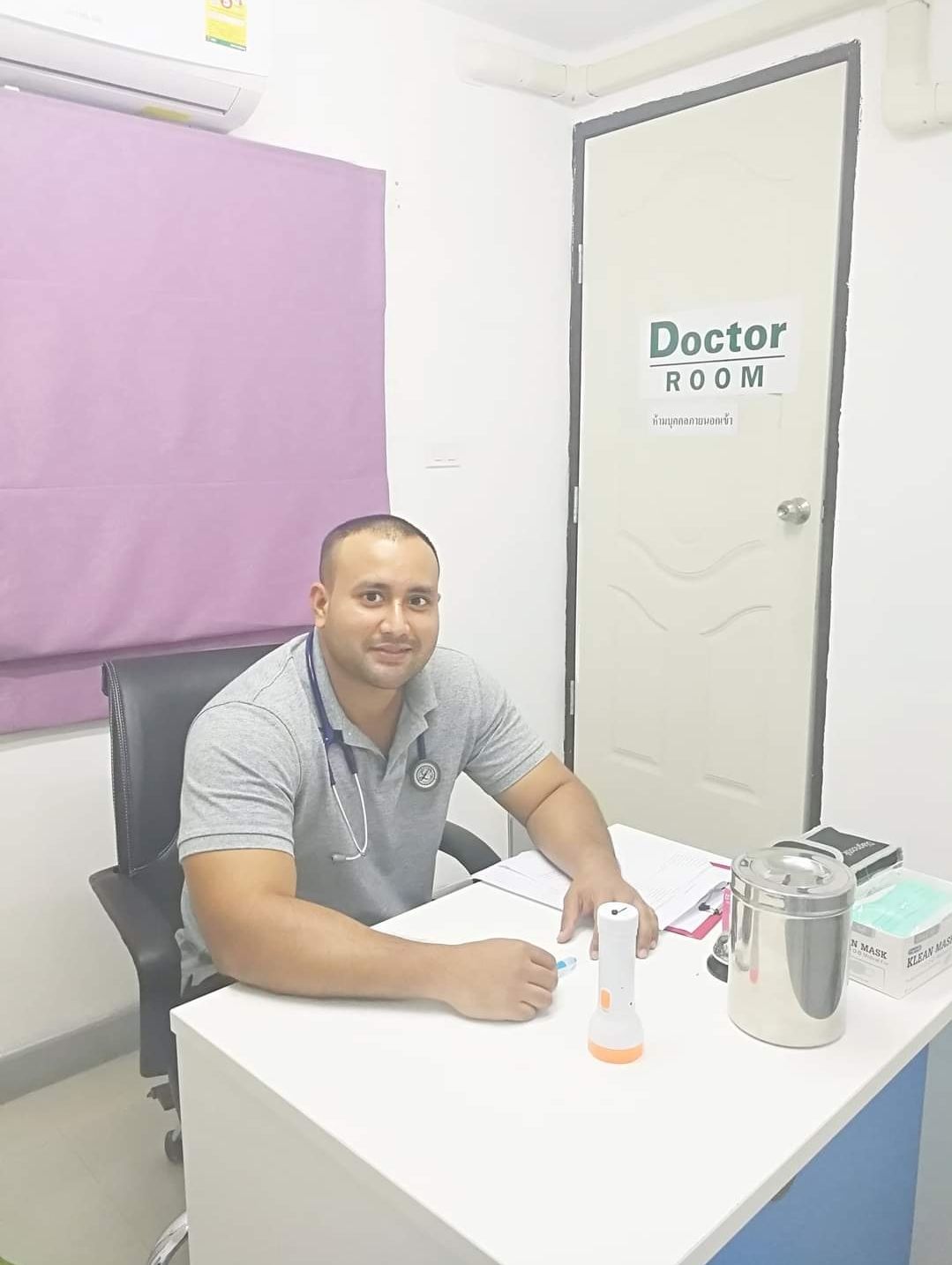
Dr. Ponlawat Pitsuwan is a physician at Doctor Bangkok, a private clinic in central Bangkok. He sees expats, residents, and medical tourists for general medicine, wellness consultations, and IV therapy. His focus is straightforward, evidence-based care delivered in plain language.