

Clinically reviewed by Dr. Ponlawat Pitsuwan, Physician, Doctor Bangkok. Last reviewed: July 2026
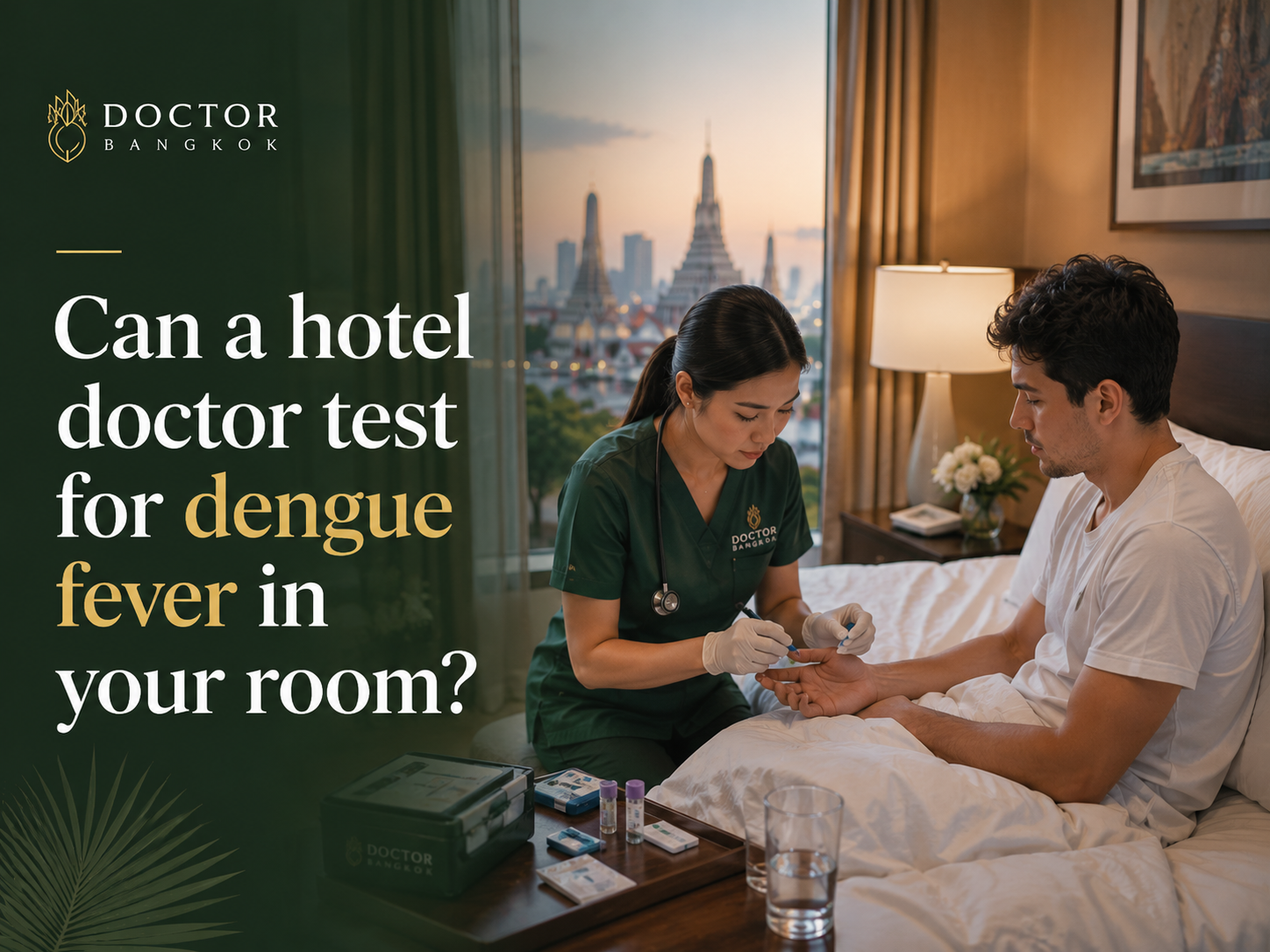
Yes, a doctor can come to your Bangkok hotel room and test for dengue at your bedside. A licensed physician arrives with an NS1 antigen rapid test and can have results ready in about 20 minutes. You do not need to leave your room, flag a taxi, or sit in a hospital waiting area while you feel terrible.
If you are reading this from a Bangkok hotel bed with a fever, a headache behind your eyes, and bones that ache like you have been hit by a truck, this article is for you. You are not being dramatic. These are real symptoms, and dengue is genuinely common in Bangkok.
The good news is you have options. A doctor can come to you, run a blood test at your bedside, and tell you what is going on, what medication is safe to take, and whether you need a hospital or can stay where you are. Here is what you need to know.

What dengue actually feels like — and why it catches tourists off guard
Most people describe the same thing. It comes on fast. One evening you feel fine, and by the next morning you have a fever above 39 degrees Celsius, a pounding headache especially behind the eyes, and muscle aches that are out of proportion to how long you have been sick.
A rash sometimes appears a few days in. It tends to look like a red flush across the chest or arms. Nausea and vomiting are also common.
What catches tourists off guard is how sudden and severe the onset is. Many assume it is food poisoning, jet lag, or a bad cold. They take ibuprofen, feel no better, and only seek help days later. By then, the most useful testing window may have passed.
Which dengue test is right depending on how many days you have been sick
This is the part that actually matters, and most articles skip it.
The NS1 antigen test works best in the first five days of illness. It detects the virus directly, and a bedside rapid test gives results in about 20 minutes. From around day five onward, IgM and IgG antibody tests become more reliable. If you cannot pin down when your symptoms started, a PCR test can be sent to a lab and covers a wider window.
Your doctor will ask when you first felt unwell and choose the right test based on your timeline.
| Days of Illness | Recommended Test | Why |
|---|---|---|
| Day 1 to 5 | NS1 antigen test | Detects virus directly during active phase |
| Day 5 onward | IgM / IgG antibody test | Antibodies now detectable |
| Timing unclear | PCR test | Works across wider window |

Why the fever breaking is not a sign you are getting better
This is the most dangerous misconception I see, and it costs people days of unmonitored deterioration.
In the first few days of dengue, you have a high fever and feel awful. Around day three to five, the fever often drops and many patients feel temporarily better. It is easy to assume the worst is over. It is not.
This is when dengue can become most dangerous. Platelet counts can drop sharply, and fluid can leak from blood vessels. Warning signs that mean you need an emergency room right now include severe abdominal pain, persistent vomiting, bleeding from the gums or nose, blood in urine or stool, sudden bruising, and a feeling of collapse, especially as the fever drops. Thailand’s emergency number is 1669.
If you are unsure whether what you are feeling is a warning sign, call a doctor. Do not wait.
Do not take ibuprofen or aspirin if you think you have dengue
This gets its own section because most tourists arriving in Bangkok do not know it.
If dengue has not been ruled out, take paracetamol only. In Thailand, this is sold as Panadol. Ibuprofen, sold as Nurofen or Advil, and aspirin must be avoided. Both affect platelet function, and in dengue your platelet count is already under stress. Taking either one increases your bleeding risk.
This is not a minor precaution. If you have already taken ibuprofen before reading this, tell your doctor when they arrive and do not take more.
How a hotel room dengue test actually works
The process is straightforward, and it helps to know what to expect before you reach out.
You send a WhatsApp message with your hotel name, room number, and a brief description of your symptoms. A licensed, English-speaking doctor is dispatched and typically arrives within 45 to 75 minutes. The doctor does a bedside assessment, takes a small blood sample, runs the NS1 rapid test, and has a result in about 20 minutes.
Based on the result and your clinical picture, the doctor advises on next steps. If you test positive and your symptoms are manageable, you may be able to stay in your hotel with paracetamol, fluids, and a follow-up plan. If warning signs are present, the doctor arranges hospital transfer. Doctor Bangkok also offers follow-up bedside platelet monitoring, so your blood count can be checked over the following days without leaving your room. You can find a full breakdown of what this covers at the hotel dengue test service page.
When is dengue risk highest in Bangkok?
Bangkok sees dengue year-round, but risk climbs during the rainy season, roughly May through October. The mosquito that carries dengue bites during the day, with peaks at dawn and dusk. Tourists often assume that staying indoors after dark is enough protection. It is not.
The situations where I see the most exposure in Bangkok tourists are outdoor markets in the late afternoon and hotel courtyards or garden areas with standing water nearby. Repellent with DEET, long sleeves at dawn and dusk, and air-conditioned rooms with closed windows all reduce risk. A single bite is enough.
Practical things to sort before calling a doctor
A few things will make the process faster. Know your hotel name and room number before you message. Have your passport nearby, as the doctor will need ID details. If you have travel insurance, have your policy number accessible. Most Bangkok insurers cover a hotel doctor visit for dengue assessment.
Think back to when your symptoms started. Even an approximate date helps. "I started feeling unwell on Tuesday evening" is much more useful than "a few days ago," because it directly affects which test the doctor will use. If you have already taken any medication, including ibuprofen or paracetamol, note what it was and when. For more on what to expect from a fever check at your hotel, the Doctor Bangkok service page has a full breakdown.
Suspected dengue in your Bangkok hotel room? Doctor Bangkok sends a licensed English-speaking physician to you within 45 to 75 minutes, day or night, seven days a week. The doctor performs a bedside NS1 antigen test, assesses your full clinical picture, and advises on treatment and follow-up, including platelet monitoring if needed, without you leaving the room. WhatsApp your hotel name, room number, and symptoms to get started. Visit doctorbangkok.co.th/doctor-hotel-visit to book or learn more.
FAQ
Can I get a dengue test done in my Bangkok hotel room without going to a hospital?
Yes. Doctor Bangkok dispatches a licensed physician to your hotel with a bedside NS1 antigen rapid test. The doctor draws a small blood sample, runs the test in the room, and has a result in about 20 minutes. You do not need to leave your hotel at any point for the initial assessment.
Which dengue test should I get, and does it matter how many days I have been sick?
It matters a lot. The NS1 antigen test is most accurate in the first five days of illness. After day five, IgM and IgG antibody tests become more reliable. If you are unsure when your symptoms started, a PCR test covers a wider window. Your doctor will assess your symptom timeline and choose the right test.
What painkiller is safe to take if I think I have dengue?
Paracetamol only, sold in Thailand as Panadol. Do not take ibuprofen, Nurofen, Advil, or aspirin until dengue has been ruled out by a doctor. These medications affect platelet function and can increase bleeding risk in dengue. If you have already taken one, tell your doctor when they arrive.
I feel better and my fever has dropped. Does that mean the dengue is improving?
Not necessarily. When dengue fever breaks around day three to five, patients often feel temporarily better, but this is when the most dangerous phase can begin. Platelet counts can drop sharply in the 24 to 48 hours after the fever breaks. Continued monitoring matters more, not less, at this point.
How quickly can Doctor Bangkok send a doctor to my hotel?
A licensed, English-speaking doctor can be dispatched across central Bangkok within 45 to 75 minutes after receiving a WhatsApp message with your hotel name, room number, and symptoms. The service runs 24 hours a day, seven days a week, including public holidays.
Can Doctor Bangkok do follow-up platelet monitoring at my hotel if I test positive for dengue?
Yes. If you test positive, Doctor Bangkok can arrange follow-up bedside blood tests to monitor your platelet count over the following days. This means you can be monitored through the critical phase without travelling to a clinic or hospital unless your condition changes.
What are the warning signs that mean I need to go to a hospital immediately?
Go to an emergency room or call 1669 if you develop severe abdominal pain, persistent vomiting, bleeding from the gums or nose, blood in urine or stool, sudden bruising, or feel like you are about to collapse, especially if your fever has just dropped. These are red flags that need immediate assessment, not a wait-and-see approach.
Dr. Ponlawat Pitsuwan
Physician, Doctor Bangkok
a private medical clinic in central Bangkok. He sees expats, residents, and medical tourists for dengue fever assessment, fever evaluation, and general medical consultations including hotel and home visits across Bangkok. His focus is straightforward, evidence-based care delivered in plain language.
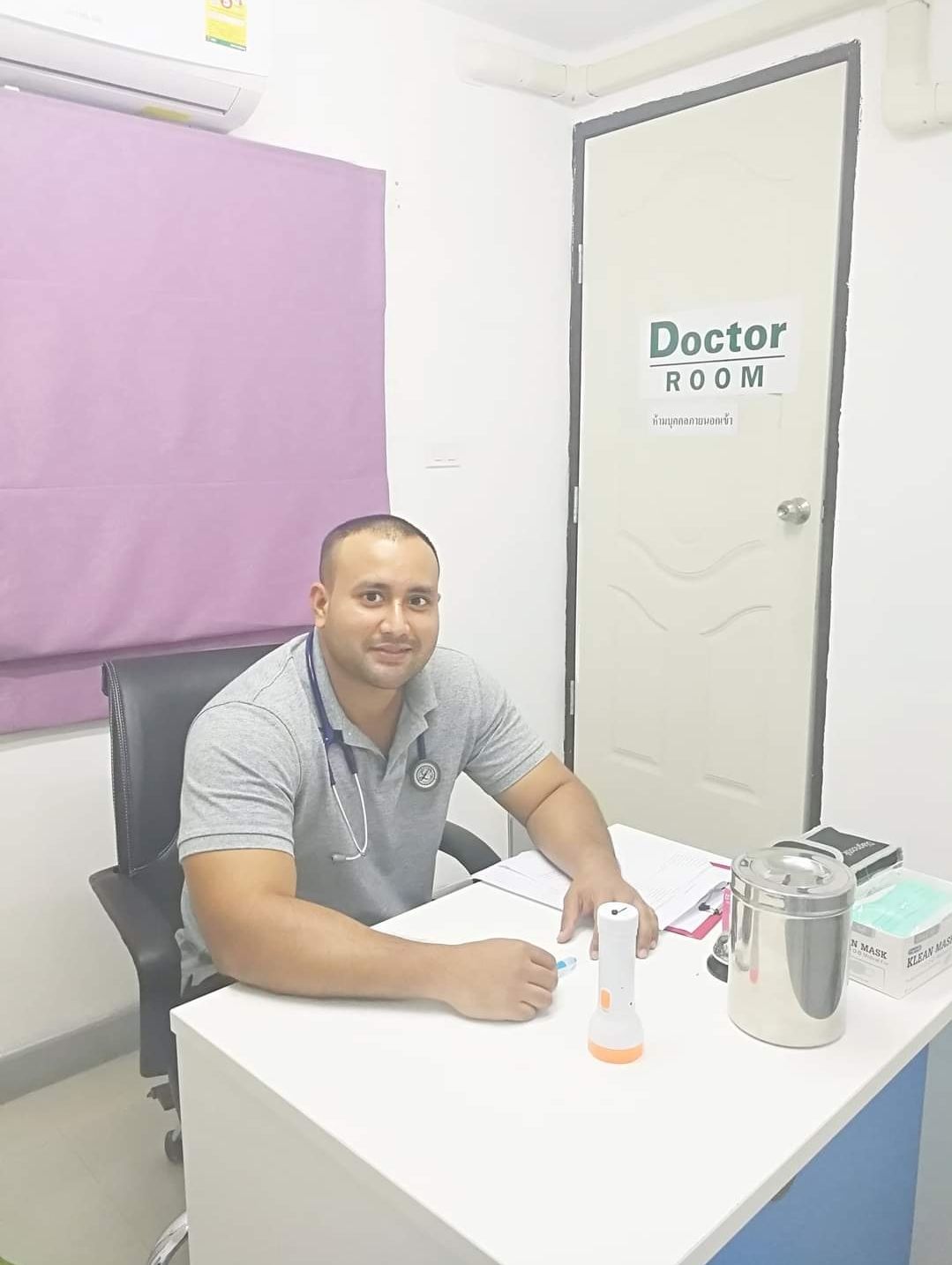
Dr. Ponlawat Pitsuwan is a physician at Doctor Bangkok, a private clinic in central Bangkok. He sees expats, residents, and medical tourists for general medicine, wellness consultations, and IV therapy. His focus is straightforward, evidence-based care delivered in plain language.