
Clinically reviewed by Dr. Ponlawat Pitsuwan, Physician, Doctor Bangkok. Last reviewed: July 2026
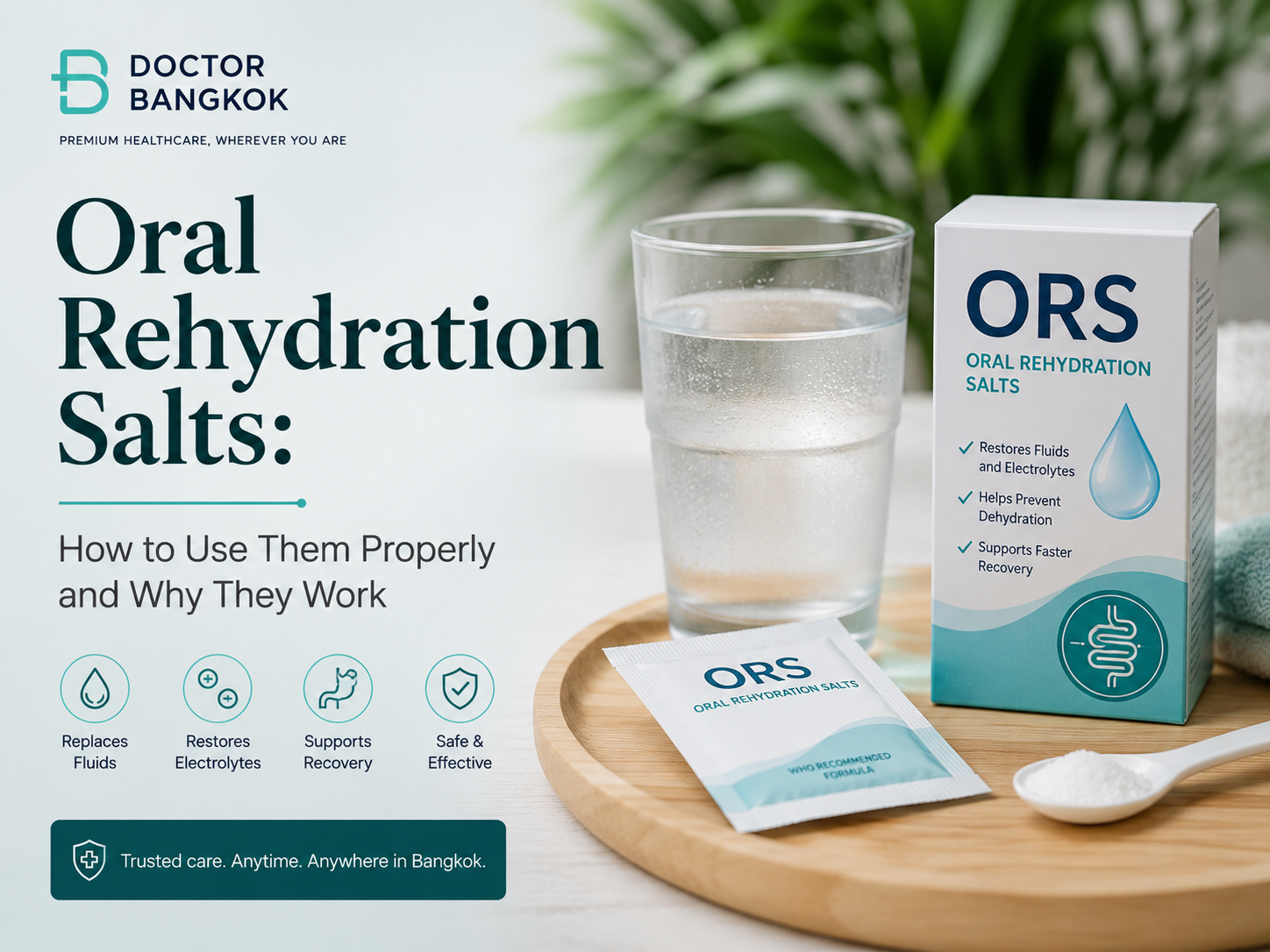
Oral rehydration salts are the most effective first-line treatment for mild to moderate dehydration from diarrhoea, vomiting, or heat. Mix one sachet with 1 litre of sealed bottled water, not Bangkok tap water. Drink 200 to 400 mL after each loose stool. If you cannot keep fluids down, have blood in your stool, or feel severely dizzy with no urination for 8 hours, stop self-treating and see a doctor.
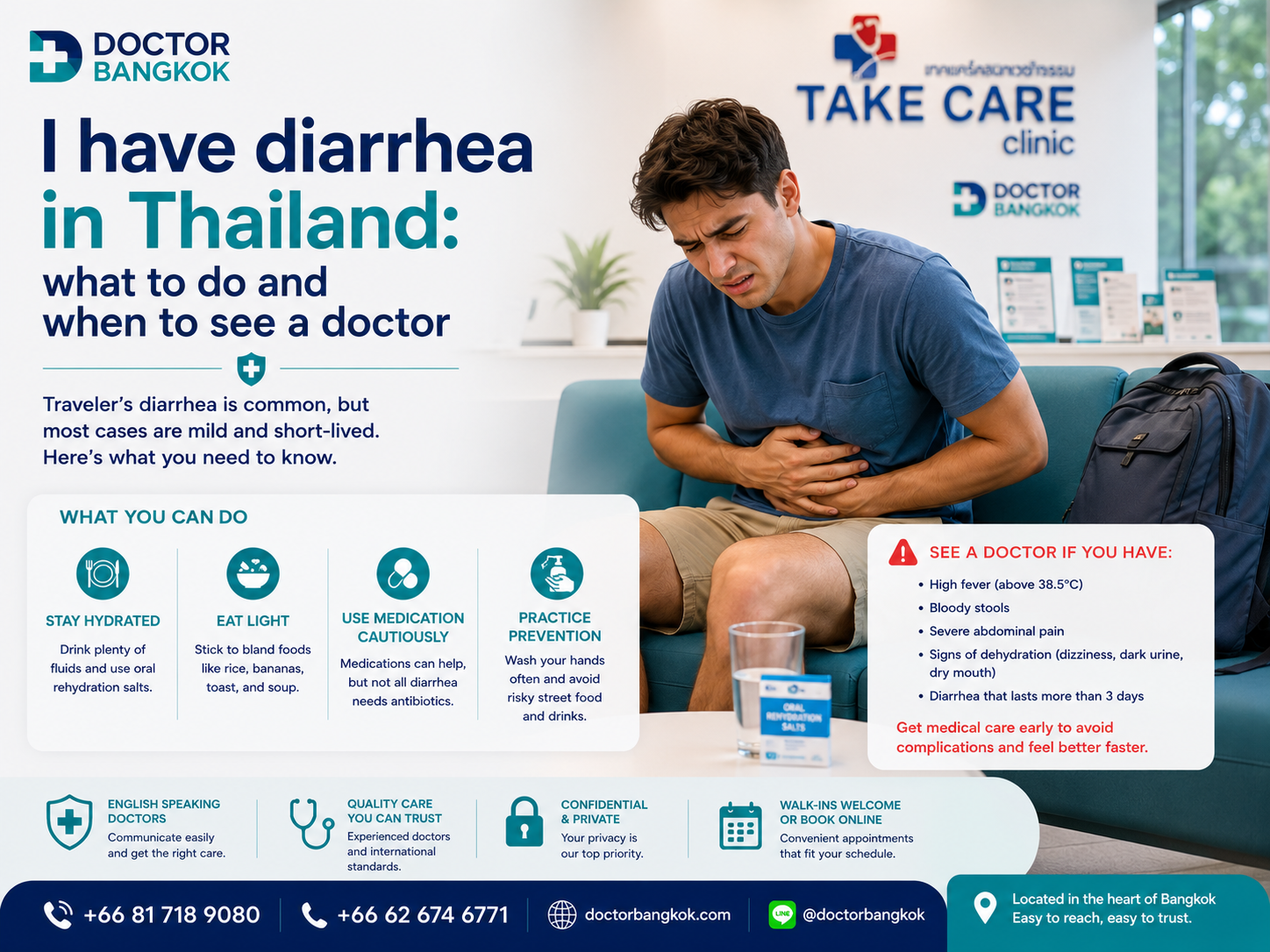
If you are lying in your Bangkok hotel room or apartment with a stomach that has turned on you, you are not alone. Traveller’s diarrhoea is one of the most common reasons expats and visitors end up in my clinic. Most cases can be managed at home. The first thing you need, before anything else, is oral rehydration salts.
A lot of people reach for a sports drink or a coconut water from 7-Eleven. I understand why. They are everywhere, they taste better, and they feel like the logical choice. But they are not the same thing. In a hot, humid city where your body is losing fluid fast, using the wrong product can slow your recovery.

What Is Actually Inside an ORS Sachet
The short answer is sodium, glucose, and potassium chloride in very specific proportions. That specificity is the whole point.
The current WHO formula contains 75 mmol of sodium and 75 mmol of glucose per litre. Your gut absorbs sodium and glucose together, and water follows. Plain water cannot trigger this process. That is why ORS replaces fluid faster than water alone, even though it looks identical in a glass.
Most sachets sold in Bangkok pharmacies now follow the updated WHO reduced-osmolarity formula. This version causes less vomiting and works more effectively than older, higher-concentration products.
Why Bangkok Makes Dehydration Worse Than Usual
Most people think of dehydration as something that happens slowly. In Bangkok, it can happen in a single afternoon.
Here is what I see in clinic: a patient has diarrhoea overnight, sweats through 35-degree heat, skips meals, and by mid-afternoon they are genuinely unwell. Fluid loss from the gut plus fluid loss from sweat compresses the timeline fast. What might take two days to become moderate dehydration in a cooler city can happen here before dinner.
This is why I tell patients to start ORS from the very first loose stool. Not after a few hours. Not when you feel bad. Getting ahead of fluid loss is far easier than catching up once you are already behind.

ORS vs Sports Drinks vs Coconut Water
I get asked about this constantly, especially by expats who have been told coconut water is a natural electrolyte drink. It is. But it is not the right one for illness.
Coconut water is low in sodium. When you have diarrhoea, sodium loss is the main problem, and coconut water does not contain enough to fix it. Sports drinks like Gatorade or Pocari Sweat have a better profile than coconut water, but they are still made for exercise, not illness. The sugar-to-sodium ratio is wrong for a sick gut.
ORS is the only product designed to match what your body loses during illness. For illness-related dehydration, it is the clinically right choice.
| Product | Sodium Content | Designed For | Suitable for Illness? |
|---|---|---|---|
| WHO ORS | High (75 mmol/L) | Illness dehydration | Yes |
| Sports drink | Moderate | Exercise recovery | Not ideal |
| Coconut water | Low | General hydration | No |
| Plain water | None | General hydration | No (alone) |
How to Mix and Use ORS Correctly in Bangkok
The instructions on the sachet say "clean water." In Bangkok, that means sealed bottled water or water that has been boiled and cooled. It does not mean tap water. Bangkok tap water is not safe to drink, and using it to mix ORS could make things worse. Bottled water is at every 7-Eleven for a few baht, so there is no reason to take the risk.
Mix one sachet into exactly 1 litre of water. Do not use less water to make it stronger. A solution that is too concentrated can work against you rather than helping. Drink 200 to 400 mL after each loose stool. For a typical adult with moderate diarrhoea in Bangkok’s heat, aim for 2 to 3 litres over the day.
Once mixed, the solution is good for up to 24 hours if kept refrigerated, or about 1 hour at room temperature. Make a fresh batch if it has been sitting out. If you feel nauseous, sip slowly. Small, frequent amounts work better than forcing down a large volume at once.
Where to Get ORS in Bangkok
ORS sachets are available without a prescription across the city. You will find them at Boots, Watsons, most independent pharmacies, and many 7-Eleven stores. Thai brands typically cost between 10 and 20 THB per sachet. Look for products labelled WHO-formula or reduced-osmolarity ORS.
Doctor Bangkok stocks pharmaceutical-grade ORS sachets and our team can advise on the right product during a same-day consultation. If you are unsure how much to take given your symptoms and Bangkok’s heat, it is worth asking rather than guessing.
ORS for Heat, Not Just Diarrhoea
Most people think of ORS as a diarrhoea remedy. It is also the right treatment for heat exhaustion, which I see regularly during Bangkok’s hottest months.
If you have been out in the heat, feel dizzy or weak, and notice you have barely urinated, ORS will rehydrate you faster than water alone. Drinking too much plain water without electrolytes can actually dilute your sodium levels further. For mild heat exhaustion, get inside, cool down, and start drinking ORS. If you do not improve within an hour, come in for an assessment.
When ORS Is Not Enough
ORS works well for mild to moderate dehydration. There is a point where it stops being the right tool, and you need to recognise that point before you get into serious trouble.
Come in to be seen if you cannot keep fluids down for more than 2 to 3 hours, if there is blood or mucus in your stool, if your fever climbs above 38.5°C, or if you have not urinated in 8 hours. Severe dizziness when you stand, a racing heartbeat, or confusion are signs that dehydration has progressed beyond what a sachet of ORS can fix.
At that stage, IV rehydration is usually the right step. Doctor Bangkok offers IV drip therapy that can restore your fluid and electrolyte balance within an hour, far faster than drinking fluids at home when your gut is not absorbing properly. Our physicians can also check whether your symptoms need further investigation such as stool testing or blood work. You can book a same-day appointment through our diarrhoea treatment page.
ORS and Companion Treatments
ORS treats dehydration. It does not treat the cause of your diarrhoea. Depending on what is making you sick, your doctor may also recommend other things.
Zinc supplementation has solid evidence for reducing the duration of diarrhoea and is commonly recommended alongside ORS. Loperamide can reduce how often you need the toilet, but should not be used if you have a fever or blood in your stool. Antibiotics are only appropriate for bacterial causes and should be prescribed after proper assessment, not self-prescribed. If you have been sick for more than 48 hours without clear improvement, getting a diagnosis is the right move rather than adding more over-the-counter products.
Sick in Bangkok and not sure if ORS is enough? Doctor Bangkok offers same-day consultations and on-site IV rehydration for patients who need more than oral fluids can provide. Our English-speaking physicians are BTS accessible and see expats, residents, and travellers every day. If your symptoms are not improving or you cannot keep fluids down, do not wait. Visit doctorbangkok.co.th to book or walk in.
FAQ
Can I use coconut water or a sports drink instead of ORS in Bangkok?
For illness-related dehydration, neither is a good substitute. Coconut water is too low in sodium, and sports drinks have the wrong balance of sugar and electrolytes for a sick gut. When diarrhoea is the cause of your dehydration, use ORS.
What water should I use to mix ORS sachets in Bangkok?
Use sealed bottled water or water that has been boiled and cooled. Bangkok tap water is not safe to drink and should not be used. Bottled water is available at every 7-Eleven in the city for a few baht.
How do I know when ORS is not enough and I need to see a doctor?
If you cannot keep fluids down for more than 2 to 3 hours, see blood in your stool, have a fever above 38.5°C, or have not urinated in 8 hours, stop self-treating and get assessed. Doctor Bangkok offers same-day appointments and IV rehydration for cases that have moved past home management.
How much ORS should an adult drink per day during diarrhoea in Bangkok?
Aim for 200 to 400 mL after each loose stool, targeting 2 to 3 litres over the day. Bangkok’s heat means you are losing fluid through sweat on top of your gut losses, so your needs will likely be higher than in a cooler climate. Start from your first loose stool, not after you already feel unwell.
Are ORS sachets available over the counter in Bangkok?
Yes, without a prescription. You can find them at Boots, Watsons, independent pharmacies, and many 7-Eleven stores for around 10 to 20 THB per sachet. Doctor Bangkok also stocks pharmaceutical-grade ORS and can advise on the right product during a consultation.
Can I use ORS for heat exhaustion, not just diarrhoea?
Yes. If you have been overheated and feel dizzy or weak with little urination, ORS restores your fluid balance more effectively than plain water alone. Get out of the heat first, then sip ORS steadily. If symptoms do not improve within an hour, come in for an assessment.
Is it safe to give ORS sachets to children in Bangkok?
ORS is safe for children, but the dose differs from adults. For children under 5, a doctor should guide the amount and frequency. If a child is refusing fluids, vomiting repeatedly, or showing signs of severe dehydration, bring them in rather than managing at home.
Dr. Ponlawat Pitsuwan
Physician, Doctor Bangkok
a private medical clinic in central Bangkok. He sees expats, residents, and medical tourists for general consultations, traveller’s diarrhoea, dehydration, fever assessment, and IV rehydration therapy. His focus is straightforward, evidence-based care delivered in plain language.
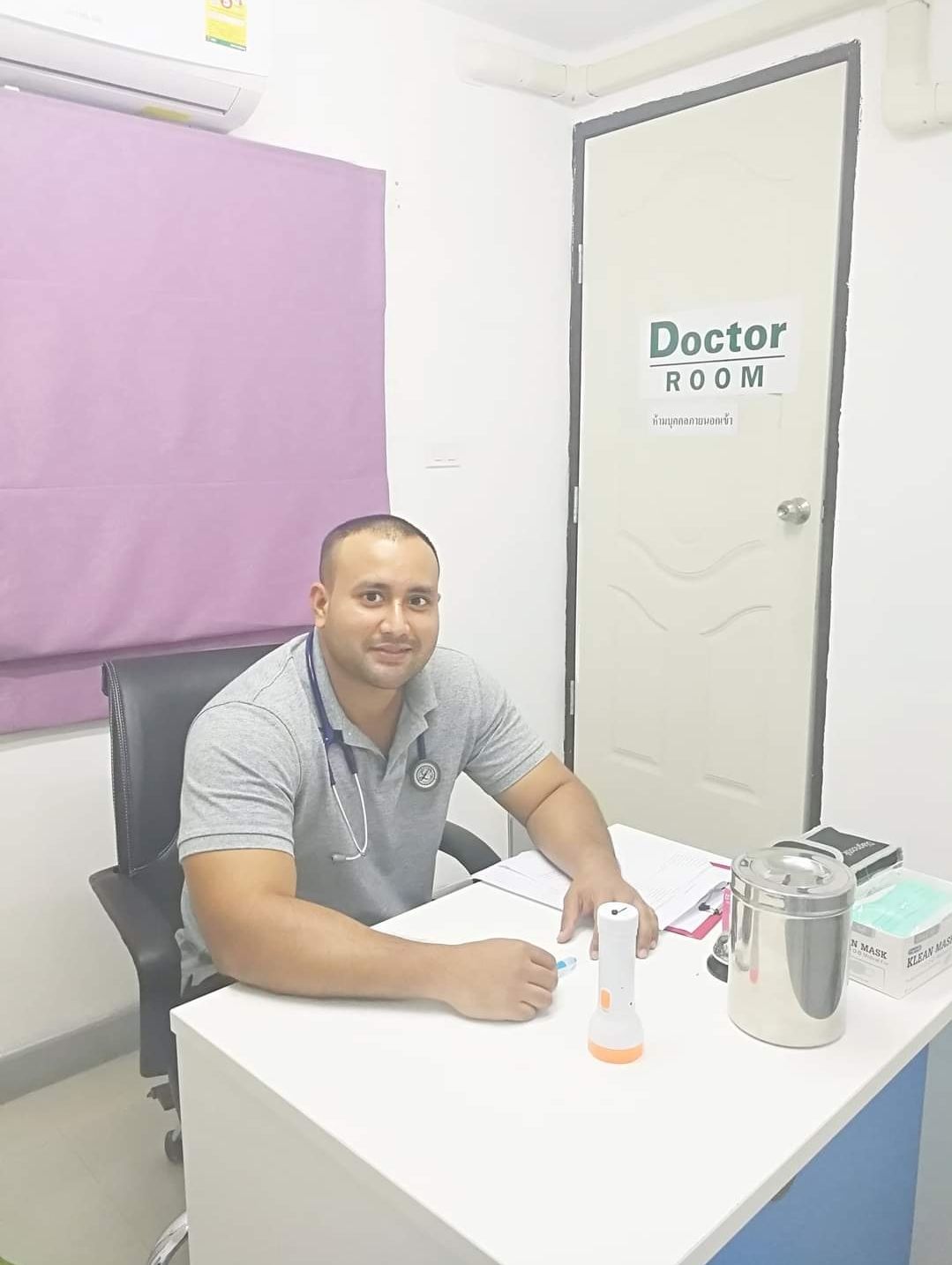
Dr. Ponlawat Pitsuwan is a physician at Doctor Bangkok, a private clinic in central Bangkok. He sees expats, residents, and medical tourists for general medicine, wellness consultations, and IV therapy. His focus is straightforward, evidence-based care delivered in plain language.