
Clinically reviewed by Dr. Ponlawat Pitsuwan, Physician, Doctor Bangkok.
Last reviewed: July 2026
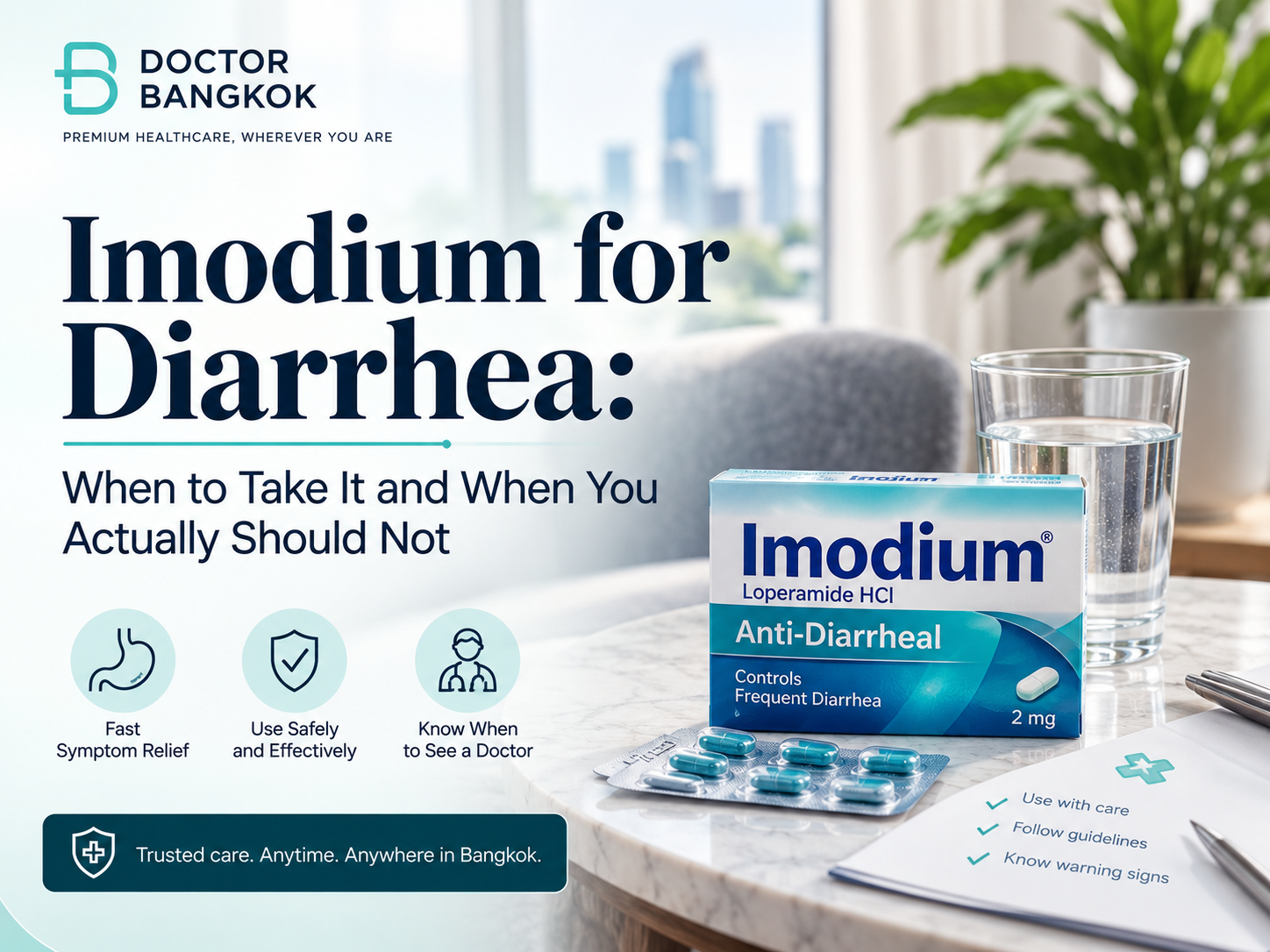
Imodium (loperamide) is safe and effective for mild, watery diarrhea without fever or blood. The standard adult dose is 4 mg to start, then 2 mg after each loose stool, up to 8 mg per day without a prescription. Do not take it if you have a fever above 38°C, bloody stool, or severe stomach cramps. Those symptoms point to a bacterial infection that needs a doctor, not a pharmacy.
You are in Bangkok. Your stomach turned overnight and now you are not sure whether to grab Imodium from the nearest pharmacy or head to a clinic. Most of the time, Imodium is the right first move. Sometimes it is exactly the wrong one, and taking it can make things worse.
This guide tells you how to tell the difference. It covers when loperamide helps, when it can cause real harm, the correct dose, and what to do if it stops working. If you are already seeing blood in the toilet or running a fever, skip to the red flags section now.

When You Should Take Imodium
The short answer: mild to moderate watery diarrhea, no fever, no blood.
If you have had three or more loose stools in a day, no temperature, and nothing unusual in the toilet, Imodium is appropriate. This covers most cases of what people call Bangkok belly. It is not going to kill the infection, but it will slow your gut so your body can reabsorb more fluid and you make fewer urgent runs to the bathroom.
Loperamide is also a reasonable choice when you need to function. You have a flight, a meeting, or a long drive and you cannot spend the next few hours near a bathroom. Using it short-term in this situation is legitimate. Just reassess after 48 hours.
When You Should NOT Take Imodium
This is the part most pharmacy labels do not explain clearly enough, so I want to be direct.
Fever with diarrhea
If your temperature is above 38°C and you have diarrhea, do not take Imodium. Fever alongside diarrhea usually means bacteria have invaded the gut wall, not just irritated it. Pathogens like Salmonella, Shigella, and Campylobacter are common in Bangkok and across Southeast Asia. When you slow the gut down in this situation, you are keeping those bacteria inside longer. That can extend the infection and raise the risk of it spreading. This is one of the main reasons I push back against self-treating every case of diarrhea with Imodium.
Blood or mucus in the stool
Bloody stool is a red flag. It means the gut lining is damaged and you almost certainly have a bacterial infection that needs antibiotics. Taking loperamide here can lead to a serious complication called toxic megacolon, where the colon swells dangerously. You need a doctor, not a pharmacy.
After a course of antibiotics
If you have recently finished antibiotics and now have diarrhea, be careful. This can be a condition caused by a bacterium called C. difficile, which takes over when your normal gut bacteria are disrupted. Loperamide can mask symptoms and delay the right treatment. Come in for an assessment first.
Cardiac medication interactions
High doses of loperamide can affect the heart’s electrical rhythm. If you are on certain heart medications or antifungals, check with a doctor before taking loperamide. Standard doses taken as directed carry very low risk for healthy people, but it is worth flagging if you are on regular medication.
Dosage, Duration, and the 48-Hour Rule
| Situation | Dose |
|---|---|
| First dose (loading dose) | 4 mg (two standard 2 mg capsules) |
| After each loose stool | 2 mg (one capsule) |
| Maximum per day without prescription | 8 mg |
| Maximum per day under medical supervision | 16 mg |
| When to stop and reassess | After 48 hours, or sooner if red flags appear |
The 48-hour rule is simple. If loperamide has not controlled things within two days, or if you get worse at any point, stop and see a doctor. Do not just keep dosing and hoping.
Drink oral rehydration solution (ORS) alongside loperamide. ORS replaces the salts and fluids you are losing. You can buy it at any pharmacy in Bangkok. It comes in sachets you mix with water. Do not rely on sports drinks or plain water alone. In Bangkok’s heat, you dehydrate faster than you would in a cooler climate, and dehydration is where things turn dangerous quickly.
Imodium and Antibiotics Together
This combination works better than either alone for traveler’s diarrhea, and the evidence behind it is reasonably solid. When loperamide is paired with the right antibiotic, illness duration drops compared to taking an antibiotic by itself.
The key word is right antibiotic. In Southeast Asia, many of the bacteria causing traveler’s diarrhea are resistant to ciprofloxacin and related drugs. Most travel medicine guidelines now recommend azithromycin as the first-choice antibiotic for this region. A doctor can assess your symptoms, consider local resistance patterns, and prescribe the correct drug. A pharmacy cannot do that.
Buying Loperamide in Bangkok
You do not need a prescription for standard doses. It is sold over the counter at Boots, Watsons, and almost every local pharmacy across Bangkok.
The brand name Imodium is available, but the generic is identical and costs a fraction of the price. In Thai, it is labelled โลเพอราไมด์. You can simply ask for "loperamide" at any pharmacy and they will understand. A pack of ten 2 mg capsules typically costs well under 100 baht.
Buying it is easy. The harder part is knowing whether you should be taking it. When in doubt, that is what a clinic is for.
When Imodium Is Not Working
Most mild cases settle within 24 to 48 hours with loperamide and ORS. When they do not, something else is going on.
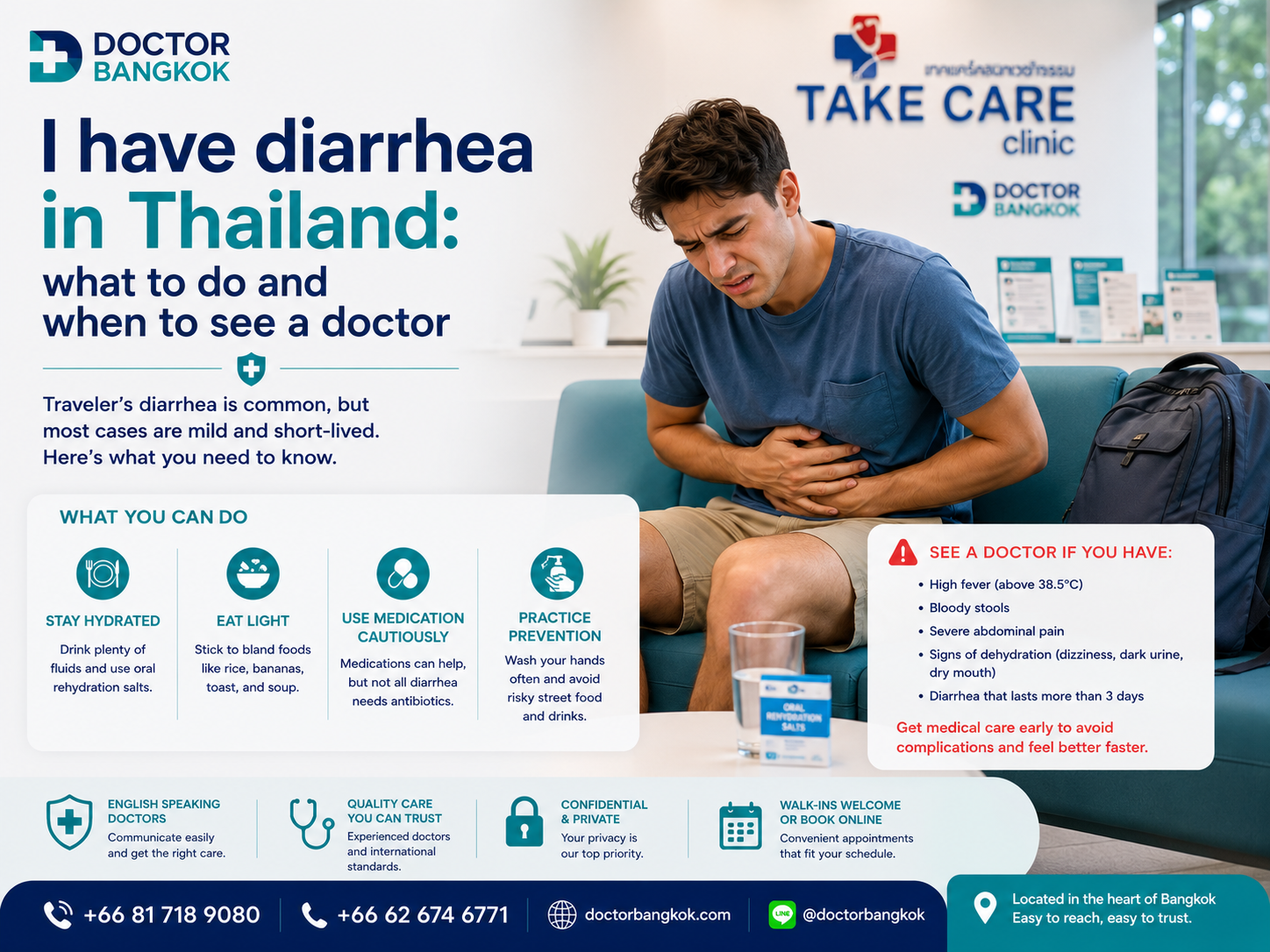
Come in if any of these apply: diarrhea lasting more than 48 hours despite loperamide, fever starting or rising, blood or mucus appearing in the stool, severe cramps, dizziness when you stand up, dry mouth, or very dark urine. The last three are signs of significant dehydration.
At the clinic, we take a history, examine you, and usually run a blood test and stool test. If you are dehydrated, IV rehydration gets fluids back into you far faster than drinking can. We can also prescribe medication to stop vomiting if that is making it hard to keep anything down. These are things Imodium cannot do.
Southeast Asia has a higher burden of antibiotic-resistant gut bacteria than most of Europe or North America. This matters when choosing antibiotics, because the wrong drug will not work. A proper assessment changes the outcome. Doctor Bangkok offers same-day diarrhea assessment, stool testing, and antibiotic prescribing. If you are too unwell to travel, ask about our hotel visit service when you call.
Diarrhea that is not improving, or diarrhea with fever or blood, needs more than a pharmacy visit. Doctor Bangkok is a private clinic in central Bangkok, BTS accessible, with English-speaking doctors available same day. We offer stool testing, blood tests, IV rehydration therapy, and antibiotic prescribing on-site. Visit doctorbangkok.co.th or walk in. If you are too unwell to travel, ask about our hotel visit service through our diarrhea treatment and assessment page.
Frequently Asked Questions
Can I take Imodium if I have a fever with diarrhea in Bangkok?
No. Fever with diarrhea usually means a bacterial infection that has invaded the gut wall. Slowing the gut down with loperamide can make that worse and delay the treatment you actually need. See a doctor the same day. Doctor Bangkok takes walk-in appointments and can assess you quickly.
How long does it take for Imodium to work?
Most people notice it slowing things down within one to two hours of the first dose. Full control can take up to 48 hours. If you are not improving after two days, or you get worse at any point, stop taking it and come in for an assessment.
Is it safe to combine Imodium with antibiotics for traveler’s diarrhea?
Yes, and the combination tends to work better than an antibiotic alone. The key is getting the right antibiotic for Southeast Asia, where many gut bacteria are resistant to drugs like ciprofloxacin. A doctor makes that call based on your symptoms and local resistance data. We do this regularly at Doctor Bangkok.
Where can I buy Imodium or loperamide in Bangkok?
Any Boots, Watsons, or local pharmacy will have it. Ask for loperamide or look for the Thai label โลเพอราไมด์. The generic is inexpensive and identical to the brand. That said, knowing when not to take it matters as much as knowing where to buy it, so check your symptoms against the red flags above first.
When should I stop taking Imodium and see a doctor in Bangkok?
Stop and seek care if diarrhea runs past 48 hours, if you see blood or mucus in the stool, if fever comes on, or if you feel dizzy, have a dry mouth, or notice your urine turning dark. In Bangkok’s heat, dehydration escalates quickly. Doctor Bangkok has IV rehydration and same-day appointments available.
Can children take Imodium for diarrhea?
Loperamide is generally not recommended for children under 12 without medical advice. For children with diarrhea in Bangkok, oral rehydration solution is the first step and a doctor should assess them, particularly if fever is present. Do not give adult-dose Imodium to a child.
Dr. Ponlawat Pitsuwan
Physician, Doctor Bangkok
a private medical clinic in central Bangkok. He sees expats, residents, and visitors for general medical consultations, traveler’s diarrhea, fever assessment, and travel medicine. His focus is straightforward, evidence-based care delivered in plain language.
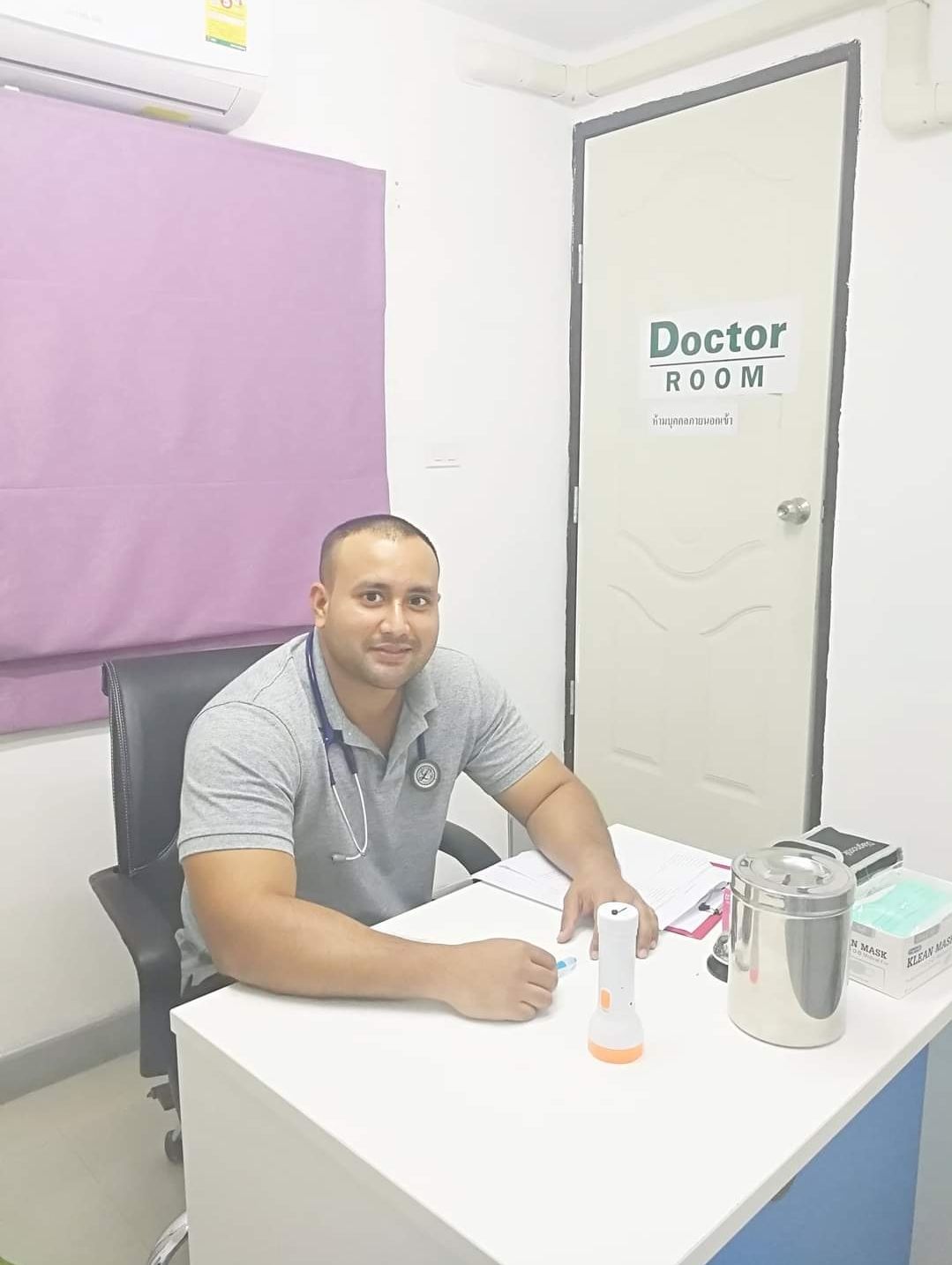
Dr. Ponlawat Pitsuwan is a physician at Doctor Bangkok, a private clinic in central Bangkok. He sees expats, residents, and medical tourists for general medicine, wellness consultations, and IV therapy. His focus is straightforward, evidence-based care delivered in plain language.