
Clinically reviewed by Dr. Ponlawat Pitsuwan, Physician, Doctor Bangkok.
Last reviewed: July 2026
Most food poisoning clears up in one to three days with rest and fluids. In Bangkok, the heat speeds up dehydration, which can make even a mild case turn serious faster than you would expect. If you still feel sick after 72 hours, have blood in your stool, or cannot keep fluids down, that is the point to stop waiting and see a doctor.
If you are reading this from a Bangkok hotel room with a bucket nearby, here is the straight answer first. Most cases of food poisoning last one to three days. You feel terrible, but your body is clearing the infection. The problem in Bangkok is that the heat makes dehydration happen fast. What might be a minor inconvenience back home can need medical attention within half a day here.
Not all food poisoning is the same. Some of it clears up overnight. Some of it, especially the parasitic kind that is genuinely common in Thailand, can drag on for weeks without treatment. Knowing which one you have changes what you should do next.

How Long Does Food Poisoning Last — By Pathogen
The honest answer is that it depends on what you ate and what is growing in your gut right now.
| Pathogen | Common Source | Onset After Eating | How Long It Lasts |
|---|---|---|---|
| Staph aureus | Rice dishes, pastries left out | 1 to 6 hours | 24 to 48 hours |
| Norovirus | Raw shellfish, shared surfaces | 12 to 48 hours | 1 to 3 days |
| E. coli | Undercooked meat, raw veg | 1 to 10 days | 3 to 7 days |
| Salmonella | Eggs, poultry, unpasteurised dairy | 6 hours to 2 days | 4 to 7 days |
| Campylobacter | Undercooked chicken, raw milk | 2 to 5 days | 5 to 10 days |
| Vibrio | Raw or undercooked seafood | 4 to 96 hours | 3 to 5 days |
| Giardia | Contaminated water | 1 to 3 weeks | Weeks if untreated |
| Cyclospora | Fresh produce, herbs | 1 week | Weeks if untreated |
Giardia and Cyclospora are parasites. They do not respond to rest and fluids. They need specific medication. If your symptoms started more than a week after a meal you are suspicious of, or if they keep coming back in waves, those two are worth ruling out.
Why Bangkok Changes the Timeline
This is the part that no general guide will tell you. Bangkok sits at around 35 degrees Celsius most of the year, with high humidity on top of that. When you are vomiting and have diarrhoea, you are losing fluid faster than you can replace it by sipping water.
I have seen patients who felt fine at breakfast, started vomiting at noon, and were genuinely unwell by mid-afternoon. They underestimated how much fluid they were losing in the heat. This is something I see regularly at the clinic.
Bangkok also has a real population of tropical pathogens that most Western medical guides do not mention. Vibrio from raw seafood is common at restaurants that do not keep proper cold storage. Cyclospora turns up in fresh herbs and unwashed produce. Giardia comes through contaminated ice and water more often than people realise.
Travellers who are jet-lagged, eating adventurously, or drinking alcohol are at higher risk. Your gut defences are already stretched when you arrive somewhere new.

Food Poisoning vs Traveller’s Diarrhoea vs Bangkok Belly
These terms get mixed up all the time, including by patients sitting in my consulting room.
Food poisoning refers to illness caused by toxins or bacteria in a specific meal. Traveller’s diarrhoea is broader. It includes bacterial infections, waterborne parasites, and viral gut infections that travellers pick up because their gut has no immunity to local strains. Bangkok Belly is just a casual name for any of the above.
The practical difference is this. True bacterial food poisoning usually hits fast and hard, within hours of eating. Parasitic infections come on slowly, sometimes a week or more later. If your symptoms started well after the suspicious meal, or keep cycling back, you are more likely dealing with a parasitic infection. A stool test tells us which one it is. Without it, you are guessing.
What Actually Speeds Up Recovery
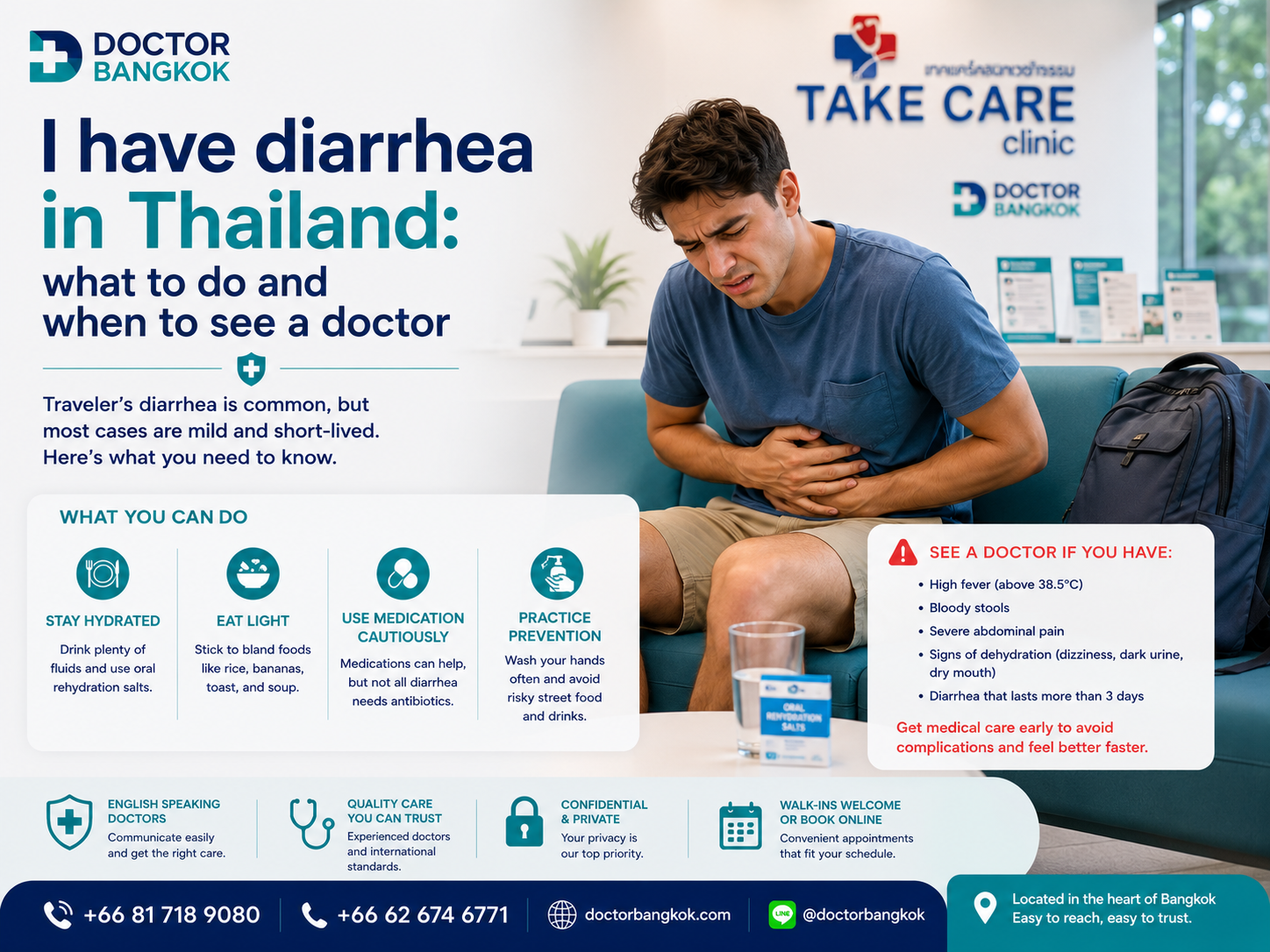
Hydration is the main thing. Not plain water. Oral rehydration solution replaces both fluid and the electrolytes you are losing. You can buy it at any pharmacy in Bangkok for almost nothing. Plain water is better than nothing, but it does not replace sodium and potassium, and that gap matters when you are losing large amounts of fluid.
Once you can eat, bland and low-fibre is easier on an irritated gut. Plain rice, banana, or dry toast are good starting points. Do not push food before you are ready. Clear fluids first, then plain foods, then a gradual return to normal eating.
About loperamide, which is the active ingredient in Imodium. In a mild case with no fever, it can make a long flight or journey bearable. But if you have a fever, blood in your stool, or a suspected bacterial infection, taking it can make things significantly worse. It slows your body’s ability to clear the pathogen. Do not take it unless you are sure there is no fever and no blood. If you are not sure, ask a doctor first.
Rest genuinely matters. Your immune system works faster when you are not also fighting heat, alcohol, and exhaustion.
Red Flag Symptoms — When to Stop Waiting
Most people with food poisoning feel better within three days. But there are specific signs that mean you need a doctor today.
Blood in your stool or vomit is the clearest red flag. A fever above 38.5 degrees Celsius alongside gut symptoms points toward a bacterial infection that may need antibiotics. If you cannot keep any fluids down for more than 12 hours, you are at serious risk of dehydration and may need IV fluids. Dizziness when you stand up, dark urine, and a dry mouth are signs you are already dehydrated.
Symptoms still present after 72 hours without improvement warrant a clinical assessment. Symptoms that started more than a week after a suspicious meal should trigger a stool test to rule out parasites.
If you are alone in a Bangkok hotel room with any of the above, do not try to wait it out. Heat, dehydration, and a bacterial or parasitic infection compound faster here than in a cooler climate.
Getting Medical Help in Bangkok
You do not need to go to a Thai public hospital to get good care. At Doctor Bangkok, we see patients with food poisoning regularly. We are English-speaking, centrally located, and accessible by BTS. When you come in, we assess your hydration, check your vital signs, and go from there. If you need a stool test, we order it. If you need IV fluids, we can do that in-clinic. If you need antibiotics, we prescribe the right one based on what is likely causing your symptoms.
If you cannot get to the clinic, we also offer hotel visits across central Bangkok. You do not have to travel when you are unwell.
For patients with travel insurance, we can provide documentation for your claim. This is straightforward and something we do often.
The biggest mistake I see is people waiting four or five days, getting steadily more dehydrated in a hot hotel room, then arriving much more unwell than they needed to be. If you are unsure whether you need to be seen, a quick call to our clinic takes the guesswork out of it.
Our diarrhea treatment page covers what to expect at a consultation and when testing becomes necessary, including the average length of food poisoning by type.
Still sick after 72 hours? Cannot keep fluids down? Doctor Bangkok offers same-day consultations, IV rehydration therapy, stool testing, and hotel visits across central Bangkok. English-speaking physicians. No appointment needed for walk-ins. Visit doctorbangkok.co.th or call us directly.
Frequently Asked Questions
How long does food poisoning last in Bangkok compared to back home?
Bangkok’s heat means you dehydrate faster, so a case that might clear up in 24 hours in a cooler climate can escalate within half a day if you are not replacing fluids. Tropical bacterial strains like Vibrio are also more common in Thai food than in most Western countries. If you are unwell and cannot get to a clinic, Doctor Bangkok offers hotel visits across central Bangkok.
Is it safe to take Imodium when I have food poisoning in Bangkok?
Not always. If you have a fever or any blood in your stool, loperamide can prolong the infection by slowing your gut’s ability to clear the pathogen. It can be used cautiously in mild cases without fever, for example if you have a flight to catch. When in doubt, ask a doctor before taking it.
When should I stop waiting and see a doctor?
See a doctor if you have blood in your stool, a fever above 38.5 degrees, symptoms that have not improved after 72 hours, or you cannot keep fluids down for more than 12 hours. Bangkok’s heat makes dehydration dangerous faster than you might expect, so do not wait as long as you might at home.
What is the difference between food poisoning and traveller’s diarrhoea in Thailand?
Food poisoning hits fast, usually within hours of a specific meal, and is caused by bacteria or toxins in that food. Traveller’s diarrhoea is a broader term that also includes waterborne infections and viral gastroenteritis. If symptoms started more than a week after the suspicious meal and keep coming back, a parasitic infection like Giardia is more likely. A stool test identifies which one it is.
Can food poisoning from Thai street food last more than a week?
Yes. Most viral and bacterial cases resolve within three to seven days, but parasitic infections like Giardia and Cyclospora can last for weeks without specific treatment. These parasites are genuinely common in Southeast Asia. If your symptoms are still present after five to seven days, get a stool test. Self-care alone will not clear a parasitic infection.
Should I eat or fast when I have food poisoning?
Do not force food when you feel nauseous. Start with clear fluids and oral rehydration solution. Once you can tolerate fluids without vomiting, move to bland foods like plain rice, banana, or dry toast. Your gut needs a day or two to settle before you reintroduce anything rich or spicy.
When is food poisoning an emergency?
Treat it as an emergency if you see blood in your stool or vomit, have a very high fever, feel confused or unusually weak, or show clear signs of severe dehydration such as not urinating, extreme dizziness, or a completely dry mouth. These symptoms need clinical assessment immediately, not a wait-and-see approach.
Dr. Ponlawat Pitsuwan
Physician, Doctor Bangkok
a private medical clinic in central Bangkok. He sees expats, residents, and medical tourists for food poisoning, traveller’s diarrhoea, tropical infections, and general illness. His focus is straightforward, evidence-based care delivered in plain language.
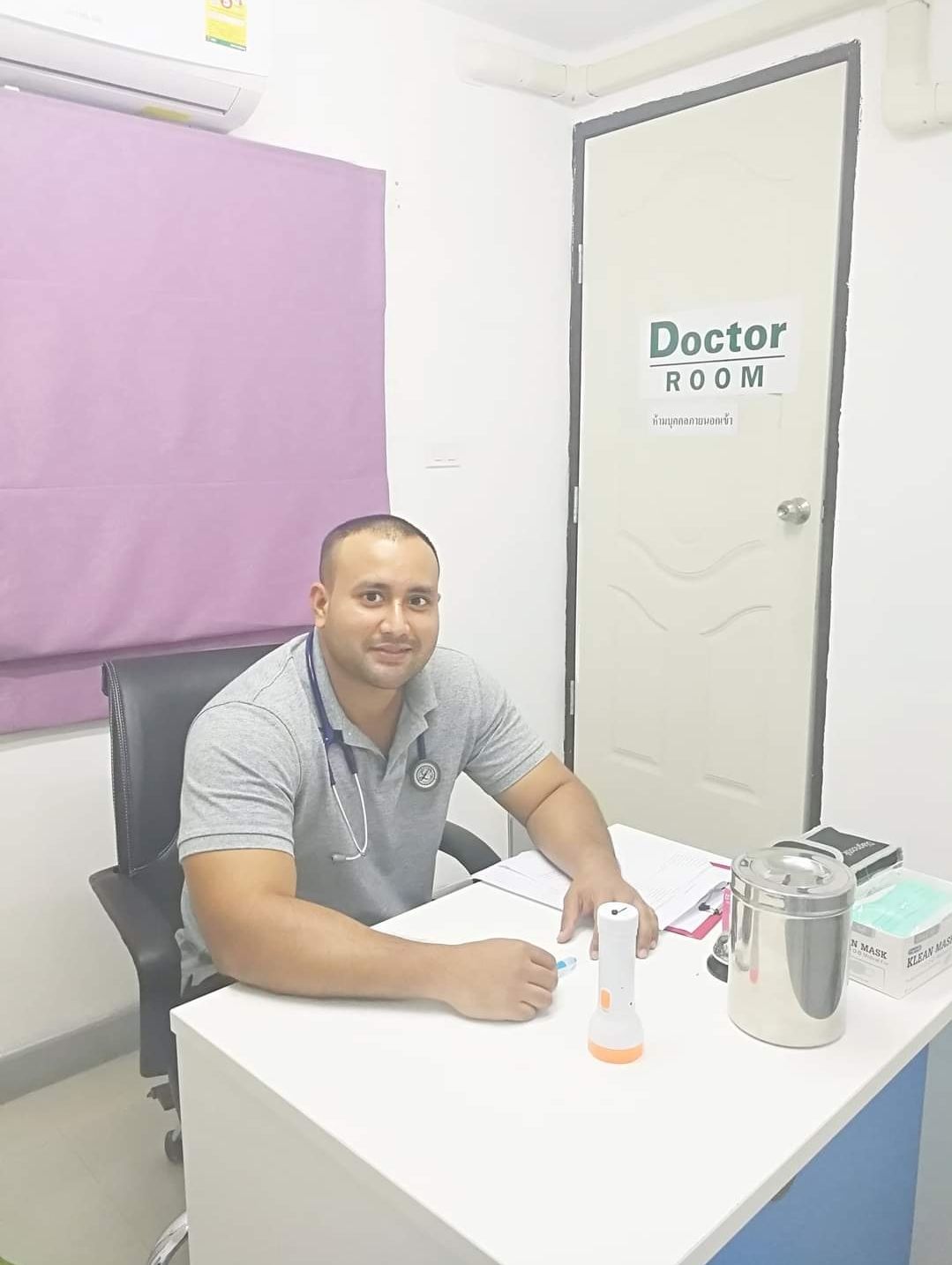
Dr. Ponlawat Pitsuwan is a physician at Doctor Bangkok, a private clinic in central Bangkok. He sees expats, residents, and medical tourists for general medicine, wellness consultations, and IV therapy. His focus is straightforward, evidence-based care delivered in plain language.