

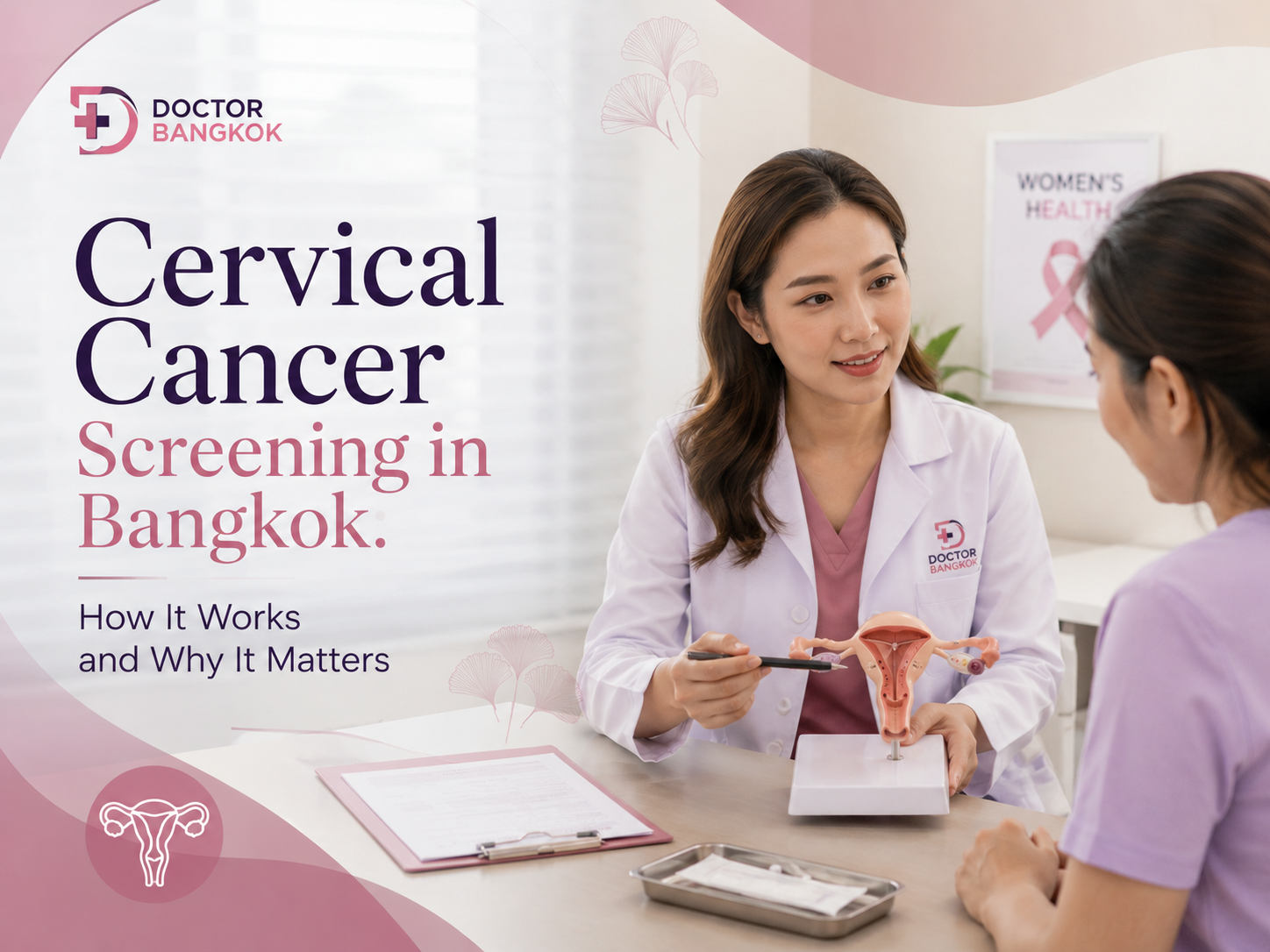
Clinically reviewed by Dr. Ponlawat Pitsuwan, Physician, Doctor Bangkok. Last reviewed: July 2026
Cervical cancer screening in Bangkok typically involves a Pap smear, an HPV DNA test, or both together. Most women aged 25 to 65 should be screened every three to five years depending on which test they have and their personal risk factors. If you have not been screened since moving to Bangkok, catching up is simple at a private clinic with English-speaking doctors.
A lot of expat women I see have not had a cervical screening in two, three, sometimes five years. Moving countries disrupts routines. You are not registered with a GP here. You are not sure which clinic to trust or which test to ask for. So it just does not happen.
I want to fix that. This article explains what screening involves, which test makes sense for you, and what to expect from start to finish. Nothing here should scare you. Cervical cancer is one of the most preventable cancers we have, and that is entirely because of screening.

Pap Smear, HPV Test, or Co-Test: Which One Is Right for You?
These are three ways to check for the same thing: early signs that your cervix might be developing a problem.
A Pap smear collects cells from your cervix and checks whether any look abnormal. An HPV test checks for the presence of high-risk strains of the human papillomavirus, the virus responsible for almost all cervical cancers. A co-test does both at once from the same sample.
Here is how I usually think about it with patients. Between 25 and 29, a Pap smear every three years is the standard starting point. From 30 onwards, a co-test every five years is one of the most widely accepted approaches, and it is what I often recommend for expat women in this age group. Under 25, routine screening is not generally recommended.
The right choice also depends on your history. If you have had abnormal results before, are immunocompromised, or have never been screened, those factors change the plan. A short conversation with your doctor is the fastest way to sort this out.
Thai vs International Guidelines: Which One Should You Follow?
This is probably the question I get most from expat patients, and understandably so.
The Royal Thai College of Obstetricians and Gynaecologists recommends screening for women aged 25 to 65, every two to five years depending on the test used. American Cancer Society guidelines favour primary HPV testing from age 25. NHS guidelines also start at 25 and use HPV testing as the primary screen. Australian guidelines recommend an HPV test every five years from age 25.
In practice, these guidelines are more similar than different. What matters most is that you are screened regularly, using a validated test, and that your results are followed up properly. At Doctor Bangkok, we help patients figure out the right schedule based on their age and background, not just the country they come from.

Who Needs More Frequent Screening?
Most healthy women follow the standard three to five year schedule. Some situations call for more regular checks.
If you are living with HIV or another condition that affects your immune system, annual screening is typically recommended, at least until you have a track record of normal results. The same applies if you have had a previous abnormal result or were treated for precancerous cells. If you are on immunosuppressant medication, such as after an organ transplant, your screening should be more frequent. Talk to your doctor about what schedule makes sense for you.
Who Does Not Need Routine Screening?
Women over 65 who have had multiple consecutive normal results and no history of high-grade abnormalities can generally stop routine screening. Your doctor will confirm this based on your record.
If you have had a total hysterectomy where the cervix was removed and the surgery was not related to cancer, routine cervical screening is usually not needed. If your cervix was left in place, or if the hysterectomy was done for a cancer-related reason, screening should continue. If you are unsure what kind of hysterectomy you had, ask your doctor or request your surgical records. It is a common question and an important one.
What Happens After an Abnormal Result?
An abnormal result does not mean cancer. I want to be clear about that upfront, because it is the first thing most patients think.
Most abnormal Pap smears reflect minor cell changes that the body resolves on its own. A low-grade change might mean a repeat test in six to twelve months. A high-grade change, or a positive HPV test alongside an abnormal Pap, usually means a referral for colposcopy. That is a closer look at the cervix using a magnifying instrument. If anything looks suspicious, a small tissue sample called a biopsy may be taken.
The biggest thing I tell patients is: do not disappear after an abnormal result. That follow-up step is the most important part of the whole process. If you received a result you did not fully understand, come in and we can go through it together. Explaining a Thai lab report in plain English is something we do often at Doctor Bangkok, and it matters.
Do You Still Need Screening If You Have Had the HPV Vaccine?
Yes. Full stop.
Current HPV vaccines protect against the strains most likely to cause cervical cancer, particularly HPV 16 and 18. They do not cover every high-risk strain, and they offer no protection against strains you may have already encountered before vaccination. ACOG’s 2026 updated guidance, the Royal Thai College of Obstetricians and Gynaecologists, and the NHS all recommend continued routine screening regardless of vaccination status.
Think of the vaccine and screening as two layers of protection. You want both, not one or the other.
Preparing for Your Appointment
Try to book when you are not having your period. Menstrual blood can affect the sample quality. In the two days before your appointment, avoid vaginal douching, vaginal creams, and sexual intercourse. None of these are strict rules, but they help the sample come back clean.
Wear something easy to change in and out of. The procedure itself takes about two minutes. You may feel brief pressure or mild cramping. Most patients find it straightforward. If you have had a difficult experience with pelvic exams before, tell your doctor at the start. That conversation helps.
Cervical Screening for Visitors and Medical Tourists
I see a fair number of women who come to Bangkok specifically to get health checks they have been putting off. Cervical screening is one of the most common.
If you are visiting for a week or two, the process fits easily into a short trip. A sample is taken in the clinic, results come back within a few days, and we can discuss them in person or remotely if you have already left. You do not need to be a long-term resident to access screening at a private clinic in Bangkok. We can also provide a written summary of your results in a format that is useful for your home-country doctor.
Getting Screened at Doctor Bangkok
Central location, short wait times, English-speaking doctors, and no referral needed. That is the experience most patients are looking for.
You book, you come in, the sample is taken in a private room, and your results are explained to you by the doctor who ordered the test. Not handed to you in an envelope. Not sent via an app with no context. If your result is normal, I tell you when to come back. If it is not, I walk you through exactly what it means and what happens next.
For expats managing their own healthcare without a regular GP here, that continuity matters. You can find out more about our cervical cancer screening and diagnostics services and book directly online.
Cervical cancer screening is available at Doctor Bangkok in central Bangkok. We offer Pap smears, HPV DNA testing, and co-testing with English-speaking doctors and no referral needed. Results are explained clearly and followed up properly. If your screening is overdue or you have questions about a previous result, book an appointment at doctorbangkok.co.th/diagnostics or walk in during clinic hours.
Frequently Asked Questions
I have not had a Pap smear in several years since moving to Bangkok. Is it too late to catch up?
It is never too late, and this situation is more common than you might think. A single co-test can establish a baseline and give you and your doctor a clear picture of where things stand. Book an appointment, let the doctor know how long it has been, and they will advise you on the right catch-up schedule.
What is the difference between a Pap smear and an HPV test?
A Pap smear looks at cells from your cervix to see if any look abnormal. An HPV test checks for the virus that causes those cell changes. From age 30 onwards, doing both together as a co-test every five years is often the most practical and reliable approach.
My Pap smear came back abnormal. What happens next in Bangkok?
An abnormal result does not mean cancer. Most low-grade changes resolve on their own and need only a repeat test in six to twelve months. Higher-grade results usually lead to a colposcopy, which is a closer examination of the cervix. At Doctor Bangkok, we can explain your result in plain English and coordinate the next step with you directly.
I have had the HPV vaccine. Do I still need cervical screening?
Yes. The vaccine does not cover every high-risk HPV strain, and it offers no protection against strains you may have encountered before vaccination. Every major guideline, including ACOG’s 2026 update and Thai national guidelines, recommends continued routine screening for all women regardless of vaccination status.
Can I request a female doctor for my cervical cancer screening in Bangkok?
Yes, and it is a completely reasonable preference. When you book at Doctor Bangkok, let us know and we will do our best to accommodate you. Confirm availability when you make the appointment rather than assuming it will be arranged automatically.
How long does the screening appointment take, and will it be painful?
The cell collection itself takes about two minutes. Most women feel brief pressure or mild cramping, similar to a period cramp. If you have had a difficult experience before, let your doctor know at the start. The whole appointment from arrival to leaving is usually under thirty minutes.
Can I get screened if I am just visiting Bangkok for a short time?
Yes. You do not need to be a resident. Results are available within a few days, and we can discuss them with you in person or by phone if you have already left Bangkok. We can also provide a written summary for your doctor back home.
Dr. Ponlawat Pitsuwan
Physician, Doctor Bangkok
a private medical clinic in central Bangkok. He sees expats, residents, and medical tourists for preventive health checks, [cervical cancer screening](https://doctorbangkok.co.th/diagnostics/), general medical consultations, and travel medicine. His focus is straightforward, evidence-based care delivered in plain language.
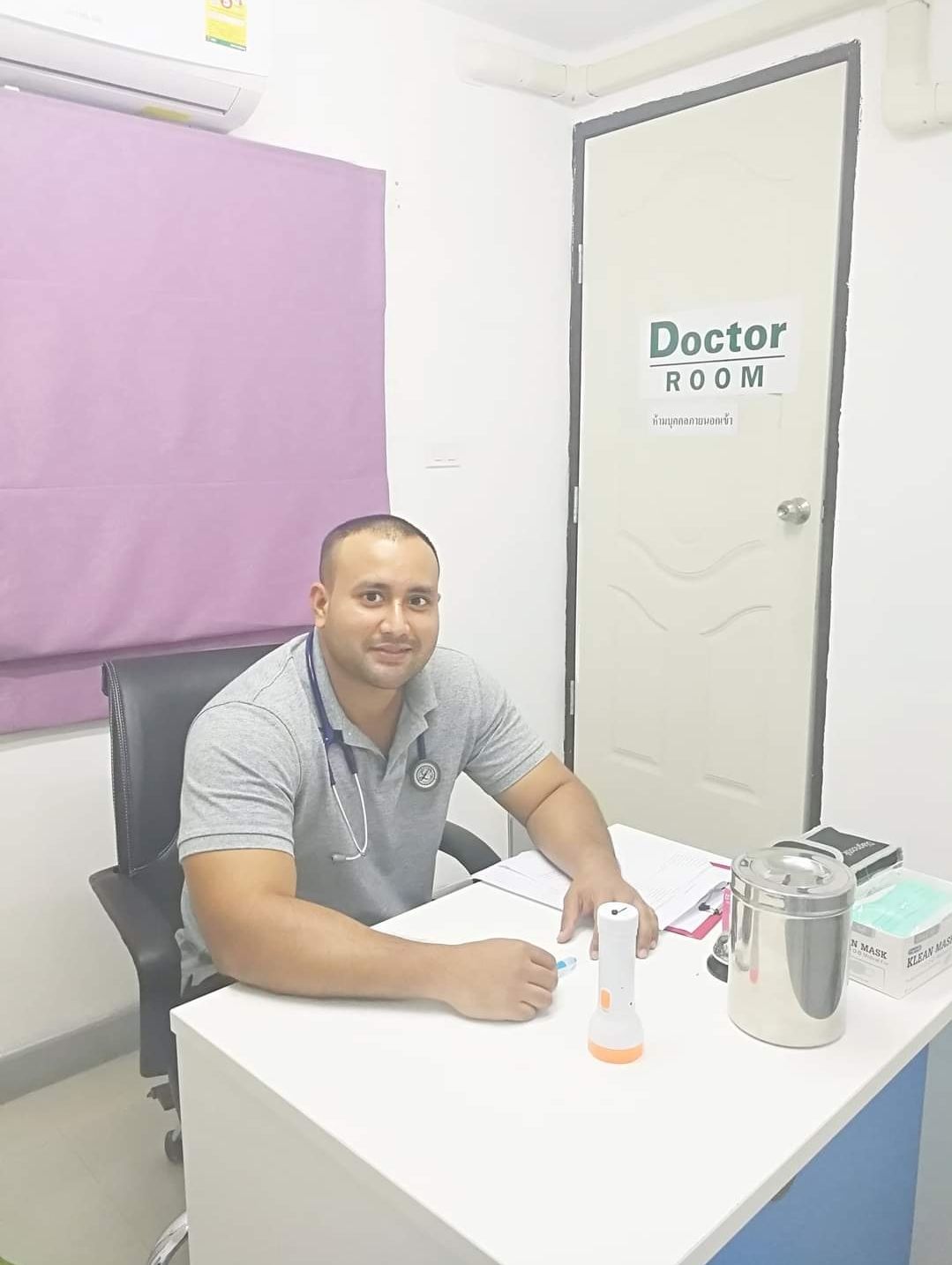
Dr. Ponlawat Pitsuwan is a physician at Doctor Bangkok, a private clinic in central Bangkok. He sees expats, residents, and medical tourists for general medicine, wellness consultations, and IV therapy. His focus is straightforward, evidence-based care delivered in plain language.