
Clinically reviewed by Dr. Ponlawat Pitsuwan, Physician, Doctor Bangkok. Last reviewed: July 2026
Breast cancer screening in Bangkok is straightforward, accessible, and available at private clinics without long waits. Most women benefit from a mammogram, an ultrasound, or both, depending on age, risk factors, and breast density. A brief consultation with an English-speaking GP is the best first step before any imaging, so you know you are getting the right test, not just the most convenient one.
If you are living in Bangkok and have not had a mammogram in a while, you are not alone. Many expats put this off because they are not sure how the system works here, which guidelines to follow, or where to find a clinic that speaks their language. Bangkok has strong private healthcare options and you do not need to wait months for an appointment.
What you do need is a clear sense of which screening is right for you, what the results mean, and how to follow up if something needs a closer look. That is what this article covers.

Who Should Get Screened and When
The honest answer is: it depends on your age, your personal history, and which country’s guidelines your doctor trained under.
The US Preventive Services Task Force, updated in 2024, recommends mammograms every two years starting at age 40. The American College of Radiology goes further and recommends yearly screening from 40. Many European guidelines start at 50. If you are an expat, you may have arrived in Bangkok with a different expectation.
My recommendation is simple. If you are 40 or over and have not had a mammogram in the last two years, it is time. If you have a family history of breast cancer or other risk factors, you may need to start earlier. A GP consultation will help you work out the right schedule for you personally.
Risk Factors That Change Your Screening Plan
Some women need to start earlier or screen more often. Knowing your own risk profile matters more than any general guideline.
If a mother or sister had breast cancer, especially before age 50, earlier screening is worth discussing with a doctor. Women who carry BRCA1 or BRCA2 gene mutations face significantly higher lifetime risk and usually need annual screening plus MRI, starting well before 40. Prior chest radiation, such as treatment for lymphoma, also changes the picture.
Long-term hormone replacement therapy (HRT) slightly increases risk, as does having dense breast tissue. None of these factors means you will develop cancer. They simply mean your screening plan needs more thought.

Mammogram or Ultrasound — Which Do You Actually Need?
This is the question I get most often. Here is the short version.
A mammogram is the clinical standard for breast cancer screening. It can detect tiny calcium deposits called microcalcifications, which can signal early cancer before any lump is felt. Modern 3D mammography produces clearer images than older machines. Ultrasound uses sound waves and no radiation. It is excellent at identifying masses and distinguishing solid lumps from fluid-filled cysts, but it is less reliable for detecting microcalcifications.
Ultrasound is usually used alongside mammography, not instead of it. For younger women or those with very dense breast tissue, it can find things a mammogram might miss. Most women over 40 should start with a mammogram. Ultrasound is often added in Bangkok, and the next section explains why.
Why Ultrasound Is Often Recommended Alongside Mammography in Bangkok
This is genuinely relevant to many patients I see here, so I want to explain it clearly.
Asian women, including Thai women and many expat women of Asian background, tend to have denser breast tissue. Younger women generally do too. Dense tissue can make it harder to spot small abnormalities on a mammogram. A cancer hidden within dense tissue and missed on mammogram is sometimes called an interval cancer.
Because of this, many doctors in Bangkok recommend a combined approach: mammogram plus ultrasound in the same visit. This is not overtreatment. It is clinically sensible for this population. Your mammogram report will include a breast density classification, and your doctor should review that with you.
Screening Guidelines — Which One Should You Follow?
UK guidelines say start at 50 with three-yearly screening. US guidelines say 40 with annual or biennial screening. Australian guidelines say 50. These differences are real and they cause genuine confusion for expats.
Here is my practical take. The most protective approach, supported by strong evidence from the American College of Radiology, is annual screening from age 40. That said, your individual risk profile should drive the decision. When I see patients for a breast screening consultation at Doctor Bangkok, I help them work out which schedule makes sense for their age and history. That conversation is more useful than following any one country’s guideline blindly.
Understanding Your Results — BI-RADS Scores Explained
Every mammogram report in Bangkok uses the same scoring system called BI-RADS (Breast Imaging Reporting and Data System). Here is what the numbers mean in plain terms.
BI-RADS 1 and 2 mean the scan is normal or shows clearly benign findings. No action needed beyond your regular schedule. BI-RADS 3 means probably benign, but a follow-up scan in around six months is recommended to confirm nothing has changed. This does not mean cancer.
BI-RADS 4 means the finding is suspicious and a biopsy should be considered. The range within BI-RADS 4 is wide, from mildly to more strongly suspicious, and a follow-up consultation is essential to understand what yours means. BI-RADS 5 is highly suspicious. BI-RADS 6 means a biopsy has already confirmed cancer and imaging is being used for treatment planning.
Receiving a result above BI-RADS 2 does not mean you have cancer. It means further investigation is needed. Please do not sit alone with that report. Bring it to a doctor who can explain it.
What Happens If Something Is Found
Most findings on screening are not cancer. But if something needs follow-up, here is what to expect.
A BI-RADS 3 result usually means a repeat scan in six months. For BI-RADS 4 or 5, the next step is typically a core needle biopsy, where a thin needle is used to take a small tissue sample from the area of concern. It is done under ultrasound guidance, uses local anaesthetic, and does not require a hospital stay.
If you are referred to a hospital for a biopsy, make sure your results will be communicated to you in English and that a follow-up appointment is already booked. This is a step many expats miss, and it causes unnecessary distress when a report arrives by email with no clinical context.
Cost, Insurance, and What to Expect at a Private Clinic in Bangkok
Private breast screening in Bangkok is significantly more affordable than in the US or UK private sector. A standalone digital mammogram at a private clinic costs less than at a large flagship hospital group. A combined mammogram and ultrasound package costs more but is still reasonable by international standards.
Most international health insurance policies cover preventive breast screening from age 40. Travel insurance policies vary, and some do not cover routine screening at all. Check your policy before booking. Doctor Bangkok provides itemised English-language receipts and clinical documentation suitable for insurance reimbursement submissions.
You do not need a referral letter to book imaging in Bangkok. However, arriving at an imaging centre without any clinical context and then receiving results you do not understand is a common problem. A GP consultation beforehand, and a follow-up afterward, makes the whole process far more useful. Our diagnostics and health screening page has more detail on what is available.
How to Get Started With Breast Screening in Bangkok as an Expat
The biggest mistake I see is patients booking a scan without speaking to a doctor first. They get a report, they do not understand it, and they end up anxious and unsure what to do next.
The better path is to start with a general health consultation. Our English-speaking GPs at Doctor Bangkok can review your personal and family history, confirm which screening is right for you, and provide a referral letter if imaging at a specialist centre is needed. We can also help you interpret results after the scan and coordinate any follow-up.
Bangkok’s private clinics are well-equipped and appointments move quickly. You do not need to wait. What you do need is a clear plan before you walk in.
Thinking about breast cancer screening in Bangkok and not sure where to start? Doctor Bangkok’s English-speaking GPs offer same-day health consultations for expats and medical tourists in central Bangkok, BTS accessible. We help you work out which screening suits your age and risk profile, provide referral documentation, and help you make sense of your results. Visit our diagnostics and health screening page or contact us at doctorbangkok.co.th to book your consultation.
Frequently Asked Questions
Should I get a mammogram, an ultrasound, or both?
For most women over 40, a mammogram is the right starting point. It detects early changes that ultrasound cannot. Ultrasound is often added if you have dense breast tissue, which is common in Asian women and younger women generally. A GP consultation will help you decide which combination makes sense for you.
What does my BI-RADS score mean?
BI-RADS 1 and 2 are normal or benign findings. BI-RADS 3 means probably benign but worth a repeat scan in six months. BI-RADS 4 is suspicious and a biopsy is usually recommended, though it does not confirm cancer. If you have received a result above 2 and are not sure what it means, speak to a doctor before you worry further.
I have dense breasts. Does that change what screening I need in Bangkok?
Yes, it can. Dense breast tissue reduces how clearly a mammogram shows abnormalities, so ultrasound is commonly added alongside it. Many Bangkok clinics offer combined packages for exactly this reason. Your mammogram report will include a density classification, and your doctor should review this with you.
How much does breast cancer screening cost in Bangkok, and will my insurance cover it?
Private breast screening in Bangkok is considerably more affordable than in the US or UK private sector. Most international health insurance policies cover preventive screening from age 40. Doctor Bangkok provides itemised English-language receipts suitable for reimbursement claims. Check your specific policy before your appointment.
I have not had a mammogram in years. Can I just walk in and get one in Bangkok?
You can book imaging quickly at most private clinics in Bangkok without a long wait. That said, a brief GP consultation first ensures you get the right test for your risk profile and that someone will help you understand your results rather than just hand you a report. Doctor Bangkok offers same-day consultations for exactly this situation.
Which screening guidelines should I follow as an expat in Bangkok?
Guidelines differ by country, which is genuinely confusing when you are living abroad. The most protective approach, supported by the American College of Radiology, is annual screening from age 40. Your personal risk factors should shape the decision. A GP consultation helps you land on the right schedule for you rather than defaulting to whichever guideline you happened to grow up with.
What is a diagnostic mammogram, and how is it different from a screening mammogram?
A screening mammogram is a routine check when you have no symptoms. A diagnostic mammogram is done when there is already a concern, such as a lump, nipple discharge, or an abnormal result from a previous scan. If you have symptoms, tell the clinic before booking so they arrange the right type of imaging.
Dr. Ponlawat Pitsuwan
Physician, Doctor Bangkok
a private medical clinic in central Bangkok. He sees expats, residents, and medical tourists for general health consultations, health screening coordination, and preventive care including cancer screening guidance. His focus is straightforward, evidence-based care delivered in plain language.
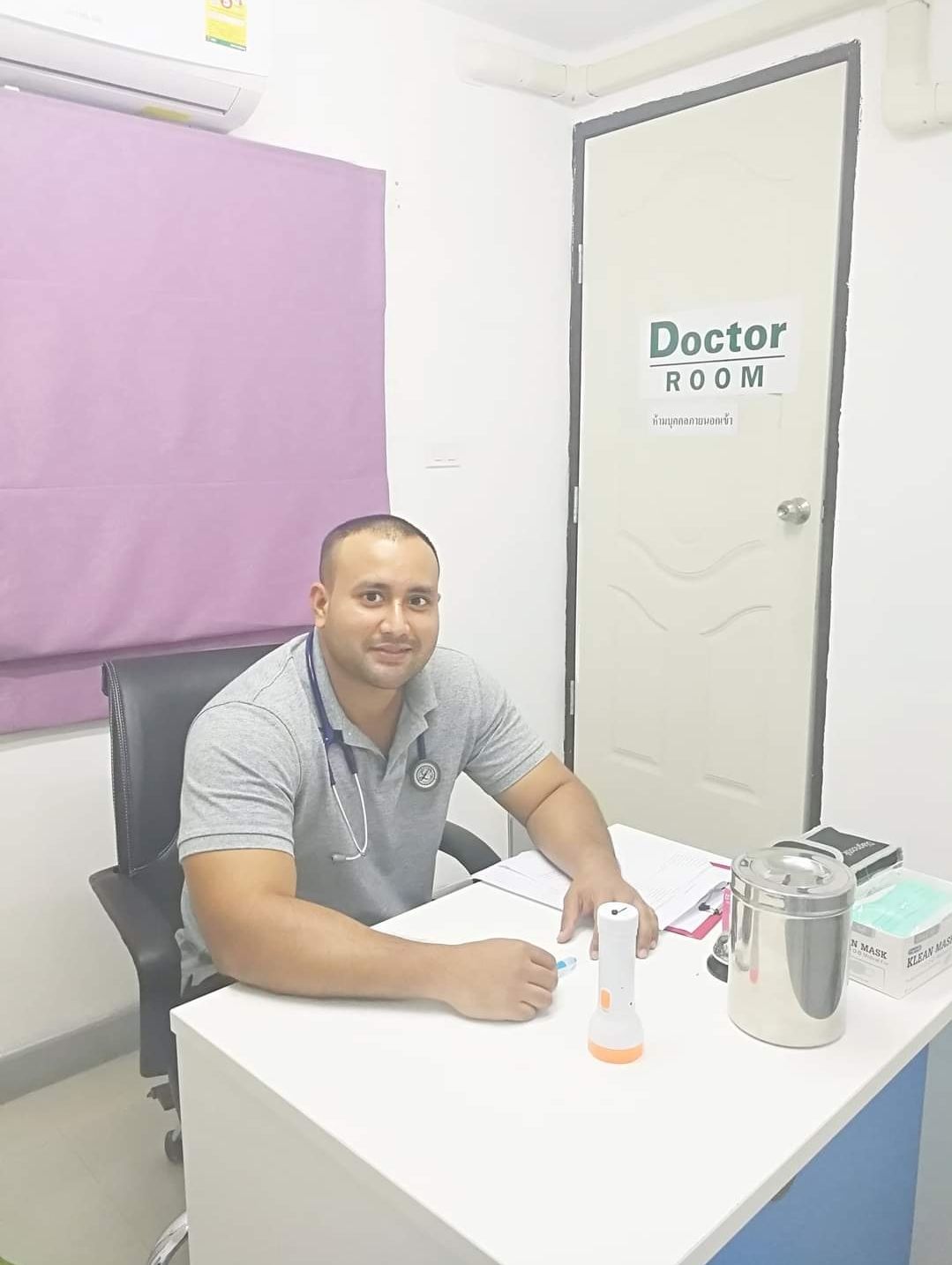
Dr. Ponlawat Pitsuwan is a physician at Doctor Bangkok, a private clinic in central Bangkok. He sees expats, residents, and medical tourists for general medicine, wellness consultations, and IV therapy. His focus is straightforward, evidence-based care delivered in plain language.