
Clinically reviewed by Dr. Ponlawat Pitsuwan, Physician, Doctor Bangkok.
Last reviewed: July 2026
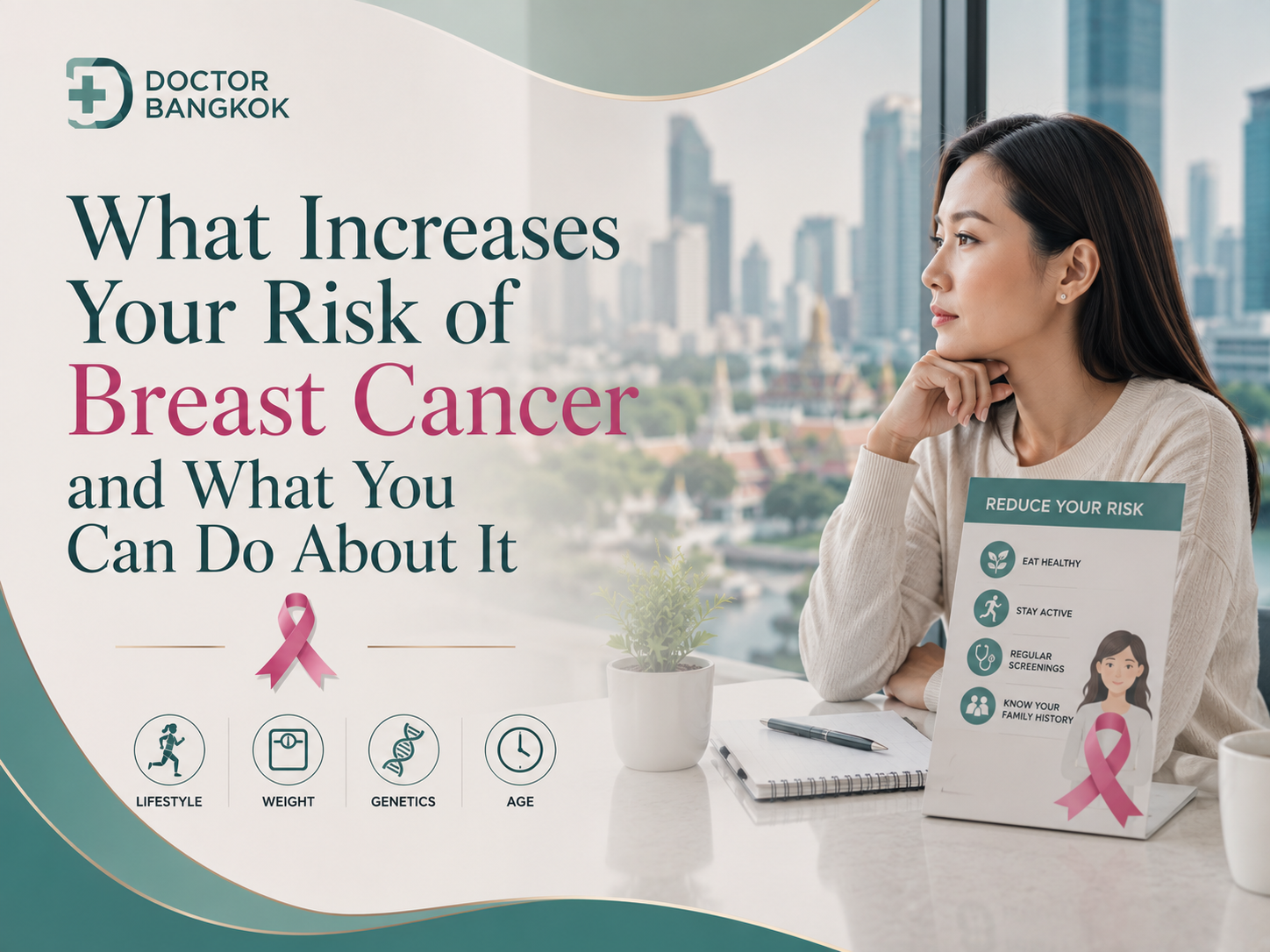
Breast cancer risk comes from a mix of factors you cannot change, like age and family history, and factors you can, like alcohol intake, weight, and when you start screening. Knowing where you stand lets you make smarter decisions. A personalised risk assessment is the right place to start, especially if you have not had one since moving to Bangkok.
If you have been living in Bangkok for a year or two and quietly wondering when you last had a breast exam, you are not alone. Most expat women I see have let this slide. Not out of carelessness, but because leaving your home country’s health system means losing the routine reminders. No GP to send you an annual letter. No nurse to flag it at a check-up. You simply fall through the gap.
The good news is that breast cancer is one of the most well-studied cancers we have. We know what raises risk, we know what lowers it, and we have reliable tools to work out where you personally sit. This article walks you through the key risk factors and what to actually do about them.

Risk Factors You Cannot Change
Some things are fixed. That does not mean they are not useful to know. They tell us how carefully we need to watch and how soon screening should start.
Age
The older you are, the higher your risk. Most breast cancer diagnoses happen after age 50. If you are in your 40s and have not started annual screening, now is the time. If you are younger but have other risk factors, that changes the calculation entirely.
Family History
Having a mother, sister, or daughter diagnosed with breast cancer raises your risk. The closer the relative and the younger they were at diagnosis, the more it matters. Two or more first-degree relatives with breast cancer, or a male relative with the disease, pushes risk higher still.
BRCA1 and BRCA2 Gene Mutations
These inherited gene changes significantly raise lifetime breast cancer risk, and ovarian cancer risk too. If your family history is strong, a genetic counsellor can advise whether testing makes sense. Women who carry one of these mutations typically start screening earlier and may need MRI in addition to mammography.
Reproductive History and Hormonal Exposure
Starting your period before age 12, or going through menopause after age 55, means more years of oestrogen exposure. Women who never had children, or who had their first child after 30, also have slightly higher risk. Breastfeeding is protective. The longer the total duration, the greater the benefit, based on strong evidence.
Risk Factors You Can Change
This is where your daily choices actually matter. These are not scare tactics. They are levers you can pull.
Alcohol
I want to be direct about this one. Alcohol is one of the most consistently evidenced modifiable risk factors for breast cancer. Every drink raises risk a little, and the effect builds over time. This applies regardless of what you drink, wine included. Regular social drinking is a big part of expat life in Bangkok, and it adds up. When I do a risk assessment, I always ask about alcohol intake honestly and without judgement, because it directly affects what I recommend.
Body Weight and Physical Activity
Being overweight after menopause raises breast cancer risk. Fat tissue produces oestrogen, so carrying extra weight means higher circulating hormone levels. Regular physical activity, even at moderate levels, reduces risk based on strong evidence. This is something many expats working long office hours in Bangkok could realistically address.
Hormone Replacement Therapy
Combination HRT, which contains both oestrogen and progestogen, is linked to a modest increase in breast cancer risk when used for more than a year. If you are using HRT or considering it, discuss this with your doctor as part of your overall risk picture.
Hormonal Contraception
Current use of hormonal contraceptives, including the pill, is linked to a small increase in breast cancer risk. The risk returns to baseline after stopping. For most women, the benefits of contraception outweigh this risk, but it is worth factoring in if you have other elevated risk factors.

Breast Density
This is a risk factor most women have never heard of until a radiologist mentions it after a mammogram.
Breast density refers to the ratio of glandular and fibrous tissue to fatty tissue in your breasts. Dense breast tissue is both a modest independent risk factor for breast cancer and a practical problem on mammography, because tumours and dense tissue can look similar on the image, making early detection harder.
In Bangkok, it is common clinical practice to combine mammography with breast ultrasound for women with denser tissue. Ultrasound picks up things mammography misses in this group. If you have never been told your breast density status, a risk assessment consultation is the right time to ask.
Personal Health History
If a previous breast biopsy showed certain cell changes, your risk is significantly higher than average. These changes are not cancers, but they are signals that need closer watching, not a wait-and-see approach. Prior radiation therapy to the chest, particularly during adolescence, also raises risk substantially.
Why Expats in Bangkok Face a Specific Risk Profile
I see this pattern regularly. Expat women arrive in Bangkok, settle into a new lifestyle, and routine health maintenance quietly stops.
Bangkok’s expat social culture involves more alcohol than many people had at home. Diets often shift toward higher-fat restaurant meals. Office work and traffic mean less daily movement. And without a GP who knows your history, nobody is prompting you to keep up with screening.
None of these things alone is alarming. Together, they can shift a woman from average risk to elevated risk without her realising it. That is the specific problem I see, and it is entirely addressable with one straightforward step: a proper risk assessment.
The Screening Gap Problem
Most women I see who are overdue for screening did not decide to skip it. They moved, got busy, and it never got rescheduled. Some have not had a mammogram or clinical breast exam in three or more years.
If that sounds familiar, the right first step is not necessarily booking a mammogram. It is a clinical consultation where we look at your full picture: age, family history, reproductive history, current medications, lifestyle, and any previous breast findings. That conversation tells us what screening you need and when. At Doctor Bangkok, that is exactly how we approach it.
For women over 40 with average risk, annual mammography is standard. For younger women with elevated risk factors, we may recommend starting earlier. For women with BRCA mutations, the pathway is different again.
Getting a Breast Cancer Risk Assessment in Bangkok
A breast cancer risk assessment is not a scan. It is a structured clinical conversation that produces a personalised risk profile.
One validated tool we use is the Gail Model. It takes into account your age, family history, reproductive history, previous biopsy results, and ethnicity. The output is an estimated risk percentage over five years and over a lifetime. This helps determine whether you fall into average, elevated, or high-risk categories, and what screening follows from that.
At Doctor Bangkok’s diagnostics service, we go through this in a single consultation. You leave with a clear picture of where you stand and a practical plan for what comes next. For women who have been moving through Bangkok’s healthcare system without a regular doctor, this is often the most useful appointment they have had in years.
What Happens After a Risk Assessment
If your risk is average, you follow a standard screening schedule based on your age. For most women over 40, that means annual or biennial mammography. We can arrange that, including combined mammography and ultrasound where breast density warrants it.
If your risk is elevated, we discuss more frequent screening, earlier start dates, or additional imaging. We also look at which modifiable factors can realistically be changed.
If your risk is high, because of a strong family history or a known gene mutation, the pathway is more intensive. That might include referral for genetic counselling, MRI screening, or specialist input. We make sure you know exactly what to do next and help you get there.
If you are a woman living in Bangkok and you cannot remember your last breast exam, do not put this off. Doctor Bangkok offers breast cancer risk assessments and diagnostics at our clinic in central Bangkok, accessible by BTS. We see expats, residents, and medical tourists, and our physicians speak English. Book your breast cancer risk assessment at doctorbangkok.co.th/diagnostics/ and leave with a clear, personalised plan.
FAQ
I have not had a breast exam or mammogram since moving to Bangkok. Where do I start?
Start with a risk assessment consultation, not a scan. A doctor reviews your personal history, family history, lifestyle, and reproductive history to work out what screening you actually need and how urgently. Doctor Bangkok’s diagnostics service offers exactly this, and it is the right first step if you have been out of the system for a while.
What is the Gail Model and will my doctor use it?
The Gail Model is a validated tool that estimates your breast cancer risk based on factors like age, family history, reproductive history, and previous biopsy results. It gives a five-year and lifetime risk estimate that helps classify you as average, elevated, or high risk. Yes, this is part of how we structure a risk assessment at Doctor Bangkok.
Does drinking alcohol really increase breast cancer risk?
Yes, and the evidence is strong. Risk increases with the amount you drink, and there is no clearly safe level. This is one of the most actionable modifiable risk factors, and it is something I ask about directly in every breast cancer risk consultation.
I have dense breasts. Does that change what screening I need in Bangkok?
It can. Dense breast tissue makes tumours harder to spot on a mammogram alone, and it is also a modest independent risk factor. Combining mammography with breast ultrasound is a common approach in Bangkok for women with denser tissue. Ask your doctor whether your breast density has been assessed and whether an ultrasound should be added.
My mother had breast cancer. When should I start screening?
General guidance recommends starting screening about ten years before the age your relative was diagnosed, or from age 30 to 40 depending on your full risk profile. Women with BRCA mutations may need to start from age 25 with MRI. A personalised risk assessment will give you a specific, evidence-based answer rather than a guess.
I am in my 30s with no family history. Do I need to think about this yet?
It is worth knowing your baseline risk. Women in their 30s with certain risk factors, including prior biopsies showing abnormal cells or regular alcohol intake combined with a sedentary lifestyle, may warrant earlier screening. A brief risk assessment tells you where you stand, and it is better to know now than to start thinking about it at 45.
Dr. Ponlawat Pitsuwan
Physician, Doctor Bangkok
a private medical clinic in central Bangkok. He sees expats, residents, and medical tourists for general health consultations, preventive care, and diagnostics including breast cancer risk assessment. His focus is straightforward, evidence-based care delivered in plain language.
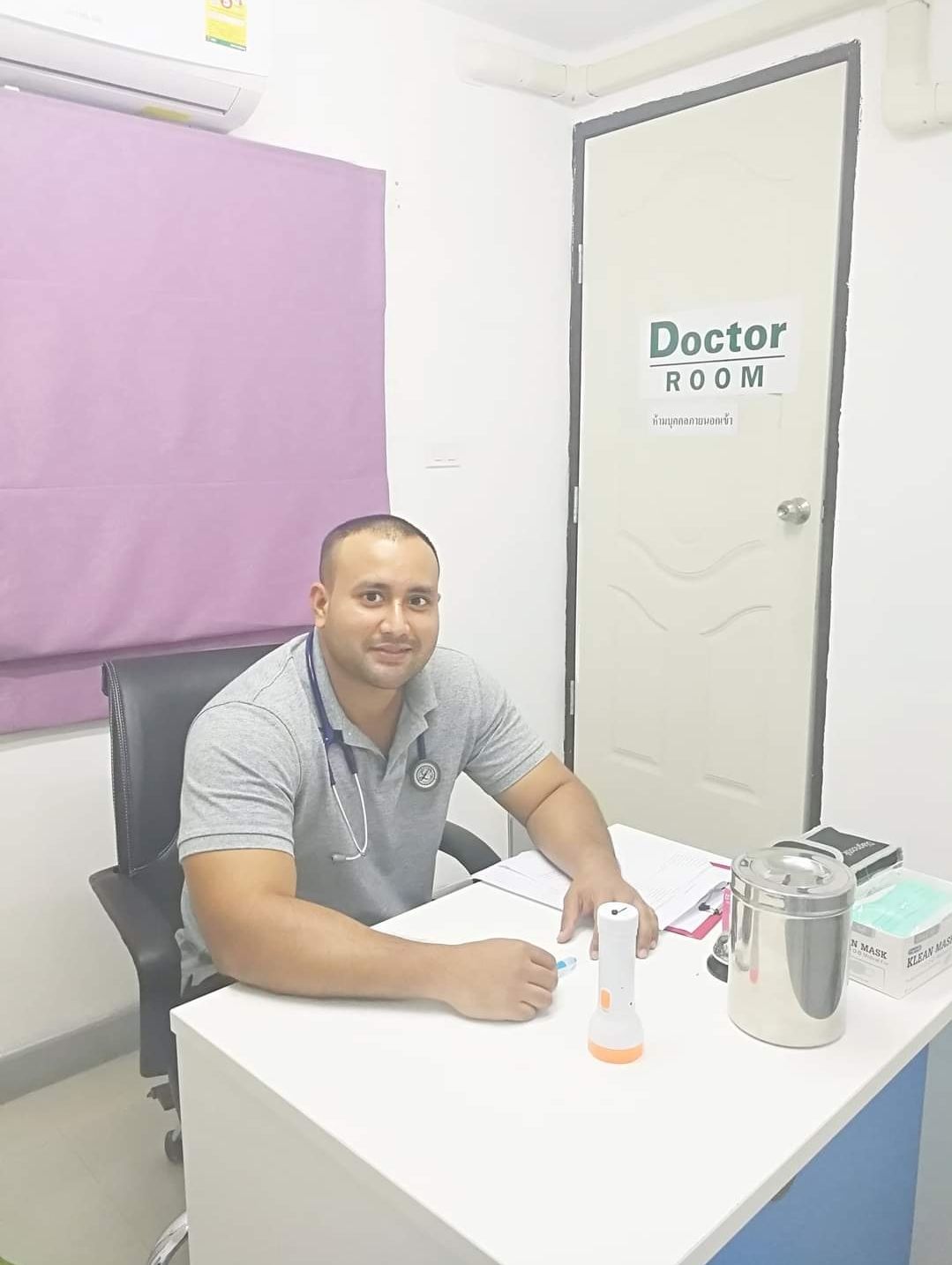
Dr. Ponlawat Pitsuwan is a physician at Doctor Bangkok, a private clinic in central Bangkok. He sees expats, residents, and medical tourists for general medicine, wellness consultations, and IV therapy. His focus is straightforward, evidence-based care delivered in plain language.