

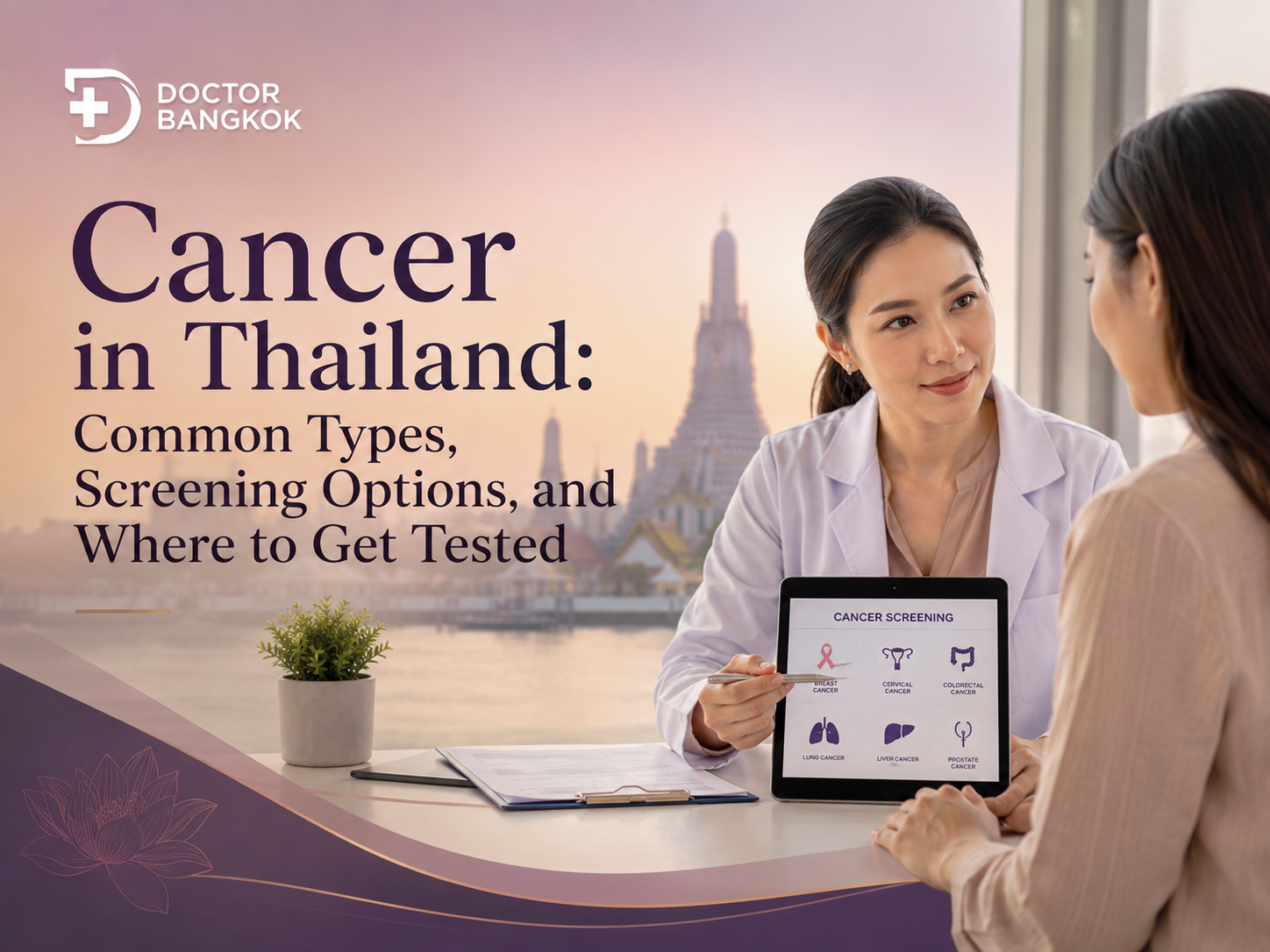
Clinically reviewed by Dr. Ponlawat Pitsuwan, Physician, Doctor Bangkok.
Last reviewed: July 2026
Cancer is a leading cause of death in Thailand, with liver, breast, lung, colorectal, and cervical cancers topping the list. Expats face some of the same risks they brought from home, plus a few that are unique to living here. The most important thing you can do is get screened regularly, starting with a GP consultation to work out which tests actually make sense for you.
If you have been living in Bangkok for a year or more and have not had a cancer screening, you are not alone. I see this constantly with expat patients. Life gets busy, you feel fine, and the healthcare system feels unfamiliar. So screening gets pushed back, then pushed back again. What I tell those patients is simple: the longer you wait, the less useful screening becomes.
Thailand has a cancer profile that is a bit different from what you may be used to back home. Some cancers are more common here than in Western countries. Some risks are tied to local diet and infections you may not have thought about. If you have been eating, drinking, and living here for several years, some of those risks apply to you too.

The Most Common Cancers in Thailand
The five cancers that cause the most deaths in Thailand are liver cancer, breast cancer, lung cancer, colorectal cancer, and cervical cancer. This mirrors patterns seen across much of Southeast Asia.
Liver cancer sits at the top of that list, and Thailand’s rate is notably higher than in most countries. That is not a coincidence. The others follow patterns that will be more familiar if you come from a Western country, though local risk factors still apply.
For expats, the key point is this: you bring your baseline risk with you. If colorectal cancer runs in your family, that risk did not disappear when you moved to Bangkok. Depending on how long you have lived here and how you live, you may have added new risk factors on top.
Liver Cancer and Cholangiocarcinoma — Thailand’s Most Distinctive Cancer Risk
This is the one that surprises most of my expat patients. Thailand has one of the highest rates of cholangiocarcinoma, which is bile duct cancer, in the world. The risk is tied to a tiny parasite found in undercooked freshwater fish, common in some traditional northeastern Thai dishes. People who eat these dishes regularly over many years can develop a chronic infection that raises bile duct cancer risk considerably. This is not a common risk for expats who stick to cooked food, but it is worth knowing if you eat locally and adventurously.
Hepatitis B is a separate but equally important factor. Thailand has a meaningful rate of hepatitis B in the general population, and chronic infection raises liver cancer risk substantially. If you have never been tested or never completed your vaccination course, that is something to address. It is one of the first things I check when a new expat patient comes in for a health review.

Cancer Risks That May Be Higher for You Living Here
Moving to Thailand does not automatically raise your cancer risk, but it can shift it depending on your lifestyle here.
Alcohol is widely available and social drinking is part of expat life for many people. Regular heavy use raises the risk of liver, colorectal, and breast cancer. If your drinking has increased since moving here, that is worth acknowledging.
Air quality in Bangkok is a real concern. Prolonged exposure to fine particulate pollution, which Bangkok sees during certain months, is linked to higher lung cancer risk over time. Dietary patterns shift when you live abroad too. Some expats eat more processed food, some eat more local street food. Both carry their own risk profiles for colorectal and gastric cancer. None of this means illness is inevitable, but it does mean a personalised screening conversation is more useful than a generic package.
How Often Should Expats in Bangkok Get Screened?
There is no single answer. Screening depends on your age, sex, family history, and lifestyle. Here is a rough framework I use with expat patients.
In your 30s, with no significant family history, the priorities are cervical screening for women, hepatitis B status for everyone, and a baseline GP conversation about your personal risk. Make sure your HPV vaccination is complete if it is not.
In your 40s, add a mammogram for women. Men should start thinking about colorectal screening. A cancer marker blood panel as part of a broader health check is also worth considering at this stage.
From 50 onwards, colorectal screening becomes a priority for everyone. PSA testing for prostate cancer is worth discussing if you are a man in this age group. Lung cancer screening with a low-dose CT scan is recommended for long-term or heavy smokers. Liver ultrasound and a blood marker called AFP is something I recommend for anyone with hepatitis B or a history of heavy alcohol use.
Cancer Screening Tests Available in Bangkok
Bangkok has excellent diagnostic facilities. The question is not whether the tests exist here. The question is which ones you actually need.
Blood-based tumour marker panels are widely available and can be done at a private clinic with same-day or next-day results. Common markers include CEA for colorectal and lung cancer, CA-125 for ovarian cancer, PSA for prostate cancer, AFP for liver cancer, and CA 19-9 for pancreatic and bile duct cancer. These are not diagnostic on their own, but they are a useful part of a broader assessment. You can find out about early cancer detection tests in Thailand through Doctor Bangkok’s diagnostics service as a starting point.
Cervical screening is available at most private clinics. A Pap smear or HPV DNA test takes about ten minutes, and results come back within a few days. Women who have not had one in the last three to five years should book this soon.
Mammography, colonoscopy, and low-dose CT scans require referral to a hospital radiology or endoscopy department. Doctor Bangkok can arrange these referrals and provide documentation in English, which makes coordinating with larger hospital networks much smoother. Abdominal ultrasound for liver and gallbladder assessment is available quickly at most private hospitals and clinics in Bangkok.
Start With a GP, Not a Package
Every competitor in this space sells a screening package upfront. A package gives you a fixed set of tests regardless of who you are. A GP consultation gives you a plan based on your actual history.
Spending twenty minutes with a doctor first means you do not waste money on tests that are not relevant to you, and you do not miss tests that are. At Doctor Bangkok, we see expats who have bought a package elsewhere and have no idea what the results mean or what to do next. Starting with a GP visit, explaining your background, family history, and lifestyle, and then building a targeted test list, is the approach I recommend every time.
What Happens If a Result Comes Back Abnormal?
This is the question nobody talks about, and it causes the most anxiety.
An abnormal result is not a diagnosis. It means we need to look further. Depending on which test flagged and what it showed, the next step might be a specialist referral, repeat testing, additional imaging, or a biopsy.
What I tell patients is this: an abnormal screening result is information. It is far better to have that information early than late. If something comes back that needs follow-up, we will explain exactly what it means, write a referral letter in English, and help you navigate the specialist system in Bangkok. If you need to coordinate care with doctors back home, we can provide documentation that makes that straightforward.
Does Your International Health Insurance Cover This?
Travel insurance almost never covers preventive cancer screening. It is designed for emergencies, not elective health checks.
International health insurance, which many long-stay expats hold through employers or private plans, is a different matter. Many policies include a preventive care or health screening benefit that covers annual check-ups, cancer marker panels, and sometimes imaging. Check your policy for those terms specifically.
Doctor Bangkok provides itemised receipts and clinical documentation that meet the requirements for insurance reimbursement claims. If you are unsure whether your policy covers a specific test, our team can advise on how to frame the request to your insurer.
If you have not had a cancer screening in years, or you are not sure where to start, Doctor Bangkok offers GP consultations and diagnostic testing in central Bangkok. English-speaking physicians, no appointment needed, BTS accessible. We will help you work out which tests make sense for your age, lifestyle, and history, and get them arranged without the confusion. Visit doctorbangkok.co.th to book or walk in.
Frequently Asked Questions
Which cancers are most common in Thailand and are expats at higher risk?
The five most common in Thailand are liver cancer, breast cancer, lung cancer, colorectal cancer, and cervical cancer. Expats are not at elevated liver fluke risk unless they regularly eat undercooked freshwater fish, but hepatitis B exposure and alcohol use are relevant for everyone living here. Your risk for breast, colorectal, and cervical cancer depends largely on your personal history and how long you have gone without screening.
What cancer screening tests can I get at a private clinic in Bangkok?
Blood-based tumour marker panels, Pap smears, HPV DNA tests, hepatitis B testing, and abdominal ultrasound are available at clinics like Doctor Bangkok. Mammography, colonoscopy, and low-dose CT scans require hospital facilities, but a GP can arrange the referral and documentation. Blood results are typically available the same day or within 24 to 48 hours.
Will my international health insurance cover cancer screening in Bangkok?
Travel insurance rarely covers preventive screening. International health insurance often does, particularly if your policy includes a preventive care or health screening benefit. Doctor Bangkok provides itemised receipts suitable for reimbursement claims, so keep your documentation from the visit.
How do I know which cancer screening tests are right for my age?
It depends on your age, sex, family history, and lifestyle, which is exactly why starting with a GP consultation makes more sense than a fixed package. Generally, cervical screening from age 25, mammography from 40 to 50, colorectal screening from 45 to 50, and a PSA discussion for men from 50 are reasonable starting points. A doctor can tailor this to you specifically.
What should I do if my cancer screening result comes back abnormal in Bangkok?
Do not panic. An abnormal result means further investigation is needed, not that you have cancer. The next step depends entirely on which test flagged and what it showed. At Doctor Bangkok, we will explain the result clearly, arrange the appropriate specialist referral, and provide documentation in English whether you continue care here or coordinate with doctors at home.
Is it worth getting cancer screening even if I feel completely well?
Yes, and this is the whole point. Most early-stage cancers produce no symptoms at all. By the time you feel something, the disease is often more advanced and harder to treat. Screening finds problems before they become serious, which is when outcomes are generally best.
Do I need an appointment for cancer screening at Doctor Bangkok?
No appointment is needed. You can walk in, speak with an English-speaking physician, and have blood tests done the same visit. If you need imaging or procedures that require hospital facilities, we will arrange the referral for you.
Dr. Ponlawat Pitsuwan
Physician, Doctor Bangkok
a private medical clinic in central Bangkok. He sees expats, residents, and medical tourists for preventive health checks, cancer screening consultations, and general medicine. His focus is straightforward, evidence-based care delivered in plain language.
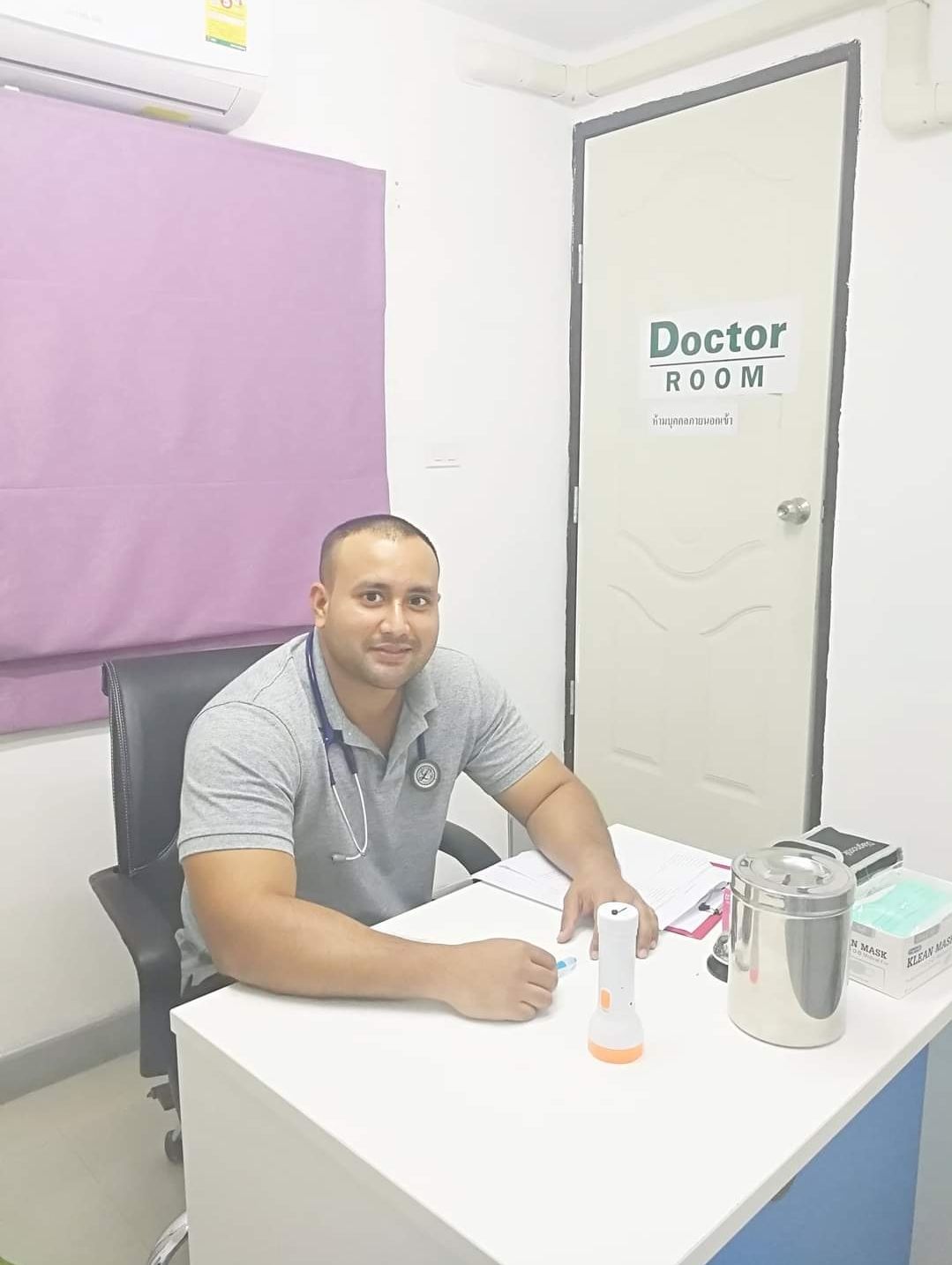
Dr. Ponlawat Pitsuwan is a physician at Doctor Bangkok, a private clinic in central Bangkok. He sees expats, residents, and medical tourists for general medicine, wellness consultations, and IV therapy. His focus is straightforward, evidence-based care delivered in plain language.