
Clinically reviewed by Dr. Ponlawat Pitsuwan, Physician, Doctor Bangkok. Last reviewed: July 2026
Cancer screening in Bangkok is fast, affordable, and available to expats and visitors without Thai health insurance. Private clinics offer blood-based cancer panels, imaging, and GP-led consultations in English. The right tests depend on your age, sex, and personal risk factors. A GP consultation is the best first step to work out exactly what you need.
If you have been living in Bangkok for a year or two and have not had a single cancer check-up, you are not alone. I see this constantly. Expats get busy, they do not have a home doctor here yet, and preventive health keeps getting pushed back. Some assume their home country’s health system will catch them up when they return. Most of the time, that does not happen.
Bangkok is genuinely one of the easiest cities in the world to get screened. Private clinics here offer internationally recognised tests at a fraction of what you would pay in the UK, US, or Australia, with fast results and English-speaking doctors. This guide covers which tests matter, at what age, and how to get started.

Know Your Risk Before You Book Anything
The biggest mistake I see is people booking a package without knowing whether it matches their actual risk. A 35-year-old non-smoker with no family history needs very different tests than a 52-year-old whose parent had colon cancer.
Before you call any clinic, think through three things: your age, your family history, and your lifestyle. Smoking, alcohol use, obesity, and long-term hepatitis B infection all shift your screening needs significantly. A GP consultation is designed to sort this out, and it is where most people should start.
At Doctor Bangkok, you sit down with a doctor, we go through your history, and we build a plan that fits you, not a generic package.
Thailand-Specific Cancer Risks Expats Often Overlook
Thailand has a higher rate of hepatitis B infection than most Western countries. Chronic hepatitis B is one of the leading causes of liver cancer. Many expats have never been tested for it. If you do not know your hepatitis B status and you have been living here for years, that is the first thing to check.
Cervical cancer rates in Southeast Asia remain higher than in many high-income countries. If you are a woman who has not had a Pap smear or HPV test in the last few years, that needs to happen now.
For expats spending significant time in northern or northeastern Thailand: liver fluke exposure through raw freshwater fish is a genuine risk factor for bile duct cancer. If that applies to you, mention it to your doctor.

Cancer Screening by Type: Which Test, at What Age, How Often
These are baseline recommendations based on current evidence. Your personal history may mean you need to start earlier or screen more often.
| Cancer Type | Recommended Test | Starting Age | Frequency |
|---|---|---|---|
| Colorectal | Colonoscopy or stool-based test | 45 (earlier if family history) | Colonoscopy every 10 years; stool test annually |
| Breast | Mammogram | 40 to 50 depending on risk | Annually or every 2 years |
| Cervical | Pap smear; HPV co-test from age 30 | 21 | Every 3 years (ages 21 to 29); every 5 years with HPV co-test (ages 30 to 65) |
| Lung | Low-dose CT scan | 50, current or former heavy smoker | Annually |
| Prostate | PSA blood test (discuss with doctor first) | 50 (45 if higher risk) | Annually if testing |
| Liver | Ultrasound plus AFP blood test | Any age if chronic hepatitis B positive | Every 6 months |
| Skin | Clinical skin exam | Any age, especially with high UV exposure | Annually |
A note on PSA testing: it can find prostate cancer early, but it also picks up cancers that would never have caused problems. Talk to your doctor before deciding. Low-dose CT for lung cancer is only for people with a significant smoking history. It is not a general population test.
The Tests Bangkok Clinics Actually Offer
Everything in that table is available in Bangkok, mostly at a cost well below what you would pay in your home country.
Blood-based cancer panels, including tumour markers such as PSA, AFP, CA-125, CA 19-9, and CEA, are available at most private clinics including Doctor Bangkok. Results typically come back within a day or two. These markers are most useful in specific clinical contexts. A doctor needs to interpret them in context, not as standalone results.
For imaging, digital mammography, colonoscopy, and low-dose CT scanning are all widely available at Bangkok’s private hospitals. Your GP can order blood work directly and refer you for imaging if needed. You do not need to navigate the hospital system alone.
Starting Your Screening: What a GP Consultation Actually Covers
If you have not had any cancer screening in the last few years, start with a GP consultation, not a package.
At Doctor Bangkok, we review your full medical history and family history of cancer. We talk through your lifestyle, your diet, your alcohol use, and whether you smoke or used to. From there we decide together which tests are worth doing for you right now.
We run blood panels in-house and refer you for imaging at a Bangkok hospital when needed. We help you read your results and tell you clearly what happens next. For expats without a regular doctor in Bangkok, this kind of continuity matters. You can book through our health check and diagnostics page and we will take it from there.
How Often Should You Get Screened?
Once you have had a baseline check, the question becomes: how often do you come back?
For most people with no significant findings and average risk, a full review every one to two years is reasonable. A colonoscopy that comes back normal does not need repeating for ten years. A Pap smear with a normal HPV co-test can be left for five years. A blood-based cancer marker panel and general health screen once a year is not excessive if you are over 40 and living abroad without regular access to a home GP.
If anything comes back abnormal, that schedule changes immediately.
What Happens If a Result Is Abnormal
An abnormal result is not a cancer diagnosis. I want to be clear about that. It means something needs a closer look.
Most abnormal findings on screening turn out to be benign, need a repeat test in a few months, or require a specialist opinion. Your GP reviews the result with you, explains what it likely means, and refers you to the right person. In Bangkok that might be a gastroenterologist, a gynaecologist, or an oncologist at one of the major private hospitals.
What I tell patients is this: do not try to interpret an abnormal result alone at midnight. Come back in. We sit down, go through it together, and work out the next step.
Cancer Screening and Insurance in Bangkok
Many expats assume that because they are outside their home country, their insurance will not cover cancer screening. That is often not true.
Most international health insurance plans include preventive care coverage, which often extends to cancer screening. Private clinics in Bangkok can provide itemised English-language receipts and formal medical reports that meet most international insurance requirements.
Before you book, check your policy for preventive care or health screening coverage. When you come to Doctor Bangkok, let us know at the start of your visit that you need insurance documentation. We will make sure the paperwork is done correctly so your reimbursement claim goes through without issues. You can find out more about what we offer through our cancer screening services page.
Ready to get your cancer screening sorted in Bangkok? Doctor Bangkok offers GP-led health check consultations and cancer screening blood panels in central Bangkok, with English-speaking doctors and fast results. Whether you need a full review or just want to know where to start, book through our cancer screening in Bangkok page or walk in during clinic hours. BTS accessible, no referral needed.
Frequently Asked Questions
Which cancer screenings should expats in Bangkok prioritise?
The most evidence-backed screenings for most adults are colorectal cancer testing from age 45, mammograms from age 40 to 50 for women, cervical screening via Pap smear and HPV co-test, and a lung low-dose CT scan for current or former heavy smokers from age 50. In Bangkok specifically, I also recommend checking hepatitis B status for anyone who has not done so, given Thailand’s higher prevalence and the link to liver cancer. A GP consultation is the right way to personalise this list for your age and history.
How often should I get a cancer screening in Bangkok?
It depends on the test and your risk level. A colonoscopy every ten years is standard if results are normal; a Pap smear with HPV co-test every five years from age 30; a mammogram annually or every two years. Blood-based cancer marker panels and a general health review once a year is reasonable for most adults over 40 living abroad. Your doctor should set your personal schedule based on your results and risk factors.
Can I get cancer screening in Bangkok without Thai health insurance?
Yes. Private clinics and hospitals in Bangkok work on a self-pay or international insurance basis. Most international health insurance policies cover preventive cancer screening. Doctor Bangkok provides itemised English-language receipts and formal medical reports suitable for insurance reimbursement claims. Check your own policy for preventive care coverage before you book.
Is Bangkok a good place to get cancer screening done?
It is one of the most practical places for it. Private hospitals here offer internationally accredited diagnostics including digital mammography, colonoscopy, low-dose CT, and HPV co-testing, with fast turnaround and English-speaking doctors. Wait times are short compared to public systems in the UK or Australia, and costs are significantly lower than most Western countries. For expats and medical tourists, the combination of access and affordability is hard to match.
What should I do if my cancer screening result comes back abnormal?
Do not panic, and do not try to interpret it alone online. An abnormal result usually means a closer look is needed, not that you have cancer. Come back to your GP, go through the result together, and work out the next step. That might be a repeat test, a specialist referral, or additional imaging. Having an English-speaking GP in Bangkok you can return to makes this process far less stressful.
Do I need a referral to get cancer screening at a private clinic in Bangkok?
No. Private clinics in Bangkok, including Doctor Bangkok, do not require a referral. You can walk in, book a consultation, and start the process the same day. For imaging such as colonoscopy or low-dose CT, your GP at the clinic will refer you to the right facility and explain what to expect.
Dr. Ponlawat Pitsuwan
Physician, Doctor Bangkok
a private medical clinic in central Bangkok. He sees expats, residents, and medical tourists for preventive health consultations, cancer screening, general medical care, and health check-ups. His focus is straightforward, evidence-based care delivered in plain language.
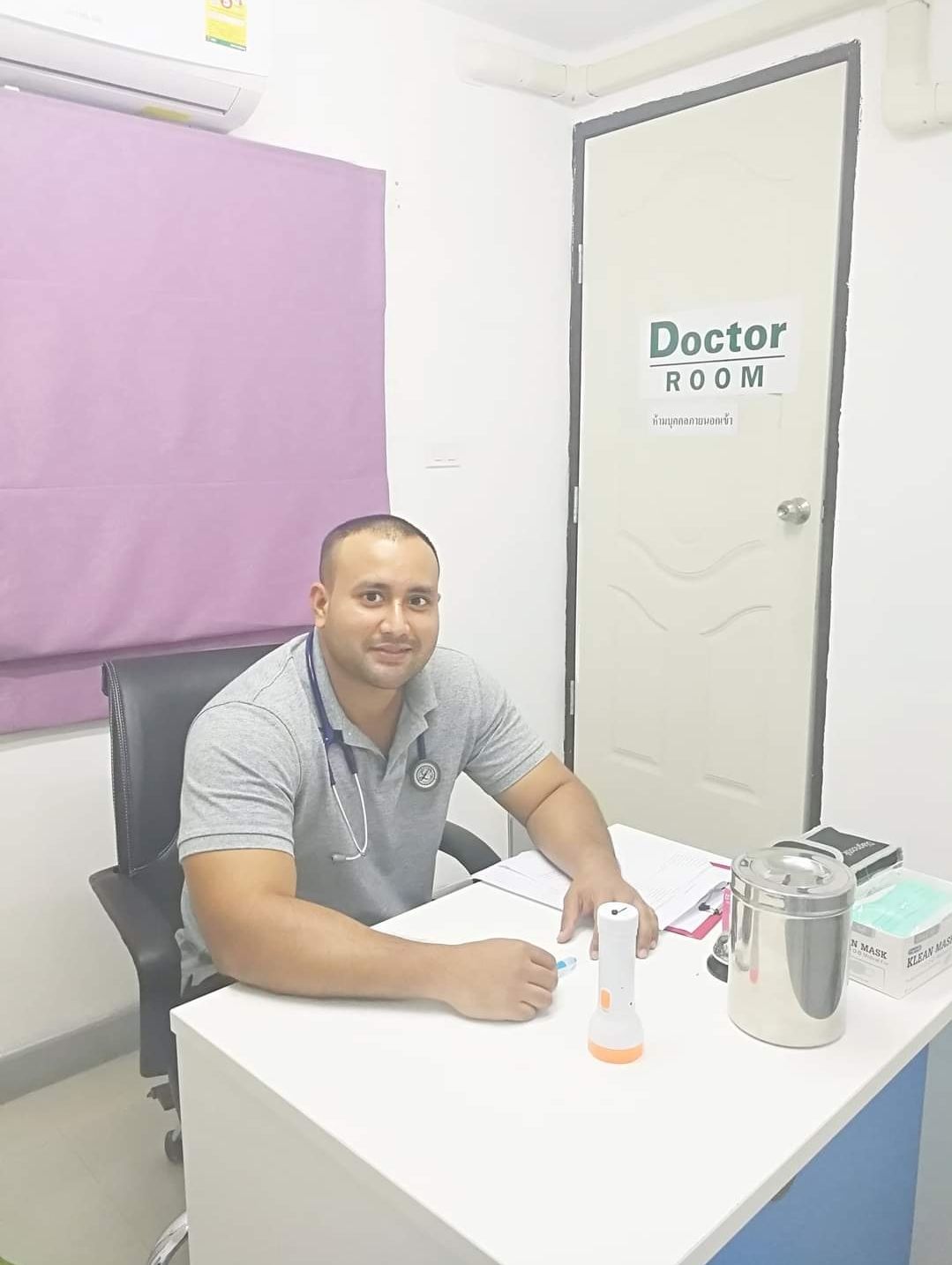
Dr. Ponlawat Pitsuwan is a physician at Doctor Bangkok, a private clinic in central Bangkok. He sees expats, residents, and medical tourists for general medicine, wellness consultations, and IV therapy. His focus is straightforward, evidence-based care delivered in plain language.