

Clinically reviewed by Dr. Ponlawat Pitsuwan, Physician, Doctor Bangkok. Last reviewed: July 2026
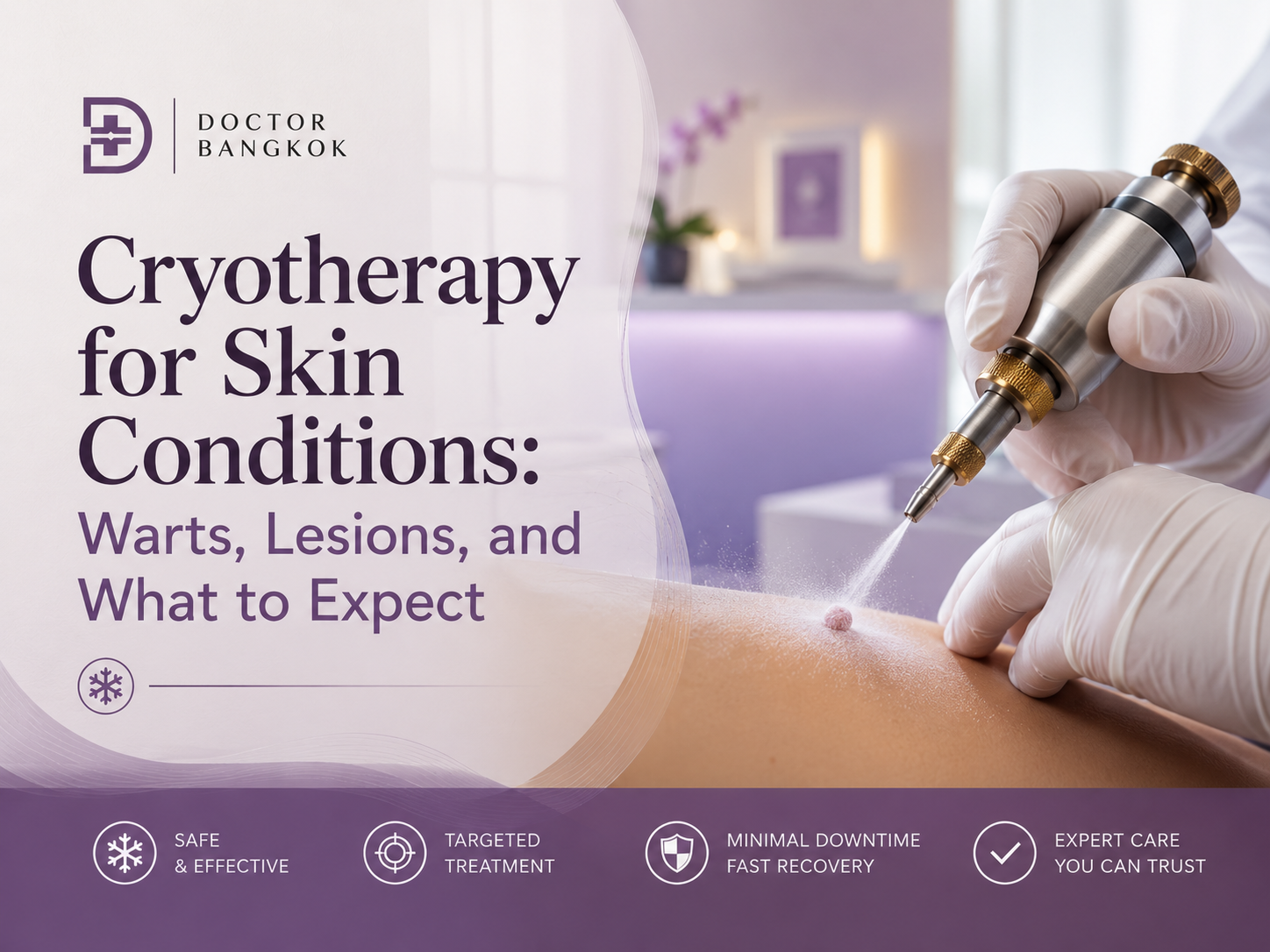
Cryotherapy uses liquid nitrogen to freeze and destroy wart tissue. Most warts need one to four treatment sessions, spaced two to three weeks apart. The procedure takes a few minutes, no referral is needed at a private clinic in Bangkok, and you can usually be assessed and treated in the same visit.
You have noticed a wart. Maybe it appeared on your foot a few weeks after a hotel pool visit. Maybe you have had one on your hand for months and the over-the-counter freezing kit from the pharmacy is not shifting it. Either way, you are wondering whether it is time to see someone, and whether cryotherapy is the right move.
The short answer is: professional cryotherapy works better than home treatment, and most warts can be treated the same day you come in. This guide covers what to expect, what the real risks are, and what the treatment cannot do. That last part is something most clinic pages quietly skip over.

Types of Warts Suitable for Cryotherapy — and Which Are Not
Most common warts respond well to cryotherapy. Common warts, known clinically as verruca vulgaris, usually appear on the hands and fingers. They have a rough, raised surface and are almost always a good candidate for freezing. Plantar warts grow on the sole of the foot and can be painful to walk on. They often need more sessions because they grow deeper into the skin.
Flat warts tend to appear in clusters on the face, neck, or forearms. They respond to cryotherapy but require a careful approach, because pigmentation changes on the face are more visible. Periungual warts grow around the nail and can be tricky to treat. Filiform warts, the thin finger-like ones that often appear around the eye or mouth, are small but can spread quickly.
Some lesions that look like warts are not warts at all. A quick assessment rules out anything that needs a different approach. Do not freeze a lesion at home if it has not been examined by a doctor.
How Cryotherapy Works
Liquid nitrogen is applied directly to the wart using a cotton swab or spray tip. You will feel a sharp sting, which fades within a minute or two after the application stops. The whole thing usually takes a few minutes.
In the days that follow, your body clears away the treated tissue. A blister often forms within 24 hours. This is normal and expected. It usually flattens and dries over the following week, and the skin peels away on its own.
Do not pop the blister. Keep the area clean and dry. Your doctor will tell you when to come back, typically two to three weeks later, to check whether another session is needed.

Cryotherapy vs. Other Wart Treatments
Salicylic acid is the main alternative. It softens and strips the wart layer by layer over weeks to months. It is painless and available over the counter. Some doctors recommend using it to thin the wart before a cryotherapy session, and there is moderate clinical evidence this combination helps with thick plantar warts.
Electrocautery, which uses electrical current to burn the wart away, is effective but tends to cause more discomfort and a longer healing time. Surgical excision is rarely used for common warts because scarring risk is higher.
If you have tried over-the-counter treatments for more than two months without results, cryotherapy is usually the next logical step. Stubborn plantar warts rarely respond well to home treatment alone.
What to Expect at Your Appointment
The doctor will examine the lesion first. Once confirmed as a wart, the area is cleaned and liquid nitrogen is applied. Most patients describe it as a rubber band snap followed by a burning feeling that lasts two to three minutes.
After treatment, the area may be red and tender. A blister typically forms within a day. It flattens and dries over the following week, and the treated skin peels away naturally. For most warts, a second look in two to three weeks tells us whether another session is needed. Some warts clear completely after one treatment.
Risks, Side Effects, and Who Should Be Cautious
The most common side effect is temporary skin lightening or darkening around the treated area. This matters more on darker skin tones, which are common across Bangkok’s patient population. In most cases it fades over weeks to months, though it can occasionally last longer. Choosing a clinician experienced with diverse skin types reduces this risk.
Scarring is uncommon with well-performed cryotherapy but is possible, particularly with repeated aggressive treatments or if the blister becomes infected. Infection risk is low if the area is kept clean. Temporary numbness can occur near fingers and toes.
Some people should not have cryotherapy. If you have Raynaud’s disease, cold urticaria, or cryoglobulinemia, the treatment is not appropriate for you. If you have diabetes or poor circulation in your feet, plantar wart treatment needs extra care. Tell your doctor about any of these before treatment starts.
Aftercare in Bangkok’s Climate
Bangkok’s heat and humidity create specific aftercare challenges. Sweating keeps the treated area damp, which slows healing and raises infection risk. Keep the area as dry as possible for the first 48 hours.
If your wart is on the foot, avoid public pools, wet markets, and walking barefoot until the skin has healed. A waterproof dressing during the day protects the area well, especially when wearing open sandals.
The treated skin is more sensitive to UV while healing, and Bangkok sun is strong year-round. If the wart is on an exposed area like the hand or face, cover it or apply SPF until the skin has fully settled. Skipping this step makes pigmentation changes more likely.
Does Cryotherapy Get Rid of HPV?
This is the question most patients do not think to ask. Cryotherapy destroys the visible wart. It does not eliminate HPV, human papillomavirus, from your body. The virus can remain in surrounding skin cells that look completely normal, which is why warts sometimes come back weeks or months after a treatment that appeared successful.
Recurrence does not mean the treatment failed. It means the virus was present beyond the treated area. The best response is to come back and treat any new lesions early, before they grow or spread.
There is no treatment that clears HPV from the body the way antibiotics clear a bacterial infection. For most people, the immune system suppresses the virus on its own over months to a couple of years.
Getting Cryotherapy for Warts in Bangkok
You do not need a GP referral to get cryotherapy at a private clinic in Bangkok. You can walk in, be assessed, and in most cases be treated the same day. This surprises a lot of expats who are used to waiting weeks for a dermatology appointment back home.
At Doctor Bangkok, the clinic is in central Bangkok, a short walk from BTS, and all consultations are with English-speaking physicians. If you are a tourist who has noticed a wart and wants it dealt with before flying home, same-day treatment is usually possible. If you are a long-term resident with a stubborn or recurring wart, we can plan a course of treatment over several sessions.
The doctor will confirm whether your lesion is a wart, whether cryotherapy suits your skin type, and what a realistic outcome looks like. We also treat a broader range of skin lesions beyond warts, including seborrhoeic keratoses and skin tags, where cryotherapy is often the fastest and simplest option. See our skin lesion assessment and treatment page for more on what we treat.
For expats and visitors managing their health while abroad, Doctor Bangkok also offers travel health services covering vaccinations, dengue assessment, and general consultation. You can often sort multiple things in a single visit.
Thinking about cryotherapy for a wart or skin lesion in Bangkok? Doctor Bangkok offers same-day assessment and treatment at our central Bangkok clinic. English-speaking physicians, no referral needed, BTS accessible. Book your appointment at doctorbangkok.co.th or walk in during clinic hours. Visit our cryotherapy and skin lesion service page to find out more.
FAQ
How many cryotherapy sessions will I need to remove a wart?
Most warts clear in one to four sessions, spaced two to three weeks apart. Plantar warts and larger lesions usually need more sessions because they grow deeper. Your doctor will give you a realistic estimate after examining the wart at your first visit.
Does cryotherapy hurt, and will I need anaesthetic?
There is a sharp stinging sensation during the freeze and a burning feeling for a few minutes afterward. Some soreness can continue for two to three days, especially with plantar warts. A local anaesthetic is not routinely needed but can be used for sensitive areas or deeper warts.
Can cryotherapy cause permanent scarring or skin discolouration?
Scarring is uncommon when the procedure is done carefully. Temporary skin lightening or darkening is more common and more noticeable on darker skin tones. In most patients it fades over weeks to months. Protecting the area from sun exposure during healing reduces this risk.
Why might my wart come back after cryotherapy?
Cryotherapy removes the visible wart but does not eliminate HPV from your body. The virus can stay in surrounding skin and cause a new wart to appear later. This is not a treatment failure. Treating new lesions early is the most effective strategy.
Can I get cryotherapy in Bangkok as a tourist without a referral?
Yes. No referral is needed at a private clinic in Bangkok. At Doctor Bangkok, you can walk in, be assessed by an English-speaking physician, and be treated in the same visit in most cases. Same-day treatment is common for straightforward warts.
What should I avoid after cryotherapy in Bangkok’s climate?
Keep the treated area dry for the first 48 hours. Avoid public pools, walking barefoot, and prolonged sun exposure while healing. Bangkok’s heat and humidity can slow healing if the area stays damp, so a clean dry dressing during the day helps, especially for foot warts.
Is cryotherapy suitable for warts on the face?
Yes, but the face needs more care. Pigmentation changes are more visible in facial skin, and flat warts on the face tend to cluster. An experienced doctor will use a conservative approach to minimise skin colour change while still treating the lesion effectively.
Dr. Ponlawat Pitsuwan
Physician, Doctor Bangkok
a private medical clinic in central Bangkok. He sees expats, residents, and medical tourists for skin lesions, wart removal, general medical concerns, and travel health. His focus is straightforward, evidence-based care delivered in plain language.
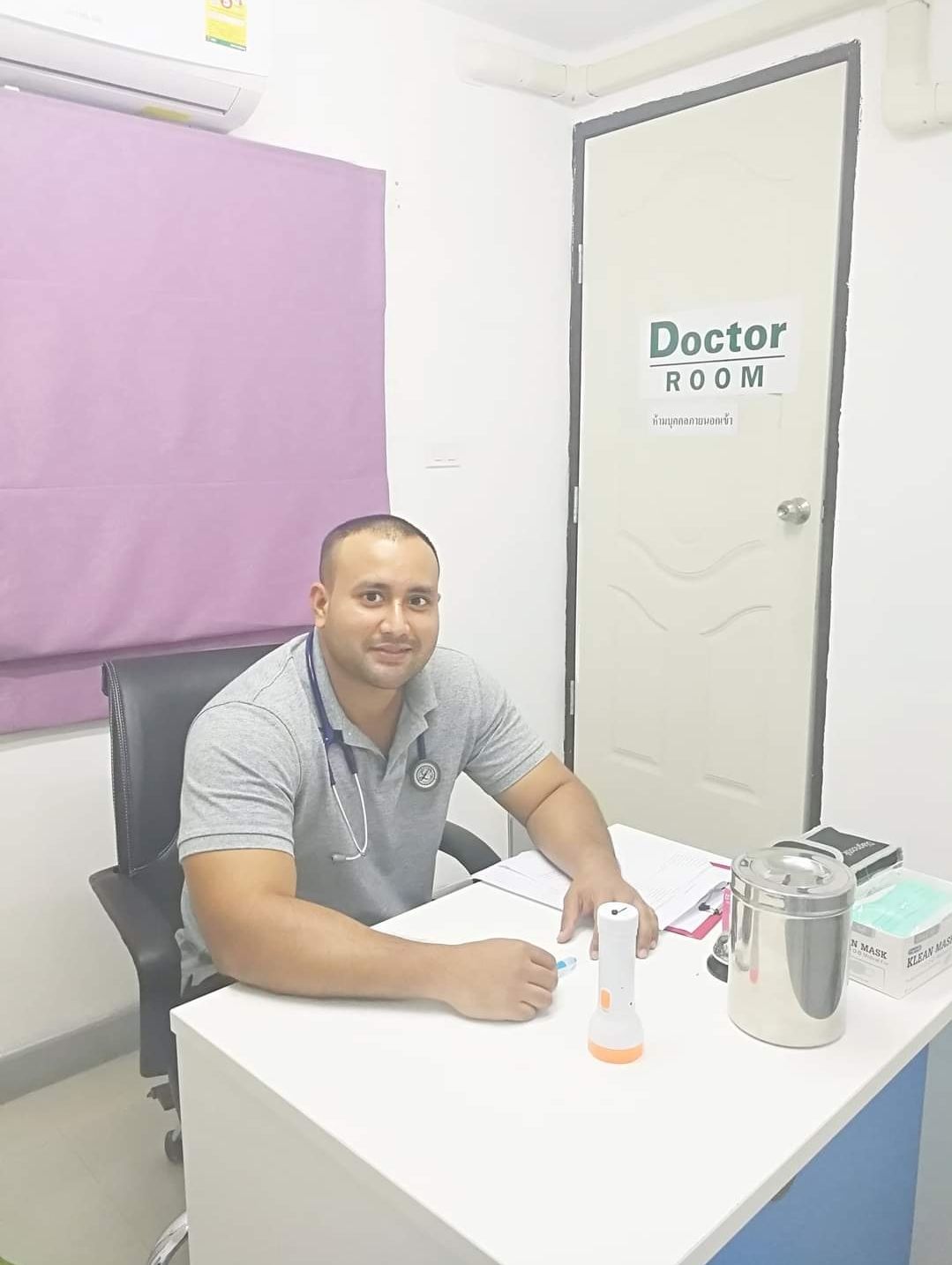
Dr. Ponlawat Pitsuwan is a physician at Doctor Bangkok, a private clinic in central Bangkok. He sees expats, residents, and medical tourists for general medicine, wellness consultations, and IV therapy. His focus is straightforward, evidence-based care delivered in plain language.