

Clinically reviewed by Dr. Ponlawat Pitsuwan, Physician, Doctor Bangkok.
Last reviewed: July 2026
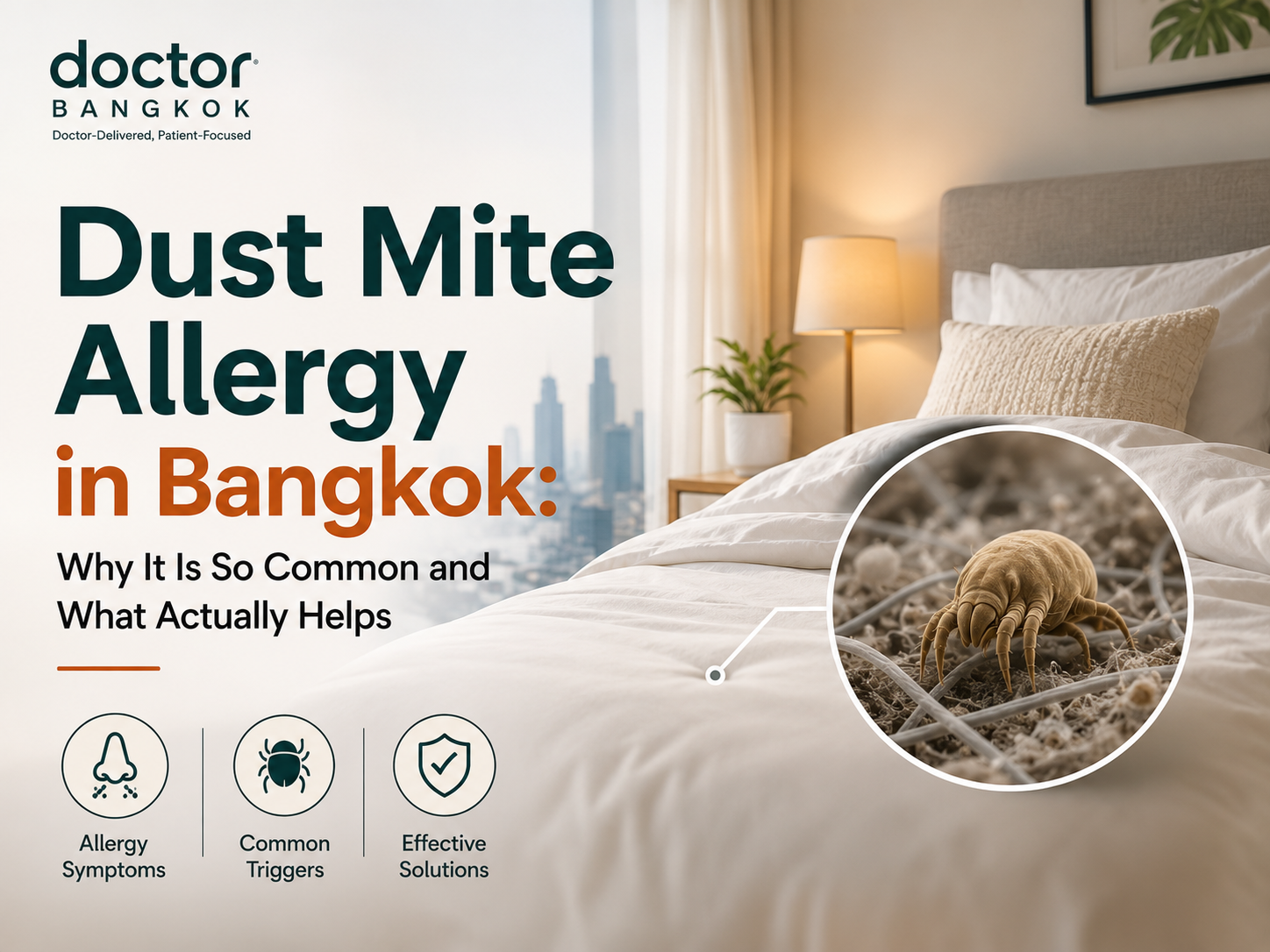
Dust mite allergy is one of the most common reasons expats in Bangkok develop a persistent runny nose, morning sneezing, or itchy eyes that never fully go away. Bangkok’s year-round heat and humidity mean there is no quiet season for dust mites, unlike in cooler climates. A skin prick test or blood test can confirm the diagnosis, and effective treatment options including long-term immunotherapy are available in Bangkok.
If you have been waking up every morning in your Bangkok apartment sneezing for twenty minutes and wondering if you have had the world’s longest cold, you are not imagining it. This is one of the most common things I see in expats who have been in Bangkok for a few months. It is usually not a cold. It is usually dust mites.
The reason this catches people off guard is that back home, many allergy sufferers get a break. Cooler, drier winters slow things down. Bangkok does not do that. The humidity stays high all year, which means dust mites thrive all year, and your symptoms never fully settle. The good news is there are real solutions, and you do not have to just live with it.

Why Bangkok Never Gives Dust Mite Allergy Sufferers a Break
Bangkok sits at roughly 70 to 90 percent relative humidity for most of the year. Dust mites need humidity above 50 percent to survive and breed. This city gives them exactly what they need, twelve months a year.
They live in mattresses, pillows, upholstered furniture, and carpets. If you moved here from the UK, Australia, Canada, or northern Europe, your immune system may never have encountered this level of exposure before. High mite loads combined with no off-season mean symptoms that feel constant and exhausting. Many patients tell me they assumed they would adjust. Most do not, without help.
What Symptoms Should You Watch For
The classic picture is morning sneezing, a runny or blocked nose, and itchy, watery eyes. Symptoms are usually worst right after waking up and improve once you leave the apartment. That pattern matters because it points to your home as the source.
Some patients also develop post-nasal drip, which is mucus dripping down the back of the throat, causing a chronic cough or a scratchy feeling that never clears. Others notice itchy skin or worsening eczema.
What concerns me more is when rhinitis progresses to allergic asthma: chest tightness, wheezing, or shortness of breath triggered by the same exposures. It does not happen to everyone, but it is common enough that I take poorly controlled rhinitis seriously. If you have any breathing difficulty alongside nasal symptoms, come in sooner rather than later.

Is It a Dust Mite Allergy or Just a Cold
Colds last seven to ten days and come with fever, body aches, and a sore throat. Dust mite allergy symptoms go on for weeks or months, follow a pattern tied to your environment, and do not come with a fever.
The clearest clue is location. Do your symptoms improve when you travel or stay in a hotel for a few days? Do they return as soon as you are back home? That pattern strongly suggests an environmental allergy rather than a viral infection.
If you are not sure, that is exactly what testing is for.
The Bangkok Trigger Most People Never Think About: Your Air Conditioner
This is something I bring up with almost every allergy patient I see in Bangkok, and it surprises nearly all of them. Your wall-mounted split-unit air conditioner may be making your allergy significantly worse.
Most Bangkok apartments rely entirely on split-unit AC systems. When the filters and internal coils are not cleaned regularly, they accumulate dust, mould, and allergens. Every time the unit runs, it blows those allergens directly into your living space. You are breathing them in all night while you sleep.
The fix is straightforward. Get your AC unit professionally serviced every three to six months. Clean or replace the filter yourself monthly in between. It is one of the highest-impact steps I recommend, and it costs almost nothing compared to months of medication.
Getting Diagnosed in Bangkok: What to Expect
I get asked this a lot, especially by patients who have never had allergy testing before. The short answer is that it is simple, and at Doctor Bangkok we do it in English.
A skin prick test involves placing tiny amounts of allergen on your forearm and making a small scratch through each drop. If you are allergic, a small raised bump appears within fifteen to twenty minutes. You get your results before you leave. The alternative is a specific IgE blood test, which looks for allergy antibodies in a blood sample and comes back from the lab within a day or two.
Both tests are available at Doctor Bangkok. Which one we recommend depends on your symptoms and any medications you are taking. We go through the results in plain language so you know exactly what you are dealing with and what comes next.
Treatment Options in Bangkok: From Antihistamines to Immunotherapy
There is a spectrum here, and where you start depends on how much your symptoms affect daily life.
For mild to moderate symptoms, daily antihistamine tablets are a reasonable first step. They reduce sneezing and itching but do not address the underlying sensitivity. A nasal corticosteroid spray is often more effective for congestion and is safe for long-term use. Many patients need both.
When medications are managing symptoms but not solving the problem, allergen immunotherapy is worth a conversation. It is the only treatment approach with strong evidence for changing how your immune system responds to dust mites over time.
Subcutaneous Immunotherapy (SCIT)
SCIT means injections given in a clinic at regular intervals, starting weekly and gradually spacing out. It requires a longer-term commitment and regular clinic visits. For expats planning to stay in Bangkok for several years, it is a viable option worth discussing with your doctor.
Sublingual Immunotherapy (SLIT)
SLIT uses daily dissolving tablets taken at home under the tongue. No weekly injections, and no clinic visits once the prescription is established. For expats who cannot commit to frequent appointments, SLIT is often the more practical choice. A full course runs around three years, and benefits can last for up to two years after stopping. Doctor Bangkok can assess whether you are a suitable candidate and guide the referral to an appropriate specialist.
Practical Steps to Reduce Dust Mite Load in Your Bangkok Home
Medication helps. Reducing your exposure helps more. The combination is where most patients see real improvement.
Keep bedroom humidity below 50 percent by running your AC or a standalone dehumidifier, especially at night. Wash bedding in water at 60 degrees Celsius weekly, as that is the temperature needed to kill mites. Many serviced apartments have shared laundry with fixed, lower temperature settings. If that applies to you, placing pillows in a sealed bag in the freezer for 24 to 48 hours, then washing in cold water to remove dead mites, is a practical alternative.
Allergen-barrier mattress and pillow covers make a meaningful difference. These are zippered covers that create a physical barrier between you and the mite population in your bedding. Basic versions are available at HomePro and larger malls across Bangkok, with more effective options online. A HEPA air purifier in the bedroom also helps, particularly if your AC is older or hard to service.
If you are choosing between apartments, it is worth knowing that tiles, which most Bangkok condos already have, are genuinely better for allergy sufferers than carpet. Dust mites do not thrive on hard floors the way they do in carpet fibres.
When to See a Doctor and What Doctor Bangkok Offers
If you have been using over-the-counter antihistamines for more than a few weeks and are still waking up miserable, it is time to get properly assessed. Treating symptoms without knowing what you are actually allergic to means you are guessing.
Doctor Bangkok offers English-language allergy consultations, skin prick testing, and specific IgE blood testing. We can confirm your diagnosis, go through your full trigger profile, and put together a treatment plan that fits your life in Bangkok, whether you are here long-term or just for a few months. For patients who are candidates for immunotherapy, we guide the referral pathway and help coordinate ongoing management.
If your symptoms include any wheeze, chest tightness, or shortness of breath, do not wait. That warrants a same-day assessment.
Waking up sneezing every morning in Bangkok is not something you have to accept. Doctor Bangkok offers English-language allergy consultations, skin prick testing, and clear next steps for diagnosis and treatment. We are centrally located, BTS accessible, and see expats and residents every day for exactly this kind of issue. Book a consultation at doctorbangkok.co.th or contact us directly to speak with an English-speaking physician.
FAQ
Why have my allergies got so much worse since moving to Bangkok?
Bangkok’s year-round humidity gives dust mites ideal conditions with no seasonal dip. If you moved from a cooler climate, you are likely encountering higher mite loads than you ever have before, with no low season to recover. Unserviced split-unit AC systems in rental apartments often make this worse by pushing accumulated allergens into your living space every time they run.
How do I know if I have a dust mite allergy or just a recurring cold?
Colds clear up within ten days and usually come with a fever or body aches. Dust mite allergy symptoms persist for weeks or months, follow a pattern tied to your home, and tend to be worst first thing in the morning. If your symptoms improve when you travel and return when you get home, that points strongly toward an environmental allergy. A skin prick test will give you a clear answer.
What allergy testing is available in Bangkok and how long does it take?
Doctor Bangkok offers skin prick testing, which gives results within fifteen to twenty minutes during your appointment, and specific IgE blood tests, which come back from the lab within a day or two. Both are done in English, and we go through the results and next steps with you during the same consultation.
Is immunotherapy for dust mite allergy available in Bangkok, and can I do it if I am not a permanent resident?
Both subcutaneous injections and sublingual tablets are available. Sublingual immunotherapy is the more practical option for expats because it is taken daily at home once the initial prescription is set up, with no need for weekly clinic visits. A full course runs around three years. Doctor Bangkok can assess your suitability and guide the referral process.
Does cleaning my air conditioner actually help with dust mite allergy?
Yes, and it is one of the first things I tell patients to do. Unserviced split-unit AC systems in Bangkok apartments accumulate dust, mould, and allergens and blow them into your living space every time they run. Professional servicing every three to six months, combined with monthly filter cleaning, can meaningfully reduce your allergen exposure with no medication required.
Can a dust mite allergy lead to asthma?
It can. Persistent, poorly controlled allergic rhinitis is a recognised risk factor for developing allergic asthma. If you are already experiencing chest tightness, wheezing, or shortness of breath alongside your nasal symptoms, come in for an assessment rather than waiting to see if it settles on its own.
Dr. Ponlawat Pitsuwan
Physician, Doctor Bangkok
a private medical clinic in central Bangkok. He sees expats, residents, and medical tourists for allergy assessment, respiratory symptoms, and general medical care. His focus is straightforward, evidence-based care delivered in plain language.
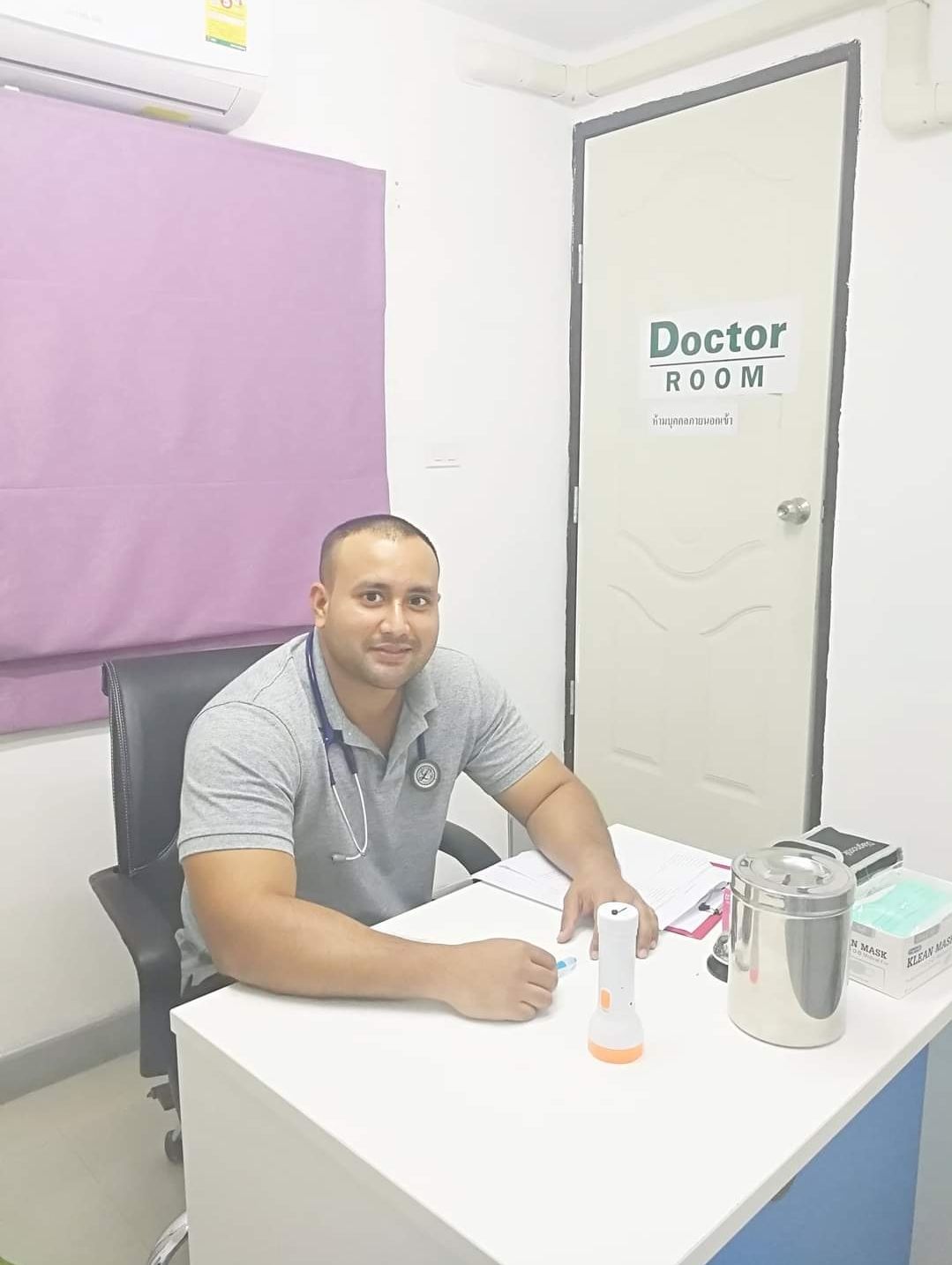
Dr. Ponlawat Pitsuwan is a physician at Doctor Bangkok, a private clinic in central Bangkok. He sees expats, residents, and medical tourists for general medicine, wellness consultations, and IV therapy. His focus is straightforward, evidence-based care delivered in plain language.