
Clinically reviewed by Dr. Ponlawat Pitsuwan, Physician, Doctor Bangkok.
Last reviewed: October 2026
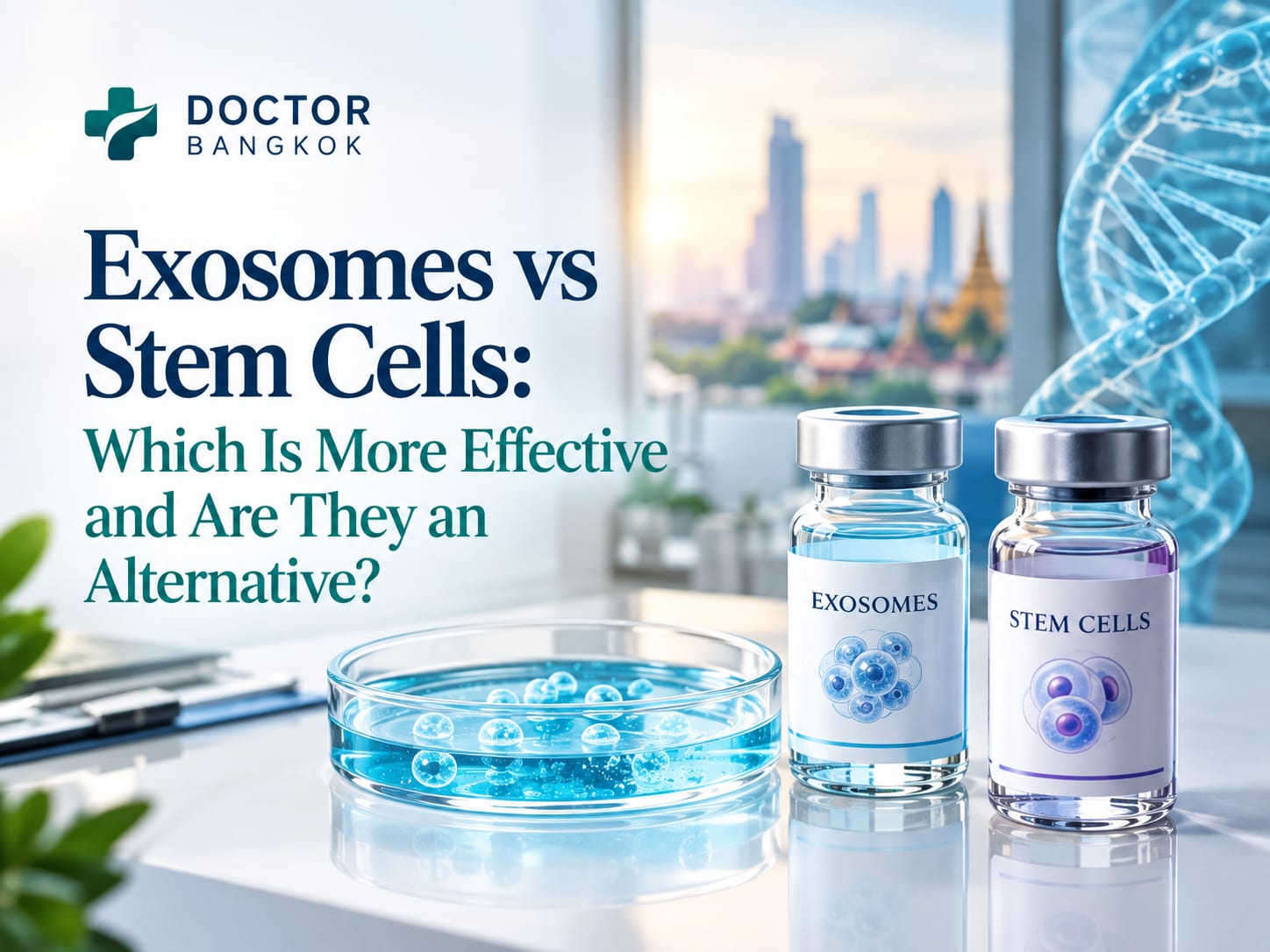
Exosomes and stem cells are both used in regenerative medicine, but they work differently and suit different situations. Exosomes are tiny particles released by cells that carry growth factors and signalling proteins. Stem cells are living cells that can repair and replace damaged tissue. Neither is universally better. The right choice depends on your condition, your health history, and the quality of the clinic providing it.
I get asked about this at least a few times a week, usually from expats who have seen an ad, done some Googling, and are now more confused than when they started. "Are exosomes just stem cells with a different name?" No. "Is one safer than the other?" Usually yes, but it depends. "Should I be doing this at all?" That is the right question to ask first.
This article gives you a straight clinical comparison. Not hype, not marketing copy. Just what the evidence currently shows, what the Thai regulatory picture actually looks like, and what to watch out for if you are considering any Bangkok clinic offering these treatments.
Builders vs Messengers: The Core Difference
Here is how I explain it to patients. Stem cells are builders. You put them into the body and, in theory, they travel to damaged tissue and help repair or replace it. Exosomes are messengers. They carry signals, proteins, and genetic material that tell your own cells to reduce inflammation or ramp up repair activity.
Stem cells are living. Exosomes are not. That one difference has big downstream effects on safety, storage, cost, and how the treatment is delivered.
What Exosomes Actually Are
Exosomes are tiny particles, smaller than a human cell, that all cells naturally produce and release. They carry proteins, RNA, and growth factors that influence how nearby cells behave. Think of them as the body’s internal messaging system.
For therapeutic use, exosomes are typically collected from mesenchymal stem cells grown in a lab, then purified and prepared as a standardised product. The stem cells themselves are not injected. Just their signals.
How Stem Cell Therapy Works
In stem cell therapy, living cells are introduced into the body, usually by IV infusion or direct injection into a joint or tissue. The goal is that these cells find damaged areas and support repair. They may also release their own growth factors once in place.
The most common type used clinically are mesenchymal stem cells, which can come from your own body or from a donor. Both approaches carry different risks, which I cover below.
Safety Profile: Where Exosomes Have the Clearer Advantage
This is where the comparison becomes clinically meaningful. Stem cell therapy carries risks that exosome therapy largely does not.
Because stem cells are living and foreign when from a donor, the body can mount an immune response. There is also a small but documented risk of uncontrolled cell growth, particularly with poorly regulated products. A point most clinics skip over: a large proportion of transplanted stem cells do not survive more than a few days after administration. Cell survival is a genuine clinical challenge.
Exosomes carry none of these risks. They cannot cause immune rejection. They cannot replicate or form tumours. The risk profile is lower, which is one reason research interest has grown quickly. That said, lower risk does not mean no risk. Product quality, manufacturing standards, and the clinical setting still matter enormously.
Which Conditions Suit Exosomes and When Are Stem Cells Still Preferred?
This is where a binary answer breaks down. The honest answer: it depends on what you are trying to treat.
For skin rejuvenation and hair restoration, exosomes are often the more practical and better-supported option. Their growth factor content directly stimulates collagen and follicle activity, delivery is simple, and recovery is minimal. For significant joint damage, such as moderate to severe osteoarthritis, stem cells may still offer more structural repair potential. The evidence for both in joint conditions is still developing, and any clinic claiming guaranteed outcomes should be questioned.
For neurological conditions, the research is early. Neither therapy has strong enough clinical trial data for me to recommend either as a primary treatment outside an approved research protocol.
Regulation in Thailand: What Expats and Medical Tourists Need to Know
Thailand’s Ministry of Public Health regulates both therapies. Stem cell treatments must be conducted under licensed facilities and approved protocols. Exosome products are classified as biological products and should meet GMP-certified manufacturing standards.
In practice, not every clinic operates within this framework. Some offer treatments under investigational protocols, which sit in a grey zone between approved medicine and clinical research. You have a right to ask which category applies to what you are being offered. A reputable clinic will answer that question clearly.
You can verify a facility’s licensing through the Thai Ministry of Public Health directly. You can verify a physician’s registration through the Thailand Medical Council by licence number. If a clinic discourages these questions, that tells you something.
At Doctor Bangkok, we do not offer stem cell or exosome infusions as walk-in treatments. What we offer is an independent consultation with an English-speaking physician who can review your history, explain your options honestly, and help you decide whether any regenerative therapy is appropriate before you commit to anything in the city.
Red Flags When Choosing a Bangkok Clinic
Stem cell tourism is a documented problem in Southeast Asia, and Bangkok is not exempt. I have seen patients arrive after treatments at unregulated facilities with infections, unexpected side effects, and no clear idea what they were actually given.
Watch for clinics that cannot name the specific product or its manufacturer. Watch for claims with precise numbers, such as "300% collagen boost," with no cited source. If pricing shifts when you ask detailed questions, or there is no written treatment protocol and no follow-up plan, those are warning signs. A ten-minute consultation that goes straight to booking with no health history review is not a consultation.
Also confirm that a licensed doctor will be present for any IV infusion. In Thailand, IV administration of biological products must be supervised by a licensed physician. That is not optional.
Can Exosomes and Stem Cells Be Used Together?
Yes, combination protocols exist. Some clinics use both together, with exosomes added as a signalling support to amplify what the stem cells do. The rationale is that exosomes may help create a more receptive environment for stem cell activity.
The evidence base is still early. This is not a standard-of-care protocol. Approach any clinic offering it routinely with scepticism unless they can point to a specific, well-supervised treatment plan. It is a reasonable question to raise directly in your consultation.
Getting an Honest Assessment in Bangkok
Most patients I see have already done a lot of reading. The problem is not a lack of information. It is too much information of variable quality.
What actually helps is sitting with a physician who has no financial interest in selling you a particular product, who can review your full health picture, and who will tell you plainly if a treatment is likely to help or not. Doctor Bangkok is BTS accessible, offers same-day appointments, and every consultation is in English with a physician, not a sales coordinator.
If you are a medical tourist weighing options before committing to a programme, or an expat who wants an independent second opinion before booking anywhere, that conversation is a reasonable place to start. You can find more on how we approach regenerative medicine and stem cell therapy on our service page, including what an assessment at our clinic actually involves.
| Feature | Exosomes | Stem Cells |
|---|---|---|
| Type | Acellular (non-living) | Living cells |
| Source | Derived from MSCs in a lab | Autologous or allogeneic MSCs |
| Immune rejection risk | Very low | Low to moderate (allogeneic) |
| Tumorigenic potential | None | Small but documented risk |
| Cell survival concern | Not applicable | Significant post-transplantation challenge |
| Storage | Freeze-dried, off-the-shelf | Requires controlled cell banking |
| Administration | IV infusion, injection, topical | IV infusion or direct injection |
| Evidence strength | Moderate, growing rapidly | Moderate, condition-dependent |
| Best suited for | Skin, hair, inflammation, early joint changes | Significant structural tissue repair |
| Thai regulatory status | Biological product (GMP required) | Thai FDA licensed protocols required |
Not sure whether exosomes, stem cells, or neither is the right option for you? Doctor Bangkok offers independent consultations with English-speaking physicians in central Bangkok. We will review your health history, explain what the evidence actually shows for your situation, and give you an honest recommendation before you book anything. Same-day appointments available. BTS accessible. No sales pitch.
Are exosomes and stem cells both legal in Thailand?
Yes, both are regulated in Thailand, but the detail matters. Stem cell treatments must be conducted under Ministry of Public Health-licensed facilities. Exosome products should meet Thai FDA standards for biological products with GMP-certified manufacturing. Some clinics operate under investigational protocols, which is a grey zone. Always ask whether a product is fully registered or investigational, and verify the clinic’s licence independently through the Ministry of Public Health.
Is exosome therapy safer than stem cell therapy?
Generally yes, exosomes carry a lower inherent risk. They cannot cause immune rejection or form tumours, and post-transplantation cell survival is not a concern as it is with stem cells. But safety still depends heavily on product quality, the clinical setting, and physician oversight. The therapy type alone does not guarantee anything.
Can exosomes and stem cells be used at the same time?
Combination protocols do exist, where exosomes are used alongside stem cells to support their activity. The evidence for this approach is still early and it is not a standard clinical protocol. If a clinic recommends combination therapy, ask for a written protocol and ask what research supports it.
I am based near Asok and looking at hair loss treatment. Are exosomes or stem cells better?
For most types of hair loss, exosomes are currently the more practical and better-supported option. Their growth factor content targets follicle activity directly, delivery is straightforward, and recovery is minimal. That said, the cause of your hair loss needs proper assessment first. Come in at Doctor Bangkok and we will work out what is actually driving it before recommending anything.
Which is better for joint pain or skin rejuvenation?
For skin rejuvenation and early hair loss, exosomes have a strong growth factor payload and solid clinical rationale. For significant joint damage, stem cells may offer more structural repair potential, though evidence for both is still building. Individual suitability needs a proper physician assessment, not a general comparison article.
How do I know if a Bangkok clinic offering these treatments is legitimate?
Verify Ministry of Public Health licensing and confirm the physician’s Thailand Medical Council registration by licence number. Ask whether the product is registered or investigational, ask for a written treatment protocol and a follow-up plan, and confirm a licensed doctor will be present for any IV procedure. If a clinic avoids these questions or makes very specific claims with no cited evidence, treat that as a warning sign.
Does Doctor Bangkok offer exosome or stem cell infusions?
We offer independent physician consultations to help you assess whether regenerative therapy is appropriate for your situation and how to evaluate any clinic you are considering. For full detail on how we approach this area, see our page on stem cell therapy in Bangkok. Our role is to give you a clinically honest starting point before you commit to any programme.
Dr. Ponlawat Pitsuwan
Physician, Doctor Bangkok
a private medical clinic in central Bangkok. He sees expats, residents, and medical tourists for general medical consultations, regenerative medicine assessments, and health checks. His focus is straightforward, evidence-based care delivered in plain language.
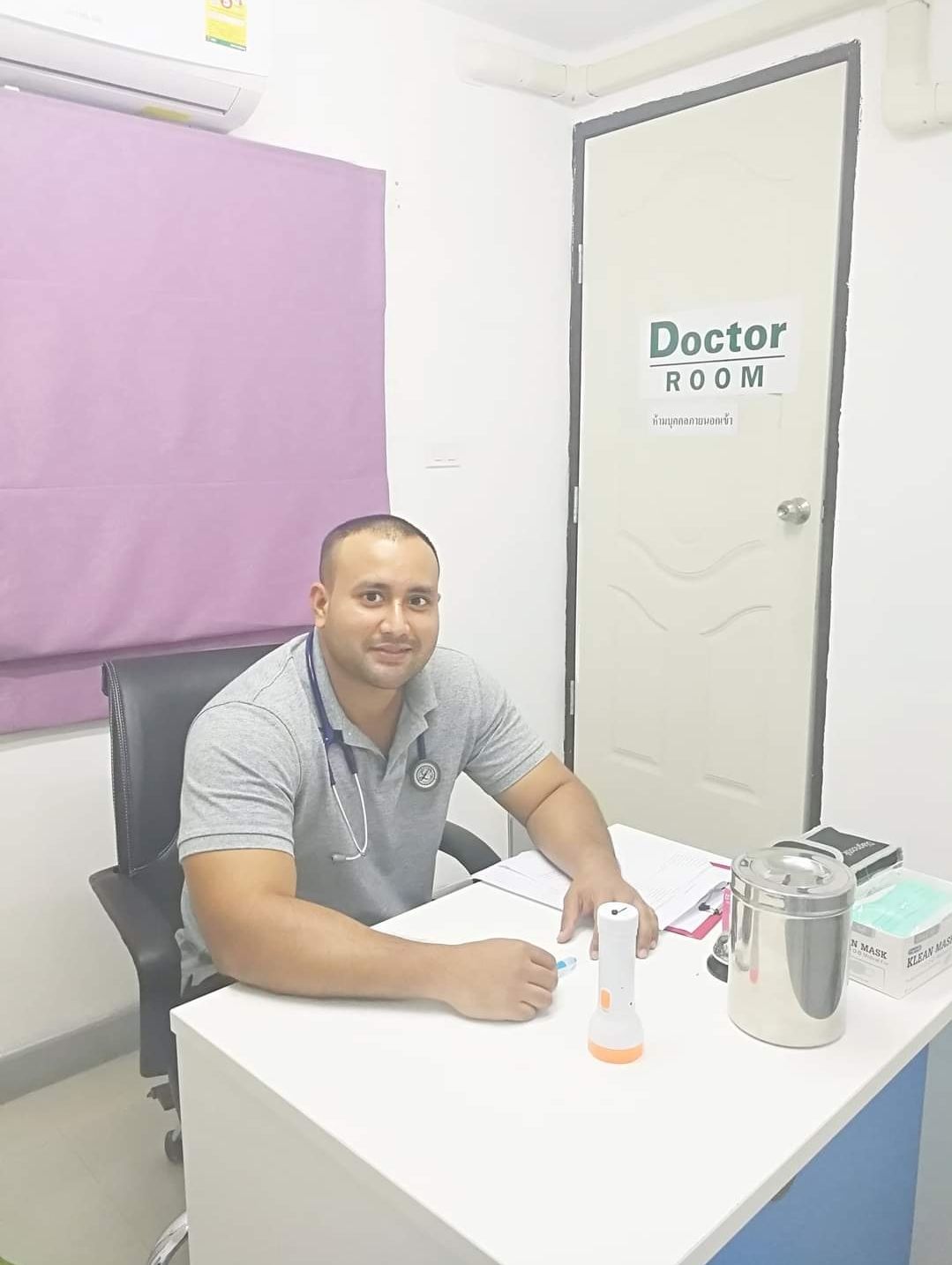
Dr. Ponlawat Pitsuwan is a physician at Doctor Bangkok, a private clinic in central Bangkok. He sees expats, residents, and medical tourists for general medicine, wellness consultations, and IV therapy. His focus is straightforward, evidence-based care delivered in plain language.