

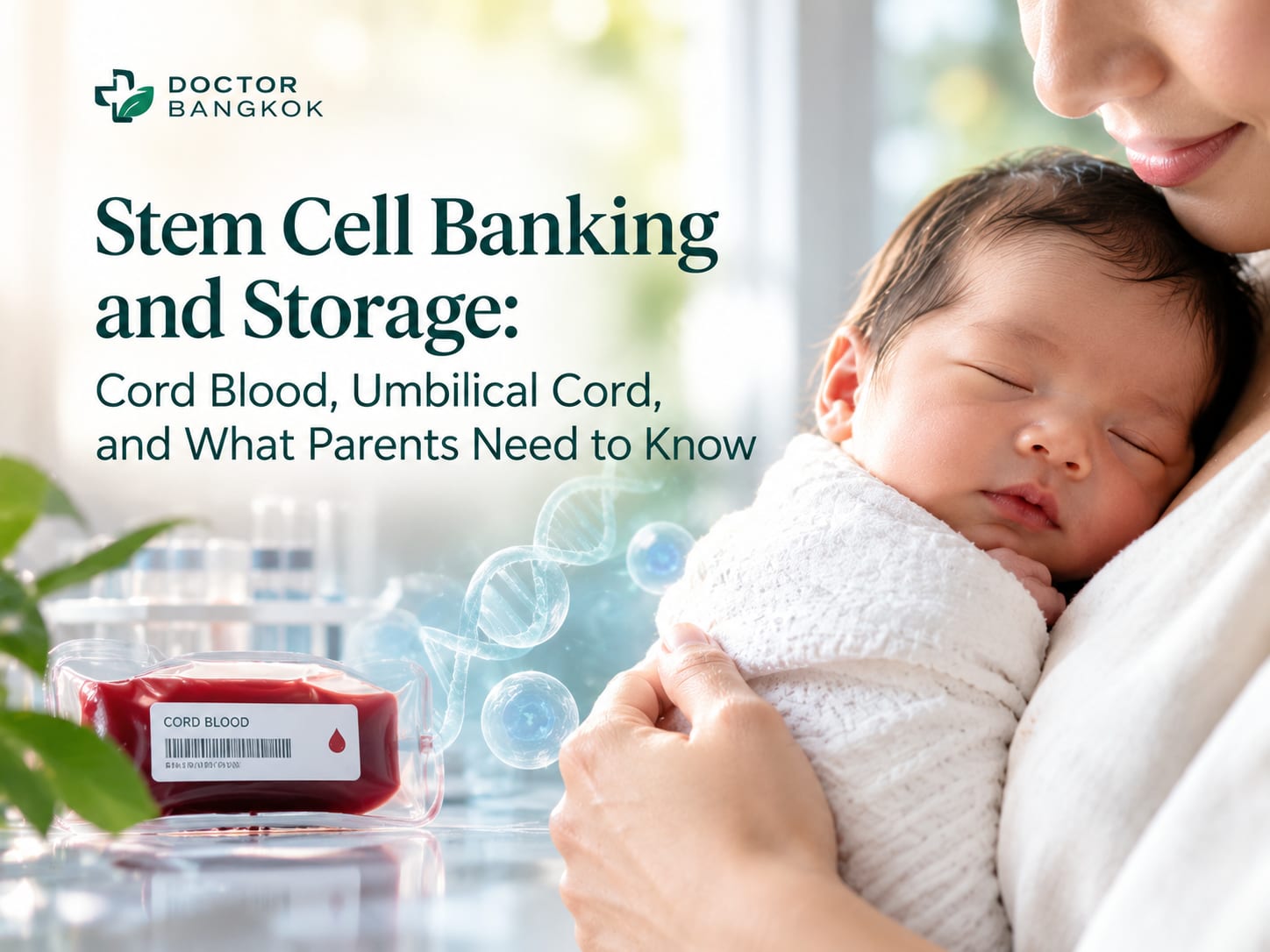
Clinically reviewed by Dr. Ponlawat Pitsuwan, Physician, Doctor Bangkok. Last reviewed: October 2026
Cord blood banking collects stem cells from your baby’s umbilical cord immediately after birth and stores them for potential future medical use. Private banking costs money and is not routinely recommended for all families, but for those with a relevant family history, it can have real clinical value. If you are expecting in Bangkok, you need to arrange collection at least six weeks before your due date.
A lot of expat parents ask me about cord blood banking somewhere between the anatomy scan and the third trimester. They have seen the marketing, they are not sure what is real, and they want someone without a financial stake in the answer to talk them through it. That is exactly what this is.
The honest summary: cord blood banking is genuinely useful for some families and unnecessary for others. The decision depends on your medical history, your budget, and which bank you choose. If you are delivering in Bangkok, there are practical logistics that nobody in the brochures covers. Let me walk through all of it.

What Are Cord Blood Stem Cells?
The blood left in your baby’s umbilical cord after birth is rich in stem cells. These are called haematopoietic stem cells, the same type found in bone marrow that produce all your blood cells. They can be used in transplants to treat certain blood cancers, immune disorders, and inherited blood conditions.
They come from tissue that exists only at birth. Once the cord is cut and discarded, they are gone. That is the core reason parents consider banking.
Cord Blood vs Cord Tissue: Two Different Sources, Two Different Cell Types
This distinction matters and most parents do not know it exists. Cord blood and cord tissue are two separate products from the same birth.
Cord blood comes from the blood inside the umbilical vessels. It contains haematopoietic stem cells, used in blood and immune system treatments. Cord tissue is the physical cord itself, and it contains a different type of stem cell called mesenchymal stem cells, or MSCs.
MSC therapy, sometimes called UC-MSC therapy, is a growing area in regenerative medicine currently being studied for inflammatory and immune conditions. Several Bangkok-based banks already offer cord tissue storage alongside cord blood, and many families bank both.
Private vs Public Banking: Which Is Right for Your Family?
Public banking means donating your baby’s cord blood to a shared registry. Anyone who needs a matched donor can access it. It costs nothing, but you give up exclusive access to those cells.
Private banking means paying to store your baby’s cord blood for your family’s use only. This is called autologous use when the child uses their own cells, or directed donation when banked for a sibling who already needs treatment. Annual storage fees apply indefinitely.
Think of private banking as biological insurance. Like all insurance, the value depends on your risk. ACOG and the American Academy of Pediatrics do not recommend private banking as routine storage for healthy families with no relevant disease history. If your family has a history of leukaemia, thalassemia, sickle cell disease, or lymphoma, the calculation changes.
Honest Limitations: When Cord Blood Banking May Not Be the Right Choice
I tell parents this clearly: the chance that a privately banked cord blood unit is ever used is low for the general population. Lifetime use rates vary significantly by family history, and international registry data suggest the figure is low for families with no relevant medical background.
There is also a biological limitation worth knowing. For certain conditions, a child cannot use their own cord blood because the disease is already encoded in those cells. A child who develops some forms of leukaemia may need a matched donor unit rather than their own stored blood.
None of this means banking is wrong. It means the decision should be made with accurate information, not marketing copy.
Delivering in Bangkok: How the Collection Process Works
This is the part expat parents most often get caught short on. Collection happens immediately after delivery, in a very short window. Your birthing team needs to know in advance.
Contact your chosen bank and request a collection kit at least six weeks before your due date. The bank ships the kit to you. You bring it to the hospital. Your obstetrician or midwife collects the cord blood after the placenta delivers. A courier picks up the kit within a few hours and transports it to the bank’s processing facility.
Most private hospitals in Bangkok will accommodate this. Confirm with your specific hospital that they will participate, and brief your birthing team before labour begins. If your team speaks primarily Thai, get that coordination right early.
Delayed Cord Clamping and What It Means for Collection Volume
Many parents are also asking about delayed cord clamping, which means waiting one to three minutes before cutting the cord so more blood transfers to the baby. This is evidence-based practice that benefits the newborn.
The trade-off is straightforward: delayed clamping leaves less blood in the cord for collection. A smaller volume may not meet the cell count threshold required for a viable banking unit. This is not a reason to skip delayed clamping, but discuss it openly with your obstetrician and banking coordinator before the birth, not on the day.
Regulation and Accreditation: What Bangkok Parents Must Verify
Thailand’s FDA is actively developing its regulatory framework for advanced therapy medicinal products, which covers stem cell products. The framework is still evolving, so the bank you choose needs to meet international standards right now.
Look for two things: AABB accreditation and ISO certification. AABB is a US-based international body that sets standardised processing, storage, and release protocols for cord blood banks, verified through regular audits. ISO certification covers quality management systems more broadly. Several private cord blood banks operating in Thailand hold both credentials.
Do not take a bank’s word for it. Ask for their accreditation certificate and verify it directly with the accrediting body. An independent physician can help you assess a bank’s credentials without the commercial pressure that comes from speaking to the bank’s own sales team.
Getting an Independent Medical Opinion Before You Bank
Every piece of marketing you receive about cord blood banking comes from someone trying to sell you a contract. That is not a criticism. It is just the reality of the industry, and it means the information is rarely neutral.
At Doctor Bangkok, we offer consultations for expectant parents who want an unbiased clinical view before making this decision. We look at your family’s medical history, assess whether private or public banking makes more sense for your situation, and can help you evaluate the specific banks and packages you are considering. We have no commercial relationship with any cord blood bank.
Our stem cell therapy service covers UC-MSC applications, which gives us direct clinical familiarity with how these products are actually used, not just stored. If you want to understand the realistic future value of what you are banking, that context is worth having. You can also speak with us about cord blood banking as part of a broader pre-natal planning consultation, or ask about stem cell banking cord blood options specific to your family history.
Expecting in Bangkok and not sure whether cord blood banking is right for your family? Doctor Bangkok offers independent pre-banking consultations with no commercial ties to any cord blood bank. We will review your family history, explain your options clearly, and help you ask the right questions before you sign anything. Contact Doctor Bangkok to book your consultation.
Can I bank my baby’s cord blood if I am giving birth at a private hospital in Bangkok?
Yes, collection is possible at most private Bangkok hospitals, but you need to arrange it well in advance. Request a collection kit from your chosen bank at least six weeks before your due date, confirm your hospital will participate, and brief your birthing team before labour starts. Language coordination with Thai-speaking staff is something expat parents often overlook until it is too late.
What is the difference between cord blood banking and cord tissue banking?
Cord blood contains haematopoietic stem cells used in blood and immune system treatments. Cord tissue contains mesenchymal stem cells, which are being studied in regenerative and anti-inflammatory therapies. Several Bangkok-based banks offer both as separate products, and Doctor Bangkok’s stem cell therapy service covers UC-MSC applications, so we can give you a grounded view of what cord tissue storage actually means in practice.
Does delayed cord clamping affect how much cord blood can be collected?
It can. Delayed clamping allows more blood to transfer to the baby, which is beneficial, but leaves less in the cord for collection. If the volume is too low, it may not meet the cell count threshold for a viable banking unit. Discuss this with your obstetrician and banking coordinator before your due date, not on the day.
Is private cord blood banking recommended for all families?
No. ACOG and the American Academy of Pediatrics do not recommend routine private banking for healthy families with no relevant medical history. If your family has a history of leukaemia, thalassemia, sickle cell disease, or lymphoma, the clinical rationale is stronger. An independent consultation at Doctor Bangkok can help you assess your actual risk before committing to a contract.
How do I know if a cord blood bank in Bangkok meets international quality standards?
Look for AABB accreditation and ISO certification. Ask any bank you are considering for their accreditation certificate and verify it directly with the accrediting body. A physician consultation gives you a way to evaluate these credentials without relying on the bank’s own marketing.
Can my child use their own cord blood if they develop leukaemia later in life?
Not always. For some leukaemias, the genetic changes that cause the disease are already present in the cord blood at birth. In those cases, a matched donor unit is needed rather than the child’s own stored cells. This is one of the honest limitations of private banking that is worth understanding before you sign a storage contract.
If I go into early labour in Bangkok without having arranged collection, can I still bank?
If you have not arranged a collection kit and briefed your hospital team, it is too late at that point. Collection requires advance preparation, a kit on site, and a briefed birthing team. This is exactly why the six-week-before-due-date rule exists. Plan early, not in the taxi.
Dr. Ponlawat Pitsuwan
Physician, Doctor Bangkok
a private medical clinic in central Bangkok. He sees expats, residents, and medical tourists for pre-natal consultations, general health assessments, and questions around stem cell therapy and banking decisions. His focus is straightforward, evidence-based care delivered in plain language.
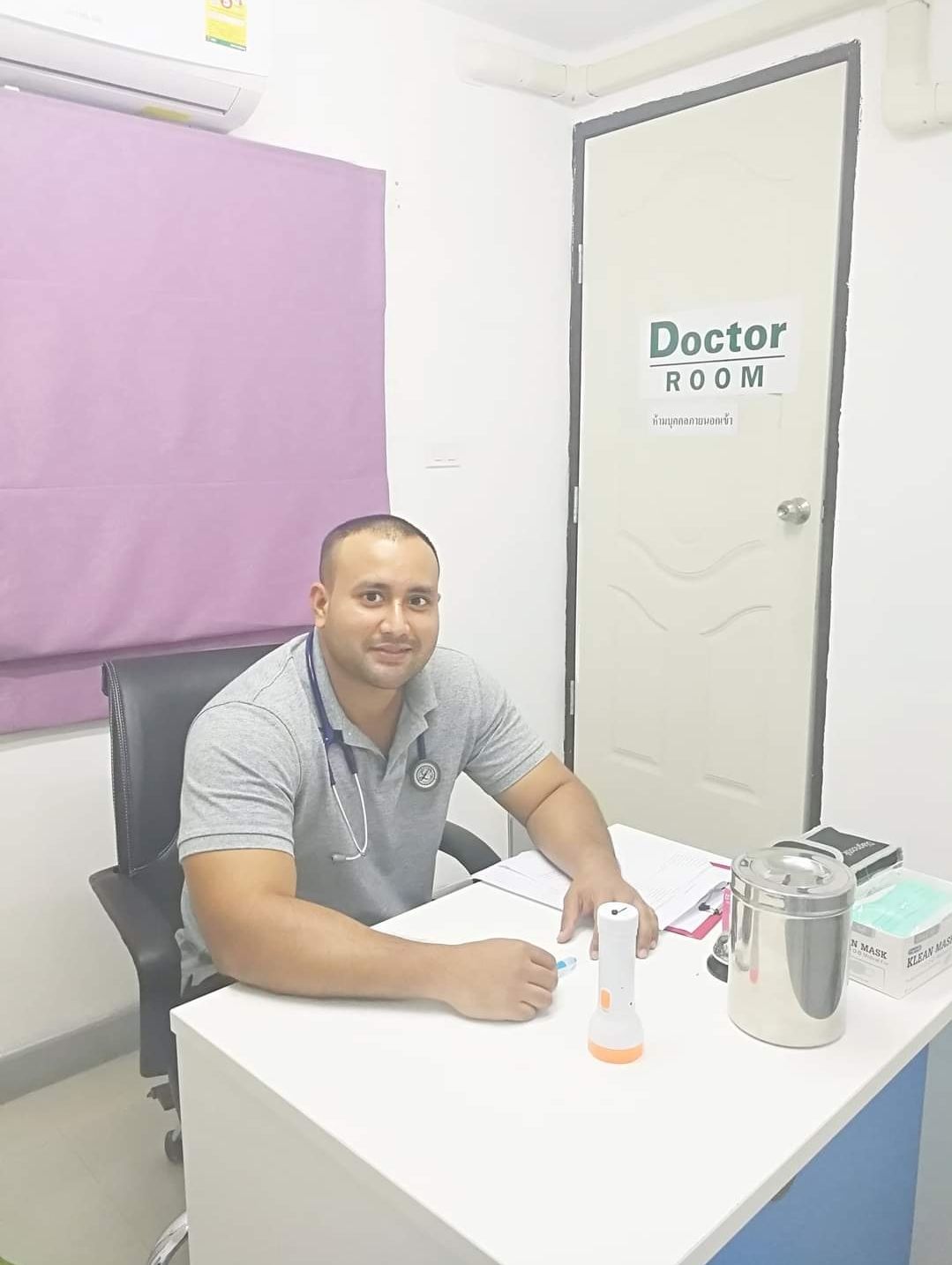
Dr. Ponlawat Pitsuwan is a physician at Doctor Bangkok, a private clinic in central Bangkok. He sees expats, residents, and medical tourists for general medicine, wellness consultations, and IV therapy. His focus is straightforward, evidence-based care delivered in plain language.